
Will vs. Living Trust: Estate Planning Guide
Discover key differences between wills and living trusts to choose the best estate planning tool for privacy, probate avoidance, and incapacity protection.
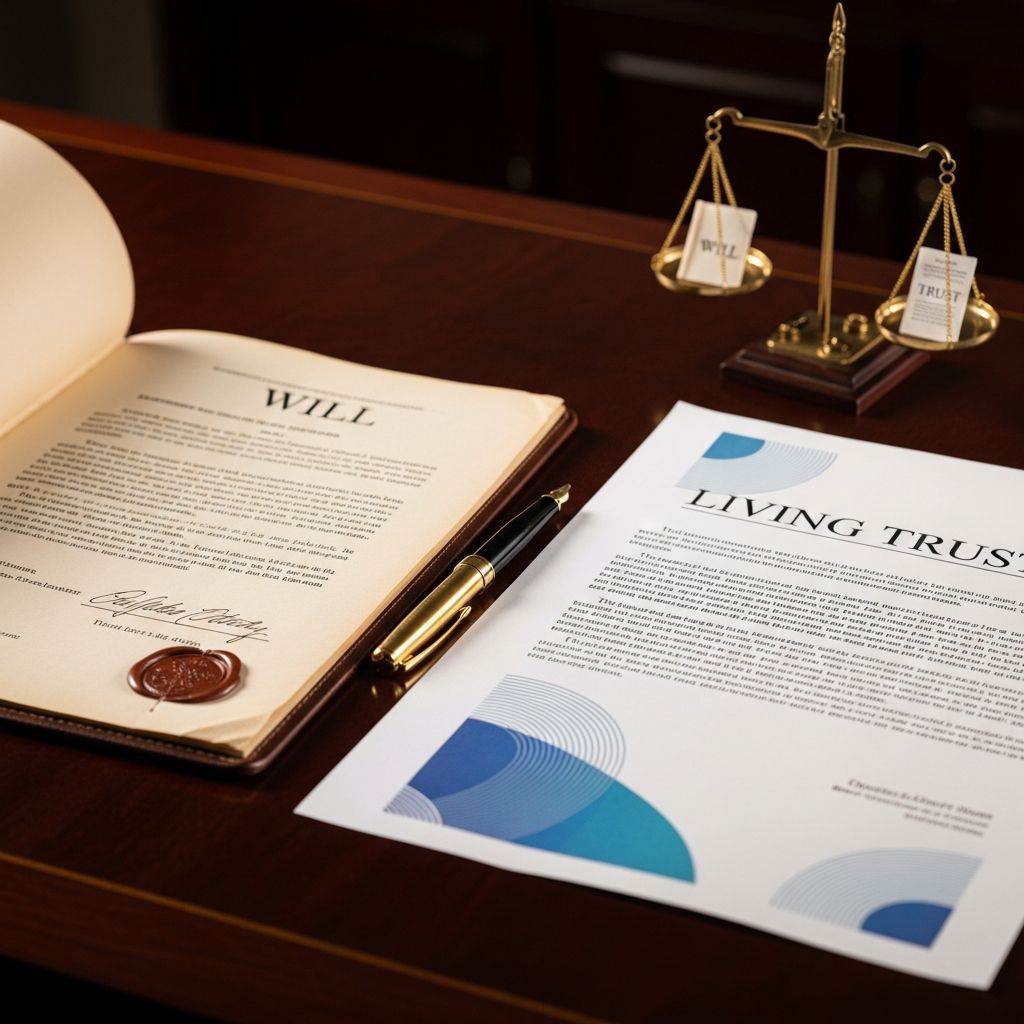
A will and a living trust are foundational estate planning documents that help ensure your assets reach your intended beneficiaries. While a will activates only after death and involves court oversight, a living trust operates immediately upon creation, bypassing probate for smoother transfers.
Understanding Wills in Estate Planning
A last will and testament is a legal document specifying how your assets should be distributed after your death. It names an executor to manage the process and can appoint guardians for minor children.
Wills are straightforward to create, often at low cost, and easy to update as life changes occur. However, they become public during probate, the court-supervised validation and distribution process, which can take months or years and incur fees up to 5% of the estate value in some states.
Key Features of a Will
- Takes effect solely after the creator’s death.
- Allows designation of guardians for minors, a feature trusts cannot replicate.
- Subject to probate, making details public and potentially delaying distribution.
- Simple amendments possible while mentally competent.
Creditors can claim against estate assets post-death, and there’s no provision for incapacity management.
Exploring Living Trusts
A living trust, or inter vivos trust, is created during your lifetime to hold and manage assets. You transfer ownership of property into the trust, which you can control as the initial trustee.
Typically revocable, it allows changes anytime, but irrevocable versions permanently relinquish control for tax or creditor protection benefits. Trusts avoid probate entirely if properly funded, maintaining privacy since proceedings aren’t public.
Types of Living Trusts
| Type | Description | Key Benefit |
|---|---|---|
| Revocable Living Trust | Changeable during lifetime; grantor retains control. | Probate avoidance and incapacity planning. |
| Irrevocable Living Trust | Permanent terms; assets removed from estate. | Potential estate tax reduction and creditor shielding. |
Funding the trust—retitling assets like homes, bank accounts, and investments—is crucial for effectiveness. Unfunded trusts function like wills, requiring probate.
Core Differences: Will vs. Living Trust
The primary distinctions lie in timing, probate involvement, privacy, and incapacity handling. Wills are postmortem tools; living trusts are proactive vehicles active from inception.
| Aspect | Will | Living Trust |
|---|---|---|
| Activation | After death | Immediately upon funding |
| Probate | Required; public and costly | Avoided; private |
| Incapacity | No provision | Successor trustee manages assets |
| Guardianship for Minors | Yes | No |
| Privacy | Public record | Private |
| Cost | Lower upfront | Higher setup and funding |
Trusts offer precedence over wills for funded assets and reduce contest risks by skipping court.
Advantages and Drawbacks
Benefits of Wills
- Low creation cost, sometimes free via legal templates.
- Easy to modify with codicils.
- Essential for naming child guardians.
- Sufficient for simple estates.
Drawbacks of Wills
- Probate delays (6-18 months typical) and fees.
- Public exposure invites disputes or creditor claims.
- No incapacity safeguards, risking conservatorships.
Benefits of Living Trusts
- Immediate incapacity protection via successor trustee.
- Probate bypass speeds distribution (weeks vs. years).
- Privacy shields family matters from public view.
- Harder to contest; customizable distribution terms.
Drawbacks of Living Trusts
- Upfront costs: $1,000-$3,000+ for setup.
- Ongoing funding maintenance for new assets.
- No minor guardianship naming.
- Revocable versions offer no tax savings.
Circumstances Favoring Each Option
Opt for a will if your estate is modest, under probate thresholds (e.g., $166,250 in California), or includes minor children needing guardians. It’s ideal for straightforward asset distribution without multi-state properties.
Choose a living trust for larger estates, real estate in multiple states, privacy concerns, or incapacity planning needs. Blended families benefit from controlled distributions, like staggered inheritances.
For special needs beneficiaries, trusts preserve eligibility for government aid. High-net-worth individuals may pair revocable trusts with irrevocable ones for tax strategies.
Combining Wills and Living Trusts
Most experts recommend both: a pour-over will catches unfunded assets, directing them into the trust post-probate, while the trust handles the bulk efficiently.
This hybrid approach maximizes flexibility, covers guardianship, and minimizes probate exposure. Regular reviews every 3-5 years ensure alignment with life events like births, deaths, or asset gains.
Costs and Creation Process
Wills cost $0-$500 typically; online tools suffice for basics. Living trusts range $1,000-$4,000, involving attorneys for funding deeds and retitling.
DIY options exist but risk errors; professional advice prevents invalidation. State laws vary—consult local rules on probate exemptions.
Frequently Asked Questions
Do I need a lawyer for a will or living trust?
While DIY kits work for simple wills, attorneys are advisable for trusts due to funding complexities. Errors can lead to probate or disputes.
Does a living trust save on taxes?
Revocable trusts do not; irrevocable ones may reduce estate taxes by removing assets from your taxable estate.
Can I change a living trust after creation?
Yes, revocable trusts allow full amendments; irrevocable ones generally cannot.
What happens if I don’t fund my living trust?
Unfunded assets pass via will and probate, negating trust benefits.
Is probate always expensive and slow?
In many states yes, but simplified procedures exist for small estates. Costs average 3-7% of value.
Steps to Get Started
- Inventory assets: real estate, accounts, personal items.
- Identify beneficiaries and successors.
- Consult an estate attorney for tailored advice.
- Draft, fund (for trust), and store securely.
- Review periodically.
Proper planning ensures your legacy endures without burdening loved ones.
References
- Will vs Living Trust: Key Differences Explained — Best Lawyers. 2023-05-15. https://www.bestlawyers.com/article/bestlawyers-com-difference-between-a-will-and-a-living-trust/6941
- Living Trust vs. Will: What’s the Difference? — NerdWallet. 2024-10-01. https://www.nerdwallet.com/estate-planning/learn/living-trust-vs-will
- Will vs Revocable Living Trust? — John Hancock. 2023-08-20. https://www.johnhancock.com/ideas-insights/will-vs-living-trust.html
- Living trust vs. will: Key differences explained — FreeWill. 2024-11-12. https://www.freewill.com/learn/trust-vs-will
- Will vs. Living Trust: Pros, Cons, & Key Differences — Britannica Money. 2024-07-10. https://www.britannica.com/money/will-vs-living-trust
- Should I have a will or a living trust? — New York Life Insurance. 2023-12-05. https://www.newyorklife.com/articles/living-will-vs-living-trust
- Revocable Living Trust vs. Will — Charles Schwab. 2024-03-22. https://www.schwab.com/learn/story/revocable-living-trust-vs-will
Similar Articles








Read full bio of medha deb




