
The High Cost of Turning Classrooms into Political Battlegrounds
When schools become arenas for ideological warfare, students lose their right to learn, grow, and think critically.
The Erosion of the American Classroom
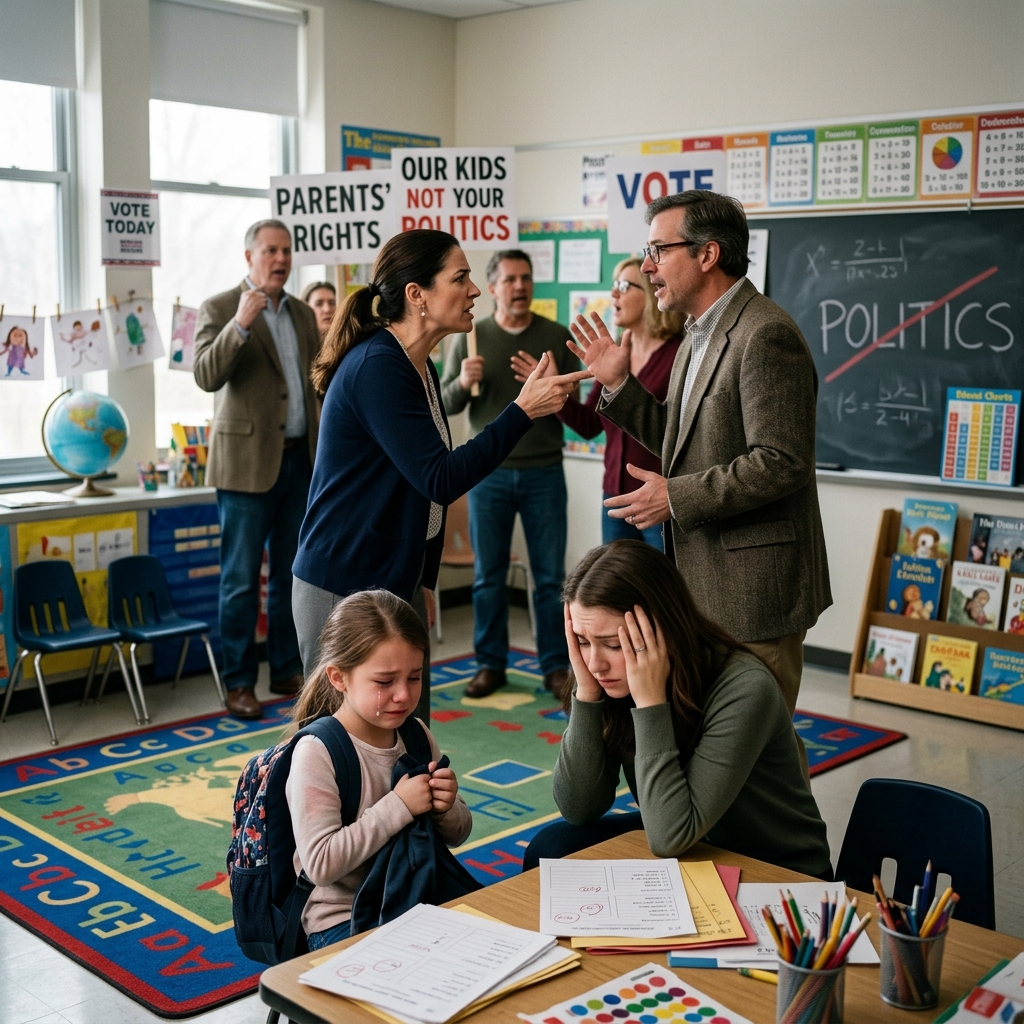
Public education has long been conceptualized as the fundamental bedrock of a functioning democratic society. Historically, classrooms were envisioned as dynamic, intellectually stimulating environments where young minds could safely encounter novel ideas, grapple with complex historical realities, and learn how to navigate a pluralistic society. The classroom is meant to be a laboratory for critical thinking, where students learn not just what to think, but how to think. However, in recent years, a profound and disturbing shift has occurred. A rising tide of ideological conflict has forcibly transformed many local school districts from sanctuaries of learning into volatile arenas for partisan warfare.
When state legislatures, school boards, and vocal activist groups mandate what can and cannot be discussed, the primary victims are the students themselves. The introduction of vague, restrictive legislation targeting educational content—particularly concerning race, gender identity, and sexual orientation—strips away the fundamental right of students to receive a comprehensive and truthful education. Instead of focusing on academic excellence, pedagogical innovation, and student well-being, schools are increasingly forced to dedicate their resources to navigating legal minefields, addressing relentless curriculum challenges, and placating polarized community factions.
The consequences of this ideological warfare extend far beyond a single election cycle or a localized school board dispute. The hyper-politicization of education has initiated a systemic degradation of the learning environment, resulting in pervasive teacher self-censorship, the normalization of book bans, the marginalization of vulnerable youth, and the erosion of civic preparedness. To understand the full scope of this crisis, we must examine exactly what students lose when their education is sacrificed on the altar of political expediency.
The Chilling Effect on Educators and Pedagogy
Teachers and educational professionals are currently positioned on the fraught front lines of this culture war. Across the nation, a proliferation of loosely defined legislative acts and district policies has sought to restrict instruction on “divisive” or “controversial” topics. Because these directives are frequently ambiguous, they create a perilous legal and professional landscape for educators. A teacher facing the threat of disciplinary action, termination, or even the revocation of their teaching license is naturally inclined to adopt an overly cautious approach to their curriculum.
This dynamic has birthed a pervasive culture of self-censorship. According to a comprehensive 2024 survey conducted by the RAND Corporation, 65 percent of K-12 teachers reported limiting their instruction regarding political and social issues. Strikingly, many of these educators admitted to restricting their teaching even in states where no formal legislative bans existed, illustrating the widespread psychological chilling effect of a polarized national climate . When teachers operate in a state of professional anxiety, the quality of education inherently suffers. They may choose to skip critical historical events, gloss over systemic injustices, or actively avoid answering legitimate student questions out of fear that a classroom discussion could be maliciously taken out of context and weaponized against them.
The pedagogical consequences of this self-censorship are severe. Education requires the exploration of nuance and the willingness to confront uncomfortable truths. When educators are forced into a defensive posture, history is inevitably watered down into a sterilized, unquestionable narrative. Literature discussions are stripped of their deeper thematic meanings. The classroom transforms from an interactive space of intellectual discovery into a sterile environment focused on compliance and risk mitigation. Students are thereby deprived of the mentorship of passionate educators who feel empowered to challenge them academically.
The Normalization of Book Bans and the Erasure of Identity
Perhaps the most visible and concerning manifestation of schools becoming political battlegrounds is the dramatic escalation of coordinated book banning campaigns. School libraries have traditionally served as safe havens for independent intellectual exploration, offering students access to a wide spectrum of ideas, cultures, and experiences that might not be covered in the standard curriculum. However, organized activist groups have increasingly utilized administrative loopholes and aggressive intimidation tactics to systematically remove literature from both library shelves and classroom syllabi.
The sheer volume of these restrictions is staggering. During the 2024-2025 academic year alone, PEN America documented over 6,800 instances of book bans across public school districts in the United States . This staggering figure represents an unprecedented assault on the freedom to read. Furthermore, a critical analysis of the targeted materials reveals a distinct and troubling pattern: the vast majority of restricted books are authored by, or prominently feature, LGBTQ+ individuals and people of color. This is not a coincidence, but rather a deliberate effort to erase specific narratives and communities from the educational landscape.
In educational psychology, literature is often described as providing “mirrors” and “windows” for students. Mirrors allow young people to see their own identities and experiences validated and reflected in the world around them, fostering self-esteem and a sense of belonging. Windows offer a glimpse into the lives and cultures of others, cultivating empathy and reducing prejudice. When schools capitulate to political pressure and ban diverse literature, they shatter these mirrors and board up these windows. Students from marginalized backgrounds receive a clear, devastating message that their stories are inherently controversial, inappropriate, or unworthy of institutional space. Simultaneously, students from majority backgrounds are denied the crucial opportunity to develop empathy and an understanding of a diverse global society.
Marginalizing Vulnerable Youth and Public Health Consequences
The politicization of schools extends far beyond academic restrictions; it directly impacts the psychological safety and physical well-being of students. The introduction of policies that forcibly restrict the discussion of gender identity and sexual orientation—often colloquially referred to as “Don’t Say Gay” laws—serves to actively marginalize LGBTQ+ youth within the very institutions designed to protect and nurture them. These policies mandate the invisibility of an entire demographic, forcing students to hide who they are and instructing teachers to pretend that certain types of families do not exist.
The erasure of identity is not merely an academic concern; it is a profound public health issue. Adolescence is a critical period for identity formation, and peer acceptance and institutional support are vital for healthy psychological development. When a school environment becomes hostile or exclusionary through politically motivated policies, the mental health of vulnerable students rapidly deteriorates. The anxiety and depression resulting from institutional discrimination can severely impede a student’s ability to focus, learn, and thrive academically.
Conversely, data unequivocally demonstrates that inclusive educational environments benefit the entire student body. The Centers for Disease Control and Prevention (CDC) report that schools implementing LGBTQ+-supportive policies and practices see significant reductions in emotional distress, incidents of violence, and suicidal ideation . Crucially, the CDC notes that these positive outcomes are not limited to LGBTQ+ students; heterosexual students also experience improved mental health and safety in inclusive, affirming school environments . By turning schools into ideological battlegrounds and enacting exclusionary policies, political actors are actively compromising the mental health and physical safety of an entire generation of young people.
The Erosion of Civic Preparedness and Democratic Engagement
The ultimate purpose of the American public education system is to prepare young people for active, informed participation in a democratic society. Democracy is inherently messy; it requires citizens to engage with competing viewpoints, evaluate complex evidence, deliberate civilly with those they disagree with, and reach informed compromises. When schools become politically sanitized environments where only majority-approved narratives are permitted, they fundamentally fail in their civic mission.
A curriculum that avoids “divisive” concepts such as the history of slavery, systemic racism, the civil rights movement, or contemporary social justice struggles leaves students woefully unprepared to understand the modern world. Without a comprehensive understanding of how historical injustices shape present-day realities, future voters and leaders will lack the context necessary to solve complex societal problems. We are raising a generation in an artificial echo chamber, unequipped with the intellectual resilience required to tolerate discomfort or engage in constructive debate.
Furthermore, the spectacle of adults engaging in vitriolic attacks at school board meetings, banning books, and intimidating educators teaches students a dangerous lesson about civic engagement. It models a version of democracy defined by hostility, censorship, and the subjugation of minority rights to majority demands. If we want students to value free speech, respect diversity, and uphold democratic norms, we must fiercely protect their right to experience these values in action within their own schools.
Reclaiming the Educational Landscape
The current trajectory of educational censorship is alarming, but it is not irreversible. Reclaiming public schools as centers of robust inquiry and inclusive learning requires a concerted, multi-faceted effort from all stakeholders invested in the future of democratic education. Communities must actively push back against the vocal minority seeking to impose a narrow ideological framework onto public institutions.
- Community Mobilization: Parents, students, and community members must attend school board meetings, ask critical questions, and demand transparency regarding curriculum changes and book removal processes. Consistent, organized presence is vital to counterbalancing aggressive censorship campaigns.
- Supporting Educators: Teachers need visible and vocal backing from the community. Establishing networks of support can help alleviate the isolation and fear driving self-censorship. School administrators must also be held accountable for defending their staff against unwarranted political attacks.
- Electoral Participation: School board elections, which traditionally suffer from low voter turnout, have become ground zero for educational policy. Citizens must recognize the profound impact of these local elections and vote for candidates committed to academic freedom, inclusive environments, and the First Amendment rights of students.
- Legal Advocacy: When administrative and electoral avenues fail, legal challenges remain a critical tool. Civil liberties organizations continually rely on the judicial system to strike down unconstitutional bans and vindicate the rights of students to access information.
Schools belong to the students, not to political operatives seeking to score partisan points. The future of our democracy depends heavily on our collective willingness to defend the classroom as a space of open inquiry, diverse representation, and intellectual courage. When we allow schools to become battlegrounds, it is the students who suffer the casualties—losing their right to learn, to see themselves in the world, and to prepare for the complexities of adult citizenship.
Frequently Asked Questions
Why are book bans considered harmful to a student’s education?
Book bans limit a student’s access to a diverse range of perspectives, cultures, and ideas. This restriction hinders the development of critical thinking, empathy, and a comprehensive understanding of the world. For marginalized students, banning books that reflect their identities can lead to feelings of isolation and lowered self-worth.
What is teacher self-censorship, and why does it happen?
Teacher self-censorship occurs when educators voluntarily restrict or alter their curriculum to avoid discussing topics deemed “controversial,” even if those topics are academically relevant. This typically happens out of fear of professional retaliation, parental backlash, or legal consequences resulting from vaguely worded state laws or district policies.
How do inclusive school policies affect the student body as a whole?
Data from public health organizations indicates that inclusive policies, such as those supporting LGBTQ+ students, improve the overall school climate. These environments correlate with lower rates of emotional distress, decreased violence, and reduced suicidal ideation for all students, demonstrating that a supportive culture benefits everyone.
What role does the First Amendment play in public schools?
The First Amendment protects the rights of students to receive information and freely express themselves, within the boundaries of a functioning educational environment. While school boards have discretion over curricula, the Supreme Court has ruled that they cannot remove books from libraries simply because they dislike the ideas contained within them, as doing so violates students’ First Amendment rights.
References
- Instruction About Social and Political Topics in K-12 Public Schools: Findings from the 2024 State of the American Teacher Survey — RAND Corporation. 2024. https://www.rand.org/pubs/research_reports/RRA134-22.html
- The Normalization of Book Banning — PEN America. 2024-10-01. https://pen.org/report/banned-in-the-usa/
- Inclusive Practices Help All Students Thrive | Safe Supportive Environments — Centers for Disease Control and Prevention (CDC). 2024-11-22. https://www.cdc.gov/healthyyouth/safe-supportive-environments/inclusive-practices.htm
Similar Articles








Read full bio of Sneha Tete




