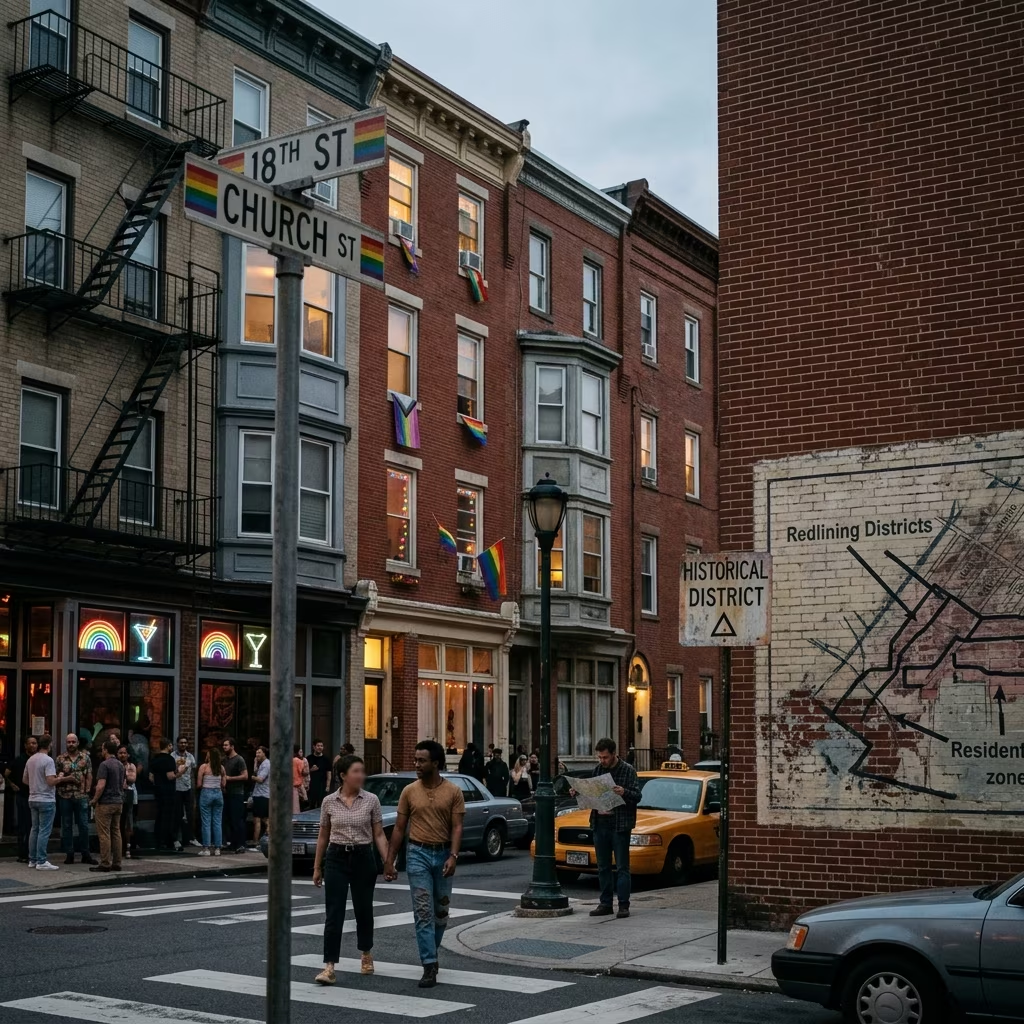
When walking down the vibrant, rainbow-lined streets of iconic districts like San Francisco’s Castro, Chicago’s Northalsted, or New York’s Greenwich Village, it is incredibly easy to assume these spaces were forged solely through a triumphant fight for LGBTQ+ visibility and pride. They are globally recognized as beacons of queer liberation, cultural celebration, and community solidarity. However, beneath the bustling nightlife, historic storefronts, and commemorative plaques lies a much darker, heavily systemic blueprint. The true origins of America’s renowned LGBTQ+ enclaves are inextricably linked to discriminatory urban planning, mortgage denial, and the institutionalized racism of the twentieth century. To understand how the modern ‘gayborhood’ came to be, we must look past the colorful celebrations and examine the rigid geographic fault lines created by government-sanctioned housing segregation. It is a complex story of how marginalized communities navigated a hostile landscape, and how the intersections of race, privilege, and heteronormativity dictated the literal boundaries of queer existence in America.
The Illusion of the American Dream: Redlining and the Nuclear Family Ideal
To fully grasp the geographic distribution of queer communities today, one must first examine the deeply exclusionary nature of the twentieth-century American housing market. For decades, the idealized concept of the ‘American Dream’—specifically the acquisition of a suburban home—was aggressively gatekept by banks, real estate agents, and federal government entities. The most desired demographic for mortgage lenders was the married, heterosexual, white family. Anyone falling outside of this rigid, puritanical societal construct was deemed a severe financial liability and an undesirable neighbor.
During the throes of the Great Depression, the federal government established the Home Owners’ Loan Corporation (HOLC) in an attempt to stabilize the crashing housing market. However, HOLC introduced a color-coded appraisal system that permanently scarred the American socio-economic landscape. Neighborhoods inhabited largely by Black, immigrant, and low-income populations were outlined in red ink—a practice that became universally known as redlining. This red ink signaled to banks and lenders that these areas were ‘hazardous’ for financial investment. Consequently, securing a home loan or funding for business development in these districts became practically impossible, suffocating local economies and ensuring a cycle of chronic municipal disinvestment and urban decay.
Simultaneously, lending institutions heavily scrutinized single adults, divorcees, and same-sex companions. Unmarried individuals, regardless of their racial background, faced steep, often insurmountable barriers to acquiring property. For the LGBTQ+ community, who could not legally marry and often lived unconventional domestic lives out of necessity, accessing the emerging mainstream housing boom was virtually out of the question. The nuclear family was not just a cultural expectation; it was a rigid economic prerequisite for housing stability.
The Intersection of White Privilege and Queer Marginalization
Following the conclusion of World War II, the United States experienced a massive expansion of suburban housing, largely fueled by the benefits of the GI Bill. These sprawling, idyllic new developments were fiercely guarded by restrictive covenants—legal clauses written into property deeds that explicitly banned people of color from purchasing or renting homes in the area. While millions of white veterans successfully utilized these government benefits to build generational wealth and flee the cities, white queer men found themselves navigating a uniquely paradoxical position in the socio-economic hierarchy.
These individuals possessed the distinct, systemic advantage of whiteness, shielding them from the brutal racial covenants that locked Black Americans completely out of the mainstream housing market. However, their lack of a traditional, heterosexual nuclear family meant they were frequently rejected by the conservative standards of suburban neighborhood associations and suspicious lenders. Driven out of the suburban idyll by intense heteronormative pressures, but empowered by their racial privilege and relative economic mobility, many white gay men gravitated back toward the urban core.
They often settled in the exact inner-city neighborhoods that had been abandoned by the phenomenon of white flight and subsequently redlined by the federal government. These areas, characterized by depressed property values, absentee landlords, and a lack of municipal investment, paradoxically provided exactly what this marginalized group needed: affordable housing and a crucial layer of societal anonymity.
- Affordable Real Estate: Depressed property values in redlined, disinvested districts allowed marginalized sexual minorities to pool their resources, rent cheaply, and eventually buy homes collectively without arousing significant financial scrutiny.
- Urban Anonymity: The density, chaos, and relative neglect of the inner city provided necessary cover from the intense, suffocating social surveillance typical of mid-century suburban life.
- Exclusionary Mortgage Practices: The absolute refusal of banks to lend to unmarried same-sex companions in affluent, white-picket-fence areas forcefully redirected queer individuals to seek alternative, less regulated housing markets.
The Forging of the Modern Gayborhood
As more white gay men and lesbians migrated to these specific urban centers, they began to establish distinct, geographically concentrated communities that would alter the fabric of the cities. Neighborhoods that were previously defined by municipal neglect and crumbling infrastructure began to experience a profound cultural transformation. Queer residents invested their available capital into opening gay-owned and operated bars, independent bookstores, underground health clinics, and grassroots community centers.
These establishments quickly became the lifeblood of the modern gayborhood. They were far more than mere commercial enterprises; they were critical sanctuaries where individuals could socialize freely, organize politically without fear of immediate police raids, and build a cohesive, resilient cultural identity. The spatial concentration of these venues allowed the LGBTQ+ community to harness immense local political power. By clustering densely in specific voting districts, queer residents were eventually able to elect sympathetic local officials and successfully lobby for early, localized anti-discrimination ordinances.
The visibility of these neighborhoods ultimately played a pivotal role in the momentum of the gay liberation movement. Yet, as we celebrate these historic enclaves, it remains absolutely crucial to recognize that the physical boundaries of these havens were not chosen purely out of architectural preference. They were largely predetermined by the racial segregation lines drawn decades earlier by federal appraisers and racist urban planners.
Erasure of Black Queer Communities and Double Marginalization
The prevailing historical narrative of the traditional gayborhood frequently, and problematically, centers on affluent, white, cisgender men. This narrow focus inadvertently erases the profound, enduring history of queer people of color. Long before the establishment of highly commercialized queer districts in the late twentieth century, Black LGBTQ+ communities were carving out their own vibrant, radical spaces, expertly navigating the intersecting, brutal realities of both anti-Black racism and systemic homophobia.
In Washington D.C., for instance, historical records show that formerly enslaved individuals, such as the pioneering William Dorsey Swann, were organizing elaborate drag balls as early as the 1880s. These events bravely defied the strict racial, gender, and moral codes of the era, establishing a foundation of queer resilience. Similarly, the legendary Harlem Renaissance of the 1920s was deeply influenced by openly queer Black artists, poets, and musicians who cultivated a thriving, intersectional subculture that revolutionized American art.
However, when white queer populations began migrating en masse into inner-city neighborhoods post-WWII, they often inadvertently—and sometimes intentionally—displaced the existing residents of color. As these newly established gayborhoods gentrified and property values inevitably rose, Black and immigrant families, alongside queer people of color, were systematically priced out of the very neighborhoods they had long called home. This gentrification dynamic created a harsh double marginalization for Black queer individuals: they found themselves actively excluded from white-dominated gayborhoods due to pervasive racism, and simultaneously excluded from broader American society due to both their race and their sexuality.
The Legislative Landscape: The Fair Housing Act and its Glaring Omissions
The passage of the federal Fair Housing Act in 1968 marked a monumental and long-overdue step in the American civil rights movement. The landmark legislation legally prohibited discrimination in the sale, rental, and financing of housing based on race, religion, national origin, and eventually, sex. However, this transformative law possessed a glaring, devastating omission: it offered absolutely no federal protection for individuals based on sexual orientation or gender identity.
Because the federal law did not explicitly protect them, LGBTQ+ individuals remained highly vulnerable to sudden, unjustified evictions, discriminatory lending practices, and overt landlord harassment for several decades following the act’s passage. Mortgage lenders could legally deny loans to same-sex couples simply for being queer, and property managers could outright refuse to rent an apartment to anyone they suspected of being a sexual minority.
This ongoing legal vulnerability forced queer communities to rely even more heavily on their established urban enclaves. The gayborhood was not merely a cultural destination; it was a necessary defensive mechanism against a profoundly hostile real estate market. It wasn’t until much later, through an exhausting, patchwork evolution of local city ordinances, progressive state laws, and eventual, modernized interpretations of the Fair Housing Act by the Department of Housing and Urban Development (HUD), that the LGBTQ+ community began to secure standardized housing rights.
Historical Housing Policies and Their LGBTQ+ Impact
| Policy / Era | Target Demographic | Impact on LGBTQ+ Communities |
|---|---|---|
| 1930s HOLC Redlining | Nonwhite and immigrant populations | Devalued urban cores, later making them affordable for marginalized white queer folks to purchase. |
| Post-WWII GI Bill & Covenants | White military veterans & Nuclear Families | Suburban expansion was aggressively gatekept by heteronormative and racist covenants, pushing single gays back to the cities. |
| 1968 Fair Housing Act | Race, Religion, National Origin | Left queer people legally unprotected from eviction and mortgage denial for decades, forcing reliance on enclaves. |
Modern Implications: Gentrification, Pricing Out, and Ongoing Disparities
Today, the landscape of LGBTQ+ housing has drastically shifted, yet deep, systemic inequalities remain deeply entrenched. Many of the historic gayborhoods that once served as gritty, affordable sanctuaries have become some of the most expensive and exclusive real estate markets in the nation. Rampant gentrification has transformed these radical, working-class enclaves into heavily commercialized, high-rent districts, effectively displacing the younger, diverse, and less affluent generations of queer individuals who need them the most.
The soaring cost of living in these historic areas shatters the harmful myth that the LGBTQ+ community is universally affluent and financially secure. According to a comprehensive 2023 analysis by the Urban Institute, the homeownership rate among LGBTQ+ individuals is starkly lower—by approximately 20 percentage points—than that of their cisgender and heterosexual peers. This massive wealth and ownership gap underscores the lasting generational impact of historic mortgage denial and family estrangement.
Furthermore, transgender and gender-nonconforming individuals face even more severe housing instability today. Transgender Americans experience disproportionately high rates of homelessness and continue to encounter overt discrimination when interacting with landlords, rental agencies, and emergency homeless shelters. The legacy of twentieth-century segregation and institutional prejudice continues to echo loudly through the modern housing market, proving that the fight for equitable, safe living conditions is far from over.
Frequently Asked Questions (FAQs)
What is redlining and how did it influence LGBTQ+ neighborhoods?
Redlining was a highly discriminatory government and banking practice originating in the 1930s where minority and low-income neighborhoods were deemed ‘hazardous’ for financial investment. Denied access to suburban mortgages due to their lack of a traditional heterosexual marriage, many white queer individuals utilized their racial privilege to purchase affordable property in these underfunded, redlined urban areas, inadvertently laying the geographic groundwork for America’s most famous gayborhoods.
Did the Fair Housing Act of 1968 protect the LGBTQ+ community?
No. Upon its initial historic passage, the Fair Housing Act only outlawed housing discrimination based on race, color, religion, and national origin. It did not include protections for sexual orientation or gender identity. This massive legal loophole forced the LGBTQ+ community to endure decades of ongoing housing discrimination, making self-segregation into urban enclaves a vital matter of survival, community support, and physical safety.
Why are historic gay enclaves often associated predominantly with white men?
Historically, white gay men faced intense homophobia but still benefited heavily from systemic white privilege. This inherent advantage allowed them greater access to capital, steady employment, and the ability to purchase property in urban centers compared to queer people of color. As these white men invested in specific neighborhoods, property values skyrocketed, subsequently gentrifying the areas and pricing out the existing Black, immigrant, and queer communities of color who had originally populated those spaces.
Does housing discrimination against LGBTQ+ people still exist today?
Yes, absolutely. While federal interpretations and localized state laws have expanded vital protections in recent years, systemic barriers heavily remain. Extensive research shows that LGBTQ+ individuals—particularly transgender people and queer people of color—continue to face significantly higher rates of housing denial, eviction, homelessness, and a persistent, massive gap in homeownership rates compared to the broader cisgender, heterosexual population.
Conclusion: Acknowledging a Complex Heritage
The story of America’s gayborhoods is undeniably one of remarkable resilience, cultural triumph, and the fierce claiming of space in a society that demanded invisibility. However, it is fundamentally impossible to untangle this inspiring history from the dark, oppressive legacy of American housing segregation. The very streets that proudly host modern pride parades and rainbow crosswalks were historically shaped by exclusionary zoning, discriminatory lending, and the complex intersectional forces of privilege and marginalization. By actively acknowledging that these vibrant sanctuaries were built directly along the fault lines of systemic racism and heteronormative policy, we gain a much more profound and honest understanding of our urban history. Moving forward, the fight for comprehensive LGBTQ+ equality must remain deeply committed to dismantling the ongoing housing disparities that continue to push the most vulnerable members of the community into the margins.
References
- Housing Segregation and Redlining in America: A Short History — NPR Code Switch. 2018-04-11. https://www.npr.org/sections/codeswitch/2018/04/11/601494521/video-housing-segregation-in-everything
- Why Are There Gaps in LGBTQ+ Homeownership? — Urban Institute. 2023-11-08. https://www.urban.org/research/publication/why-are-there-gaps-lgbtq-homeownership
- Mapping Inequality: Redlining in New Deal America — University of Richmond Digital Scholarship Lab. 2023-01-01. https://dsl.richmond.edu/panorama/redlining/
- Housing Discrimination Under the Fair Housing Act — U.S. Department of Housing and Urban Development (HUD). 2023-06-01. https://www.hud.gov/program_offices/fair_housing_equal_opp/fair_housing_act_overview