
Mass Deportation and the Erosion of Civil Liberties
An analysis of wartime laws, militarized ICE enforcement, and civil rights.
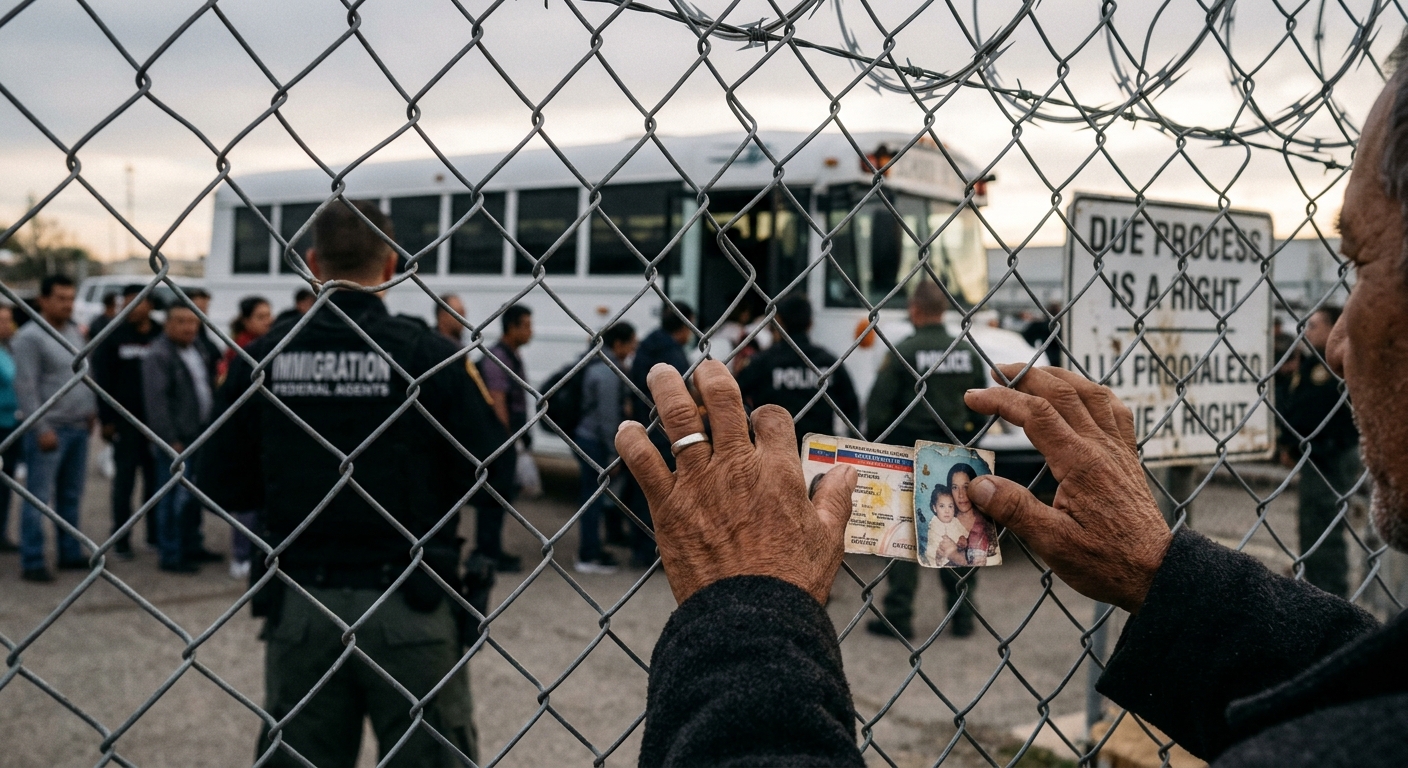
The Paradigm Shift in Immigration Enforcement
The paradigm of American immigration enforcement has shifted dramatically, departing from routine border management to enter an era defined by aggressive executive action and domestic militarization. As federal authorities scale up operations to realize a sweeping mass deportation agenda, long-standing civil liberties and legal protections face unprecedented challenges. Policies initially framed as measures to secure national sovereignty have expanded into systemic initiatives that affect not only undocumented individuals but also legal permanent residents and U.S. citizens.
This transformation has shocked legal experts, civil rights organizations, and local community advocates. The velocity and scale of these federal strategies have created an environment of heightened fear and legal instability. To understand the gravity of these developments, it is essential to look closely at the operational changes within federal immigration agencies, the historical laws being adapted for modern use, and the personal consequences revealed in recent legal battles. By analyzing these interlocking trends, we can observe how the current administration’s immigration agenda threatens the core principles of due process and the rule of law.
The Corporatization of Deportation: Logistics and the Business of Removal
A critical driver of this enforcement acceleration is the systematic adoption of a corporate framework to manage federal expulsions. Rather than treating the Department of Homeland Security (DHS) as a public service agency constrained by regulatory protocols and human rights standards, leadership has championed a business-oriented model. This approach was exemplified when acting Immigration and Customs Enforcement (ICE) Director Todd Lyons described a vision for deportations that mimics the private sector . Lyons advocated for running the removal pipeline ‘like Amazon Prime, but with human beings,’ prioritizing automation, speed, and volume in the transportation and exile of individuals .
To support this rapid transit system, federal agencies have turned to accelerated infrastructure projects. Recognizing that traditional public construction requires public notice, community consultations, and thorough environmental reviews, ICE has increasingly relied on military procurement mechanisms to build and scale detention facilities . This process allows the government to bypass standard transparency mandates and quickly convert existing municipal jails and empty private facilities into high-capacity federal holding camps. Private prison operators have quickly capitalized on these military-style acquisitions, leasing their holdings to the government to secure substantial profits . However, this rapid, secretive scaling has incurred massive financial costs. By mid-2025, ICE’s operational expenditures had exceeded its congressionally authorized budget by over $1 billion, illustrating the steep price tag associated with prioritizing corporate-style mass incarceration over systematic legal processing .
Resurrecting Historical War Powers: Legal Pretexts and Global Carceral Networks
To execute rapid expulsions without the bottleneck of immigration court backlogs, the executive branch has relied on controversial historical legal mechanisms. Chief among these is the Alien Enemies Act of 1798. Historically, this wartime statute has been reserved for periods of formally declared military conflicts and was famously invoked during World War II to authorize the wrongful internment of thousands of Japanese, German, and Italian Americans. By applying this centuries-old act outside the context of a declared war, the administration has attempted to claim unilateral executive authority to arrest and deport individuals suspected of gang activity or national security risks, completely bypassing standard due process hearings and access to legal representation .
This reliance on wartime pretexts has facilitated the development of an offshore carceral network. Rather than deporting individuals back to their home countries through standard administrative channels, the government has forged agreements to send migrants to specialized foreign facilities. A primary destination is the Terrorism Confinement Center (CECOT) in El Salvador, a maximum-security prison notorious for extreme conditions and human rights violations . By routing deportees to CECOT, the administration places them beyond the reach of the U.S. judicial system, rendering it nearly impossible for domestic lawyers to challenge their detention . Additionally, federal planners have explored using the military prison at Guantanamo Bay for civil immigration holding and have attempted to deport individuals to highly unstable nations, such as South Sudan or Libya, where they face severe risks of violence and abuse .
Human Consequences: Key Case Studies in Federal Overreach
The operational reality of these policies is best illustrated by the legal battles of individuals swept up in this expanded enforcement machinery. Two landmark cases show the systemic errors and ideological motives driving federal actions.
The Mistaken Deportation of Kilmar Ábrego García
Kilmar Ábrego García, a Salvadoran husband and father residing legally in Maryland, fell victim to the system’s capacity for catastrophic administrative errors. Although he possessed a valid withholding of removal order granted by an immigration judge due to safety concerns in El Salvador, Ábrego García was detained during a routine ICE appointment and deported to the CECOT prison in El Salvador . Although federal officials admitted his deportation was a direct administrative error, the government resisted subsequent federal court orders demanding his return . When persistent litigation finally forced the administration to bring him back to Maryland, federal prosecutors retaliated by filing criminal smuggling charges and subsequently attempting to deport him to Uganda—a country where he had no family ties, language skills, or cultural connections . His ordeal highlights how administrative actions can completely disregard established legal rights.
Ideological Targeting: The Detention of Mahmoud Khalil
The case of Mahmoud Khalil demonstrates the weaponization of immigration enforcement to suppress political expression and domestic dissent. A lawful permanent resident and graduate of Columbia University, Khalil was a prominent advocate for Palestinian rights. In March 2025, plainclothes ICE agents arrested him from his residence without a warrant, citing ‘foreign policy grounds’ to justify revoking his permanent resident status . He was quickly transferred to a remote detention center in Louisiana, separating him from his legal representatives and pregnant wife . Legal filings later revealed that the Department of Justice fast-tracked his deportation appeal through the Board of Immigration Appeals in just nine days, attempting to secure a broad legal precedent that would permit the deporting of non-citizens based purely on their political speech . This direct targeting of an activist represents an assault on the First Amendment, showing how immigration laws can be leveraged to silence protected public discourse.
The Administrative Trap of Universal Registration
Beyond targeted enforcement, the federal government has introduced sweeping structural requirements that create legal traps for millions of non-citizens. A central pillar of this effort is a nationwide mandatory registration policy. Under this system, all non-citizens—including children as young as 14—must periodically register their physical location and biometric details directly at ICE offices .
This registration requirement places immigrant families in an impossible ‘Catch-22.’ If they comply with the law and report to ICE facilities to register, they risk being immediately taken into custody and deported, regardless of whether they have active legal cases or strong community ties. On the other hand, if they fail to register out of fear for their safety, they face federal criminal prosecution, which automatically disqualifies them from seeking future pathways to legal residency . This system effectively criminalizes ordinary administrative status, transforming a basic civil registration process into a direct tool for mass detention and deportation. By creating an environment where compliance and non-compliance both carry severe penalties, the policy leaves millions with no safe legal recourse.
The Militarization of Communities and the Economic Burden
The physical scaling of these deportation operations has led to an unprecedented militarization of local communities across the country. Once restricted primarily to immediate border regions, high-profile enforcement actions have become a common sight in deep-interior metropolitan areas. The administration has repeatedly proposed deploying National Guard troops to patrol suburban neighborhoods, establish roadblocks, and search for suspected undocumented residents . Turning military forces inward to act as domestic police officers represents a profound shift in American civil governance, eroding the traditional boundary between military action and civil law enforcement.
This militarization is further expanded by the 287(g) program, which deputizes local police officers to function as federal immigration agents . This arrangement compromises public safety by making immigrant communities deeply fearful of local law enforcement. As a result, victims of crimes or witnesses of violence are far less likely to report incidents, leaving entire neighborhoods more vulnerable.
This aggressive approach also carries an immense financial cost. Operating an extensive, militarized detention and logistics system requires vast public funding. By mid-2025, ICE had already run more than $1 billion over its authorized budget, requiring emergency capital injections to sustain its private prison contracts and charter flights . This demonstrates the unsustainable economic reality of mass deportation, which diverts essential taxpayer resources away from domestic infrastructure, education, and social programs in order to fund punitive incarceration.
A Comparative Overview of Contemporary Policy Shifts
To understand how current policies depart from traditional immigration enforcement, we can analyze several key areas of change:
| Enforcement Area | Traditional Administrative Standard | Contemporary Policy Shift | Key Civil Liberties Concern |
|---|---|---|---|
| Infrastructure Acquisition | Transparent public contracting with community impact reviews. | Use of military procurement tools to bypass local oversight . | Erosion of local governance and lack of environmental/fiscal accountability. |
| Legal Pretext for Removal | Civil immigration court proceedings with judicial oversight. | Invocation of the wartime Alien Enemies Act of 1798 . | Complete denial of due process and right to legal counsel. |
| Enforcement Personnel | Specialized civil federal agents (ICE and Border Patrol). | Deployment of domestic National Guard and deputized local police [1, 2]. | Militarization of civil spaces and profiling of minority communities. |
| Compliance Mechanisms | Voluntary administrative filings and scheduled court dates. | Mandatory biometric registration for all non-citizens aged 14+ . | Creation of a legal trap where compliance leads to detention. |
Frequently Asked Questions
What is the Alien Enemies Act, and how is it used today?
The Alien Enemies Act of 1798 is a wartime statute that gives the president unilateral authority to detain and deport non-citizens from a hostile nation during a declared war. Today, the administration is invoking this historical law in peacetime to bypass immigration courts and execute rapid deportations without due process .
Can legal permanent residents be targeted under these new immigration policies?
Yes. As demonstrated by the case of Mahmoud Khalil, the administration has used broad ‘foreign policy grounds’ to revoke permanent residency and detain lawful permanent residents who engage in controversial political speech, raising major First Amendment concerns .
How does the 287(g) program affect local communities?
The 287(g) program allows the federal government to deputize local police officers to act as federal immigration agents . This blurs the line between local policing and immigration enforcement, making community members fearful of reporting crimes or cooperating with local investigations, which can compromise overall public safety.
How is the government funding this massive deportation initiative?
The administration is funding these operations through massive budget reallocations and emergency requests, which has resulted in ICE running more than $1 billion over its authorized budget due to high expenditures on private prisons and transport services .
References
- Ice director wants to run deportations like ‘Amazon Prime for human beings’ — The Guardian. 2025-04-09. https://www.theguardian.com/us-news/2025/apr/09/ice-todd-lyons-deporation-amazon
- July 1, 2025 Congressional Letter on DHS and ICE Detention Centers — U.S. House of Representatives. 2025-07-01. https://mccollum.house.gov/sites/evo-subsites/mccollum.house.gov/files/evo-media-document/Letter%20to%20DHS%20on%20ICE%20detention%20expansion%207.1.25.pdf
- After New Evidence of DOJ Misconduct, Mahmoud Khalil Calls On Board of Immigration Appeals to Terminate Case — American Civil Liberties Union. 2026-05-15. https://www.aclu.org/press-releases/after-new-evidence-of-doj-misconduct-mahmoud-khalil-calls-on-board-of-immigration-appeals-to-terminate-case
- Administrative Errors: Kilmar Ábrego García and the US-El Salvador Carceral Archipelago — Taylor & Francis / Journal of Ethnic and Migration Studies. 2026-03-19. https://www.tandfonline.com/doi/full/10.1080/1369183X.2026.271109
Similar Articles








Read full bio of medha deb


