Defending Immigrant Rights: Free Speech & Community Action
Explore the intersection of immigrant rights, free speech, and local allyship.
Introduction: The Ongoing Struggle for Immigrant Rights
The United States has long been romanticized as a beacon of hope, a sanctuary for those fleeing persecution and seeking a brighter future. However, for millions of immigrants currently navigating the complex and often unforgiving landscape of the U.S. immigration system, this ideal sharply contrasts with their lived reality. The pursuit of safety and opportunity is frequently met with systemic hurdles, pervasive fear, and the constant threat of enforcement actions. As the national discourse surrounding immigration becomes increasingly polarized, the fundamental rights of marginalized communities are continuously tested on a daily basis.
At the heart of this struggle is the critical intersection of civil liberties and immigration status. While the Constitution ostensibly guarantees certain unalienable rights to all individuals within the country’s borders, the operational execution of immigration law often leaves non-citizens vulnerable to exploitation and silencing. Understanding the harsh realities of immigration enforcement, the profound psychological toll it extracts on families, and the crucial importance of protecting free expression is the absolute first step toward meaningful advocacy. This comprehensive guide explores the systemic challenges embedded in the immigration apparatus and outlines concrete, actionable strategies for individuals and communities to stand in solidarity with immigrants.
The Crucial Intersection of Free Speech and Immigration
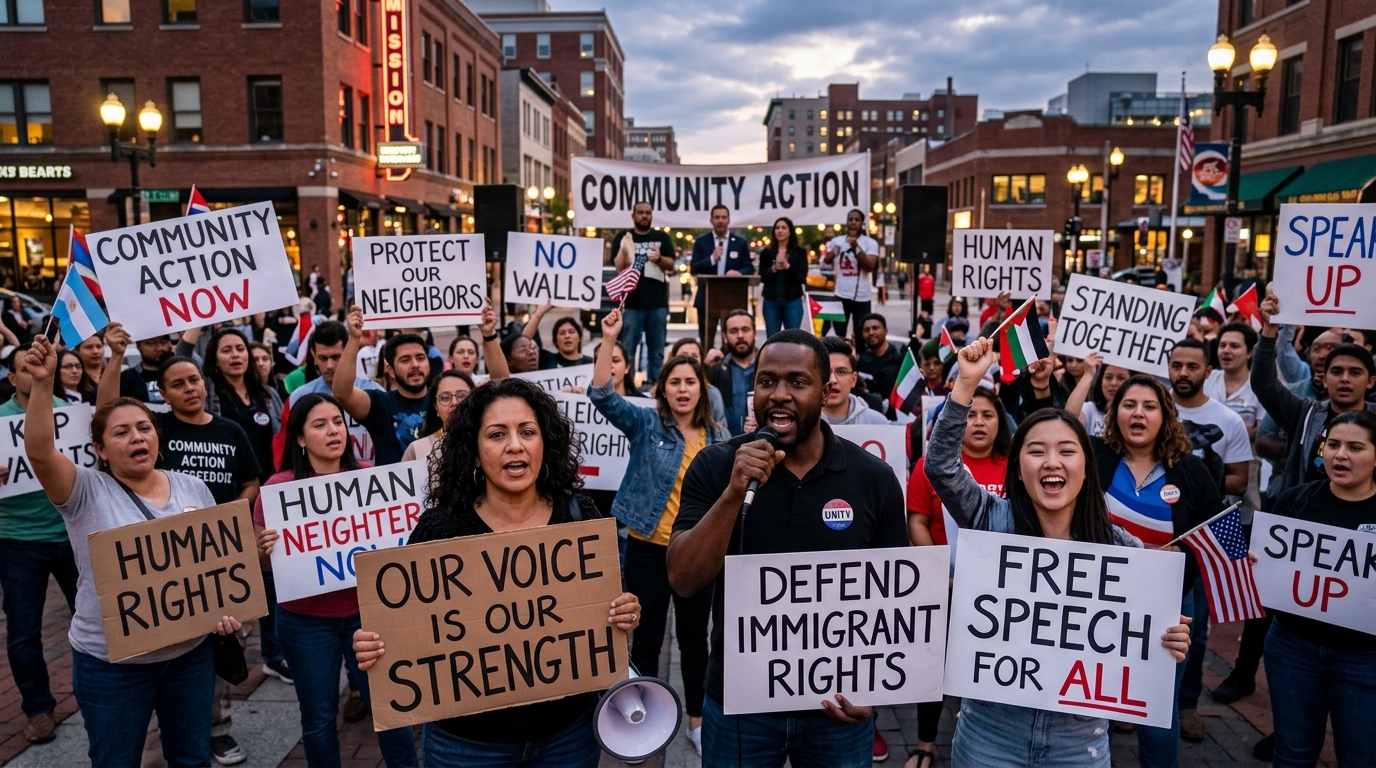
The First Amendment of the United States Constitution is a foundational cornerstone of American democracy, explicitly designed to protect the freedom of speech, assembly, and the press from government overreach. Crucially, legal precedents established by the Supreme Court have consistently affirmed that these constitutional protections extend to all individuals residing within the United States, completely regardless of their citizenship or formal immigration status. In theory, an undocumented immigrant or a temporary visa holder possesses the exact same legal right to express political dissent, participate in peaceful protests, and publish their opinions as a natural-born citizen.
However, the practical application of these rights on the ground paints a vastly different and far more intimidating picture. The sheer discretionary power wielded by federal immigration enforcement agencies frequently creates a massive chilling effect on free speech. When immigrants choose to raise their voices—whether to expose unsafe labor conditions, advocate for human rights, or simply share their personal narratives in public forums—they often face the explicit or implicit threat of retaliatory enforcement. There is a well-documented and troubling history of federal agencies utilizing surveillance, targeted physical arrests, and expedited deportation proceedings as direct punitive measures against immigrant activists and community organizers who dare to speak out.
This weaponization of precarious immigration status to suppress political dissent not only violates the core principles of the First Amendment but also significantly weakens the democratic fabric of the entire nation. When vulnerable populations are silenced through institutional fear, critical perspectives on policy, fairness, and justice are lost from the public square. Defending the free speech rights of immigrants is therefore not merely a matter of strict legal compliance; it is an essential prerequisite for maintaining a functioning, inclusive democracy where all residents can safely advocate for their own well-being and the well-being of their communities.
The Expanding Apparatus of Immigration Detention
To fully grasp the magnitude of the challenges facing immigrant communities today, one must understand the sheer scale, scope, and nature of the U.S. immigration detention system. Operating as the largest network of its kind anywhere in the world, the system is a sprawling, multibillion-dollar web of federal processing centers, localized county jails, and private, for-profit prisons. Over the past decade, this apparatus has expanded dramatically, fueled by massive congressional budgets and aggressive executive enforcement mandates. On any given day, tens of thousands of individuals—including lawful asylum seekers, long-term community residents, and undocumented essential workers—are held in indefinite administrative confinement.
One of the most concerning structural aspects of this expansive system is its heavy, systemic reliance on privatization. An overwhelming majority of detained immigrants are housed in facilities managed by corporate, private prison entities. This profit-driven model inherently incentivizes mass incarceration and aggressive cost-cutting measures, which frequently and predictably come at the direct expense of human dignity, health, and physical safety. Numerous independent investigations and internal government oversight reports have detailed thoroughly substandard living conditions within these facilities. Detainees frequently and consistently report harrowing instances of severe medical neglect, highly inadequate nutrition, the arbitrary and punitive use of solitary confinement, and a near-total lack of access to critical legal counsel.
Adding to the severe crisis is the pervasive lack of transparency surrounding day-to-day detention operations. Independent human rights watchdogs and academic researchers frequently encounter systemic bureaucratic barriers when attempting to obtain accurate, timely data regarding facility conditions, detainee transfer patterns, and overall health outcomes. This institutional opacity allows severe abuses to go unchecked and effectively shields private contractors from necessary public accountability. Furthermore, the geographic distribution of these facilities further complicates the ability of detained individuals to secure any outside support. Many large detention centers are purposely located in remote, rural areas, strategically isolating immigrants from their families, established support networks, and pro bono legal advocacy groups. The table below illustrates the historical concentration of detained populations across key states, underscoring the vast physical reach of the enforcement network.
| State | Estimated Daily Detained Population | Primary Facility Characteristics |
|---|---|---|
| Texas | Over 9,000 individuals | High concentration of large, privately operated corporate centers. |
| Louisiana | Over 4,000 individuals | Extensive use of rural county jails repurposed as private prisons. |
| California | Over 1,700 individuals | Private facilities operating under increasing state regulatory scrutiny. |
| Georgia | Over 1,500 individuals | Large-scale, for-profit detention complexes with high transfer rates. |
| Arizona | Over 1,500 individuals | A complex mix of government-owned and privately contracted sites. |
The Profound Impact on Mental Health and Child Development
Beyond the formidable structural and legal concerns, the daily human cost of aggressive immigration enforcement is absolutely staggering. The psychological toll of living under the constant, looming threat of deportation permeates entire communities, leading to elevated levels of chronic anxiety and highly toxic stress. This environment of perpetual fear is particularly devastating for developing children and adolescents, whose neurological and emotional development relies fundamentally on environmental stability, physical safety, and unbroken family cohesion.
Interaction with the immigration system—whether through the direct, traumatic experience of being detained or the secondhand trauma of witnessing a parent’s sudden removal—is universally recognized by pediatricians, psychologists, and child development experts as a severe Adverse Childhood Experience (ACE). When children are forcibly separated from their primary caregivers, they are abruptly deprived of the essential, buffering relationships strictly needed to process extreme fear and uncertainty. This prolonged exposure to extreme, unmitigated stress can permanently alter developing brain architecture, leading to long-term cognitive impairments, severe behavioral challenges, and weakened systemic immune responses.
This pervasive anxiety is certainly not limited strictly to those in physical confinement. Recent public health surveys and academic studies indicate that nearly seven in ten undocumented immigrants, along with significant portions of lawfully present non-citizens, live in chronic, daily fear that they or a family member could be unexpectedly detained. This environment of perpetual dread deeply disrupts routine daily life, hindering access to essential preventative healthcare, public education, and necessary social services, as vulnerable individuals may actively avoid public spaces out of a generalized fear of enforcement.
The impact of actual, physical confinement on youth is even more intensely alarming. Systematic medical reviews of mental health outcomes among detained immigrant children consistently reveal profoundly high rates of severe psychiatric distress. A comprehensive clinical meta-analysis indicated that over 40% of children placed in immigration detention exhibit clear symptoms of major depression, while nearly a third meet the rigorous clinical criteria for Post-Traumatic Stress Disorder (PTSD). Medical professionals uniformly agree across the board that there is simply no safe period of detention for a child; even incredibly brief stints in confinement can inflict lasting, irreversible psychological scars. The data underscores an immediate, urgent moral imperative to strictly prioritize community-based alternatives to detention that keep families intact and proactively safeguard the well-being of the next generation.
Actionable Strategies: How We Can All Support Immigrants
While the heavily entrenched, systemic issues within the national immigration apparatus can often feel insurmountable to a single person, collective community action consistently has the power to effect real, meaningful change. Supporting immigrants goes far beyond offering passive sympathy; it strictly requires proactive engagement, continuous self-education, and a firm commitment to actively dismantling oppressive institutional structures. Here are several highly actionable strategies that individuals and grassroots organizations can immediately implement to become effective, reliable allies in the fight for immigrant justice:
- Educate Yourself and Amplify Voices: Begin by deeply educating yourself on the myriad complexities of modern immigration law, the nuanced history of U.S. intervention abroad, and the driving root causes of global migration. Listen to and deliberately amplify the primary narratives of directly impacted individuals. Share thoroughly accurate, fact-checked information within your personal and professional circles to vigorously counter harmful rhetoric and xenophobic stereotypes.
- Financially Support Legal Funds and Advocacy Groups: The federal immigration court system, unlike the criminal justice system, does not guarantee the right to court-appointed counsel. As a direct result, individuals with professional legal representation are significantly more likely to win their complex cases and avoid catastrophic deportation. Donate generously to local mutual aid funds, community bond funds, and established non-profit organizations that specialize in providing free or low-cost legal representation to immigrants.
- Engage in Local Community Support: Offer your personal time, specialized skills, and resources to local grassroots organizations. This can actively include volunteering as a language interpreter or document translator, providing safe transportation to mandatory federal court hearings or local ICE check-ins, or directly assisting newly arrived families in navigating complex social services. Establishing robust, neighborhood-level community defense networks can provide immediate, life-saving protection during localized enforcement raids.
- Advocate for Comprehensive Policy Reform: Use your constitutionally protected civic voice to aggressively pressure local, state, and federal elected representatives. Advocate relentlessly for the total abolition of private, for-profit detention centers, the immediate end of cooperative enforcement agreements between local municipal police and federal immigration agents, and the widespread implementation of humane, community-based alternatives to traditional detention. Demand clear, codified legislative protections for the First Amendment rights of all residents, regardless of status.
- Foster Inclusive and Safe Spaces: Actively ensure that your professional workplace, educational institution, and local community center are structurally welcoming and secure environments. Advocate for internal administrative policies that fiercely protect the digital and physical privacy of immigrant colleagues and students, and work diligently to publicly declare your local institutions as “sanctuary” spaces that explicitly prioritize universal human rights over aggressive, punitive enforcement measures.
Frequently Asked Questions (FAQ)
Do undocumented immigrants possess First Amendment rights?
Yes. The United States Supreme Court has clearly and repeatedly established that the fundamental, foundational rights enshrined in the First Amendment—including the freedom of speech, peaceful assembly, and religious expression—apply fully to everyone residing within the physical borders of the United States, absolutely regardless of their legal immigration or citizenship status. However, actually exercising and enforcing these rights can be practically perilous due to the looming, extralegal threat of retaliatory detention or expedited deportation by federal agencies.
What are the primary humanitarian concerns regarding ICE detention centers?
International human rights organizations, medical professionals, and internal government watchdogs have consistently raised numerous, severe concerns regarding the stark conditions within ICE detention centers. Major, recurring issues include severe and dangerous overcrowding, highly unsanitary living environments, incredibly inadequate access to essential medical and mental health care, the arbitrary and punitive use of prolonged solitary confinement, and the massive, inherent ethical conflict of interest present in privately operated, profit-driven facilities.
How exactly does immigration enforcement affect childhood development?
The constant threat and physical execution of immigration enforcement, particularly forced family separation and physical detention, act as exceptionally severe Adverse Childhood Experiences (ACEs). The resulting chronic toxic stress can severely disrupt foundational neurological development, leading to vastly elevated rates of clinical depression, severe anxiety, PTSD, and long-term behavioral and cognitive challenges. Leading medical experts universally assert that detaining developing children, even for remarkably short durations, is inherently and permanently harmful to their overall health and development.
What precisely is retaliatory deportation?
Retaliatory deportation occurs when federal immigration enforcement agencies specifically target a non-citizen for sudden arrest, prolonged detention, or expedited removal proceedings precisely because that individual courageously exercised their constitutionally protected First Amendment rights—such as publicly protesting, speaking to the media, or organizing labor unions. This deeply unethical practice is heavily criticized by legal scholars as it directly weaponizes the administrative legal system to silence lawful dissent and heavily intimidate marginalized communities.
How can local, everyday communities best protect their immigrant residents?
Local communities can offer robust, immediate protection by establishing well-funded mutual aid networks, continually funding pro bono legal defense and emergency bond funds, and successfully passing local municipal ordinances that strictly limit any cooperation between local city law enforcement and federal immigration authorities. Actively building a culture of deep solidarity and guaranteeing universal access to vital local resources without any regard to immigration status are the most critical components of effective community defense.
Conclusion
The ongoing, multi-generational struggle for fundamental immigrant rights is deeply, inextricably intertwined with the much broader national fight for robust civil liberties, universal human dignity, and the basic integrity of our democratic institutions. The exceptionally harsh daily realities of the sprawling immigration enforcement system—ranging from the unconstitutional suppression of free speech through targeted retaliatory tactics to the profound, irreversible developmental harm inflicted upon forcibly detained children—demand immediate public attention and comprehensive, systemic legislative reform. While the current legal and political landscapes certainly remain incredibly daunting, the immense power of collective, organized community action cannot possibly be understated. By rigorously educating ourselves, providing direct, tangible, and financial support to those most at risk, and fiercely advocating for genuinely humane policies, we can collectively help dismantle oppressive institutional structures. Standing in unwavering solidarity with immigrants is not merely an act of fleeting charity; it is a fundamental, enduring commitment to fiercely upholding the inherent rights, liberties, and unconditional worth of every single human being.
References
- Immigration Detention Statistics: A Retrospective and a Look Forward — TRACreports.org, Syracuse University. 2025-02-21. https://trac.syr.edu/immigration/
- First Amendment Rights of Non-Citizens, Aliens — Free Speech Center at Middle Tennessee State University. 2023-08-10. https://firstamendment.mtsu.edu/article/first-amendment-rights-of-non-citizens-aliens/
- The impact of immigration detention on children’s mental health: systematic review — PubMed Central (PMC). 2023. https://www.ncbi.nlm.nih.gov/pmc/
- Deportation Threatens the Psychological, Physical, and Socioeconomic Well-being of Children and Families — Society for Research in Child Development (SRCD). 2024. https://www.srcd.org/research/deportation-threatens-well-being-children-and-families
Similar Articles






Read full bio of Sneha Tete