
The Erosion of the American Welcome: U.S. Refugee Caps
How severe cuts to refugee caps dismantled America's humanitarian promises.
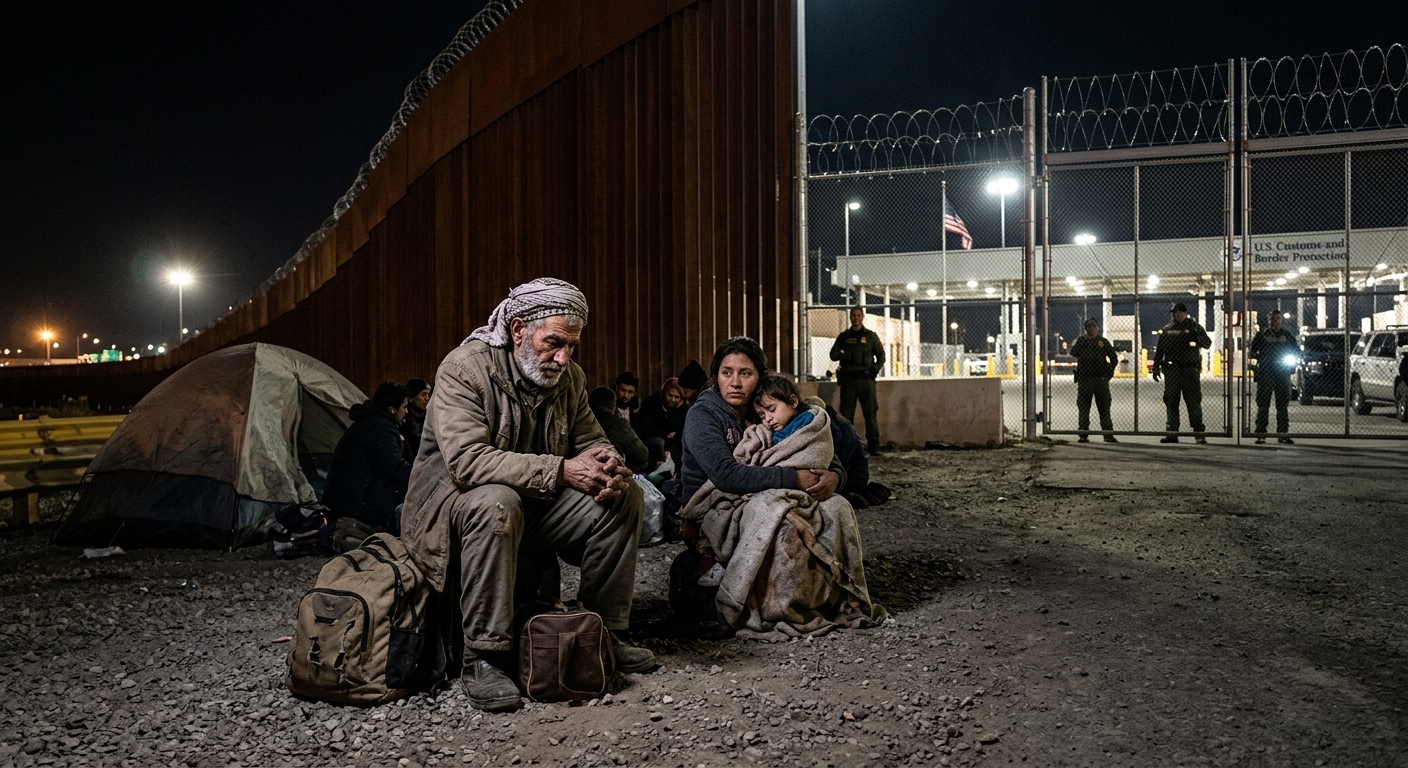
The Historic Shift in U.S. Refugee Resettlement Policies
For decades, the United States stood as a primary beacon of hope for displaced populations globally, symbolizing refuge for those fleeing persecution, war, and systemic violence. The enduring imagery of the American welcome mat—often associated with the Statue of Liberty’s pledge to harbor the tired and poor—has historically been backed by robust federal policies and international commitments. However, the architecture of American humanitarianism is heavily dependent on the political climate, and the framework governing refugee admissions is uniquely susceptible to executive authority. The U.S. commitment to harboring the world’s most vulnerable experienced a historic and systematic dismantling in recent years, drastically altering the nation’s standing on the global stage.
By actively shutting the door on refugees through unprecedented reductions in admission caps, policymakers ignited a fierce debate surrounding international obligations, moral responsibility, and the rule of law. When analyzing the trajectory of the United States Refugee Admissions Program (USRAP), it becomes evident that sudden policy shifts do not merely alter statistics on a legislative spreadsheet; they dismantle established community infrastructures and leave thousands of thoroughly vetted families stranded in dangerous transitional conditions. Understanding the intricate mechanics of these restrictive policies, the profound humanitarian toll they extract, and the subsequent ripple effects on local resettlement networks is absolutely crucial. We cannot remain silent when foundational commitments to human rights are compromised. This comprehensive overview examines the systemic lowering of refugee caps, the legal pushback from human rights organizations, and the ongoing struggle to rebuild a shattered resettlement infrastructure.
The Mechanics of the U.S. Refugee Admissions Program (USRAP)
To fully comprehend the magnitude of shutting the door on refugee admissions, one must first understand the rigorous framework of the U.S. Refugee Admissions Program. Established by the Refugee Act of 1980, USRAP is an extensive interagency effort involving the Department of State, the Department of Homeland Security, and the Department of Health and Human Services. The process of gaining entry into the United States as a recognized refugee is neither swift nor simple. It is characterized by one of the most exhaustive vetting processes required for any traveler or immigrant entering the country.
- Referral and Identification: Most candidates are initially identified and referred to the U.S. government by the United Nations High Commissioner for Refugees (UNHCR) or highly specialized non-governmental organizations operating in crisis zones.
- Intensive Security Screening: Applicants undergo rigorous background checks involving multiple intelligence and law enforcement agencies, including the National Counterterrorism Center, the FBI, and the Department of Defense. Extensive biometric and biographic data are collected and cross-referenced against multiple global security databases.
- In-Person Interviews: Specially trained officers from U.S. Citizenship and Immigration Services (USCIS) conduct intensive in-person interviews to verify the credibility of the applicant’s fear of persecution based on race, religion, nationality, membership in a particular social group, or political opinion.
- Medical Clearances: Approved individuals must pass comprehensive medical screenings to ensure they do not pose a public health threat and are cleared for international travel.
Because of these stringent, multi-layered requirements, the typical timeline for a refugee to be cleared for resettlement ranges from eighteen to twenty-four months, and sometimes stretches over several years. When administrative caps are abruptly slashed, individuals who have successfully navigated this grueling process find themselves arbitrarily locked out just as they approach the finish line, forcing their time-sensitive security and medical clearances to expire.
Examining the Drastic Reductions in the Refugee Cap
The President of the United States, in statutory consultation with Congress, sets the annual ceiling for refugee admissions before the start of each fiscal year (FY) through a directive known as the Presidential Determination. Historically, the United States led the world in refugee resettlement, frequently setting the ceiling between 70,000 and 90,000, and occasionally adjusting it upwards to dynamically respond to global humanitarian emergencies. During the final year of the Obama administration, the cap was established at 85,000 for FY 2016 and initially proposed at 110,000 for FY 2017 to address the rapidly escalating global displacement crisis stemming from conflicts in the Middle East and North Africa.
However, the landscape of American resettlement changed drastically under the Trump administration, which aggressively utilized executive authority to enforce historically low ceilings. In a systematic effort to curtail humanitarian immigration, the administration consistently slashed the refugee cap year after year. The ceiling was aggressively reduced to 45,000 in FY 2018, followed by a further drop to 30,000 in FY 2019. The cuts culminated in an unprecedented low of 18,000 for FY 2020 and a staggering 15,000 for FY 2021—the absolute lowest cap implemented since the formal inception of the modern refugee program over four decades prior.
| Fiscal Year | Presidential Administration | Refugee Admissions Cap |
|---|---|---|
| FY 2016 | Obama | 85,000 |
| FY 2018 | Trump | 45,000 |
| FY 2020 | Trump | 18,000 |
| FY 2021 | Trump (Later revised) | 15,000 (Revised mid-year to 62,500 by Biden) |
Beyond the severe numerical reductions, the administration fundamentally altered the allocation criteria. Rather than relying primarily on the vulnerability-based referrals from the UNHCR—which prioritized the most desperate survival cases globally regardless of origin—new categorical restrictions were heavily implemented. These structural changes inherently disadvantaged specific populations, particularly those from Muslim-majority nations, while carving out narrow preferences that strayed far from traditional international humanitarian standards. This deliberate administrative bottlenecking effectively shut the door on thousands of severely persecuted people, stranding them in highly precarious transitional environments.
The Humanitarian Toll: What Happens When the Doors Close
The statistical reduction in refugee admissions completely fails to capture the profound human suffering precipitated by these exclusionary policies. When the United States abdicates its historical role as a leader in global resettlement, the traumatic consequences echo across the globe. For families who have already fled extreme violence, targeted extortion, and the catastrophic destruction of their home communities, transitional refugee camps in neighboring countries offer only marginal, temporary safety. These environments are frequently plagued by severe resource scarcity, an utter lack of educational opportunities for children, and ongoing security threats from regional instability.
When the admissions door is forced shut, individuals who finally possess approved security and medical clearances watch helplessly as their documentation expires. A medical check or a security clearance is only valid for a highly specific, narrow window of time. If a refugee’s travel is delayed simply because an artificially low annual cap has been reached, their vital clearances lapse, violently forcing them to restart the grueling, months-long vetting process entirely from scratch. This agonizing bureaucratic loop places exceptionally vulnerable demographics at extreme risk of harm. Women facing immediate gender-based violence, unaccompanied children, and LGBTQ+ individuals who face active, state-sponsored criminalization in their home or host countries simply cannot afford these administrative delays without risking their lives.
Furthermore, the United States’ dramatic retreat from resettlement creates a severe chilling effect on international diplomacy. Historically, neighboring countries bearing the heavy brunt of massive refugee influxes—such as Jordan, Lebanon, or Kenya—have kept their borders relatively open under the implicit, cooperative agreement that wealthier nations would share the humanitarian burden through financial support and direct resettlement. When the U.S. abruptly closes its doors, it drastically reduces the incentive for frontline countries to provide essential asylum, directly leading to increased border closures worldwide and leaving massive fleeing populations trapped inside deadly conflict zones.
The Ripple Effects on Resettlement Agencies and Local Communities
The intentional dismantling of the refugee admissions pipeline directly and catastrophically devastated the domestic infrastructure built over decades to welcome and integrate newcomers. The U.S. resettlement network relies on a complex public-private partnership model, primarily coordinated by nine national non-governmental organizations and their hundreds of local community affiliates scattered across the country. These specialized agencies provide essential, ground-level integration services, including emergency housing assistance, English language instruction, job placement, and cultural orientation.
Because vital federal funding for these organizations is allocated almost entirely on a per-capita basis—meaning they receive financial support based on the actual number of refugees they physically resettle—the drastic cuts to the admission caps induced an immediate, paralyzing financial crisis across the sector. Local resettlement offices across the nation were violently forced to downsize operations, heavily furlough staff, or permanently close their doors entirely. The specialized institutional knowledge lost during this dark period was immense. Highly trained case workers who specialized in trauma-informed care and complex cross-cultural communication were forced to leave the sector to find stable employment elsewhere, gutting the network’s capacity.
When these vital agencies close, it doesn’t just harm incoming refugees; it actively damages the economic health of the communities that host them. Refugees have long been recognized by economists as powerful economic engines for local municipalities, particularly in regions suffering from severe demographic decline, aging populations, and labor shortages. They start small businesses at high rates, revitalize abandoned neighborhoods, and eagerly fill critical gaps in the workforce. By starving the resettlement infrastructure, the restrictive policies simultaneously stifled local economic growth and eroded the cultural vibrancy of historically welcoming communities.
The Legal and Moral Imperative for Advocacy
In the face of these severe, unprecedented reductions, remaining silent was simply not an option for civil rights advocates, immigration lawyers, and humanitarian organizations. Groups dedicated to immigrant rights vehemently challenged the administration’s aggressive actions, arguing that the near-total shutdown of the refugee program represented a profound, unforgivable betrayal of the nation’s core democratic ideals. The legal arguments frequently centered around the explicit statutory obligations outlined in the Refugee Act of 1980, which legally mandates robust, meaningful consultation with Congress—a process that critics fiercely argue was often treated as a mere administrative formality or bypassed entirely when the lowest caps were unilaterally set.
Beyond the legal battles in the courtroom, the powerful moral argument was championed by a highly diverse coalition of faith-based organizations, military veterans, and community leaders. Veterans fiercely advocated for the immediate resettlement of military interpreters and civilian allies from conflict zones like Iraq and Afghanistan, arguing passionately that abandoning them to retaliatory violence constituted a shameful breach of national honor. Faith leaders routinely pointed to the universal religious imperative of welcoming the stranger, directly contesting policies that deliberately sought to discriminate based on religious affiliation or national origin. The collective, nationwide outcry highlighted a fundamental truth: a nation’s greatness and geopolitical authority are inextricably linked to how compassionately it treats the most defenseless among us.
The Path Forward: Rebuilding a Shattered Infrastructure
Reversing the deep systemic damage inflicted on the U.S. Refugee Admissions Program requires far more than simply signing a new executive order to raise the cap. When the Biden administration took office in 2021, it moved decisively to elevate the refugee ceiling, successfully raising it mid-year and eventually setting a robust target of 125,000 for FY 2022 and subsequent years. However, these ambitious, morally corrective numerical targets starkly contrasted with the grim logistical reality on the ground.
Because the domestic resettlement network had been so thoroughly hollowed out and overseas processing pipelines were intentionally dismantled, initial admission numbers remained dismally low despite the higher legal limits. Rebuilding this complex infrastructure demands sustained federal financial investment, the massive hiring and intensive training of thousands of new USCIS officers and agency caseworkers, and the complete restoration of international processing hubs. It is a slow, methodical, and often frustrating process of earning back the deep trust of international partners and reassuring local communities that the United States is once again firmly committed to its humanitarian obligations. The long road to recovery serves as a stark, historical reminder of how quickly vital humanitarian systems can be dismantled, and how diligently civil society must guard against future attempts to shut the door on those desperately seeking refuge.
Frequently Asked Questions (FAQs)
What is the difference between a refugee and an asylum seeker?
A refugee is a person who has been forced to flee their home country due to persecution and is legally granted protection and status before entering the United States, typically processed overseas through the UNHCR. An asylum seeker is someone who meets the exact same international definition of a refugee but applies for legal protection after already arriving at a U.S. port of entry or crossing the border.
How is the U.S. refugee cap determined?
The annual refugee admissions ceiling is officially determined by the President of the United States. Under the legal framework of the Refugee Act of 1980, the President issues a formal “Presidential Determination” before the start of each fiscal year, which legally requires thorough consultation with the Judiciary Committees of both the House and the Senate.
How long does the U.S. refugee vetting process take?
The U.S. refugee screening process is exceptionally rigorous and widely considered the strictest in the world. It involves multiple interagency background checks, extensive biometric screening, comprehensive medical exams, and in-depth, in-person interviews. On average, this exhaustive process takes between 18 to 24 months, though it can take significantly longer for applicants originating from certain conflict-heavy regions.
References
- How Does the U.S. Refugee System Work? — Council on Foreign Relations. 2021-03-25. https://www.cfr.org/backgrounder/how-does-us-refugee-system-work
- Refugees and Asylees in the United States — Migration Policy Institute. 2023-06-15. https://www.migrationpolicy.org/article/refugees-and-asylees-united-states
- Clinicians as advocates amid refugee resettlement agency closures — PMC – NIH. 2020-10-31. https://www.ncbi.nlm.nih.gov/pmc/articles/PMC7598341/
- Projected global resettlement needs 2025 — UNHCR. 2024-06-01. https://www.unhcr.org/en-us/protection/resettlement
Similar Articles








Read full bio of Sneha Tete


