
Rethinking School Safety: The Impact of Police on Students
Examining the hidden costs of school policing and the push for alternatives.
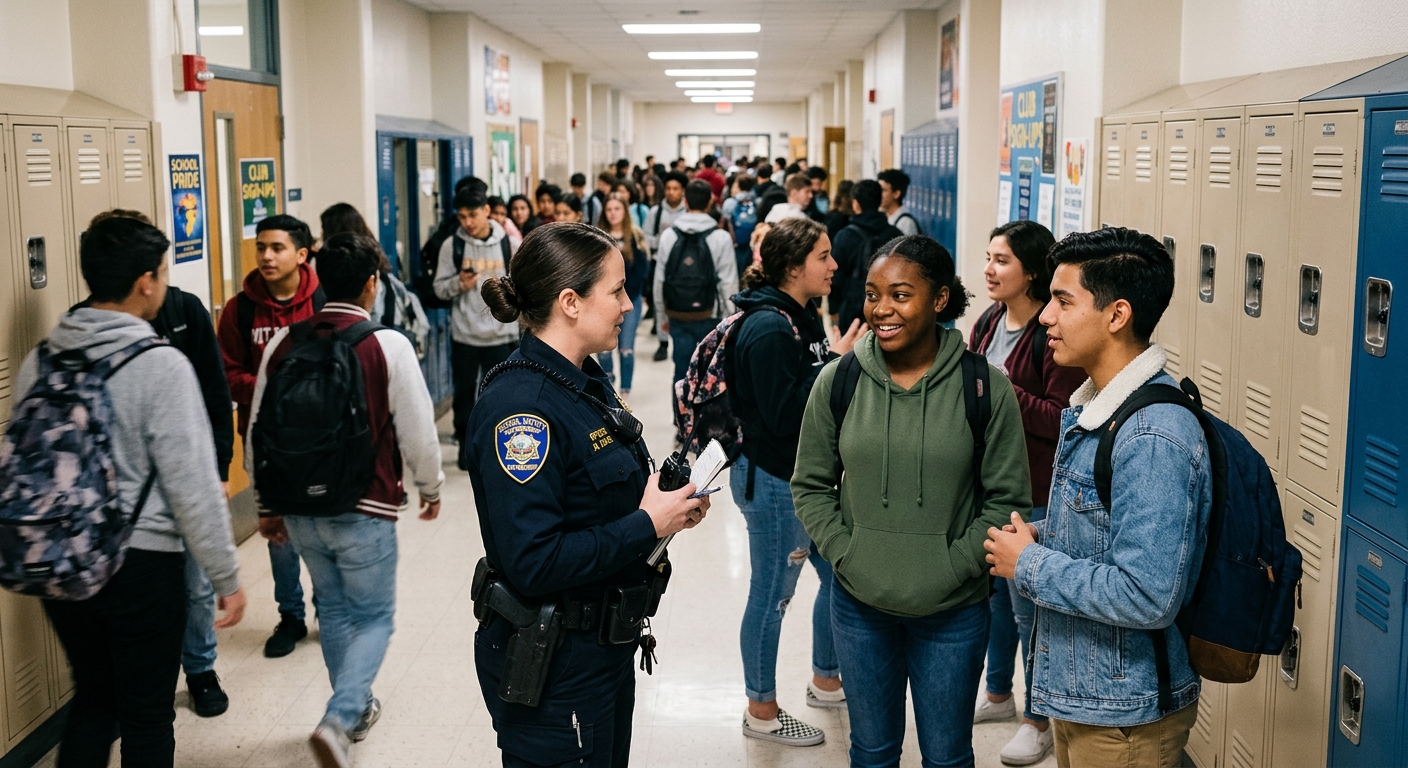
The concept of a secure and supportive educational environment is universally cherished, yet the specific methods employed to achieve this safety have become a subject of intense and polarizing national debate. For decades, the default governmental response to mounting concerns over student safety and campus security has been the systematic integration of sworn law enforcement officers directly into educational settings. However, a growing body of empirical evidence, accompanied by vocal community outcry, suggests that the presence of these officers—often resulting in highly punitive and sometimes brutal disciplinary measures—is fundamentally altering the traditional educational landscape. Instead of fostering a nurturing space dedicated to intellectual curiosity and social growth, the heavy-handed policing of school hallways has inadvertently transformed many public campuses into active extensions of the criminal justice system. This profound ideological and practical shift carries severe implications for the physical safety, psychological well-being, and long-term future prospects of millions of students across the nation.
Rethinking Campus Security: The Evolution and Expansion of School Resource Officers
The formal introduction of police personnel into American public schools originally began as a localized response to specific community safety concerns. The rationale was rooted in a genuine fear for student safety, aiming to proactively manage extreme behavioral outliers and deter unauthorized, dangerous individuals from entering school premises. However, this deployment rapidly evolved into an expansive, multi-billion-dollar enterprise following several high-profile school violence incidents in the late 1990s and early 2000s. Driven by a desperate societal desire to prevent worst-case scenarios, federal and state grants funneled massive amounts of funding into placing School Resource Officers (SROs)—who are fully sworn and armed law enforcement officers—onto school grounds. Recent systemic data indicates that well over half of all public schools now report the presence of sworn law enforcement personnel on their campuses on a weekly basis.
Despite these protective intentions, this widespread deployment experienced significant and detrimental “mission creep.” Officers who were originally stationed explicitly to protect campuses from external threats and extreme acts of violence gradually became deeply entangled in the day-to-day administration of routine school discipline. Without comprehensive, specialized training in adolescent developmental psychology or pedagogical conflict resolution, SROs began intervening in typical behavioral issues that were historically managed solely by educators and principals. The looming presence of armed police in the hallways shifted the institutional culture from one of guidance, mentorship, and correction to one of rigid surveillance and strict legal enforcement, raising critical and urgent questions about the true cost of this highly militarized version of campus security.
The Criminalization of Adolescent Behavior
When uniformed law enforcement personnel become the primary responders to routine classroom disruptions, the delicate boundary between typical adolescent misbehavior and actual criminal conduct is dangerously blurred. Actions that once warranted a trip to the principal’s office, an after-school detention, or a parent-teacher conference—such as talking back to an instructor, refusing to hand over a distracted cell phone, or engaging in a minor hallway scuffle—are now frequently escalated into formal law enforcement matters. This unwarranted escalation transforms standard educational disciplinary infractions into prosecutable legal offenses, frequently categorized under broad, vague legal terms like “disorderly conduct,” “insubordination,” or “disturbing the peace.” Such aggressive legal framing completely ignores the developmental stages of children and teenagers, whose brains are still actively forming impulse control, risk assessment, and emotional regulation capabilities.
Prominent researchers and policy analysts consistently highlight that allowing police officers to handle minor infractions in schools needlessly marks a student’s very first contact with the criminal justice system. A single school-based arrest can dramatically derail a young person’s life trajectory, introducing them to a terrifying maze of court dates, exorbitant legal fees, and stringent probationary conditions. Furthermore, the reliance on police to enforce hallway compliance fosters a toxic zero-tolerance environment. Rather than seeking to understand the root environmental or psychological causes of a student’s outburst—which could be closely linked to undiagnosed learning disabilities, severe trauma, or familial stress—the immediate and default response is punitive physical action. This criminalization of normative youth behavior not only deprives students of highly valuable instructional time but also sets a dangerous precedent where physical force and legal penalization are viewed as the most acceptable solutions to conflict resolution in an educational setting.
Disproportionate Impact on Marginalized Communities
The systemic shift toward school militarization and strict policing does not affect all student demographics equally. Empirical data consistently and tragically reveals that Black, Indigenous, and other students of color, alongside students diagnosed with emotional or physical disabilities, bear a vastly disproportionate burden of school-based policing tactics. Implicit biases and deeply ingrained systemic inequities often lead to marginalized students being perceived by authority figures as older, more naturally aggressive, and far more culpable than their white peers for the exact same minor behaviors. Extensive civil rights investigations and governmental reports repeatedly highlight that schools with high minority populations are significantly more likely to employ armed SROs and utilize restrictive disciplinary policies compared to predominantly white, affluent suburban districts.
This glaring racial and demographic disparity is starkly evident in national arrest rates and documented instances involving the use of physical force. Minorities are significantly more likely to be subjected to harsh, escalating interventions, including being physically restrained, tackled, pepper-sprayed, or handcuffed simply to enforce basic compliance. When a minor infraction committed by a student of color results in a violent physical takedown by a sworn officer, the overarching message sent to the entire student body is clear and absolutely devastating. It visually reinforces a societal narrative of marginalization and aggressively communicates to these children that their educational institutions view them as inherent threats to be managed, rather than developing scholars to be nurtured. The immense trauma inflicted by these encounters extends far beyond any physical injuries sustained, leaving lasting psychological scars that deeply alienate students from the very institutions designed to support their upward mobility.
The Hidden Costs: Psychological Toll and the School-to-Prison Pipeline
The routine, normalized presence of armed officers and the aggressive policing of the student body feed directly into what child advocates and sociologists formally call the “school-to-prison pipeline.” This widespread phenomenon describes the systematic, institutional funneling of marginalized students out of public school classrooms and directly into the juvenile and adult criminal justice systems. Once a student enters this pipeline, the likelihood of high school graduation plummets, while the probability of future adult incarceration skyrockets, effectively cementing generational cycles of poverty, trauma, and disenfranchisement. Federal education authorities have previously issued stark warnings to school leaders nationwide, expressing profound concern that the unnecessary citation or arrest of students heavily contributes to this harmful pipeline, effectively trading vital educational opportunities for lifelong incarceration.
Beyond the grim statistical reality of increased student arrests, the daily psychological toll on the broader student body is immense and largely immeasurable. Schools are fundamentally supposed to serve as safe havens and sanctuaries for learning; yet, the highly visible presence of lethal weapons, handcuffs, and uniformed officers actively creates a climate of hyper-surveillance and underlying anxiety. For students who already reside in heavily policed, systematically marginalized neighborhoods, encountering the exact same law enforcement dynamics within their school walls offers absolutely no respite from daily community trauma. This highly pressurized environment fundamentally erodes the essential trust between students and school administration. Instead of feeling protected by the adults around them, many students report feeling actively targeted, silenced, and anxious. The constant, looming threat of severe punitive action stifles creative self-expression, dampens academic engagement, and forces vulnerable students to navigate their critical educational journey in a damaging state of perpetual hyper-vigilance.
Assessing the Efficacy: Do Armed Officers Prevent Violence?
The primary and most vocal justification for the continued funding, expansion, and deployment of SROs is the explicit prevention of severe campus violence, most notably mass school shootings. Proponents of school policing passionately argue that an armed officer provides a critical, immediate line of defense and a rapid response capability in the terrifying event of an active shooter scenario. However, comprehensive, peer-reviewed reviews of national school safety data present a much more complicated, sobering reality regarding the actual efficacy of these officers.
Research remains highly inconclusive regarding whether the active presence of police in schools actually deters gun violence or successfully prevents mass casualty events. In several of the most tragic and high-profile mass shooting incidents in recent history, armed guards and SROs were present on the campus but were ultimately unable to stop the perpetrators from inflicting catastrophic harm. Many independent security audits and criminological studies strongly suggest that comprehensive emergency preparedness protocols, hardened physical infrastructure, and proactive psychological threat assessment teams provide a far more reliable defense matrix than the mere presence of a single armed guard. While the intended paramount benefit of preventing extreme violence remains statistically unproven, the negative consequences of SROs—such as the dramatic, verifiable increase in arrests for minor, non-violent offenses—are robustly and undeniably documented. This stark contrast forces policymakers and parents alike to weigh a theoretical, largely unproven benefit against the tangible, daily harm inflicted upon thousands of students whose educational trajectories are abruptly disrupted by unnecessary arrests.
A Paradigm Shift: Restorative Justice and Comprehensive Support Systems
Effectively addressing the profound, systemic issues associated with school policing requires much more than minor policy tweaks or updated handbooks; it demands a fundamental paradigm shift in how modern communities envision school safety and approach student discipline. The most effective, evidence-based alternative to the punitive policing model is the robust, sustained investment in comprehensive mental health support networks and restorative justice programs. Educational advocacy groups and leading sociological researchers overwhelmingly recommend reallocating the massive funds currently spent on law enforcement contracts to successfully hire trained professionals who are specifically equipped to handle adolescent development, emotional regulation, and crisis intervention.
School counselors, highly trained psychologists, clinical social workers, and specialized behavioral interventionists are specifically educated to de-escalate emotional conflicts without ever relying on the threat of lethal force or legal penalization. These professionals employ evidence-based, trauma-informed methodologies to deconstruct escalating situations safely, ensuring that the student is treated with empathy rather than suspicion. When a student acts out, a mental health professional can accurately assess the underlying holistic causes—be it chronic food insecurity, domestic trauma, or severe peer bullying—and provide targeted, meaningful support. Furthermore, restorative justice frameworks actively prioritize structured mediation, personal accountability, and the repairing of community harm over immediate exclusion and blind punishment. By bringing together all affected parties to discuss the true impact of the behavior and collaboratively determine a fair resolution, schools can powerfully foster deep empathy and community responsibility. These progressive approaches not only drastically reduce recidivism in student misbehavior but also build a positive, inclusive school climate that naturally promotes emotional intelligence and elevated academic success.
Policy Interventions and the Road Ahead
The national movement to critically re-evaluate law enforcement’s role in public education has gained significant, undeniable momentum, prompting several large, influential school districts across the country to sever historical ties with local police departments and entirely redesign their campus security frameworks. However, for this localized systemic change to take permanent root nationwide, decisive, unwavering policy interventions are required at both the state legislative and federal levels to protect all students uniformly.
State legislators and local educational boards must urgently enact strict, uncompromising limitations on the daily duties of SROs in the districts that choose to retain them. This critical reform includes implementing rigid Memorandums of Understanding (MOUs) that explicitly and legally prohibit sworn officers from participating in any routine school discipline. It also requires mandating extensive, specialized training in youth developmental psychology, modern de-escalation techniques, and rigorous anti-bias practices. Transparency and strict data collection must also be mandated, requiring school districts to publicly report all school-based arrests, physical uses of force, and the specific demographic data of the students involved to ensure absolute community accountability. Ultimately, the complex road ahead requires a unified, collective commitment from parents, dedicated educators, and bold policymakers to permanently dismantle the school-to-prison pipeline. By explicitly prioritizing therapeutic interventions and restorative practices over armed, punitive enforcement, society can finally reclaim its public schools as true sanctuaries of learning. The ultimate goal must unequivocally be to cultivate environments where every single child, regardless of their background, race, or ability, is treated with inherent dignity, profound respect, and the foundational belief in their limitless potential to grow.
Frequently Asked Questions (FAQs)
What is a School Resource Officer (SRO)?
A School Resource Officer (SRO) is a fully sworn, career law enforcement officer who is officially deployed by a local police department or sheriff’s agency to work directly within a public school environment. Unlike unarmed private security guards, SROs have full legal arrest powers and routinely carry lethal and non-lethal weapons, including firearms, tasers, and pepper spray.
What is the “school-to-prison pipeline”?
The school-to-prison pipeline refers to a disturbing, widely documented national trend wherein vulnerable children are systematically funneled out of public education systems and directly into the juvenile and adult criminal justice systems. This pipeline is heavily fueled by “zero-tolerance” disciplinary policies and the increasing reliance on police to handle minor school rule violations, which inevitably leads to high rates of out-of-school suspensions, expulsions, and formal school-based arrests.
How do police in schools disproportionately affect minority students?
Extensive national data consistently shows that marginalized demographic groups, particularly Black, Hispanic, and Indigenous students, as well as those with diagnosed learning or emotional disabilities, are arrested and subjected to physical force at significantly higher rates than their white peers for the exact same minor behavioral infractions. Implicit biases and long-standing systemic inequities greatly contribute to these stark, damaging disparities in school discipline.
What are the recommended alternatives to having police in schools?
Educational advocates, child psychologists, and civil rights organizations highly recommend reallocating the district funds currently spent on law enforcement contracts toward hiring substantially more school counselors, clinical social workers, psychologists, and school nurses. Additionally, implementing restorative justice programs—which focus heavily on mediation, trauma-informed care, and repairing communal harm rather than resorting to punitive, exclusionary measures—is widely considered a far more effective and humane approach to maintaining a genuinely safe and healthy school climate.
References
- Letter to Chief State School Officers and Superintendents about School Resource Officers and school discipline — U.S. Department of Education. 2016-09-08. (This foundational federal directive is uniquely authoritative in establishing the government’s stance on the school-to-prison pipeline). https://www2.ed.gov/policy/gen/guid/school-discipline/sro-dear-colleague-letter.pdf
- The Role and Impact of School Resource Officers — RAND Corporation. 2024-11-25. https://www.rand.org/pubs/research_reports/RRA2685-1.html
- Navigating the tradeoffs of police in schools — Brookings Institution. 2023-09-07. https://www.brookings.edu/articles/navigating-the-tradeoffs-of-police-in-schools/
Similar Articles








Read full bio of medha deb




