
Why Harm Reduction Must Replace Punitive Policies
How evidence-based harm reduction can fix our drug policy.
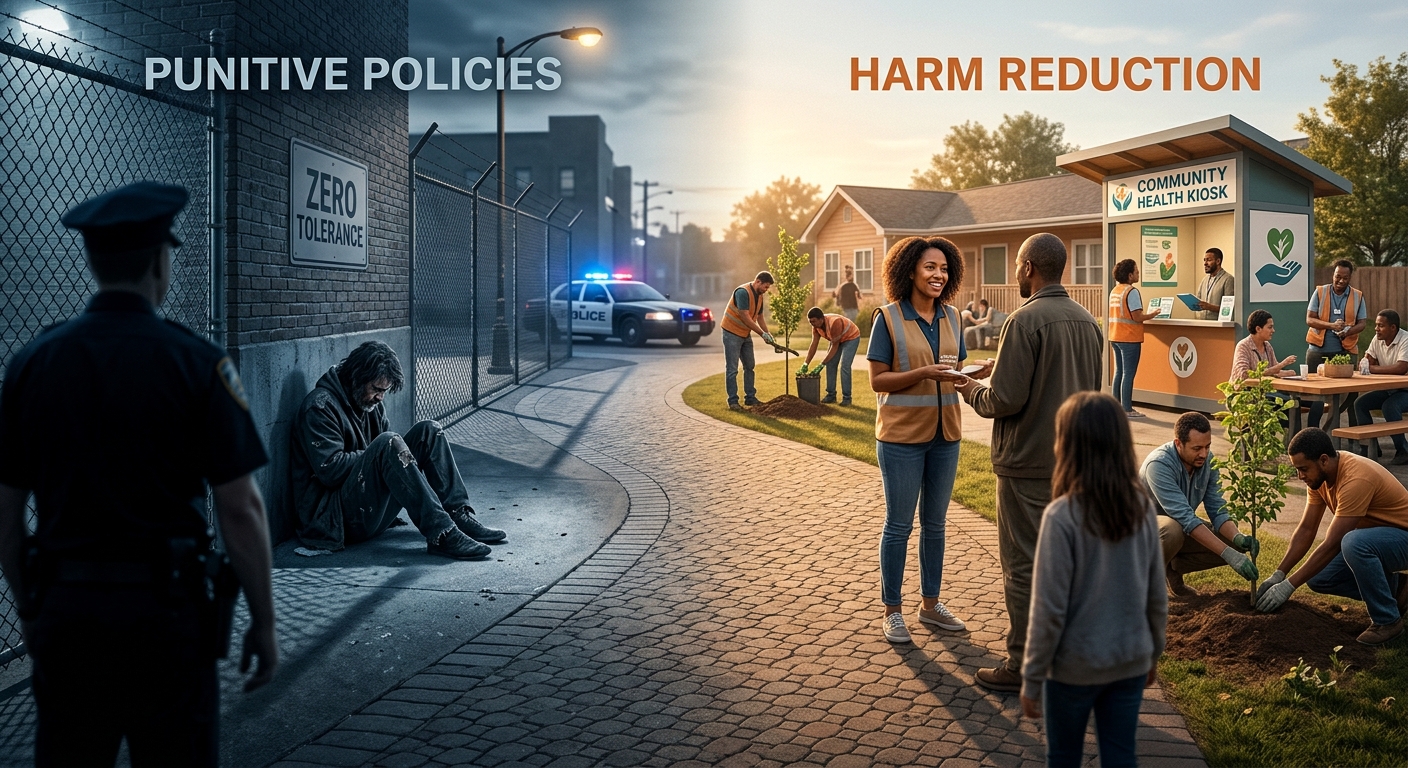
A Historic Crisis Demanding a Compassionate Response
For decades, communities across the United States have been ravaged by a devastating overdose epidemic. Despite the influx of billions of dollars into law enforcement, border security, and mass incarceration, synthetic opioids like fentanyl continue to dominate and contaminate the illicit drug supply. According to the Centers for Disease Control and Prevention (CDC), the United States recorded over 79,000 drug overdose deaths in 2024. While this represents a notable recent decline from previous pandemic-era highs—largely attributed to expanding public health interventions—the sheer volume of preventable deaths remains a stark reminder that traditional approaches to drug policy are fundamentally flawed.
The persistence of this crisis requires society to rethink deeply ingrained assumptions about drug use and addiction. Addiction is a complex medical condition heavily influenced by genetic, psychological, and social determinants of health, not a moral failing or a simple criminal act. However, the overarching governmental response has historically been rooted in punitive measures. By treating substance use solely as a legal violation, society pushes vulnerable individuals into the shadows, deliberately isolating them from medical care, robust community support, and lifesaving interventions when they need them most.
The Enduring Failures of the “War on Drugs”
The political rhetoric surrounding the “War on Drugs” began in the 1970s and quickly institutionalized a strategy of mass incarceration, strict sentencing mandates, and hyper-militarized policing. The prevailing governmental theory was that severe penalties would deter drug use and successfully disrupt global supply chains. Half a century later, empirical data tells a vastly different story. The illicit drug market is more resilient, potent, and accessible than ever before, while the collateral damage of these aggressive policies has decimated entire communities.
Deepening Racial and Economic Inequities
One of the most profound tragedies of the punitive drug war is its unequal application and enforcement. Research consistently demonstrates that while rates of substance use and distribution are relatively uniform across different racial and ethnic demographics, the enforcement of drug laws is heavily skewed. Black and Latino populations have been disproportionately targeted for stops, searches, arrests, and harsh mandatory minimum sentencing. The collateral consequences of a drug conviction—loss of voting rights, exclusion from public housing, drastically reduced employment opportunities, and the denial of federal financial aid—create generational cycles of poverty and socioeconomic marginalization.
Furthermore, relying on the criminal justice system to manage a public health crisis is economically unsustainable. The financial burden of policing, prosecuting, and incarcerating individuals for non-violent drug offenses drains local and federal resources that could be far better spent on community health infrastructure, affordable housing, and accessible mental health services. Instead of rehabilitating individuals, incarceration often exacerbates the underlying trauma, isolation, and social instability that directly contribute to substance use disorders in the first place.
Core Principles of Harm Reduction
As the devastating limitations of criminalization become impossible to ignore, public health advocates and medical professionals are championing a different, more effective framework: harm reduction. Harm reduction is a pragmatic, evidence-based approach that prioritizes keeping people alive and minimizing the negative health, social, and economic consequences associated with drug use. It operates on the fundamental, unwavering belief that every individual deserves safety, dignity, and respect, regardless of their current relationship with illicit substances.
Shifting from Punishment to Support
Unlike abstinence-only models, which demand that an individual completely cease drug use before receiving comprehensive care or support, harm reduction meets people exactly where they are. It acknowledges the reality that quitting is not immediately feasible—or even the primary goal—for everyone who uses drugs. By providing unconditional support and actively removing the stigma associated with addiction, harm reduction programs establish vital community trust. This newfound trust frequently serves as a bridge, successfully connecting individuals who use drugs to primary healthcare, housing assistance, and, when they are eventually ready, comprehensive substance use disorder treatment.
Overcoming the Stigma of Addiction
Stigma is arguably the most pervasive barrier to saving lives in the modern overdose crisis. When society criminalizes and morally condemns drug use, it forces individuals to internalize extreme shame. This stigmatization operates fatally on both an individual and systemic level. On a personal level, individuals are far more likely to hide their substance use, choosing to consume drugs completely alone rather than in the presence of someone who could administer naloxone or call for medical help if an overdose occurs. Systemically, stigma severely influences funding allocations and political will, often making it unpopular for legislators to support vital harm reduction services out of fear of being labeled “soft on crime.” By openly advocating for public health strategies, communities can begin to dismantle this shame, recognizing that every life is worth saving and that profound empathy must be the foundation of any effective drug policy.
Proven, Evidence-Based Interventions That Save Lives
Harm reduction is not an abstract or unproven philosophy; it is a collection of concrete, scientifically validated strategies that have been implemented successfully worldwide. When municipalities embrace these public health tools, they witness immediate declines in fatal overdoses and infectious disease transmission.
Syringe Services Programs (SSPs)
Syringe Services Programs are localized community-based initiatives that provide access to sterile needles and syringes, safe disposal of used equipment, and critical vaccination, testing, and linkage to infectious disease care. Decades of peer-reviewed research supported by the National Institute on Drug Abuse (NIDA) prove that SSPs dramatically reduce the transmission of HIV and Hepatitis C among people who inject drugs. Crucially, SSPs do not encourage drug use or increase crime in the surrounding neighborhoods. In fact, individuals who consistently utilize SSPs are significantly more likely to enter treatment for substance use disorders and reduce or stop their drug use compared to those who do not have access to such critical services.
Furthermore, the community impact of SSPs extends far beyond the individual user. By facilitating the safe disposal of used syringes, these programs drastically reduce the presence of hazardous medical waste in public parks, sidewalks, and community spaces. This dual benefit—protecting both the marginalized drug user and the broader public—demonstrates the pragmatic genius of comprehensive harm reduction.
Naloxone Distribution Networks
Naloxone is a safe, highly effective FDA-approved medication capable of rapidly reversing an opioid overdose. It acts by quickly binding to opioid receptors in the brain and effectively blocking the lethal effects of drugs like heroin and fentanyl. Widespread, unrestricted distribution of naloxone—equipping people who use drugs, their families, first responders, and ordinary community members with the medication—is a major cornerstone of modern overdose prevention. Ensuring that naloxone is available over-the-counter and fully subsidized for vulnerable populations transforms everyday bystanders into immediate lifesavers. When paired with the distribution of fentanyl test strips, which allow users to detect the presence of lethal synthetic opioids in their supply before consumption, communities can drastically lower the incidence of accidental fatal overdoses.
Overdose Prevention Centers (OPCs)
Perhaps the most debated, yet highly effective, harm reduction strategy is the implementation of Overdose Prevention Centers (OPCs), also known in public health as supervised consumption sites. These are legally sanctioned, medically managed facilities where individuals can consume pre-obtained drugs under the direct supervision of trained medical personnel ready to intervene instantly in the event of an overdose. Research published in peer-reviewed journals highlights the profound success of such sites. For instance, at the first publicly recognized OPCs in New York City, trained staff successfully reversed over a hundred overdoses in just their initial months of operation, effectively preventing what would have otherwise been fatal community emergencies. Additionally, OPCs substantially reduce public drug consumption, decrease improperly discarded syringes, and facilitate immediate, warm handoffs to social services and housing support.
Shifting the Paradigm: A Blueprint for Policymakers
Transitioning from a strictly carceral approach to a compassionate public health model requires bold legislative action and a willingness to dismantle entrenched systems of punishment. Policymakers at the local, state, and federal levels must collaborate extensively to create a legal environment where harm reduction can thrive without systemic obstruction.
- Decriminalization of Personal Possession: Removing criminal penalties for the personal possession of small amounts of drugs immediately mitigates the lifelong collateral damage inflicted by a permanent criminal record. Instead of a court summons, individuals might receive information on local treatment programs or community resources. This shift unburdens the criminal legal system, allowing law enforcement to concentrate on serious violent crimes while recognizing that jail cells are highly inappropriate environments for addressing behavioral health conditions.
- Fully Funding Harm Reduction Infrastructure: State and federal governments must actively redirect funds currently allocated to punitive drug enforcement into proactive community health initiatives. This specifically includes providing sustainable, long-term funding for SSPs, OPCs, and comprehensive mass-spectrometry drug-checking technologies.
- Expanding Good Samaritan Laws: Legal protections must be structurally strengthened to ensure that individuals who call emergency services during an overdose are completely shielded from arrest or prosecution for drug possession or probation violations. Fear of criminal arrest remains a leading reason why people hesitate to call 911 during a life-or-death crisis.
- Integrating Health Services: Harm reduction should not exist in a marginalized silo. It must be seamlessly integrated into primary care systems, hospital emergency departments, and housing-first initiatives to provide holistic, continuous support for individuals navigating severe substance use disorders.
Comparing the Models: Punitive vs. Harm Reduction Strategies
To fully grasp the critical necessity of this paradigm shift, it is helpful to systematically contrast the traditional drug war methodology with the public health-focused harm reduction framework.
| Feature | The “War on Drugs” Approach | The Harm Reduction Model |
|---|---|---|
| Primary Goal | Eradicate drug use entirely through intense deterrence and severe punishment. | Minimize negative health and social consequences of active drug use. |
| View of Addiction | Framed exclusively as a moral failing or deliberate criminal behavior. | Framed as a complex, manageable medical and social issue requiring care. |
| Intervention Method | Arrest, aggressive prosecution, mandatory sentencing, and mass incarceration. | Providing sterile supplies, overdose reversal tools, and safe consumption spaces. |
| Resource Allocation | Billions spent annually on law enforcement, border control, and private prisons. | Funding directed toward proactive healthcare, affordable housing, and community services. |
| Impact on Stigma | Increases extreme stigma, forcing drug use into dangerous, unmonitored isolation. | Actively reduces stigma, fostering vital trust and encouraging clinical connection to care. |
Frequently Asked Questions (FAQs)
Does harm reduction enable or encourage drug use?
No. Extensive global public health research consistently demonstrates that providing harm reduction services does not increase overall drug use or encourage initiation. Instead, it prevents fatal overdoses and halts the community spread of infectious diseases. By treating vulnerable individuals with fundamental dignity, these programs actually increase the statistical likelihood that people will engage with medical health services and eventually seek formal treatment when they are personally ready.
Are Overdose Prevention Centers legal in the United States?
The current legal landscape for OPCs is incredibly complex and actively evolving. While federal law, specifically the “crack house statute” of the federal Controlled Substances Act, has historically been weaponized to threaten the operation of such public health facilities, several progressive states and municipalities are pushing forward. Rhode Island and Minnesota have recently passed progressive laws authorizing OPCs, and New York City actively operates publicly recognized centers. Health advocates continue to fight relentlessly for explicit federal protections to allow these proven life-saving facilities to operate nationwide without the looming threat of federal prosecution.
How does decriminalization differ from full legalization?
Decriminalization dictates that while the large-scale manufacturing and commercial sale of drugs remain illegal, the personal possession of small amounts for personal use is no longer treated as an arrestable criminal offense. Instead, it may be treated as a minor civil infraction, highly similar to a standard traffic ticket, often coupled with a referral to local health services. Legalization, on the other hand, involves heavily regulating and publicly taxing the production and retail sale of substances, similar to how commercial alcohol, cannabis, and tobacco are currently managed by state governments.
Why is fentanyl driving such a massive and sudden spike in overdose deaths?
Fentanyl is a highly potent synthetic opioid that is estimated to be up to 50 times more potent than standard street heroin. Because it is incredibly cheap to manufacture chemically and extremely easy to transport across borders, illicit drug suppliers frequently mix it into other substances like heroin, cocaine, methamphetamine, and counterfeit prescription pills to artificially maximize their profit margins. Due to its extreme biological potency, even microscopic amounts can cause severe respiratory depression and sudden fatal overdose, especially for individuals who are completely unaware they are consuming it or who fundamentally lack a built-up opioid tolerance.
References
- Drug Overdose Deaths in the United States, 2023–2024 — Centers for Disease Control and Prevention (CDC). 2026-01-29. https://www.cdc.gov/nchs/data/databriefs/db549.pdf
- Syringe Services Programs — National Institute on Drug Abuse (NIDA) / National Institutes of Health (NIH). 2024-11-25. https://nida.nih.gov/research-topics/syringe-services-programs
- First 2 Months of Operation at First Publicly Recognized Overdose Prevention Centers in US — JAMA Network Open. 2022-07-15. https://jamanetwork.com/journals/jamanetworkopen/fullarticle/2794352
- The Drug War, Mass Incarceration and Race — United Nations Office on Drugs and Crime (UNODC). 2018-01-01. https://www.unodc.org/documents/ungass2016/Contributions/Civil/DrugPolicyAlliance/DPA_Fact_Sheet_Drug_War_Mass_Incarceration_and_Race_June2015.pdf
Similar Articles








Read full bio of medha deb




