The Algorithmic Divide: How Artificial Intelligence Amplifies Systemic Inequality
As AI systems automate crucial decisions, experts warn they risk cementing historical prejudices into our digital future.

In the modern era, artificial intelligence (AI) is no longer confined to the realms of science fiction or academic research; it has become the invisible architecture governing our daily lives. From the moment we wake up to the time we go to sleep, automated systems are quietly making decisions that affect our access to opportunities, resources, and fundamental rights. While the rapid deployment of these technologies has been championed as a triumph of efficiency and objective reasoning, a growing consensus among technologists, civil rights advocates, and policymakers warns of a much darker reality. Instead of serving as an impartial judge, artificial intelligence possesses the profound capacity to exacerbate societal inequality, acting as a digital mirror that reflects and amplifies the deeply ingrained prejudices of our past.
The danger lies not in malicious sentient machines, but in the mundane automation of bureaucratic processes. When a bank decides who receives a mortgage, when a hospital triages patients, or when an employer filters through thousands of resumes, AI algorithms are increasingly making the final call. Because these automated systems operate behind complex, proprietary barriers, they shield institutional decision-making from public scrutiny. Consequently, marginalized communities often find themselves locked out of vital life opportunities without explanation, facing an unyielding algorithmic wall that threatens to reverse decades of civil rights progress.
The Illusion of Objective Data
There is a pervasive myth in contemporary tech culture that data is inherently neutral. Proponents of rapid automated deployment often argue that algorithms, devoid of human emotion, are incapable of discrimination. However, this perspective fundamentally misunderstands how machine learning models are developed and deployed. These systems are trained on massive datasets scraped from historical records, human interactions, and societal outcomes. Because our global history is fundamentally shaped by systemic discrimination, the data generated by that history is inherently skewed. When developers feed this biased data into complex algorithms without rigorous safeguards, they do not eliminate human prejudice; they simply launder it through mathematics.
Machine learning models are, at their core, sophisticated engines of pattern recognition. They are designed to identify historical trends and optimize future decisions based on those trends. If an industry has historically favored a specific demographic for leadership roles, an AI screening tool will learn to associate the traits of that demographic with success. The mechanisms through which this bias is encoded are often subtle, operating through several primary channels:
- Proxy Variables: Even if developers explicitly remove protected attributes like race or gender from a dataset, algorithms can easily identify proxies. Zip codes, consumer purchasing habits, or even the type of web browser used can serve as highly accurate proxies for socioeconomic status and racial demographics, allowing the system to discriminate indirectly.
- Unrepresentative Training Sets: When the data used to train an AI model lacks diversity, the resulting system performs poorly for underrepresented groups. The most notorious example of this is early facial recognition software, which was trained predominantly on lighter-skinned male faces, resulting in alarmingly high error rates when analyzing women and people of color.
- Destructive Feedback Loops: Algorithms often create self-fulfilling prophecies. For example, if a predictive policing algorithm identifies a low-income neighborhood as a high-crime area based on historical arrest records, police departments will deploy more officers there. This increased presence inevitably leads to more arrests for minor infractions, feeding new data back into the algorithm to justify even heavier policing.
High-Stakes Vulnerabilities: Where AI Fails Equity
The impact of algorithmic bias is not distributed equally across society. The most severe consequences are felt in high-stakes domains where automated decisions act as gatekeepers to basic human needs and economic mobility. As the digital transformation accelerates, three key sectors have emerged as flashpoints for algorithmic inequality.
The Digital Divide in Employment Screening
In the contemporary job market, human resources departments have largely outsourced the initial stages of recruitment to Applicant Tracking Systems (ATS) and AI-driven assessment tools. These tools utilize natural language processing to scan resumes, monitor micro-expressions during video interviews, and administer gamified cognitive tests. While these technologies promise to streamline hiring, they frequently encode exclusionary practices. For instance, an algorithm trained to look for gaps in employment might unfairly penalize women who took time off for maternity leave, or individuals who suffered from prolonged illnesses.
Furthermore, the reliance on automated screening poses significant barriers for individuals with disabilities. Voice-analysis algorithms may misinterpret speech impediments as a lack of confidence, while visual monitoring software might inappropriately flag atypical eye contact—common among neurodivergent individuals—as a negative trait. Recognizing this growing crisis, the U.S. Equal Employment Opportunity Commission (EEOC) has launched initiatives specifically aimed at ensuring algorithmic fairness, warning that the unregulated use of AI software to assess job applicants can easily violate established civil rights protections .
Algorithmic Redlining in Housing and Finance
Access to fair credit and housing is a foundational pillar of economic mobility. Historically, practices like redlining openly denied loans and housing to marginalized communities based on race. Today, automated underwriting systems and algorithmic credit scoring threaten to revive these discriminatory practices under the guise of technological innovation. When financial algorithms evaluate risk, they consume thousands of alternative data points, including a user’s digital footprint, utility payment histories, and even the creditworthiness of their social media connections.
This massive ingestion of alternative data disproportionately penalizes individuals from lower-income backgrounds. An algorithm might lower a credit score because a consumer shops at certain discount stores or resides in a zip code with a history of mortgage defaults. Because the rationale behind these automated rejections is rarely explained to the consumer, victims of algorithmic redlining are left with no clear path to appeal or correct the flawed digital assumptions blocking their financial independence.
Healthcare Inequities and Predictive Modeling
Perhaps nowhere are the stakes of algorithmic bias higher than in healthcare, where predictive models literally hold the power of life and death. Hospital networks and insurance providers heavily rely on AI to allocate resources, predict patient risks, and determine who requires specialized care management programs. However, when these models rely on flawed proxy data, the results are devastating.
A landmark peer-reviewed study examining a widely used healthcare algorithm revealed shocking racial disparities. The algorithm was designed to identify patients needing extra medical attention by using past healthcare spending as a proxy for illness severity. However, due to systemic barriers, lack of insurance, and historical inequities, the healthcare system generally spends less money on Black patients than on white patients with similar conditions. Because the algorithm equated cost with medical need, it falsely concluded that Black patients were healthier, effectively pushing critically ill marginalized patients to the back of the triage line . This stark failure illustrates how optimizing for economic metrics rather than human outcomes can automate systemic neglect.
The Criminal Justice System: A Crisis of Unaccountable Automation
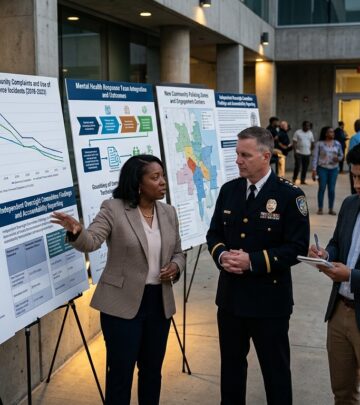
The integration of artificial intelligence into law enforcement and the criminal justice system represents one of the most immediate threats to civil liberties. Police departments increasingly rely on predictive policing software that claims to forecast where crimes will occur. However, these tools are fundamentally backward-looking, trained on decades of arrest data heavily skewed by historical racial profiling. By treating arrest rates as an objective measure of crime—rather than a reflection of police deployment—these algorithms mathematically justify the over-policing of minority neighborhoods.
Equally troubling is the deployment of algorithmic risk assessment tools used by judges to inform bail, sentencing, and parole decisions. These proprietary models analyze a defendant’s background, employment status, and neighborhood demographics to generate a ‘recidivism risk score.’ Independent audits have repeatedly demonstrated that these systems exhibit severe racial disparities, frequently assigning higher risk scores to defendants of color who never go on to re-offend, while assigning lower scores to white defendants who do. Compounding the injustice, the use of deeply flawed facial recognition technology has already resulted in numerous false arrests, disproportionately misidentifying Black men and women due to poorly balanced training data.
Breaking the Black Box: The Transparency Deficit
A central challenge in mitigating AI-driven inequality is the “black box” nature of modern machine learning. Advanced deep learning networks calculate probabilities through millions of interconnected digital nodes, creating decision pathways that are opaque even to the software engineers who designed them. When an algorithmic system produces a discriminatory outcome, tracing the exact origin of the bias is incredibly difficult.
This lack of explainability creates a profound transparency deficit that undermines the core principles of due process. In a democratic society, individuals have the right to know why a decision impacting their livelihood was made. If an applicant is denied a job or a loan, they must be given a specific, understandable reason so they can contest errors or improve their standing. However, when organizations hide behind the assertion that “the algorithm made the decision,” they effectively abdicate their responsibility to uphold civil rights. True algorithmic equity requires shifting the burden of proof from the victim of discrimination back to the developers and deployers of the technology.
Forging an Equitable Digital Framework
Addressing the algorithmic divide requires a fundamental shift in how we regulate, build, and deploy automated systems. We can no longer afford to treat AI development as an unregulated frontier where the mantra is “move fast and break things.” Instead, society must prioritize robust regulatory frameworks that enforce algorithmic accountability and center civil rights at the very foundation of technological design.
Policymakers are beginning to recognize the urgency of this crisis. Initiatives like the White House’s proposed blueprint for automated systems aim to establish core protections, emphasizing that citizens should be safeguarded from unsafe algorithms, protected against algorithmic discrimination, and provided with human alternatives when automated systems fail . Moving forward, tech companies must be mandated to conduct independent, third-party civil rights audits before high-stakes AI tools are deployed. Furthermore, building equitable AI necessitates diversifying the engineering workforce, ensuring that the teams programming our future reflect the varied communities that will be governed by their code.
| Domain | Unregulated AI Practice (Status Quo) | Equitable AI Framework (Future Standard) |
|---|---|---|
| Employment | Proprietary resume scanners using opaque criteria; gamified cognitive tests that penalize disabilities. | Transparent selection criteria; mandatory alternative human evaluations for candidates with disabilities. |
| Healthcare | Using economic spending as a proxy for patient illness severity. | Optimizing models directly for health outcomes (e.g., active chronic conditions) with continuous demographic audits. |
| Criminal Justice | Deployment of predictive policing and facial recognition without public oversight. | Strict bans on high-risk biometric surveillance; public algorithmic registries detailing risk assessment methodologies. |
| Finance | Factoring in zip codes, social media networks, and unchecked alternative data for creditworthiness. | Limiting inputs strictly to direct financial history; requiring clear, plain-language explanations for automated loan rejections. |
Frequently Asked Questions (FAQs)
What is algorithmic bias?
Algorithmic bias occurs when an automated system or artificial intelligence model produces systematically prejudiced results. This typically happens because the algorithm is trained on historical data that contains human prejudices, or because the developers inadvertently programmed flawed assumptions into the model. The result is a system that disproportionately harms or disadvantages specific demographic groups based on race, gender, disability, or socioeconomic status.
How does artificial intelligence exacerbate inequality in hiring?
Many companies use automated Applicant Tracking Systems (ATS) to filter resumes and conduct preliminary interviews. These systems can exacerbate inequality by using biased screening criteria. For example, algorithms might downgrade applicants with non-traditional educational backgrounds, gaps in employment histories, or certain geographical locations. Furthermore, video interview algorithms that analyze facial expressions or speech patterns can actively discriminate against neurodivergent individuals or applicants with disabilities.
Can artificial intelligence ever be truly objective?
Because artificial intelligence models are built by humans and trained on data generated by human behavior, achieving absolute, flawless objectivity is highly improbable. Data is a reflection of society, and society is inherently flawed. However, AI can become significantly fairer if developers prioritize diverse training data, actively identify and remove proxy variables, and implement continuous, independent audits to monitor the system’s impact on vulnerable populations.
What steps are governments taking to regulate automated decision-making?
Governments worldwide are beginning to draft legislation to rein in algorithmic harm. In the United States, federal agencies like the EEOC are issuing guidance to ensure AI hiring tools comply with civil rights laws. Additionally, policy frameworks like the White House’s guidance on AI rights emphasize transparency, data privacy, and protection from algorithmic discrimination. The European Union has taken an even stricter approach with the AI Act, which categorizes AI systems by risk and bans uses that pose unacceptable threats to fundamental rights.
References
- Artificial Intelligence and the ADA — U.S. Equal Employment Opportunity Commission. 2022-05-12. https://www.eeoc.gov/laws/guidance/americans-disabilities-act-and-use-software-algorithms-and-artificial-intelligence
- Blueprint for an AI Bill of Rights — White House Office of Science and Technology Policy. 2022-10-01. https://www.whitehouse.gov/ostp/ai-bill-of-rights/
- Dissecting racial bias in an algorithm used to manage the health of populations — Science / Obermeyer, Z., et al. 2019-10-25. https://www.science.org/doi/10.1126/science.aax2342
Similar Articles







Read full bio of Sneha Tete