
Digital Privacy at the Border: Rights and Device Searches
Understanding digital rights and device search laws at US borders.
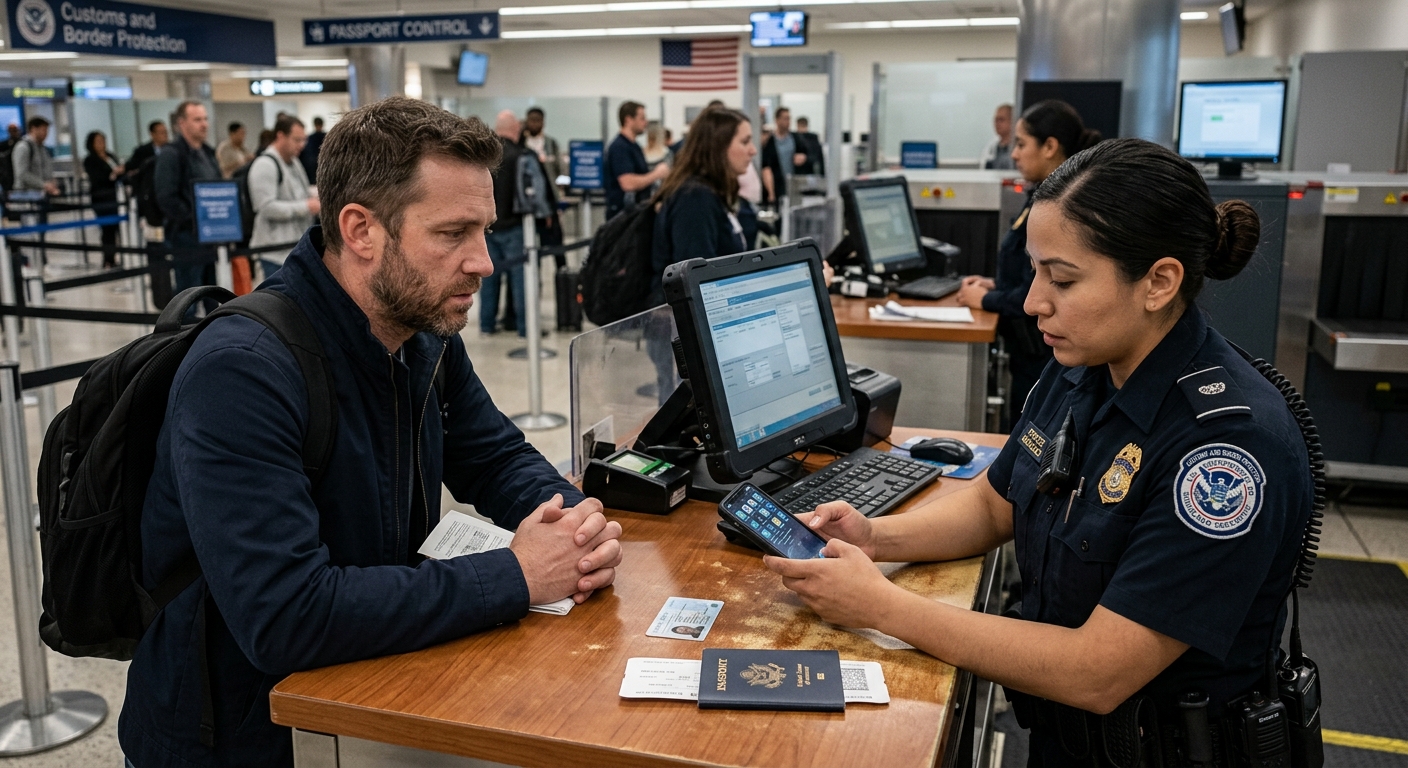
Introduction to Digital Privacy at International Crossings
In the modern era, travel has been fundamentally transformed. Passports, paper tickets, and physical luggage are no longer the only items accompanying us across international boundaries; our entire digital lives now travel with us in our pockets. Because smartphones, laptops, and tablets serve as centralized hubs for our most intimate data, crossing a United States border presents a unique and increasingly complicated legal vulnerability. The intersection of robust border security measures and the constitutional rights of travelers has created a contentious legal frontier.
At ports of entry, government agencies are tasked with ensuring that dangerous individuals and contraband do not enter the country. However, the tools used to achieve these security goals have expanded beyond opening suitcases and inspecting cargo. Customs officers now frequently demand access to electronic devices, creating a fierce debate regarding how traditional legal doctrines apply to modern technology. Understanding the framework that governs these searches is vital for any international traveler who carries a digital device.
The Historical Context of the Border Search Exception
To understand why electronic devices are vulnerable at ports of entry, one must first examine a longstanding legal doctrine known as the “border search exception.” Under the Fourth Amendment of the U.S. Constitution, individuals are generally protected against unreasonable searches and seizures. In standard domestic law enforcement scenarios, this protection typically requires police to obtain a warrant based on probable cause before conducting a search.
However, the courts have historically carved out a significant exception for international borders. The rationale behind the border search exception is rooted in the inherent sovereign right of a nation to protect its territorial integrity. The government has a compelling interest in preventing the entry of illegal weapons, narcotics, agricultural pests, and individuals who pose a security threat. Because of this paramount national security interest, the courts have long held that routine searches of persons and their luggage at the border do not require a warrant, probable cause, or even reasonable suspicion.
For centuries, this exception was applied almost exclusively to physical items. Customs officials could freely open a traveler’s trunk or inspect a physical diary for contraband or evidence of customs violations. The legal dilemma arose when this physical-world doctrine was transplanted onto the digital landscape, allowing border agents to treat a smartphone as if it were just another piece of luggage.
The Anatomy of a Digital Search at the Border
When a traveler arrives at a U.S. port of entry—whether at an international airport, a land crossing, or a seaport—officers from U.S. Customs and Border Protection (CBP) possess the authority to select individuals for secondary inspection. During this process, a traveler’s electronic devices may be seized and examined. These digital inspections generally fall into two distinct categories:
- Manual Searches (Basic): During a basic search, an officer physically handles the unlocked device and manually scrolls through its contents. This might involve looking at recent text messages, scanning through the photo gallery, reading emails, or reviewing the device’s call history. The officer relies on what is visually accessible through the device’s standard user interface.
- Forensic Searches (Advanced): An advanced search is highly technical and far more intrusive. It involves connecting the traveler’s device to external equipment—often sophisticated forensic extraction machines—to download, copy, and analyze the data. This process can recover deleted files, bypass certain app-level protections, and capture a complete digital image of the device’s hard drive for deeper analysis, often utilizing keyword searches to scan vast databases of information in seconds.
The distinction between these two types of searches is critical because it dictates the level of legal justification federal agencies currently require their officers to possess before proceeding.
Comparing Physical and Digital Searches
To fully grasp why applying traditional border search rules to digital devices is problematic, it is helpful to compare the nature of physical luggage to modern electronics.
| Feature | Physical Luggage (e.g., Suitcase) | Electronic Device (e.g., Smartphone) |
|---|---|---|
| Storage Capacity | Limited by physical dimensions; can only hold a finite number of physical documents, books, or photos. | Virtually limitless; can hold millions of pages of text, thousands of high-resolution photos, and years of correspondence. |
| Nature of Information | Typically contains items specifically packed for a single trip (clothes, toiletries, a few documents). | Contains deeply private information accumulated over years, including medical records, financial data, and intimate communications not related to travel. |
| Historical Tracking | Provides no active historical data about the traveler’s past movements or associations. | Contains precise, long-term GPS location history, revealing patterns of association, religious habits, and medical visits. |
| Connectivity | Self-contained; only holds what is physically inside. | Acts as a portal to remote cloud servers, potentially granting access to data not physically stored on the device itself. |
The Qualitative Leap in Data Storage
As illustrated in the comparison, a digital device is fundamentally different from a physical container. This distinction is at the heart of the argument that the border search exception should not apply to electronics in the same manner it applies to suitcases. A smartphone holds the combined equivalent of a person’s library, filing cabinet, safe deposit box, and photo album. It provides a comprehensive picture of an individual’s private life, revealing religious affiliations, political leanings, medical conditions, and deeply personal relationships.
While the U.S. Supreme Court has not explicitly ruled on warrantless device searches at the border, privacy advocates frequently point to the Court’s reasoning in domestic cases to highlight the need for modernization. In a landmark 2014 decision regarding police searches of cell phones during arrests, the Supreme Court recognized that treating a modern smartphone as a mere “container” is a massive underestimation of its capabilities. The Court noted that modern cell phones hold “the privacies of life,” and therefore, police must generally secure a warrant before searching them. Privacy and civil liberties advocates argue that this same logic must be extended to international borders to prevent severe constitutional overreach.
Federal Agency Directives and Operating Procedures
In the absence of a definitive Supreme Court ruling or comprehensive legislation, the rules governing border device searches are largely dictated by internal agency policies. U.S. Customs and Border Protection operates under specific directives that outline when and how officers may inspect electronics.
Under current CBP policy, officers are permitted to conduct a “basic” manual search of an electronic device without needing any individualized suspicion. This means that a traveler can be selected entirely at random, and an officer can demand the device and scroll through its contents without needing to suspect the traveler of any wrongdoing.
For an “advanced” forensic search, however, CBP directives require the officer to have “reasonable suspicion” that the traveler is violating customs laws, or that the device contains evidence of a national security threat. While reasonable suspicion provides a higher threshold than a random check, it is still a significantly lower legal standard than the “probable cause” required to obtain a search warrant from a judge. Furthermore, because these are internal agency guidelines rather than statutory laws, they can be altered by the executive branch without congressional approval.
Agency guidelines also stipulate that border officers may only search data that is locally stored on the device. They are not permitted to access data stored remotely in the cloud. Consequently, travelers are often asked to place their devices in “Airplane Mode” before a search begins to ensure that officers do not inadvertently pull down emails or files from remote servers.
The Judicial Divide on Border Electronics Searches
Because the legal standards are primarily dictated by agency policy rather than federal statute, numerous travelers whose devices were searched have filed lawsuits, leading to a complex mosaic of rulings across different U.S. Circuit Courts of Appeal. The judicial branch is currently divided on how the Fourth Amendment applies to these border device searches, creating a phenomenon known as a “circuit split.”
Some federal appellate courts have ruled that border officers must possess at least “reasonable suspicion” before conducting highly intrusive forensic examinations of a device, acknowledging the immense privacy interests at stake. These courts recognize that copying a hard drive and running complex algorithms to extract deleted data is a severe intrusion that cannot be justified merely by the fact that the individual is crossing a border.
Conversely, other courts have been more hesitant to restrict the government’s border authority, emphasizing that the primary purpose of the border search exception is to intercept digital contraband, such as illicit media or stolen proprietary information. Some legal scholars and judges argue that requiring a warrant based on probable cause would severely hinder the government’s ability to protect national security and enforce customs laws.
Until the United States Supreme Court chooses to review a border device search case and issue a definitive nationwide ruling, the level of constitutional protection a traveler enjoys may largely depend on the specific geographic location of the port of entry they use.
Proactive Measures for International Travelers
Given the legal ambiguity and the broad authority currently exercised by border agents, international travelers must be proactive in protecting their digital privacy. Legal professionals and technology experts frequently recommend a series of harm-reduction strategies for those crossing U.S. borders:
- Travel with Minimal Data: The most effective way to protect sensitive information is to not bring it to the border. Many business travelers and journalists use “burner” devices—laptops or phones wiped clean of personal data and populated only with the essential files needed for the duration of the trip.
- Utilize Strong Encryption and Passcodes: Devices should be secured with strong alphanumeric passwords rather than relying solely on biometric unlocks (like Face ID or fingerprint scanners). Biometric features can be compelled more easily than memorized passcodes in certain legal jurisdictions. Furthermore, travelers should ensure that full-disk encryption is enabled on all devices.
- Power Down Before Arrival: Turning off a device completely places it into a “First Unlock” state (commonly referred to as “Before First Unlock” or BFU). In this state, the device’s encryption keys are heavily protected, making it significantly more difficult for forensic extraction tools to bypass security measures compared to a device that is merely asleep.
- Manage Cloud Access: Since CBP policy prohibits the searching of cloud data, travelers should sign out of sensitive applications and remove local access to cloud storage before arriving at a port of entry. Storing essential data securely in the cloud allows the traveler to retrieve it once they have safely cleared customs.
Frequently Asked Questions (FAQs)
Can I refuse to unlock my phone at the border?
The consequences of refusing to provide a password depend heavily on your citizenship status. U.S. citizens cannot be denied entry into the United States, even if they refuse to unlock their devices. However, refusal can lead to extensive delays, intensive questioning, and the confiscation of the device for weeks or months while the government attempts to bypass the encryption. For non-U.S. citizens (including tourists and visa holders), refusing to unlock a device can result in being denied entry and deported.
Are border agents allowed to copy my data permanently?
If an advanced search is conducted and no evidence of illegal activity is found, agency directives require that any information copied from the device be destroyed within a specific timeframe (usually 21 days, though extensions can be requested). If evidence of a crime is discovered, the data is retained and potentially shared with other federal, state, or local law enforcement agencies.
Does the border search exception only apply at physical land borders?
No. The border search exception applies to the “functional equivalent” of a border. This includes international airports located deep within the interior of the United States. When you land on a direct flight from another country, the customs area of that airport is legally treated as the border.
Do agents need a warrant to search my social media?
If the social media data is locally cached on your device, border agents may read it during a manual search. However, they are not supposed to use your device to actively access live internet feeds or pull down new data from social media servers. Separately, visa applicants are often required to provide their social media handles during the application process, which the government monitors independent of device searches.
As society becomes increasingly tethered to digital technology, the friction between national security imperatives and individual privacy rights will only intensify. The legal framework surrounding digital border searches remains in a state of flux, underscoring the importance of understanding one’s rights and taking deliberate steps to secure sensitive personal data before embarking on international travel.
References
- CBP Directive No. 3340-049A: Border Search of Electronic Devices — U.S. Customs and Border Protection. 2018-01-04. https://www.cbp.gov/document/directives/cbp-directive-no-3340-049a-border-search-electronic-devices
- Riley v. California, 573 U.S. 373 — Supreme Court of the United States. 2014-06-25. https://www.supremecourt.gov/opinions/13pdf/13-132_8l9c.pdf
- CBP’s Searches of Electronic Devices at Ports of Entry (OIG-19-10) — Department of Homeland Security Office of Inspector General. 2018-11-26. https://www.oig.dhs.gov/sites/default/files/assets/2018-12/OIG-19-10-Nov18.pdf
- Border Searches of Electronic Devices: Background and Legal Issues — Congressional Research Service. 2023-01-24. https://crsreports.congress.gov/product/pdf/R/R45175
Similar Articles








Read full bio of Sneha Tete


