
The Battle Over Banned Books in Military K-12 Schools
Free speech battleground: Banned books in military base schools.
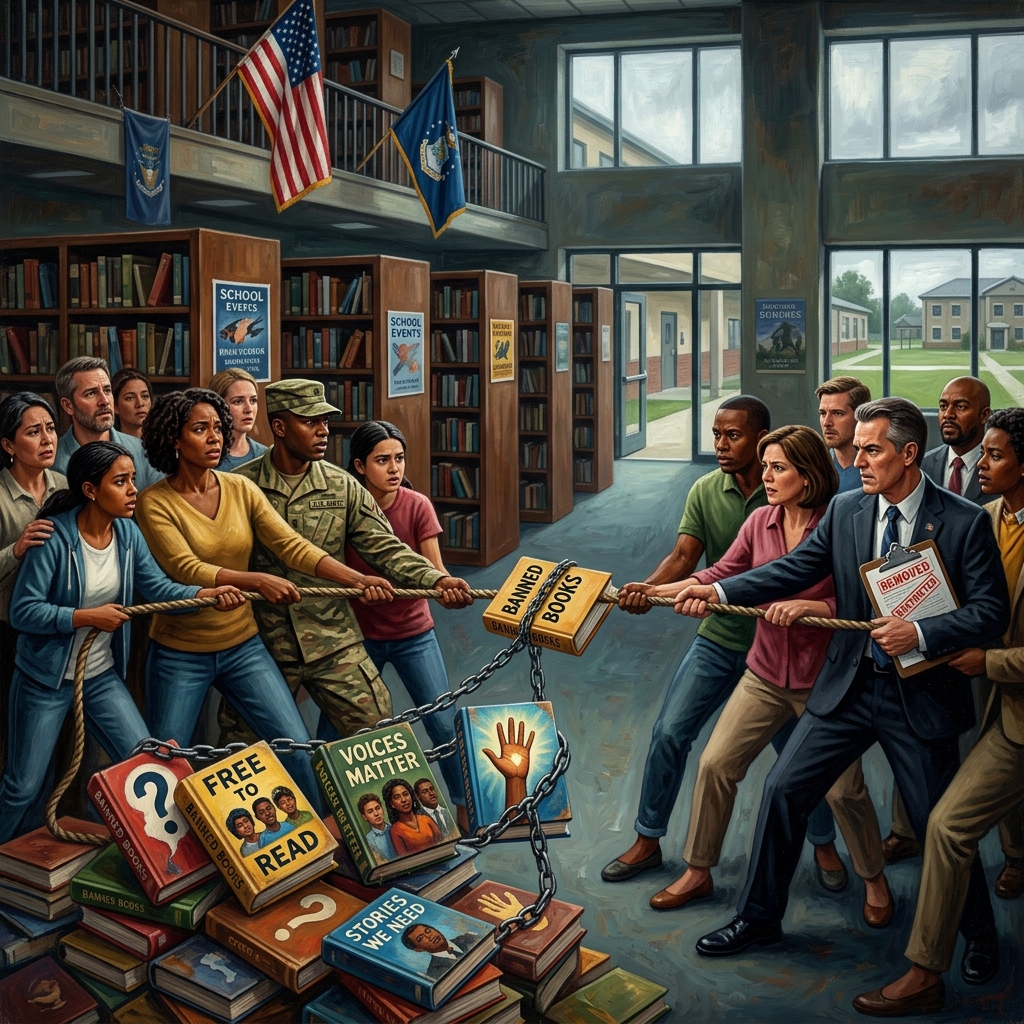
Introduction: The New Frontier of Educational Censorship
For decades, the educational achievements of military-run schools have been celebrated across the United States. Managed by the Department of Defense Education Activity (DoDEA), this unique federal agency operates 161 accredited schools across 11 countries, seven states, Guam, and Puerto Rico. Educating approximately 67,000 children of active-duty military and civilian defense personnel, DoDEA schools routinely lead nationwide math and reading proficiency scores. However, in early 2025, these global classrooms suddenly became a key battleground for an intense cultural and legal clash. Following administrative mandates designed to restrict certain discussions on race, gender, and social history, the DoDEA implemented sweeping library sweeps and curriculum modifications. Over 500 books were categorized as ‘quarantined’ or slated for review, stripping military children of access to award-winning historical, cultural, and literary works. This rapid wave of restrictions sparked widespread public alarm and eventually led to a major federal lawsuit.
The Political Drivers of Classroom Censorship
The sudden removal of literature in DoDEA schools was not an isolated choice. Rather, it resulted directly from three federal executive directives signed in late January 2025, which sought to purge federally funded schools of teachings related to ‘gender ideology’ and ‘divisive equity ideology’:
- Executive Order 14168: Barred federally supported schools from providing curriculum or materials validating diverse gender identities.
- Executive Order 14185: Targeted and sought to eliminate diversity, equity, and inclusion (DEI) initiatives within Department of Defense-run systems.
- Executive Order 14190: Explicitly banned K-12 materials exploring systemic racism, white privilege, or alternative historical perspectives regarding race relations in American history.
Fearing compliance penalties, DoDEA leadership took immediate action. Rather than vetting books case-by-case, local administrators swept library shelves, placing hundreds of titles in quarantine pending permanent classification decisions.
Broadening the Ban: Extracurricular and Curricular Sweeps
The administrative efforts in military schools quickly expanded beyond library books. To ensure complete compliance with the federal directives, DoDEA administrators revised classroom lesson plans, altered advanced course structures, and prohibited cultural activities. According to legal briefs, the restrictions included:
- Cancellation of Heritage Months: Long-standing cultural events like Black History Month and Asian American and Pacific Islander Heritage Month were prohibited, and historical displays were dismantled.
- AP Psychology Reductions: Educators were instructed to remove textbook chapters discussing human sexuality and gender identity.
- Scrubbing Health Curricula: Portions of textbooks discussing puberty, sexual harassment prevention, and communicable diseases were restricted.
- Student Publications: Yearbooks were scrutinized to prevent content indicating support for social transitions.
Librarians reported feeling compelled to pull any literature detailing slavery, civil rights, or Native American displacement, demonstrating the chilling effect of these sweeping educational directives.
Spotlight on 13 Censored Works
To illustrate the scope of the DoDEA’s sweeping book review, civil liberties groups highlighted thirteen high-profile titles representing a wide array of genres. The diverse nature of these books demonstrates how easily general educational materials can be swept up by broad, non-specific censorship guidelines:
- Freckleface Strawberry by Julianne Moore: A children’s story about a young girl learning to overcome self-consciousness about her freckles and red hair, celebrating physical differences and self-acceptance.
- To Kill a Mockingbird by Harper Lee: A classroom classic confronting systemic racism, empathy, and moral growth in the segregated American South, viewed through the eyes of Scout Finch.
- Julián Is a Mermaid by Jessica Love: An illustrated picture book celebrating a young boy’s creative self-expression and the warm support of his loving grandmother.
- The Handmaid’s Tale by Margaret Atwood: A dystopian masterpiece depicting a theocratic regime that strips women of basic rights, raising critical questions about autonomy and control.
- I Kissed Shara Wheeler by Casey McQuiston: A contemporary young adult romance and mystery novel exploring adolescent identity, academic expectations, and LGBTQ+ relationships.
- The Color Purple by Alice Walker: An epistolary novel tracing a Black woman’s journey toward resilience and self-worth amidst domestic abuse and racial hardship in rural Georgia.
- The New Jim Crow by Michelle Alexander: A landmark work of legal scholarship explaining how mass incarceration operates as a modern system of racial control in the United States.
- The Kite Runner by Khaled Hosseini: Set against Afghanistan’s tumultuous history, this novel explores redemption, friendship, class divides, and the heavy toll of trauma.
- The Nickel Boys by Colson Whitehead: Based on a brutal Florida reform school, this Pulitzer Prize-winning novel exposes the horrors of institutional racism and systemic violence.
- The Power of Style by Christian Allaire: This non-fiction book highlights how Indigenous, queer, and minority populations use fashion to honor their heritage and challenge norms.
- The Climate Book by Greta Thunberg: A collaborative educational resource compiling global scientific perspectives on climate science, sustainability, and carbon emissions.
- The Untold History of the United States by Oliver Stone and Peter Kuznick: A critical reevaluation of modern American history, questioning conventional foreign policy and highlighting overlooked historical narratives.
- Rise: A Pop History of Asian America by Jeff Yang, Phil Yu, and Philip Wang: This cultural chronicle charts the struggles, representation, and triumphs of Asian Americans from the 1990s onward.
Comparison Table: Key Banned Titles
| Book Title & Author | Primary Narrative Focus | Stated Reason for Removal |
|---|---|---|
| Freckleface Strawberry Julianne Moore | Overcoming physical self-consciousness and embracing personal differences. | Allegedly promoting self-identity concepts linked to gender ideology. |
| To Kill a Mockingbird Harper Lee | A lawyer defending a Black man falsely accused of assault in the Jim Crow South. | Portraying historical racism and institutional inequalities. |
| Julián Is a Mermaid Jessica Love | A young boy’s imaginative exploration of dressing up as a mermaid. | Allegedly encouraging social transition and non-binary gender concepts. |
| The Handmaid’s Tale Margaret Atwood | A female narrator navigating reproductive enslavement in a theocratic regime. | Addressing sensitive sexual themes and critical views of religious institutions. |
| I Kissed Shara Wheeler Casey McQuiston | High school rivals navigating a mystery and queer identity in Alabama. | Violating prohibitions on discussing LGBTQ+ themes and adolescent sexuality. |
| The Color Purple Alice Walker | A Black woman’s path to self-worth amidst domestic abuse and racial hardship. | Depicting sexual violence, domestic abuse, and historic racism. |
| The New Jim Crow Michelle Alexander | The intersection of mass incarceration, drug policies, and modern racial control. | Violating rules against teaching concepts related to systemic racism. |
| The Kite Runner Khaled Hosseini | A young Afghan man seeking redemption for a childhood betrayal in Kabul. | Depicting sexual assault, religious themes, and Afghan culture. |
| The Nickel Boys Colson Whitehead | The systemic mistreatment of Black boys in a mid-20th-century reform school. | Featuring harsh critiques of historical segregation and institutional violence. |
| The Power of Style Christian Allaire | The reclamation of history and identity through clothing, makeup, and hair. | Flagged for promoting diverse, non-traditional gender and racial viewpoints. |
| The Climate Book Greta Thunberg | Scientific analysis of global warming, carbon emissions, and climate action. | Presenting politically controversial environmental science perspectives. |
| The Untold History of the United States Oliver Stone & Peter Kuznick | A critical examination of standard American foreign policy and historic events. | Allegedly promoting highly critical or un-American interpretations of history. |
| Rise: A Pop History of Asian America Jeff Yang, Phil Yu, & Philip Wang | The progression of Asian American representation in modern media and culture. | Exploring topics related to systemic bias, race relations, and identity. |
Legal Pushback: The Case of E.K. v. DoDEA
The swift implementation of these sweeping bans did not go unchallenged. In April 2025, six military families representing twelve students filed a federal lawsuit in the Eastern District of Virginia. The case, E.K. v. Department of Defense Education Activity, was brought forward with the legal assistance of the American Civil Liberties Union (ACLU), the ACLU of Virginia, and the ACLU of Kentucky.
The plaintiffs—who ranged from pre-kindergarten to eleventh grade—were children of active-duty military personnel stationed at major bases in Virginia, Kentucky, Italy, and Japan. The lawsuit argued that the arbitrary removal of library books, modification of academic courses, and cancellation of cultural observances violated students’ First Amendment rights. The core legal argument was clear: military children attending federal civilian schools do not surrender their fundamental constitutional rights because their parents serve in the armed forces.
In October 2025, U.S. District Judge Patricia Tolliver Giles delivered a major victory for the plaintiffs. The court issued a preliminary injunction ordering the Department of Defense to immediately return the banned library books and curricular materials to the shelves at the five schools attended by the plaintiffs’ children. While the injunction was limited in scope, the ruling sent a strong signal that treating school libraries as political battlegrounds violates constitutional protections.
Legislative Defenses: Protecting Military Families
As the legal battle progressed in federal court, congressional representatives sought a legislative remedy to prevent future overreach. In September 2025, Representatives Jamie Raskin and Chrissy Houlahan introduced the ‘Stop Censoring Military Families Act’. The proposed legislation aimed to permanently protect DoDEA schools from politically motivated curriculum modifications and library sweeps.
The bill sought to restore all 596 books removed under the administration’s directives and establish safeguards to prevent political appointees from overriding professional library standards and educator decisions. Sponsors of the bill argued that the children of active-duty service members, who already face unique challenges such as frequent moves and parental deployments, deserve a stable, comprehensive, and world-class educational experience free from partisan culture wars. They emphasized that protecting educational freedom in military schools is essential to supporting troop morale and retention, as military families should not have to sacrifice their children’s education in service of their country.
Frequently Asked Questions
Why were books banned in DoD schools?
The books were removed to comply with several federal executive orders signed in January 2025. These orders banned ‘gender ideology’ and ‘divisive equity ideology’ in federally funded K-12 programs. Fearing compliance penalties, DoDEA administrators proactively swept hundreds of titles from school library shelves worldwide.
Are military students protected by the First Amendment?
Yes. Federal courts have affirmed that the children of military service members attending DoDEA schools enjoy the same First Amendment protections as civilian students. Attending a school on a military base does not strip students of their constitutional right to read, learn, and express themselves.
What was the outcome of the ACLU lawsuit?
In October 2025, a federal judge issued a preliminary injunction in the case of E.K. v. DoDEA. The court ruled that the book bans and curriculum changes likely violated students’ First Amendment rights, ordering the immediate reinstatement of the banned books and curricula in the five schools attended by the plaintiffs.
What types of books were targeted under the ban?
The ban targeted a wide variety of literature, including children’s picture books on diversity, classic high school novels addressing historic racial prejudice, memoirs focusing on LGBTQ+ identity, and non-fiction texts examining modern sociology, history, and climate change science.
How did these policies affect extracurricular school activities?
Beyond book bans, the DoDEA restricted or canceled long-standing cultural observances such as Black History Month and Asian American and Pacific Islander Heritage Month, and modified AP Psychology and sexual health education curricula. Yearbooks were also scrutinized to ensure compliance with gender ideology restrictions.
References
- E.K. v. Department of Defense Education Activity — American Civil Liberties Union. 2025-10-20. https://www.aclu.org/cases/ek-v-department-of-defense-education-activity
- Raskin, Houlahan Push to Restore Banned Books to Defense Department Schools, Protect Students from Political Interference — U.S. House of Representatives (Office of Rep. Jamie Raskin). 2025-09-19. https://raskin.house.gov/2025/9/raskin-houlahan-push-to-restore-banned-books-to-defense-department-schools
- 596 Books Banned by Department of Defense Schools Include Titles on Democracy, Feminism, Racism — PEN America. 2025-07-17. https://pen.org/press-release/596-books-banned-by-department-of-defense-schools-include-titles-on-democracy-feminism-racism/
Similar Articles








Read full bio of Sneha Tete


