
Digital Privacy at the US Border: Device Search Rights
Navigate the legal landscape of electronic device searches at US borders.
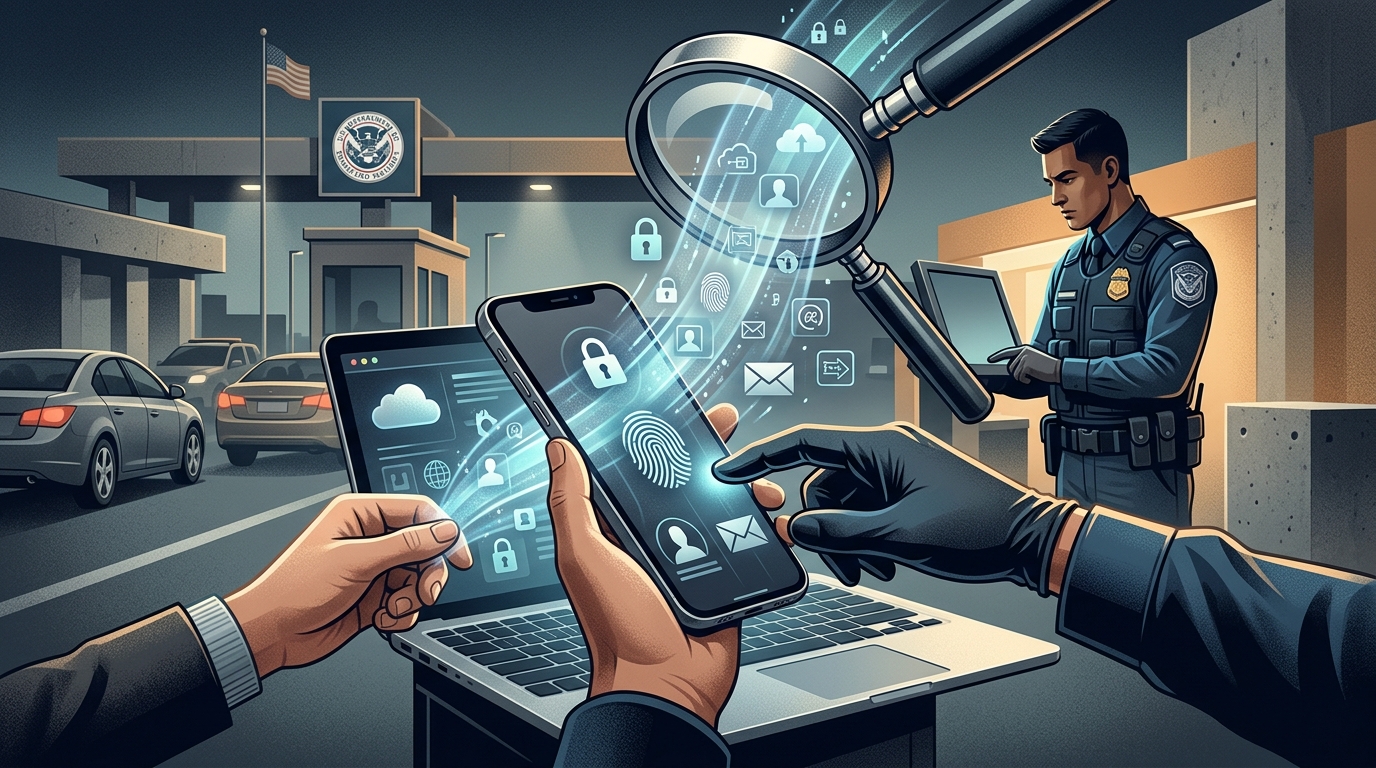
In an increasingly interconnected world, our electronic devices hold the keys to our most intimate personal, professional, and financial lives. When crossing international boundaries, the intersection of digital privacy and national security becomes a complex legal frontier. For travelers arriving at or departing from the United States, understanding the authority of U.S. Customs and Border Protection (CBP) to search smartphones, laptops, and tablets is an essential component of modern travel.
The rules governing the border are significantly different from those applied within the interior of the country. Traditional Fourth Amendment protections, which generally require law enforcement officers to obtain a warrant supported by probable cause before conducting a search, are subject to a longstanding caveat known as the “border search exception.” This article explores the current state of digital privacy at U.S. ports of entry, breaking down recent policy updates, court rulings, and practical strategies for safeguarding your sensitive information.
The Fourth Amendment and the Border Search Exception
To grasp why federal agents can inspect your phone without a warrant, one must first understand the historical context of the border search exception. Rooted in the government’s sovereign right to protect its territorial integrity, this doctrine allows customs officers to conduct routine searches of luggage, vehicles, and persons crossing the border without any individualized suspicion. The underlying rationale is that the nation has a compelling interest in preventing the entry of contraband, undocumented individuals, and potential security threats.
The Fourth Amendment of the U.S. Constitution guarantees the right of the people to be secure in their persons, houses, papers, and effects, against unreasonable searches and seizures. In the domestic context, this typically means law enforcement must demonstrate probable cause and obtain a warrant signed by a judge. However, since the foundation of the Republic, the border has been treated as a unique jurisdictional zone. The First Congress passed legislation granting broad search powers to customs officials in the very same year it proposed the Fourth Amendment, demonstrating a historical understanding that border searches are inherently “reasonable.” In the landmark case United States v. Ramsey (1977), the Supreme Court solidified the border search exception, ruling that routine searches of persons and effects entering the country do not require a warrant or any level of individualized suspicion.
For decades, this doctrine was applied straightforwardly to physical items. An agent could open a suitcase, inspect a physical ledger, or examine photographs printed on paper. However, the advent of high-capacity digital storage transformed the nature of what travelers carry. A modern smartphone contains orders of magnitude more information than a traditional briefcase, encompassing years of email correspondence, real-time location data, medical records, and banking histories. The Supreme Court recognized this unique digital reality in the domestic context in Riley v. California (2014), ruling that police generally need a warrant to search a cell phone seized during an arrest. However, the Supreme Court has not yet explicitly applied this exact standard to border searches, leaving a patchwork of circuit court decisions and agency directives to govern the process.
Deconstructing CBP Directive 3340-049B
In January 2026, U.S. Customs and Border Protection issued an updated policy, CBP Directive No. 3340-049B: Border Search of Electronic Devices. This comprehensive directive establishes the standard operating procedures for how agents may search, review, retain, and share digital information found on devices belonging to inbound and outbound travelers. The directive explicitly states that it applies to any electronic or digital device capable of storing information, including tablets, removable media, disks, drives, cameras, and even wearable technology.
Crucially, the policy limits searches to data physically stored on the device itself. CBP officers are instructed to examine only the localized files and are prohibited from using the device to access data stored in the cloud. To enforce this, agents often request that travelers place their devices in “Airplane Mode” before the inspection begins. This prevents the inadvertent downloading of remote data, ensuring the search is restricted to the “digital luggage” actually crossing the border at that moment.
The Distinction Between Basic and Advanced Searches
CBP’s operational framework heavily relies on the categorization of searches into two distinct tiers: basic (or manual) and advanced (or forensic). Understanding this dichotomy is essential for evaluating the legality and scope of an encounter.
Basic Searches: A basic search involves an officer manually scrolling through the applications, photographs, messages, or files on a device, much like a typical user would. According to CBP policy and several federal circuit courts, basic searches are considered “routine” border searches. As such, officers do not need a warrant, probable cause, or even reasonable suspicion to initiate them. The sheer act of crossing the border subjects the traveler’s physical device to this level of scrutiny.
Advanced Searches: An advanced search is considerably more intrusive. It involves the use of external equipment, software, or specialized forensic tools to connect to the device. This allows agents to retrieve deleted files, bypass encryption, analyze metadata, and duplicate the device’s entire hard drive for later review. Because of the highly invasive nature of advanced searches, CBP Directive 3340-049B requires agents to have “reasonable suspicion” of a violation of a law enforced by CBP, or a distinct national security concern, before proceeding. Furthermore, such searches typically require approval from a senior supervisor.
| Search Parameter | Basic (Manual) Search | Advanced (Forensic) Search |
|---|---|---|
| Methodology | Manual scrolling, tapping through apps and files natively on the device. | Connecting the device to external hardware or forensic software to extract data. |
| Legal Threshold Required | None (Considered a routine search). | Reasonable suspicion of illegal activity or a national security threat. |
| Scope of Data Accessed | Visible files, photos, texts stored locally on the device. | Deleted files, hidden partitions, encrypted data, metadata, and full disk imaging. |
| Supervisory Approval | Generally not required. | Requires authorization from a senior level manager (Grade 14 or equivalent). |
The Judicial Divide: Circuit Court Rulings on Digital Border Searches
The policies dictated by CBP are largely a response to ongoing litigation and shifting jurisprudence in federal courts. Advocacy groups have consistently argued that any search of an electronic device at the border—whether basic or advanced—should require a probable cause warrant, given the unprecedented privacy interests at stake.
The U.S. Courts of Appeals are currently fractured on this issue. The First Circuit Court of Appeals addressed this directly in Alasaad v. Mayorkas (2021). The plaintiffs argued that the sheer volume of personal data on a phone renders any search non-routine. The First Circuit disagreed, ruling that basic, manual searches of electronic devices at the border do not require reasonable suspicion. Conversely, the Fourth Circuit in United States v. Kolsuz (2018) determined that a forensic search of a digital device is non-routine and must be supported by individualized suspicion, specifically reasonable suspicion of a transnational offense.
Furthermore, the Ninth Circuit in United States v. Cano (2019) emphasized that border searches must be tailored strictly to the detection of digital contraband—such as child exploitation material—rather than serving as a dragnet for general evidence of past crimes. This deeply fragmented legal landscape means that a traveler’s rights can vary dramatically depending on the specific airport or land crossing they arrive at. Until the Supreme Court issues a definitive, nationwide ruling on digital border searches, these circuit splits will continue to define the boundaries of digital privacy.
Passwords, Biometrics, and Compelled Decryption
One of the most fraught aspects of a border encounter involves passwords and biometric unlocking mechanisms (like Face ID or fingerprint scanners). If a CBP officer asks you to unlock your device, what are your obligations, and what are the consequences of refusal?
From a legal standpoint, travelers have a Fifth Amendment right against self-incrimination, which courts generally interpret as protecting individuals from being compelled to reveal the contents of their mind—such as a memorized password or PIN. However, biometric features are often treated differently by the courts; because providing a fingerprint or face scan does not require “testimonial” communication, law enforcement may sometimes compel individuals to unlock devices biometrically without violating the Fifth Amendment.
Despite these constitutional nuances, the reality at the border is stark. If a traveler refuses to provide a password or unlock a device, CBP agents cannot physically force the person to speak the password. However, they possess the authority to seize the locked device and send it to a forensic laboratory to attempt decryption. The confiscation can last for weeks or even months. Furthermore, for non-U.S. citizens (including tourists, business travelers, and visa holders), refusing to cooperate with a border search can lead to a determination of inadmissibility, resulting in denied entry to the United States and the potential revocation of a visa.
U.S. citizens cannot be denied entry to their own country for refusing to unlock a device. A citizen who remains silent will eventually be allowed to re-enter the United States, though they may experience significant delays, secondary questioning, and the temporary loss of their electronic property.
Best Practices for Minimizing Digital Exposure
Given the expansive authority of border agents and the severe implications of device confiscation, security experts and legal advocates recommend a proactive approach to digital hygiene before crossing international borders. Travelers should carefully consider what information is strictly necessary for their trip and take steps to limit the exposure of highly sensitive corporate, legal, or medical data.
- Travel with Minimal Data: The most effective way to protect your information is to ensure it is not present on the device crossing the border. Consider using a “burner” phone or a freshly formatted travel laptop that contains only the essential applications and documents needed for your itinerary.
- Leverage Cloud Storage: Since CBP policy prohibits the search of remote data, travelers can remove sensitive files from their physical devices and store them securely in the cloud prior to the border crossing. Once admitted to the country, the data can be re-downloaded.
- Power Down Devices: When approaching a port of entry, completely power down your devices. A device that is turned off invokes a stronger encryption state (often referred to as “Before First Unlock” or BFU) than a device that is merely asleep. This makes it significantly harder for forensic tools to extract data if the device is seized.
- Disable Biometrics: Temporarily disabling Face ID or fingerprint authentication and relying solely on a strong, alphanumeric passphrase can prevent a situation where an agent simply holds the phone up to your face to unlock it.
- Understand Corporate Policies and MDM: For business professionals, crossing the border with company equipment poses significant professional liability. Devices may contain proprietary source code or client data protected by non-disclosure agreements. Many organizations mandate the use of Mobile Device Management (MDM) software, which allows an IT department to remotely wipe a device if it is seized. Travelers carrying privileged data should carry a formal letter from corporate counsel explaining the nature of the data.
Frequently Asked Questions (FAQ)
- Can CBP agents read my text messages and emails?
- Yes. If the messages and emails are downloaded and stored locally on your device, they are subject to a basic manual search. Agents are not permitted to access messages stored exclusively on remote servers, which is why devices are typically placed in airplane mode during the inspection.
- What happens if I am carrying attorney-client privileged information?
- CBP Directive 3340-049B includes specific protocols for handling sensitive material. If a traveler asserts that a device contains privileged legal data, medical records, or journalistic work product, the officers are supposed to consult with CBP legal counsel before proceeding with the search. However, asserting privilege does not automatically exempt the device from being searched; it simply triggers a higher level of internal review.
- Will my device be returned if it is seized?
- In most cases, yes. If CBP seizes a device to conduct an advanced forensic search off-site, it will be returned to the traveler once the search is complete, provided no digital contraband or evidence of a crime is discovered. However, this process can take weeks or months. Furthermore, if the search reveals illegal material, the device may be permanently confiscated as evidence.
- Does CBP track how many devices they search?
- Yes. CBP is required to publish statistics on border searches of electronic devices. Historically, the agency reports that a fraction of one percent of all arriving international travelers have their devices searched. While this percentage is statistically small, it translates to tens of thousands of individuals each year facing digital scrutiny.
- Can I record the CBP agents during the search?
- Policies regarding photography and video recording at ports of entry, particularly in secure areas like customs processing halls, are highly restrictive. Recording agents in secondary inspection areas is generally prohibited and can result in the confiscation of the recording device and further legal complications.
The intersection of technology and border security remains one of the most dynamic areas of modern constitutional law. As electronic devices continue to evolve, housing ever more comprehensive profiles of our lives, the debate over how to balance personal privacy against the imperatives of national security will only intensify. Until Congress enacts comprehensive legislation or the Supreme Court issues a definitive ruling applying the warrant requirement to digital border searches, travelers must navigate this uncertain terrain with awareness, preparation, and a clear understanding of their rights.
References
- CBP Directive No. 3340-049B: Border Search of Electronic Devices — U.S. Customs and Border Protection. 2026-02-02. https://www.cbp.gov/document/directives/cbp-directive-no-3340-049b-border-search-electronic-devices
- Border Search of Electronic Devices at Ports of Entry — U.S. Customs and Border Protection. 2026-05-01. https://www.cbp.gov/travel/cbp-search-authority/border-search-electronic-devices
- EFF to Third Circuit: Electronic Device Searches at the Border Require a Warrant — Electronic Frontier Foundation. 2026-03-03. https://www.eff.org/press/releases/eff-third-circuit-electronic-device-searches-border-require-warrant
- DHS/CBP/PIA-008 – Border Searches of Electronic Devices — U.S. Department of Homeland Security. 2022-05-19. https://www.dhs.gov/publication/border-searches-electronic-devices
Similar Articles








Read full bio of medha deb


