
Eviction Records: The Digital Scarlet Letter in Housing
How tenant screening algorithms weaponize court filings to deny fair housing.
The Invisible Barrier in the Modern Housing Market
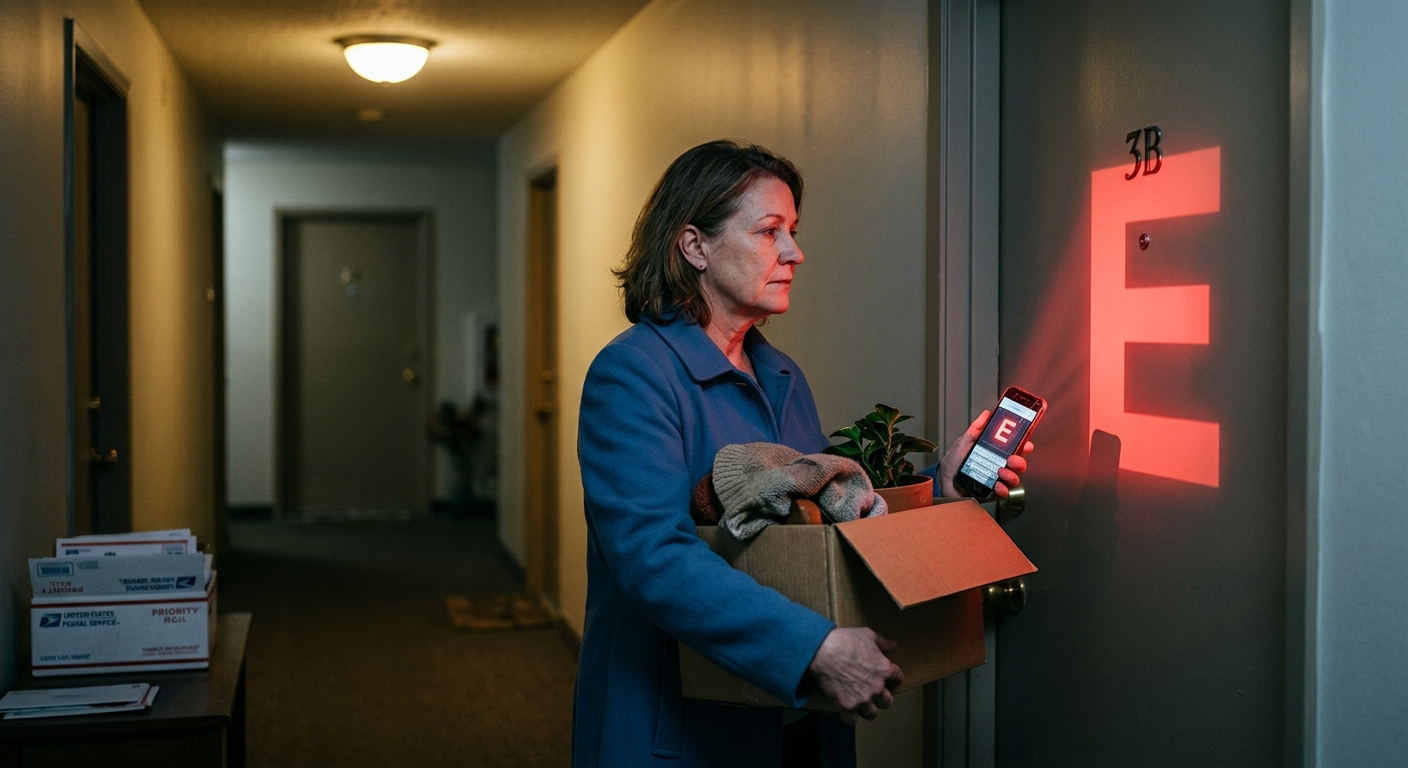
Finding a safe, affordable place to live is increasingly difficult in the modern rental market, driven by skyrocketing costs and shrinking inventory. However, for millions of prospective renters, the primary obstacle is not the price of rent or the size of a security deposit; it is the invisible, automated wall of digital data. In the era of algorithmic background checks, an individual’s civil court history has become a definitive arbiter of their housing destiny. Specifically, the mere existence of an eviction filing on a consumer background report acts as a digital scarlet letter, effectively exiling families from the mainstream rental market.
Unlike a criminal conviction or a finalized court judgment, the devastating impact of an eviction record often begins the moment a landlord files a complaint in civil court. This action generates a public record that is instantly scraped, stored, and sold by third-party data brokers. For a tenant, this means that even if a housing dispute is quickly resolved, dismissed, or won in court, the digital stain remains. This systemic reliance on incomplete and often misleading data has transformed temporary financial hardships or minor landlord-tenant disputes into permanent, lifelong embargos on housing access, compounding America’s housing crisis.
The Machinery of Algorithmic Tenant Screening
To understand how a single court filing transforms into a permanent barrier, one must examine the mechanics of the tenant screening industry. Historically, landlords relied on personal references, localized credit checks, and direct conversations to evaluate prospective tenants. Today, property management companies and corporate landlords outsource this decision-making process to Consumer Reporting Agencies (CRAs) that specialize in tenant background checks.
These screening companies utilize automated software to scrape vast quantities of public records from local, state, and national databases. They aggregate credit histories, criminal background checks, sex offender registries, and civil court records—most notably, eviction filings. Once this data is compiled, proprietary algorithms process the information to generate a risk score or a simple “approve/deny” recommendation for the landlord.
The speed and automation of this process come at the steep cost of accuracy and context. The algorithms utilized by these data brokers are notoriously rigid. They rarely differentiate between a tenant who was forcefully removed from a property for non-payment and a tenant whose landlord filed a retaliatory, baseless lawsuit that a judge later threw out. The system prioritizes the existence of a record over the nuance of the outcome. Consequently, millions of renters are subjected to algorithmic blacklisting, rejected by automated systems before a human property manager ever reviews their application.
The Critical Difference Between a Filing and an Eviction
The most egregious flaw in the modern tenant screening ecosystem is the conflation of eviction filings with actual evictions. An eviction filing is simply the initiation of a legal process; it is a claim made by a property owner. It is not a finding of fact, a declaration of guilt, or a court order.
There are numerous reasons a filing might appear on a person’s record without resulting in an actual displacement. A tenant might have withheld rent legally because the landlord refused to fix a critical health hazard, such as a broken boiler or toxic mold. A landlord might have filed the paperwork prematurely due to an administrative error regarding a lost rent check. In many instances, tenants and landlords reach a settlement out of court, or the tenant wins the case outright.
However, tenant screening algorithms are generally blind to these outcomes. Because court systems update their records inconsistently, and because data brokers have little financial incentive to continuously verify the final disposition of every case they scrape, the initial filing is what remains permanently etched into the renter’s profile. When the automated report is sent to a prospective landlord, it simply flags “Eviction Record Found,” triggering an automatic rejection under the strict, zero-tolerance policies adopted by most modern property management firms.
Demographics of Displacement: The Racial and Gender Divide
The weaponization of civil court records does not impact all communities equally. The burden of this digital scarlet letter falls disproportionately on marginalized groups, mirroring and amplifying historical inequities in American housing.
Extensive research into the demographics of eviction reveals a stark racial and gender divide. According to comprehensive data analysis conducted by the Eviction Lab at Princeton University, Black and Latinx renters face eviction filings at significantly higher rates than their white counterparts. The disparities become even more pronounced when analyzing the intersection of race and gender. Black women, in particular, are disproportionately targeted for eviction filings, facing a heightened risk that compounds existing systemic hurdles such as the racial wage gap and housing discrimination.
Furthermore, the presence of children in a household dramatically increases the likelihood of facing a housing court summons. Statistics indicate that annual eviction filing rates among Black adults living with children can exceed 25% in certain jurisdictions, representing a risk factor that is more than double that of other demographic groups. Because these marginalized populations are subjected to higher rates of initial filings, they inherently suffer the highest rates of permanent algorithmic blacklisting. This creates a devastating feedback loop: historical discrimination leads to financial instability, which leads to an eviction filing, which in turn permanently locks the family out of safe, affordable housing in the future.
The Cascading Costs of the “Scarlet Letter”
When a tenant is blacklisted by mainstream property management companies due to an eviction record, the consequences ripple outward, affecting every aspect of their social and economic well-being. The inability to secure traditional housing forces individuals and families into a shadow rental market fraught with exploitation and danger.
- Substandard Housing Conditions: Rejected by reputable landlords, renters are often forced to lease from “slumlords” who do not run background checks but fail to maintain safe living conditions. These properties often suffer from structural neglect, pest infestations, and lead-paint hazards.
- Predatory Financial Terms: Landlords who are willing to overlook an eviction record frequently offset their perceived risk by charging exorbitant, non-refundable move-in fees, doubling the required security deposit, or inflating the monthly rent.
- Geographic Displacement: Renters are often pushed out of safe neighborhoods with good schools and economic opportunities, forced to relocate to under-resourced areas located far from their places of employment.
- Increased Risk of Homelessness: For many, the complete inability to bypass algorithmic screening results in periods of housing instability, couch-surfing, living in vehicles, or entering the shelter system.
Regulatory Interventions and the Fair Housing Act
The growing crisis of algorithmic housing denial has caught the attention of federal regulators. The Consumer Financial Protection Bureau (CFPB) and the Federal Trade Commission (FTC) share enforcement authority over the Fair Credit Reporting Act (FCRA), the primary federal law governing tenant screening companies. In recent years, both agencies have signaled a need for aggressive reform.
The CFPB has issued advisory opinions explicitly warning data brokers that including obsolete, sealed, or legally restricted eviction records in background reports violates federal law. Furthermore, the agency has emphasized that screeners must take reasonable steps to ensure maximum possible accuracy, which includes updating records to reflect when a case has been dismissed or resolved in favor of the tenant. Despite these warnings, the decentralized nature of court data and the sheer volume of records processed daily make comprehensive enforcement incredibly challenging.
In parallel, the Department of Housing and Urban Development (HUD) has scrutinized these practices through the lens of the Fair Housing Act. HUD guidance has increasingly focused on the concept of “disparate impact”—the legal doctrine stating that a policy can be considered discriminatory if it disproportionately harms a protected class, even if the policy is ostensibly neutral. Because eviction filings disproportionately impact Black and Latinx women, blanket policies that deny housing to anyone with a court record may violate federal fair housing laws. Advocates argue that landlords must abandon rigid algorithms in favor of individualized, holistic assessments of prospective tenants.
Comparing Credit Reports and Tenant Screening Reports
To fully grasp the housing application ecosystem, renters must understand the difference between standard credit reports and specialized tenant background checks, as they are often erroneously used interchangeably.
| Feature | Credit Report | Tenant Screening Report |
|---|---|---|
| Primary Source of Data | Banks, credit card issuers, auto lenders, mortgage companies. | Public civil court databases, criminal registries, proprietary rental data. |
| Key Indicators | Payment history, credit utilization, total debt, age of credit accounts. | Eviction history, lease violations, criminal background, sex offender status. |
| Regulatory Oversight | Heavily regulated by the FCRA with standardized dispute processes. | Regulated by the FCRA, but dispute processes are often convoluted and opaque. |
| Predictive Value for Rent | Evaluates general debt management; not specifically tailored to rent. | Claimed to predict tenancy success, though heavily criticized for inaccuracies. |
Paths Forward: Policy Solutions and Reform
Addressing the crisis of the digital scarlet letter requires a multi-pronged approach involving legislative action, technological reform, and tenant empowerment. Several states and municipalities have already begun piloting crucial interventions.
First, the implementation of eviction record sealing or “Clean Slate” legislation is paramount. These laws automatically shield eviction filings from public view at the point of filing, only making them accessible if a landlord actually wins a final judgment. If the case is dismissed or settled, the record remains permanently sealed from data brokers, preventing algorithmic blacklisting.
Second, establishing a universal Right to Counsel in housing court can drastically alter the landscape. When tenants have legal representation, they are far more likely to win their cases, negotiate settlements that avoid a formal judgment, and successfully petition to have erroneous filings expunged from the public record.
Finally, there must be stricter regulatory oversight of the proprietary algorithms used by CRAs. Data brokers must be mandated to prioritize case dispositions over mere filings, and landlords must be prohibited from utilizing automated systems that implement blanket rejections without offering the applicant a transparent appeals process.
Frequently Asked Questions (FAQs)
How long does an eviction filing stay on my record?
Under the Fair Credit Reporting Act (FCRA), civil judgments, including evictions, can generally remain on a consumer background report for up to seven years. However, if a state has specific expungement or record-sealing laws, the timeline can be significantly shorter. If a debt associated with the eviction goes to collections, the collection account will also remain on your credit report for seven years.
Can a landlord deny me housing just for an eviction filing, even if I won the case?
Unfortunately, yes. While the FCRA requires reporting agencies to ensure accuracy, many landlords use automated systems that flag any interaction with a housing court as a high risk. Even if the case was dismissed, the mere presence of the filing can trigger an automated denial. This is why housing advocates are pushing for stricter fair housing guidance and record-sealing laws.
How can I find out what is on my tenant screening report?
When you apply for an apartment, you have the right to ask the landlord which screening company they use. If you are denied housing based on a background check, the landlord is legally required to provide you with an “Adverse Action Notice.” This notice must include the name and contact information of the screening company. You then have the right to request a free copy of your report from that company within 60 days to review it for errors.
Can I dispute false information on my rental background check?
Yes. If you find inaccurate information—such as an eviction that belongs to someone else with a similar name, or a filing that does not show it was legally dismissed—you can file a formal dispute with the screening company. Under the FCRA, the company must investigate your claim, usually within 30 days, and correct or remove the inaccurate data.
Do I need to disclose a sealed eviction to a new landlord?
If a court has officially sealed or expunged your eviction record, it is no longer a matter of public record and should not legally appear on a tenant background check. In most jurisdictions, you are not legally obligated to disclose a sealed court record to a prospective landlord, though local laws can vary.
References
- CFPB Reports Highlight Problems with Tenant Background Checks — Consumer Financial Protection Bureau. 2022-11-15. https://www.consumerfinance.gov/about-us/newsroom/cfpb-reports-highlight-problems-with-tenant-background-checks/
- Tenant Background Checks and Your Rights — Federal Trade Commission. 2024-03-19. https://consumer.ftc.gov/articles/tenant-background-checks-your-rights
- A comprehensive demographic profile of the US evicted population — Proceedings of the National Academy of Sciences (PNAS) / Princeton Eviction Lab. 2023-10-02. https://www.pnas.org/doi/10.1073/pnas.2305860120
- HUD Takes Aim at Discriminatory Practices by Tenant Screening Companies and Housing Providers — National Consumer Law Center. 2024-05-03. https://www.nclc.org/resources/hud-takes-aim-at-discriminatory-practices-by-tenant-screening-companies/
Similar Articles








Read full bio of medha deb




