
The Unseen Costs of Acoustic Gunshot Detection Systems
Exploring the privacy risks and financial drain of police surveillance tech.
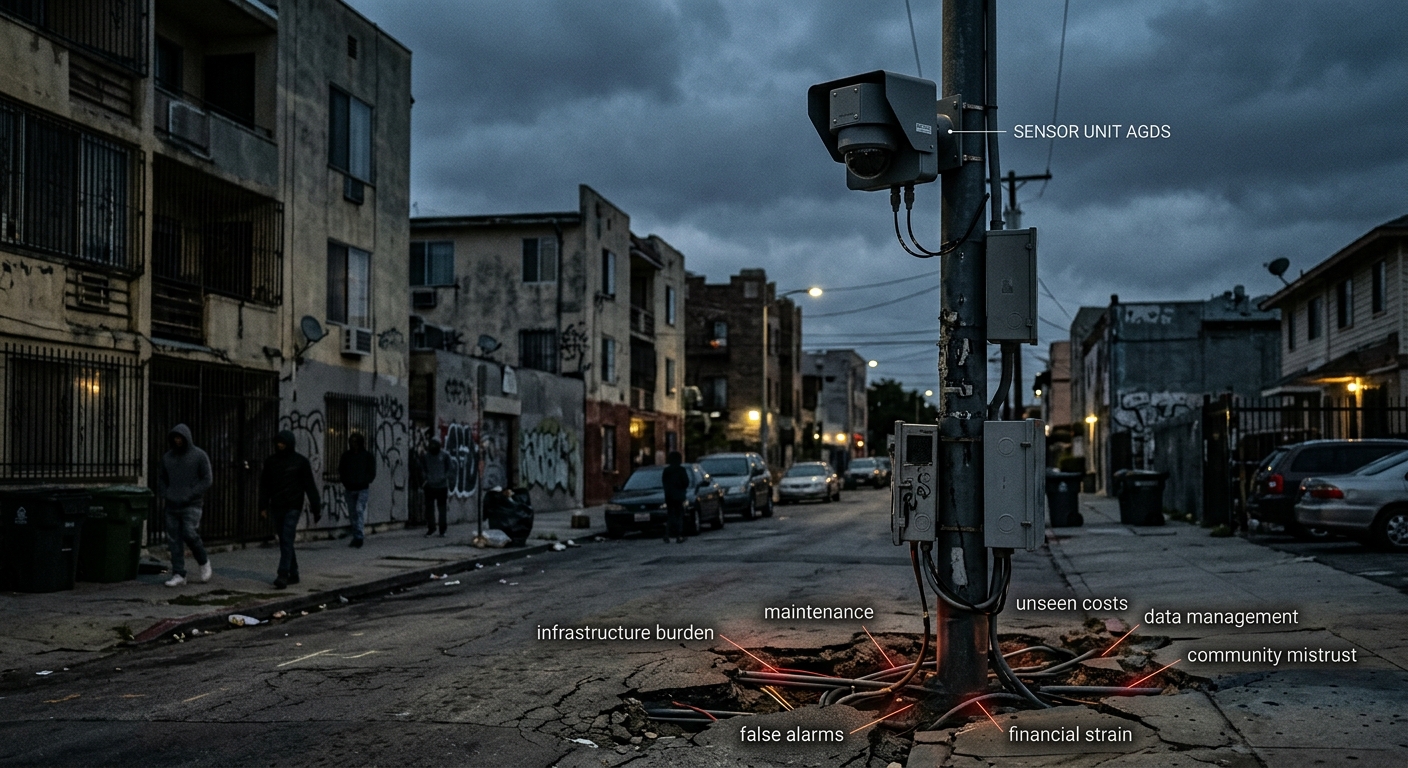
Modern law enforcement increasingly turns to digital solutions to solve complex public safety challenges. From facial recognition software to predictive policing algorithms, technology is often heralded as a panacea for urban crime. Among the most controversial of these tools are Acoustic Gunshot Detection Systems (AGDS). Originally designed in the 1990s with military and seismic applications in mind, the technology transitioned into domestic law enforcement with lofty promises of eliminating gun violence by alerting dispatchers to the exact location of a gunshot within seconds. However, beneath the veneer of high-tech efficiency lies a web of profound complications.
Civil rights organizations, independent auditors, and community advocates have raised serious alarms about the efficacy, ethics, and economic logic of acoustic surveillance. While the premise of saving lives through rapid police deployment is universally appealing, the reality of how these systems function on the ground tells a much different story. The integration of acoustic sensors into the urban landscape has introduced significant operational hurdles, exacerbated racial disparities in policing, and created a financial sinkhole for municipalities. To understand why these systems are drawing intense scrutiny, it is necessary to look past the marketing brochures and examine the tangible impacts they have on communities, the justice system, and municipal budgets.
Mechanics of Acoustic Surveillance: Fact vs. Fiction
At its core, an acoustic gunshot detection system is a network of highly sensitive microphones deployed across a specific geographic area. These sensors are typically mounted on public infrastructure, such as streetlights, utility poles, and the roofs of government buildings. When a loud, impulsive sound occurs, the microphones capture the audio and document the precise time it reached each sensor. By calculating the slight differences in the time it takes for the sound wave to reach multiple microphones—a process known as triangulation—the system’s software estimates the origin of the noise.
Once the geographic coordinates are established, machine learning algorithms analyze the audio signature to determine if the sound resembles gunfire. If the algorithm flags the noise as a potential gunshot, the audio file is typically sent to a human reviewer in an off-site control center. This reviewer listens to the recording and decides whether to forward the alert to local police dispatchers.
While this process sounds incredibly sophisticated, the urban soundscape is chaotic and unpredictable. Cities are symphony halls of impulsive noises that closely mimic the acoustic profile of a firearm. Construction equipment, nail guns, fireworks, backfiring vehicle engines, and even the slamming of heavy metal dumpsters can generate sound waves that confuse both the algorithm and the remote human reviewer. Furthermore, acoustic reflections—sound bouncing off brick buildings, asphalt, and glass—can distort the audio signature. Additionally, severe weather conditions, such as heavy rain, thunderstorms, and high winds, can physically interfere with the microphone arrays, generating spurious data. Marketing often presents these systems as nearly infallible, but the reality of deploying sensitive listening devices in a dense metropolis means the line between a genuine threat and harmless noise is frequently blurred.
The Dilemma of False Positives and Wasted Resources
When an acoustic gunshot detection system fails to accurately distinguish between a gunshot and a benign noise, it generates a false positive. In the context of law enforcement, a false positive is not merely a technical glitch; it is a potentially dangerous catalyst. When dispatchers receive a gunshot alert, patrol officers are immediately routed to the location, operating under the assumption that a violent crime has just occurred and an armed suspect may be present. This expectation fundamentally alters the psychology of the responding officers. They arrive on the scene in a state of high alert, with adrenaline pumping and weapons often drawn, anticipating a life-or-death confrontation.
If the noise was actually a car backfiring or teenagers setting off a firecracker, the sudden arrival of highly militarized, hyper-vigilant police officers creates a deeply volatile situation. Unsuspecting civilians going about their daily lives are suddenly thrust into high-tension encounters where sudden movements or misunderstandings can lead to tragic outcomes.
The volume of these false alarms is staggering. A comprehensive 2021 report by the Chicago Office of Inspector General (OIG) found that alerts from the city’s acoustic gunshot detection system “rarely produce evidence of a gun-related crime” and seldom lead to investigatory stops of value . Similarly, a June 2024 audit report released by the New York City Comptroller’s Office revealed that a massive 82% of gunshot alerts evaluated were unconfirmed, meaning officers could find no evidence that a shooting had actually taken place, while another 5% were definitively classified as unfounded or false positives . Despite this overwhelming lack of corroborating evidence, police officers were dispatched to investigate nearly every alert, draining thousands of hours of patrol time. Chasing ghost gunshots pulls departments away from community policing, actual 911 emergencies, and proactive investigations. When human 911 operators receive actual calls from residents, they can ask clarifying questions; an algorithm simply sends officers into the dark.
Geographic Disparities and the Over-Policing of Communities
The deployment of acoustic surveillance is rarely uniform across a city. Municipalities do not place these expensive sensors in every neighborhood. Instead, they target specific areas based on historical crime data. On the surface, deploying resources to areas with the highest rates of gun violence appears logical. However, this deployment strategy creates a self-fulfilling cycle of hyper-surveillance that disproportionately impacts Black and Brown communities.
When sensors are saturated in historically marginalized neighborhoods, the police are continuously dispatched to those specific streets, largely due to the high volume of unconfirmed alerts generated by the system. This constant influx of police presence inevitably leads to an increase in pedestrian stops, vehicle searches, and low-level arrests that are entirely unrelated to gun violence. The system essentially serves as a pretext generator, legally justifying a localized surge in police presence.
As a result, the crime statistics in these targeted neighborhoods artificially inflate due to the increased rate of discovery for minor infractions, which is then used by city officials to justify the continued presence of the acoustic sensors. Meanwhile, wealthier, predominantly white neighborhoods remain unmonitored by acoustic surveillance, shielding them from the same level of aggressive policing and digital scrutiny. This geographic disparity breeds deep mistrust between law enforcement and the communities they are sworn to protect. Residents living under the umbrella of acoustic sensors often report feeling like they are living in an occupied territory, where every loud noise invites a heavy-handed police response. This dynamic undermines community-oriented policing and deters residents from voluntarily cooperating with law enforcement. In response, numerous grassroots advocacy groups and civil rights organizations have launched campaigns demanding the removal of these devices from their neighborhoods.
Legal Black Boxes and Evidentiary Controversies
The controversies surrounding acoustic gunshot detection systems extend far beyond the streets and directly into the courtroom. When a defendant is charged with a crime based partly on evidence generated by an acoustic sensor network, the criminal justice system is supposed to provide a fair opportunity for defense attorneys to challenge that evidence. However, the algorithms used to filter and classify audio data in these systems are closely guarded as proprietary trade secrets by the technology companies that own them.
This creates a severe “black box” problem. The software’s source code, the specific machine learning models, and the error rates of the classification algorithms are shielded from public and legal scrutiny. Defense attorneys are effectively barred from cross-examining the digital witness that helped build the case against their client. Without access to the underlying code, it is nearly impossible to determine whether the algorithm is fundamentally flawed, biased, or prone to misinterpreting specific environmental acoustics.
Furthermore, investigative journalists and legal advocates have uncovered instances where the coordinates or the classification of a sound were retroactively altered by human reviewers at the technology company after communicating with local police. This introduces a dangerous element of human bias and malleability into evidence that is presented to juries as objective, scientific truth. The lack of evidentiary transparency violates the fundamental principles of due process. When life and liberty are on the line, the legal system cannot blindly trust proprietary software that operates entirely outside the realm of independent peer review. The admissibility of this evidence often bypasses traditional legal standards, such as the Daubert standard for expert testimony, because the foundational science behind the acoustic classification remains obscured behind corporate confidentiality agreements.
Financial Implications for Municipalities
Beyond civil liberties and operational efficiency, the financial toll of acoustic gunshot detection systems is a major point of contention for local taxpayers. These systems are not a one-time purchase; they are typically sold under lucrative, multi-year subscription contracts. Cities pay millions of dollars annually to lease the sensors and access the cloud-based analytical software.
For example, the New York City Police Department recently extended its contract in a deal worth $21.8 million, while Chicago has spent over $33 million on its acoustic surveillance contracts since 2018. For municipalities operating on tight budgets, this represents a massive misallocation of public funds. In an era of tight municipal budgets and post-pandemic economic constraints, spending tens of millions on unverified surveillance tools demands rigorous fiscal justification. The financial burden becomes even more glaring when independent audits demonstrate that the systems provide negligible benefits to public safety and rarely result in successful prosecutions .
The opportunity cost of these contracts is immense. The millions of dollars funneled into proprietary surveillance technology could be redirected toward initiatives that have a proven, evidence-based impact on reducing gun violence. Investments in community-based violence interruption programs, mental health crisis response teams, improved street lighting, after-school youth programs, and economic development directly address the root causes of crime. As evidence of the system’s ineffectiveness mounts, several cities across the United States have begun allowing their contracts to expire or have actively voted to terminate them, prioritizing community investment over digital surveillance. However, the lobbying power of police technology firms remains strong, making the financial uncoupling a highly politicized battle in many city halls.
The Path Forward: Evaluating Police Technology
As we look to the future of urban policing, the debate over acoustic gunshot detection systems must serve as a cautionary tale about the uncritical adoption of surveillance technology. Moving forward, municipalities must establish rigorous, independent testing protocols before signing multi-million dollar contracts with private tech vendors. Peer-reviewed efficacy studies, rather than corporate marketing materials, must guide public safety spending.
Furthermore, transparency and community consent should be prerequisites for the deployment of any surveillance infrastructure. Residents have a democratic right to know what data is being collected in their neighborhoods, how that data is being used, and whether the technology is actually keeping them safe. Until acoustic gunshot detection systems can definitively prove their value through independent, transparent audits without compromising civil liberties, they remain a costly and problematic experiment in modern law enforcement.
Frequently Asked Questions (FAQs)
- What are acoustic gunshot detection systems?
Acoustic gunshot detection systems (AGDS) are surveillance networks composed of microphones placed throughout a city—usually on streetlights or buildings. These sensors are designed to detect loud, impulsive noises. When a sound triggers the system, software and human reviewers attempt to determine if it is a gunshot and estimate its location, subsequently alerting local police dispatchers. - Are these systems effective at reducing violent crime?
Independent analyses heavily dispute their effectiveness. Reports from entities like the Chicago Office of Inspector General and the New York City Comptroller have found that the vast majority of alerts do not lead to evidence of a gun-related crime, an investigatory stop, or an arrest. The high rate of unconfirmed alerts suggests they do little to proactively reduce violent crime. - Do gunshot detection microphones record private conversations?
While the companies that manufacture these systems claim the sensors only trigger upon hearing loud, impulsive noises, the microphones are active and capable of recording ambient sound. In a few documented legal cases, audio of human voices caught around the time of a suspected gunshot has been recorded and introduced as evidence in court, raising significant privacy concerns. - Why do civil rights advocates oppose this technology?
Civil rights advocates argue that AGDS leads to the over-policing of marginalized communities, where the sensors are predominantly placed. The high volume of false positive alerts sends police officers into these neighborhoods on high alert, increasing the risk of dangerous confrontations with innocent civilians. Furthermore, the proprietary algorithms used to analyze the audio lack transparency, making it difficult for defendants to challenge the evidence in a court of law.
References
- OIG Finds That ShotSpotter Alerts Rarely Lead to Evidence of a Gun-Related Crime and That Presence of the Technology Changes Police Behavior — Chicago Office of Inspector General. 2021-08-24. https://igchicago.org/…
- Audit Report on the New York City Police Department’s Oversight of Its Agreement with ShotSpotter Inc. — NYC Comptroller’s Office. 2024-06-20. https://comptroller.nyc.gov/…
- Dozens of Cities Are Paying for Gunshot Detection Tech They May Not Need — The Trace. 2024-12-11. https://www.thetrace.org/
Similar Articles








Read full bio of Sneha Tete




