
Migrant Property Seizures at the Border: Policy & Reform
Examining the systemic confiscation of migrant belongings.
Introduction to the Border Property Crisis
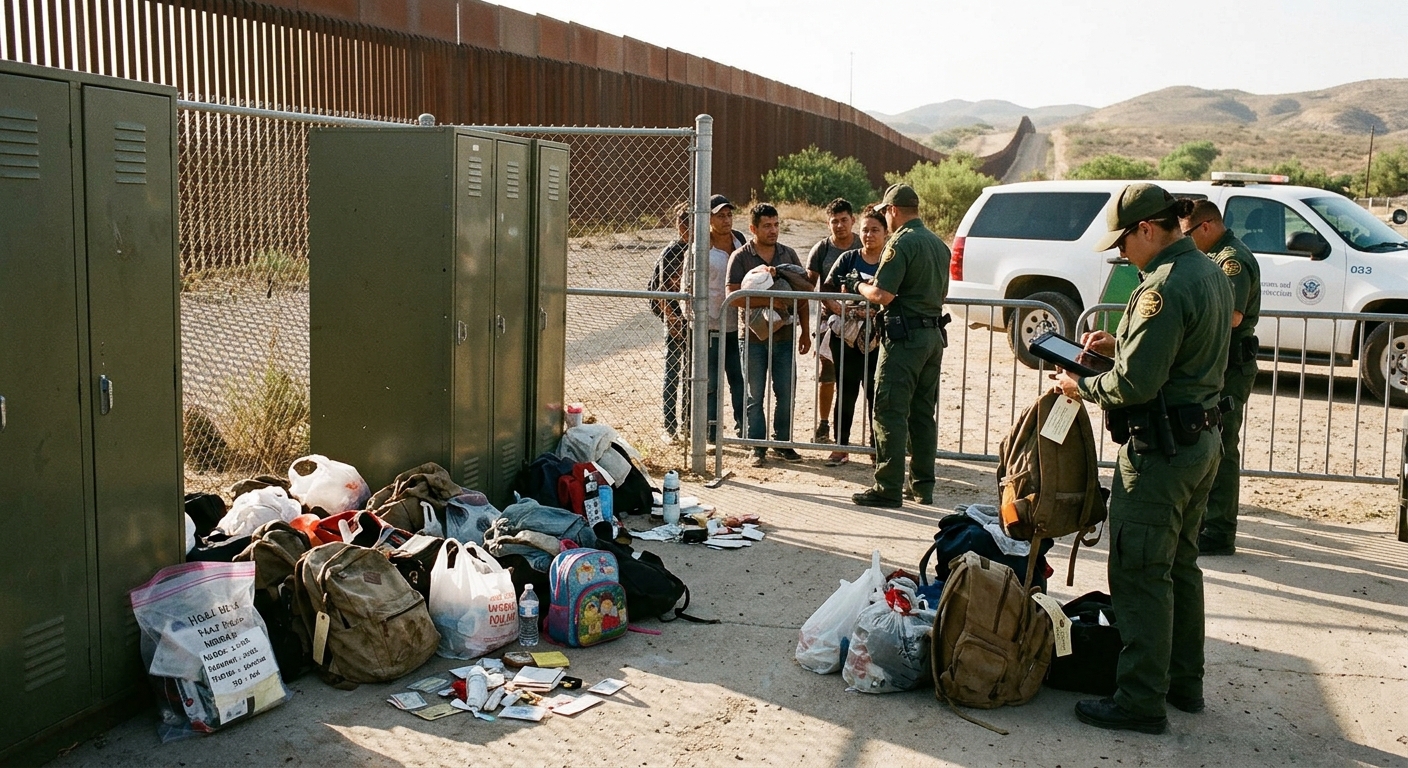
The migration route to the United States southern border is fraught with severe physical, geographical, and logistical challenges. However, for tens of thousands of individuals who survive the elements and arrive at the border, another substantial hurdle awaits them in the administrative processing rooms of U.S. Customs and Border Protection (CBP). Upon apprehension, migrants are frequently subjected to a systematic confiscation and disposal of their personal belongings. While securing border facilities inevitably requires strict screening protocols to prevent the introduction of weapons and illegal contraband, the routine destruction of non-lethal, essential personal items has sparked intense scrutiny from human rights advocates, legal scholars, and government watchdogs.
This widespread practice quietly strips individuals of vital prescription medications, foundational identification documents, and irreplaceable personal effects. As recent investigations by the Government Accountability Office (GAO) have revealed, the policies dictating what is stored and what is thrown away are wildly inconsistent across different border sectors. The resulting administrative chaos not only jeopardizes the immediate health and safety of migrants but also creates profound downstream complications for the U.S. immigration court system. A closer examination of the policies, the watchdog findings, and the resulting humanitarian toll underscores an urgent need for standardized, humane property management at the border.
The Procedural Mechanics of Intake and Confiscation
When noncitizens are apprehended along the southwestern border, they are transported to temporary holding facilities operated by the United States Border Patrol. During the standard intake process, agents conduct comprehensive security screenings intended to intercept dangerous materials. While the necessity of securing these short-term facilities is universally acknowledged by policymakers, the implementation of broader property collection protocols remains highly controversial. Agents are required to collect, inventory, and store personal items that are not deemed contraband; however, the reality on the ground often looks starkly different from written headquarters guidance.
Differentiating Between Legal Forfeiture and Administrative Disposal
To fully understand the scope of the issue, it is vital to distinguish between formal asset forfeiture and the administrative disposal of migrant property. Under the Civil Asset Forfeiture Reform Act of 2000 (CAFRA), the Department of Homeland Security and its sub-agencies possess the authority to seize and administratively forfeit property associated with violations of law. This legal framework was meticulously designed to disrupt criminal enterprises and intercept illicit contraband, providing specific notice and claims procedures for property owners. However, the everyday confiscation of a migrant’s personal belongings—such as clean clothing, daily medication, or religious texts—rarely falls under the legal purview of CAFRA. Instead, these items are frequently discarded under loosely defined administrative justifications. This critical distinction highlights a regulatory blind spot: while high-value assets seized from criminal organizations are tracked through rigorous legal channels, the essential survival items of vulnerable migrants are often thrown into dumpsters with no formal documentation or avenue for legal recourse.
The “Clear Bag” Limitation and Space Constraints
Because short-term holding facilities are frequently operating at or beyond their designed capacity, space constraints are routinely cited by field leadership as the primary justification for strict property limits. In many Border Patrol sectors, migrants are ordered to consolidate all of their worldly belongings into a single, standard-sized, transparent plastic bag. Any items that exceed this arbitrary spatial limit are summarily discarded, regardless of their intrinsic, monetary, or practical value. Consequently, individuals are forced to make impossible choices on the spot, deciding whether to keep an extra layer of warm clothing or a cherished family keepsake, while agents discard the rest.
Categories of Routinely Discarded Belongings
The indiscriminate nature of property disposal means that a wide variety of essential items are permanently lost during processing. The belongings most frequently reported as confiscated and destroyed fall into several critical categories:
- Vital Medical Supplies: Agents routinely discard prescription medications, including life-saving pharmaceuticals like insulin for diabetes, inhalers for severe asthma, and anticonvulsants for seizure disorders, often citing blanket policies against outside substances.
- Identification and Legal Documents: Original birth certificates, passports, national identification cards, and legal paperwork relevant to asylum claims are frequently thrown away, severely complicating the migrant’s legal identity verification.
- Communication Devices: Cell phones and chargers, which serve as the only link to U.S.-based sponsors, legal counsel, and family members in their home countries, are often lost or intentionally discarded during the chaotic intake process.
- Religious and Sentimental Artifacts: Items of profound spiritual or emotional significance, such as rosaries, turbans, hijabs, and family photographs, are frequently trashed, stripping individuals of their cultural identity and emotional anchors.
The Humanitarian Toll and Legal Consequences
The immediate humanitarian consequences of property confiscation are profound and multifaceted, often precipitating medical emergencies within hours of apprehension. When agents summarily discard critical medications under sweeping ‘no outside medication’ policies, they inadvertently create acute health crises within holding facilities. While Border Patrol protocols theoretically require medical personnel to evaluate individuals and issue necessary replacement prescriptions, watchdogs and humanitarian organizations report that these medical screenings are frequently delayed or inadequately equipped to replace specialized pharmaceuticals. Beyond the immediate physical risks, the psychological toll is severe. The deliberate destruction of sentimental and religious artifacts strips individuals of their dignity at a moment of extreme vulnerability, compounding the trauma of their displacement.
The ramifications of property disposal extend far beyond the walls of short-term holding facilities, severely undermining the integrity and efficiency of the U.S. immigration court system. To successfully navigate the complex asylum process, applicants bear the heavy burden of proving their identity, nationality, and the specific circumstances of their persecution. By systematically discarding national identification cards, passports, and original birth certificates, border personnel inadvertently sabotage a migrant’s ability to substantiate their legal claims. Furthermore, the loss of these foundational documents places a significant administrative burden on federal agencies. Immigration and Customs Enforcement (ICE) officers frequently face protracted delays when attempting to process removals or coordinate with foreign consulates because the individual’s proof of citizenship was thrown away during their initial processing. Depriving migrants of their cell phones effectively isolates them, turning a challenging legal proceeding into a nearly impossible endeavor.
Watchdog Oversight: The 2024 GAO Investigation
The systemic failures in property management at the border were brought into sharp focus in April 2024, when the U.S. Government Accountability Office (GAO) released a comprehensive investigative report (GAO-24-106540). The independent federal watchdog analyzed property handling procedures across a sample of Border Patrol sectors and uncovered alarming operational discrepancies. The investigation found that four of the nine southwest Border Patrol sectors instructed migrants to discard excess items simply due to facility space limitations, rather than genuine security concerns.
Furthermore, the GAO observed agents in certain regions improperly classifying clean clothing and personal backpacks as “health hazards” to justify their immediate disposal. CBP headquarters officials acknowledged to investigators that this sweeping categorization was not a standardized national policy, highlighting a severe disconnect between central command and field operations. The report underscored that imprecise guidance and a lack of defined terminology directly led to the arbitrary destruction of migrant property.
| GAO Recommendation | Current Operational Challenge | Proposed Benefit |
|---|---|---|
| Define key terms and clarify guidance (e.g., “health hazard”). | Field agents subjectively discard items, leading to vast inconsistencies. | Ensures uniformity and fairness across all border sectors. |
| Implement a robust monitoring mechanism. | Headquarters lacks oversight regarding field-level property disposal actions. | Guarantees field compliance with national directives and protects migrant rights. |
| Provide clear written retrieval instructions. | Migrants leave custody without knowing how to get stored property back. | Reduces permanent loss of securely stored essential belongings. |
The Bureaucratic Labyrinth of Property Reclamation
When an individual is finally released from short-term custody—either paroled into the United States to await immigration hearings or transferred to a long-term detention facility—their personal property is supposed to be returned. In reality, the transfer logistics frequently break down. The GAO noted that individuals routinely leave Border Patrol facilities without receiving any written instructions detailing how to retrieve belongings that were stored rather than discarded. Even if a migrant manages to locate the specific facility where their property is held, the lack of a standardized retrieval system creates an insurmountable bureaucratic barrier.
The Department of Homeland Security’s Office of the Immigration Detention Ombudsman reported receiving nearly 100 formal complaints regarding lost personal property in just the first half of fiscal year 2023. Among these grievances were distressing reports of missing birth certificates and unreturned passports. Without a centralized digital inventory system, such as barcode tracking linked to a migrant’s Alien Registration Number (A-Number), field agents are left to manually sift through cluttered property storage rooms. This archaic process is both inefficient and highly prone to error. Consequently, thousands of individuals are released into the country completely stripped of their foundational documents and financial resources, forcing local municipalities and non-governmental organizations to absorb the cost of replacing essential items.
Legislative Action and the Push for Standardization
In response to these persistent revelations, prominent lawmakers have escalated their demands for comprehensive policy overhauls. In the summer of 2024, an extensive coalition of legislators, led by figures such as Senator Alex Padilla and Representative Raúl M. Grijalva, formally urged CBP leadership to fully and immediately implement the GAO’s recommendations. Lawmakers highlighted that despite repeated congressional inquiries over the years, humanitarian organizations continued to document alarming cases of property confiscation.
Legislative proposals, such as the bicameral CBP Guidance on Personal Belongings Act, aim to legally mandate a respectful, standardized approach to property management. Advocates argue that implementing modern barcode-based tracking systems, expanding secure storage capacities at temporary holding sites, and providing explicit, multilingual instructions for property reclamation are not just matters of logistical efficiency, but fundamental requirements for upholding human dignity and due process.
Frequently Asked Questions (FAQs)
Why does Border Patrol confiscate belongings during intake?
Border Patrol agents conduct thorough searches and confiscate belongings primarily to ensure the safety and security of the short-term holding facilities. They are tasked with intercepting weapons, illicit drugs, and other hazardous contraband. However, standard personal items are also confiscated and either stored or discarded due to facility space limitations and lack of standardized storage protocols.
Can migrants retrieve their confiscated property?
In theory, migrants are supposed to have non-contraband items returned to them upon release or transfer. In practice, retrieving stored property is incredibly difficult. Many migrants are released without written instructions on how to reclaim their belongings, and the lack of a centralized tracking system often results in items being permanently lost in the bureaucracy.
What did the GAO recommend CBP change regarding personal items?
The Government Accountability Office recommended three primary changes: issuing clarifying guidance that explicitly defines terms like “health hazard” to prevent arbitrary disposal, developing a centralized mechanism to monitor how field sectors implement property guidelines, and ensuring individuals are provided with clear, written instructions on how to retrieve their belongings upon release.
How does the loss of IDs affect asylum seekers?
The loss of foundational documents like passports and birth certificates severely impedes an asylum seeker’s legal journey. In U.S. immigration courts, the burden of proof lies heavily on the applicant to establish their identity and nationality. Without these original documents, verifying their claims becomes exceptionally difficult, often leading to protracted legal battles and prolonged administrative detention.
References
- GAO-24-106540, Southwest Border: Additional Guidance and Monitoring Needed to Improve CBP’s Handling of Personal Property — U.S. Government Accountability Office. 2024-04-23. https://www.gao.gov/products/gao-24-106540
- New GAO Report Details Border Patrol’s Inconsistency in Handling Migrant Possessions; Recommends Additional Guidance — House Committee on Homeland Security Democrats. 2024-05-23. https://democrats-homeland.house.gov/news/press-releases/new-gao-report-details-border-patrols-inconsistency-in-handling-migrant-possessions-recommends-additional-guidance
- Padilla, Grijalva Urge Customs and Border Protection to Address Mishandling of Migrant Belongings — Office of U.S. Senator Alex Padilla. 2024-07-19. https://www.padilla.senate.gov/press-releases/padilla-grijalva-urge-customs-and-border-protection-to-address-mishandling-of-migrant-belongings/
Similar Articles








Read full bio of Sneha Tete




