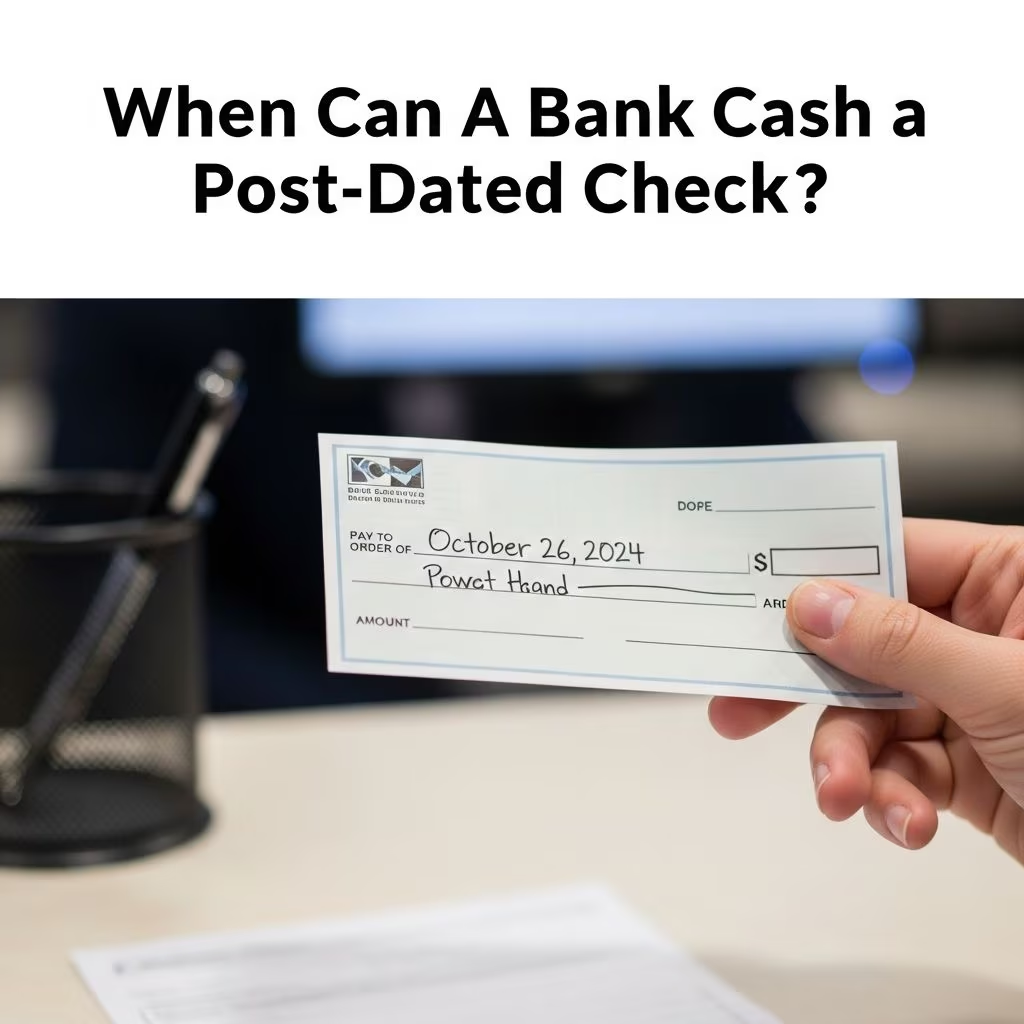
Many people write a check with a future date, hoping it will not be cashed until that day arrives. This is known as a post-dated check. However, in most situations, a bank or credit union can still pay that check before the date on its face, unless you take specific steps to prevent it.
This guide explains how post-dated checks are treated, what protections you may have under state and federal law, and practical steps you can take if you need your bank to hold a check.
Understanding Post-Dated Checks
A post-dated check is simply a check that shows a date that has not yet arrived. For example, you might write a check today but date it for next week to line up with your paycheck or another expected deposit.
Why People Use Post-Dated Checks
Consumers often post-date checks to:
- Coordinate payment with an upcoming paycheck or deposit.
- Give themselves extra time to move money between accounts.
- Inform the payee they do not want the check deposited immediately.
- Set a future payment date in situations where no electronic option is available.
Although these reasons are common, it is important to remember that a post-dated check is still a check drawn on your account and may be treated as payable when it is presented to the bank.
General Rule: Checks Are Payable on Demand
Under U.S. banking practice, a check is typically considered payable on demand, which means the bank may pay it when it is presented, regardless of the date written on the check, unless there is a valid and effective notice to hold the item.
| Scenario | Typical Bank Treatment |
|---|---|
| Regular check with today’s date | Payable when presented, if funds are available. |
| Post-dated check, no notice to bank | Usually payable when presented, even before the written date. |
| Post-dated check with valid written notice on file | Bank is generally expected not to pay before the specified date, subject to state law. |
How State Law Affects Post-Dated Checks
There is no single national rule that covers all post-dated checks in every circumstance. Instead, the rules are largely determined by state law, often based on versions of the Uniform Commercial Code (UCC), and by your account agreement.
State-Law Protections
In many states, you may have extra protection if you notify your bank or credit union in advance that you have written a post-dated check. Common state-law patterns include:
- Written notice given in time and in the format the bank requires may obligate the bank not to pay the check before the date you specified.
- If the bank pays the check early while your written notice is still valid, state law may allow you to claim reimbursement for certain losses directly caused by the bank’s mistake.
- Some states distinguish between written and oral notices, with much shorter protection for oral notices.
Because state rules differ, you should review your account disclosures and, if needed, speak with a qualified attorney or legal aid organization in your state to understand your exact rights.
Notifying Your Bank About a Post-Dated Check
If you need the bank to delay payment on a specific check, you usually must give the bank advance notice that includes clear details about that item.
Key Elements of Effective Notice
Although requirements vary, banks typically need enough information to identify the exact check. When you contact your bank, be prepared to provide:
- The check number.
- The date you wrote on the check.
- The exact dollar amount.
- The name of the person or business the check is payable to.
Your bank may require that this notice be in a particular form (such as a signed written request, an online form, or a secure message) and may charge a fee to place the hold.
Written vs. Oral Notice
Consumer guidance from federal agencies and state legal-aid groups indicates that:
- Written notice is often effective for a longer period (commonly up to six months under many state laws), during which the bank is expected not to pay the check before the specified date.
- Oral notice (by phone or in person without written confirmation) may only protect you for a short period (commonly around 14 days under many state-law patterns), after which the bank may treat the check as payable on demand again.
These timeframes are examples reflected in some state-law summaries and consumer resources; the rules in your state could be different. Always confirm with your own bank what it requires and how long a post-dating notice lasts.
What Happens If a Post-Dated Check Is Paid Early?
If a payee deposits your post-dated check before the date you wrote on it, several things can happen, depending on your account balance and whether you gave the bank valid notice.
If You Have Enough Money in the Account
- The bank will usually pay the check, even if it is presented before the date on its face, unless you have an active post-dating notice that the bank must follow.
- You generally will not incur fees if the payment does not overdraw your account.
- However, this may disrupt your budgeting if you were counting on the funds for other bills.
If You Do Not Have Enough Money in the Account
- The bank may pay the check anyway and overdraw your account, potentially triggering overdraft fees.
- Alternatively, the bank may return (bounce) the check for insufficient funds, which can lead to NSF fees from your bank and possibly fees or penalties from the payee.
- If the bank was under a valid obligation not to pay the check early—for example, because you had a current written notice in place—your state’s law may allow you to seek reimbursement for damages that can be traced to the bank’s mistake.
Post-Dated Checks and Other Banking Rules
Post-dated checks interact with other federal and state requirements, including funds-availability and collection rules.
Funds-Availability Rules
Under federal Regulation CC, financial institutions must generally make a portion of deposited check funds available within set time limits. For example, banks must usually make at least the first portion of many check deposits available by the next business day, with the remainder available within a few more days.
However, Regulation CC also allows banks to delay availability in certain circumstances where the bank has reasonable cause to doubt collectibility, such as when a check is post-dated. In practice, this means:
- The institution accepting a post-dated check for deposit may place a longer hold on the depositor’s access to those funds if it reasonably believes the check may not be paid.
- This is separate from the paying bank’s decision whether to honor a post-dated check drawn on your account.
Practical Steps to Protect Yourself
Because a date on a check does not automatically control when it will be paid, consider the following steps before relying on post-dating:
1. Talk to Your Bank or Credit Union
- Ask whether it offers a post-dating notice or similar service and how to request it.
- Confirm whether your notice must be in writing, how long it will remain in effect, and what fees apply.
- Record the date, time, and method you used to give notice, in case you need to document it later.
2. Consider Alternatives to Post-Dated Checks
Depending on your situation, safer tools may include:
- Scheduling an online bill payment for the exact date you want funds sent.
- Setting up an automatic electronic transfer on your payday.
- Arranging a written payment plan with a creditor or landlord.
- Using a debit card or other method that gives you more precise control over timing.
Electronic payments often provide clearer timing and better records than post-dated paper checks.
3. Monitor Your Account Closely
- Use online or mobile banking to watch for the check clearing earlier than expected.
- Set alerts for low balances or large withdrawals.
- Keep enough of a cushion to cover the check in case it is presented before the date.
4. If a Post-Dated Check Is Paid Too Soon
If you believe your bank paid a post-dated check in violation of an effective notice or contrary to applicable state law:
- Collect your records (copies of your notice, account statements, and any fees charged).
- Contact the bank promptly, in writing if possible, to dispute the payment.
- Ask the bank to reverse any improper charges and reimburse losses permitted under your state’s law.
- If you cannot resolve the issue, you may contact your bank’s primary regulator or a consumer-protection agency for help.
Risks of Relying on Post-Dated Checks
Before using a post-dated check as a budgeting tool, weigh the potential downsides.
- Uncertain timing: Unless you have a valid notice in place and your bank follows it, you cannot be sure when the check will actually post.
- Fee exposure: Early presentment of a post-dated check can lead to overdraft or NSF fees, as well as penalties from the payee if the check is returned.
- Impact on relationships: A bounced or delayed check can strain dealings with landlords, service providers, or others expecting timely payment.
- Legal issues in cases of fraud: Post-dating a check with the intent not to pay, or to mislead the payee, can raise fraud concerns under state law.
Frequently Asked Questions About Post-Dated Checks
Is it legal to write a post-dated check?
In most states, writing a post-dated check is legal by itself, as long as you are not doing it to deceive or defraud the person receiving the check. However, misuse of post-dated checks can lead to civil or criminal consequences under state law, particularly if you knowingly lack funds and intend not to pay.
Does the bank have to look at the date on every check?
In ordinary processing, banks use automated systems that may not review the date on each individual check. Unless they have received a valid and timely notice that a particular check is post-dated, they generally may treat it as payable when presented.
If I tell the payee not to cash it yet, is that enough?
Asking the payee to wait does not, by itself, bind your bank. The bank’s obligations depend on state law, your account terms, and whether you have properly notified the bank about the post-dated check. To reduce risk, follow your bank’s formal process for giving notice and keep proof that you did so.
How long does a post-dating notice last?
The duration of any protection depends on state law and your bank’s policies. Many state-law patterns reflected in consumer guidance suggest that written notices may remain effective for several months, while oral notices may only last for a short period (often around two weeks). You must confirm the exact timeframe with your bank.
Could a post-dated check cause problems for the person who deposits it?
Yes. If the check is deposited early and your account does not have enough money, the check could be returned unpaid, and the depositor’s bank may charge them a fee. The payee may also face delays or difficulties collecting the money they expected.
Is a post-dated check the same as a stop-payment order?
No. A stop-payment order is a request to the bank not to pay a specific check at all, whereas a post-dating notice is typically a request not to pay the check before a particular date. Both are governed by state law and your account agreement, and both usually require specific information about the check and may involve fees.
References
- Can a bank or credit union cash a post-dated check before the date on the check? — Consumer Financial Protection Bureau. 2023-08-29. https://www.consumerfinance.gov/ask-cfpb/can-a-bank-or-credit-union-cash-a-post-dated-check-before-the-date-on-the-check-en-967/
- I wrote a check and post-dated it. However, the bank cashed it before the date written on the check. Can the bank do this? — Office of the Comptroller of the Currency (HelpWithMyBank.gov). 2021-04-01. https://www.helpwithmybank.gov/help-topics/bank-accounts/check-writing-cashing/writing-cashing-checks/check-writing-postdate.html
- Postdated Checks: What You Should Know — PNC Bank. 2022-06-15. https://www.pnc.com/insights/personal-finance/spend/postdated-checks.html
- Postdated Checks: Are They Legal? Is It a Waste of Time? — SoFi Bank. 2023-02-10. https://www.sofi.com/learn/content/what-are-postdated-checks/
- A Guide to Regulation CC Compliance — Board of Governors of the Federal Reserve System. 2019-05-01. https://www.federalreserve.gov/supervisionreg/guide-regulation-cc-compliance.htm
- Postdated check — Cornell Law School Legal Information Institute (Wex). 2020-08-01. https://www.law.cornell.edu/wex/postdated_check
- Can the bank pay a post-dated check before the check’s date? — Illinois Legal Aid Online. 2020-11-10. https://www.illinoislegalaid.org/legal-information/can-bank-pay-post-dated-check-checks-date