
Warranty Deeds: Protecting Your Property Rights
Master warranty deeds: Essential protection for property buyers and secure ownership transfers.
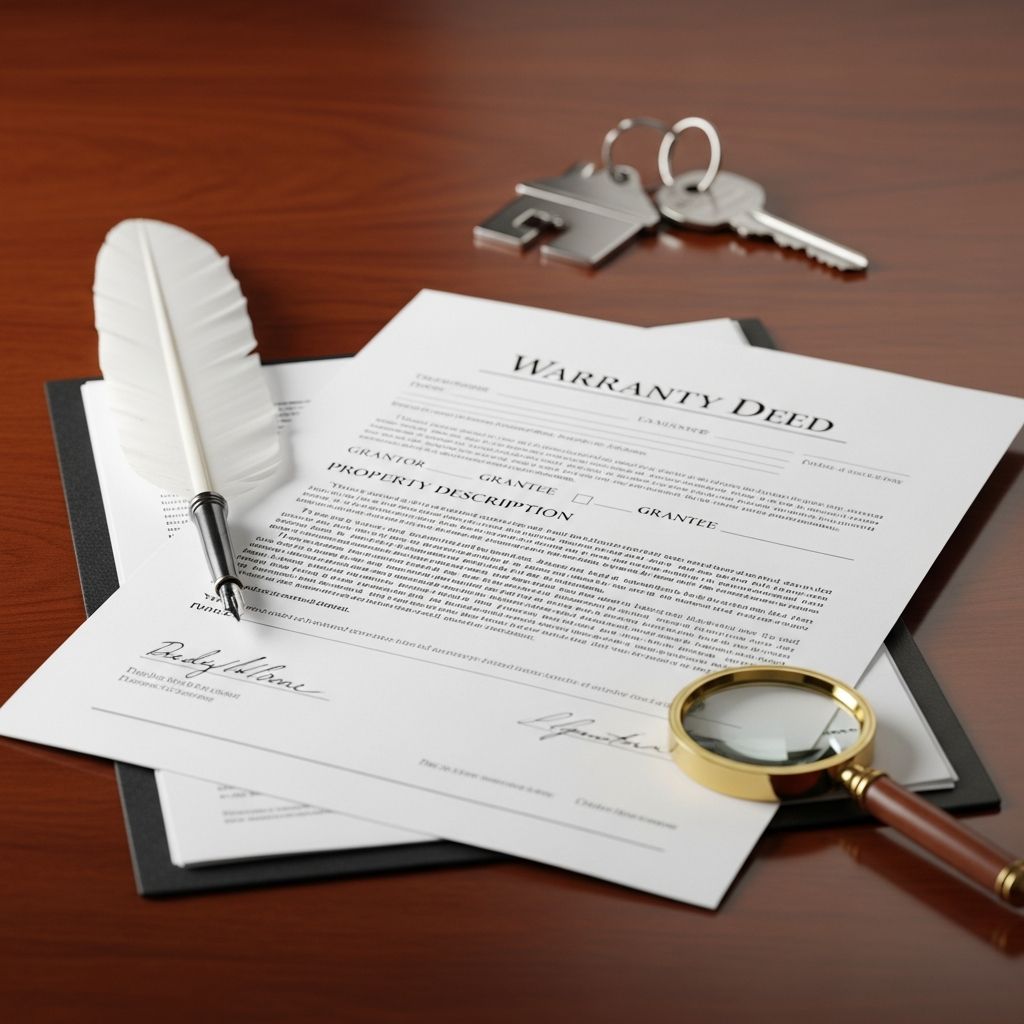
When purchasing real property, one of the most critical documents you will encounter is the warranty deed. This legal instrument serves as a foundational protection mechanism in real estate transactions, establishing the legitimacy of ownership transfer and safeguarding buyers against unforeseen title complications. Understanding the nature and function of warranty deeds is essential for anyone involved in property transactions, whether as a buyer, seller, or investor.
Defining the Warranty Deed
A warranty deed is a legal instrument used in real estate transactions that provides assurance regarding the quality and legitimacy of the property being transferred. The grantor, or seller, uses this document to guarantee that they hold clear title to the property and possess the legal authority to transfer ownership to the grantee, or buyer. Unlike other types of deeds that may offer limited or no guarantees, a warranty deed represents a comprehensive promise that the property is free from undisclosed liens, mortgages, ownership disputes, and other encumbrances that could compromise the buyer’s interests.
The fundamental purpose of a warranty deed is to ensure that the buyer receives property with a clean title—meaning no outstanding debts, legal claims, or hidden complications are attached to the property. This protection is particularly important because real estate represents one of the largest financial investments most people make during their lifetime. Without such guarantees, buyers could inherit unforeseen financial obligations or legal disputes long after completing their purchase.
The Role of Warranty Deeds in Property Ownership Transfer
In the hierarchy of real estate documentation, the warranty deed occupies a position of significant importance. It represents the formal, legal transfer of property ownership from one party to another, typically serving as the final document executed during a real estate closing. Before this point, numerous other documents and agreements will have been exchanged, including purchase agreements, inspection reports, and financing arrangements. However, the warranty deed is what officially and legally conveys ownership rights to the buyer.
The warranty deed accomplishes several critical functions simultaneously:
- Establishes the seller’s legal ownership and authority to transfer the property
- Identifies all known encumbrances and restrictions affecting the property
- Provides the buyer with legal recourse if title defects emerge after closing
- Creates a record of ownership that can be tracked through title history
- Satisfies lender requirements for mortgage financing
General Warranty Deeds: Comprehensive Buyer Protection
The most robust form of warranty deed is the general warranty deed, also known as a full warranty deed. This document represents the highest level of protection available to property buyers in real estate transactions. When a seller provides a general warranty deed, they are making comprehensive guarantees about the property’s title that extend far beyond their own period of ownership.
With a general warranty deed, the seller explicitly guarantees that they own the property free and clear and will defend against any claims to the title, whether those claims arise from defects created during their ownership or from defects that originated in the property’s entire history. This protection is particularly valuable because it shields the buyer from title problems that may have originated long before the current owner acquired the property. For example, if a lien was placed on the property twenty years ago by a previous owner, and that lien somehow resurfaces after the sale, the current seller remains liable for resolving the issue under a general warranty deed.
General warranty deeds are the standard in residential real estate transactions and are overwhelmingly preferred by mortgage lenders. Most financial institutions require a general warranty deed as a condition of providing financing, recognizing that this document provides the clearest evidence of legitimate ownership transfer and the lowest risk profile for the lender.
Special Warranty Deeds: Limited Protections and Narrower Guarantees
In contrast to general warranty deeds, special warranty deeds provide buyers with a more limited scope of protection. Sometimes referred to as limited warranty deeds, these instruments restrict the seller’s guarantees to only those title defects that arose during the seller’s period of ownership. The grantor does not guarantee against defects that existed before they acquired the property.
This distinction becomes significant in certain real estate scenarios. For instance, if a buyer receives a special warranty deed and discovers that a lien was placed on the property by a previous owner, that buyer typically cannot hold the current seller accountable for resolving the issue. The seller’s liability extends only to problems created by their own actions or omissions. Special warranty deeds are commonly used in commercial real estate transactions, foreclosure sales, and situations where the seller cannot feasibly verify the entire history of the property’s title.
Essential Components of a Warranty Deed
For a warranty deed to be legally effective and enforceable, it must include specific information and meet certain formal requirements. A properly drafted warranty deed typically contains the following elements:
| Required Element | Description |
|---|---|
| Grantor Information | Complete legal name and identification of the property seller |
| Grantee Information | Complete legal name and identification of the property buyer |
| Property Description | Detailed legal description, typically from the previous deed or property survey |
| Date of Transfer | The specific date on which ownership is being transferred |
| Notarization and Signatures | Original signatures from the seller, often witnessed and notarized |
| Title Guarantees | Explicit statements that the grantor owns the property free and clear |
| Known Encumbrances | Disclosure of any liens, easements, or other restrictions affecting the property |
| Covenant Statements | Promises regarding ownership, clear title, freedom from claims, and future defense obligations |
The precise format and specific language requirements for warranty deeds vary by jurisdiction, as each state maintains its own real estate laws and recording requirements. However, these fundamental components remain consistent across most jurisdictions in the United States.
The Four Covenants of Title
At the heart of a warranty deed lie several binding covenants, or promises, that the grantor makes to the grantee. These covenants are particularly important in general warranty deeds and represent the legal obligations the seller assumes when transferring the property. Understanding these covenants is crucial for buyers to fully appreciate the protections they receive.
The first covenant asserts that the seller actually owns the property and possesses the legal right to transfer it to the buyer. This covenant ensures that the grantor has legitimate authority over the property and is not selling something to which they do not have valid claim. The second covenant guarantees that the property is free from liens, mortgages, unpaid property taxes, and other financial encumbrances—except those explicitly disclosed in the deed. This protects the buyer from inheriting hidden debts attached to the property.
The third covenant promises that the buyer’s ownership will not be disturbed by third-party claims of superior title. In other words, no one else can legitimately claim ownership of the property or demand its return after the sale has been completed. The fourth and final covenant commits the seller to defend the buyer against all future claims to the property’s title. If someone attempts to assert rights to the property after the sale, the seller is obligated to provide legal defense at their own expense.
Obtaining and Recording Warranty Deeds
For property sellers, the process of obtaining a warranty deed involves working with experienced professionals who understand real estate law and local recording requirements. Sellers can obtain warranty deeds through their real estate agent, attorney, or title company. The specific source depends on the seller’s preference and the practices established in their local real estate market.
During the closing process, which represents the final stage of a real estate transaction, the seller’s attorney or title company typically drafts the warranty deed based on the property’s legal description and the transaction terms. After the document has been properly drafted, it must be signed by the seller, usually in the presence of a notary public who verifies the identity of the signing parties. This notarization adds an additional layer of authenticity and legal validity to the document.
Following execution, the warranty deed must be recorded with the county recorder’s office in the jurisdiction where the property is located. Recording creates a public record of the ownership transfer and protects the buyer’s interests by establishing a clear chain of title. Without proper recording, the deed may not be effective against third parties who might later claim an interest in the property.
Warranty Deeds Versus Other Deed Types
The real estate market recognizes several different types of deeds, each providing varying levels of protection to buyers. Understanding these differences is essential for making informed decisions during property transactions. A quitclaim deed, for instance, provides no guarantees whatsoever regarding the grantor’s ownership or the property’s title. When a grantor executes a quitclaim deed, they are essentially transferring whatever interest they may have in the property without asserting that they actually own it or that it is free from encumbrances. This type of deed is commonly used in situations involving gifts between family members, transfers between spouses, or situations where the grantor’s ownership status is unclear.
A bargain and sale deed offers protection that falls between quitclaim and warranty deeds. This document implies that the grantor owns the property but does not explicitly guarantee against title defects. Statutory warranty deeds vary in their specific language and guarantees depending on state law, but they generally follow the framework of general or special warranty deeds.
For most residential property purchases, the warranty deed—and specifically the general warranty deed—represents the preferred and expected choice. Mortgage lenders almost universally require general warranty deeds because these documents provide the clearest evidence of legitimate ownership and the broadest protections against future title complications.
Why Mortgage Lenders Require Warranty Deeds
Most mortgage lenders make the requirement of a general warranty deed a condition of providing financing for property purchases. This requirement reflects the lender’s legitimate interest in ensuring that their security interest in the property will not be compromised by hidden title defects. When a lender provides hundreds of thousands of dollars for a property purchase, they need assurance that the borrower’s ownership cannot be challenged or that hidden liens will not surface and complicate the property’s value or marketability.
The warranty deed, combined with title insurance, creates a comprehensive protective framework that lenders require. While these are separate documents with distinct functions, they work together to protect all parties involved in the transaction. Title insurance, obtained through a separate policy, protects against financial loss if title defects are discovered after closing, while the warranty deed provides the buyer with direct recourse against the seller for title problems.
Limitations and Considerations
While warranty deeds provide substantial protections, they are not unlimited. The seller’s liability under a warranty deed is generally confined to the amount paid for the property. If a buyer discovers a title defect and must engage in litigation to resolve it, recovering damages beyond the original purchase price becomes difficult. Additionally, the seller’s ability to indemnify the buyer against title claims depends on the seller’s financial stability and accessibility. If a seller becomes insolvent or cannot be located, enforcing the warranties becomes practically challenging.
These limitations underscore why title insurance remains important even when a warranty deed is provided. Title insurance protects the buyer’s interests by ensuring that financial compensation is available if title defects emerge, regardless of the seller’s financial condition or ability to defend the claim.
State-Specific Variations in Warranty Deed Law
Real estate law in the United States is primarily governed at the state level, meaning that specific requirements for warranty deeds, the exact covenants they must include, and the procedures for recording vary significantly across states. Some states require specific statutory language in warranty deeds, while others allow more flexibility in the deed’s wording. Buyers and sellers are well-advised to work with local real estate attorneys or experienced title companies who understand their specific state’s requirements.
Certain states have adopted uniform or statutory warranty deed forms that simplify the process and ensure compliance with state law. Other states permit customization of warranty deed language as long as essential elements are included. Understanding these local variations is crucial for ensuring that a warranty deed will be accepted for recording and will provide the intended protections.
Frequently Asked Questions
Q: Is a warranty deed the same as title insurance?
A: No. A warranty deed is a legal document transferring property ownership with the seller’s guarantee regarding title quality. Title insurance is a separate policy that protects against financial loss if title defects are discovered after closing. Buyers should obtain both for maximum protection.
Q: Can a buyer refuse a special warranty deed and require a general warranty deed?
A: In most residential transactions, yes. Buyers negotiating power depends on market conditions and the property’s desirability. However, in foreclosure sales or certain commercial transactions, special warranty deeds may be standard and non-negotiable.
Q: What happens if a title defect is discovered after the warranty deed is recorded?
A: The buyer can hold the seller accountable under the warranty deed’s covenants, provided the grantor is still accessible and financially capable of defending against or resolving the claim. Title insurance provides an additional recourse mechanism.
Q: How long do warranty deed protections last?
A: The general warranty deed’s protections extend indefinitely, theoretically covering the entire history of the property’s title. However, statute of limitations laws in each state may restrict how long after a sale a buyer can bring claims based on the warranty.
Q: Can a warranty deed be changed after it is recorded?
A: A recorded warranty deed cannot be modified after recording. If errors exist, a corrective deed may be necessary, which would then also require recording.
References
- What Is A Warranty Deed? — Bankrate. 2024. https://www.bankrate.com/real-estate/what-is-a-warranty-deed/
- Warranty deed — Legal Information Institute, Cornell Law School. 2024. https://www.law.cornell.edu/wex/warranty_deed
- Warranty Deed vs. Special Warranty Deed | Definition & Covenants — Study.com. https://study.com/academy/lesson/transfers-by-warranty-deed-special-warranty-deed.html
- Understanding Warranty Deeds in Real Estate Transactions — Ozarks Law Firm. https://ozarkslawfirm.com/what-is-a-warranty-deed-on-a-house/
- What is a warranty deed? — Rocket Mortgage. https://www.rocketmortgage.com/learn/warranty-deed
- What is a General Warranty Deed? Definition & Meaning — Trust & Will. https://trustandwill.com/learn/general-warranty-deed
- Different Deeds Mean Different Things — Ohio State University Farm Office. 2023-09-28. https://farmoffice.osu.edu/blog/thu-09282023-953pm/different-deeds-mean-different-things
Similar Articles








Read full bio of medha deb




