
How to Verify a Mortgage Lender or Broker Is Legitimate
Learn how to confirm that a mortgage company, broker, or loan officer is properly licensed and authorized before you share your money or information.
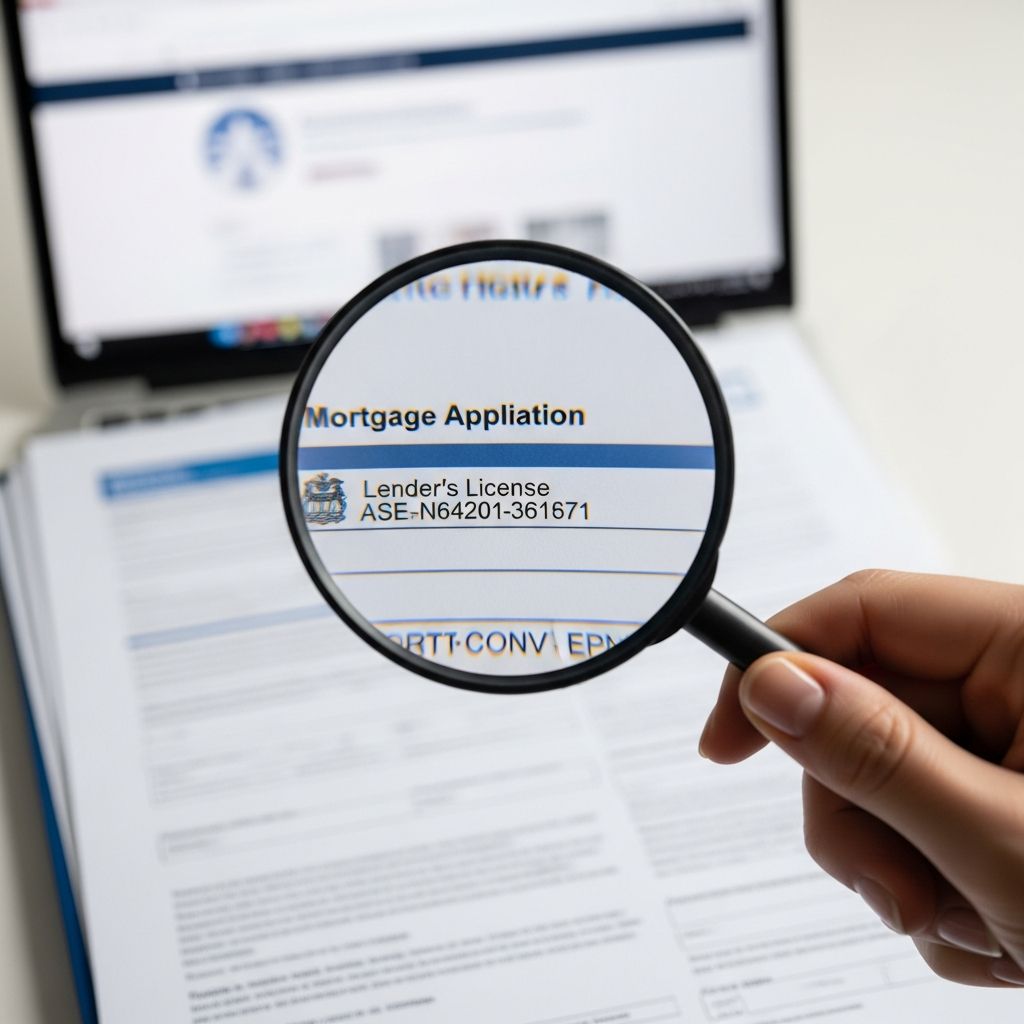
Before you share documents, pay fees, or sign any forms for a home loan, it is critical to verify that the company or individual offering the mortgage is properly licensed or registered. Doing this due diligence helps you avoid scams, illegal operators, and costly problems down the road.
This guide explains, in plain language, how to confirm whether a mortgage company, broker, or loan originator is allowed to make or arrange mortgage loans, and how to spot warning signs that something may be wrong.
Why Licensing Matters in Mortgage Lending
Mortgage lending is heavily regulated because home loans are large, long-term financial commitments and a frequent target of fraud. Federal law and state laws require most mortgage lenders, brokers, and individual loan originators to be licensed or registered and to meet minimum standards of competence and integrity.
Verifying licensing is important because it:
- Shows the person or company is known to regulators and subject to oversight.
- Helps ensure minimum education, testing, and background standards have been met.
- Makes it easier to file complaints or seek help if something goes wrong.
- Reduces the risk of dealing with unqualified or fraudulent operators.
Who Is Required to Be Licensed or Registered?
Most of the time, the people and companies you deal with in a residential mortgage must fall into one of two categories: state-licensed or federally registered.
1. State-Licensed Mortgage Loan Originators and Companies
In general, a mortgage loan originator (MLO) who works for a non-bank lender or mortgage broker must hold a state license in every state where they take applications or negotiate terms. States must, at a minimum, require that individual license applicants:
- Have not had a loan originator license revoked in any jurisdiction.
- Have not been convicted of certain felonies within specific timeframes, especially crimes involving fraud or dishonesty.
- Demonstrate financial responsibility, good character, and general fitness.
- Complete at least 20 hours of pre-licensing education, including specific hours in federal law, ethics, and nontraditional mortgage products.
- Pass a written test with at least a 75% score.
- Submit fingerprints for an FBI criminal background check and provide personal history information.
States may impose additional requirements, such as state-specific education, surety bonds, or financial reporting.
2. Federally Registered Loan Originators at Banks
Some loan originators are not state-licensed but instead are federally registered because they work for certain types of institutions, such as:
- Banks and savings associations regulated by federal banking agencies.
- Credit unions supervised by the National Credit Union Administration.
These originators must be registered in the same national system used for state-licensed originators, but their employers are regulated by federal banking or credit union regulators rather than state mortgage licensing agencies.
Key Tool: The NMLS Consumer Access Website
The main system used nationwide to track mortgage licensing and registration is the Nationwide Multistate Licensing System & Registry (NMLS). Consumers can use a free public website, often referred to as “NMLS Consumer Access,” to look up:
- Individual mortgage loan originators.
- Mortgage lenders and brokers.
- Other financial services companies that use the NMLS.
What You Can See in NMLS Consumer Access
When you search, you can typically view:
- The person’s or company’s legal and trade names.
- License or registration status, including whether it is active, inactive, revoked, or expired.
- The states where they are authorized to conduct mortgage activity.
- Their unique NMLS ID number.
- Regulatory actions or disclosures, if any, reported in the system.
| Type | Who It Applies To | Who Oversees It | Where You Check |
|---|---|---|---|
| State license | Most non-bank mortgage lenders, brokers, and their loan originators | State mortgage regulators or financial institutions departments | NMLS Consumer Access plus state regulator websites |
| Federal registration | Loan originators employed by banks and some other depository institutions | Federal banking agencies and NCUA | NMLS Consumer Access |
Step-by-Step: How to Check a Mortgage Company or Person
Use the following steps as a checklist before moving forward with any mortgage offer.
Step 1: Ask for Basic Identifying Information
Start by requesting:
- The company’s full legal name and any “doing business as” (DBA) names.
- The physical office address and main business phone number.
- The loan officer’s full name and their NMLS ID (often called “NMLS number”).
Legitimate professionals should be willing to provide this information in writing, such as on a business card, email signature, or disclosure document.
Step 2: Look Up the Individual and Company in NMLS
Next, visit the public NMLS search site (NMLS Consumer Access). You can search by:
- Individual name or NMLS ID.
- Company name or NMLS ID.
Compare what you see in the system with what the person has told you. Confirm that:
- The names and addresses match.
- The status is listed as active (or its equivalent) for the state where your property is located.
- Any branch office involved in your loan appears under the company’s record.
Step 3: Confirm State Authorization Through Your State Regulator
States maintain their own licensing records and often offer consumer look-up tools through the state regulator’s website, such as a department of banking, financial institutions, or consumer finance.
When reviewing state records, check for:
- Active license status for the company and, where required, for the branch location.
- Active license status for the individual loan originator (if they must be licensed in that state).
- Any disciplinary actions, fines, or license conditions, if disclosed.
If you cannot find a public search tool, you can usually contact the regulator’s office by phone or email to ask whether a specific company or person is licensed or exempt under that state’s laws.
Step 4: Verify the Type of Entity You Are Dealing With
Different rules may apply depending on whether your contact works for a bank, a credit union, a mortgage company, or a broker. To clarify:
- Ask directly whether the employer is a bank, credit union, mortgage lender, or broker.
- Look for the institution’s name on any disclosures or loan estimates you receive.
- Confirm the bank or credit union’s name in official directories maintained by federal regulators (such as FDIC, OCC, or NCUA databases).
A loan originator at a bank may be registered rather than state-licensed, but you should still see them in NMLS Consumer Access.
Reading License and Registration Records
Finding a company or person in NMLS or state records is only the first step. You also need to interpret what you see.
Common Status Terms
Status language varies by jurisdiction, but typical terms include:
- Active / Approved: Authorized to conduct mortgage activity in that state under the listed license.
- Approved-Inactive / Inactive: License exists but may not currently allow active origination; check details or contact the regulator.
- Expired: License term has ended and has not been renewed.
- Revoked / Surrendered: License has been taken away by the regulator or voluntarily given up; this is a red flag and requires more investigation.
Pay Attention to Disclosures and Regulatory Actions
Licensing records may note past problems, such as:
- Administrative orders or fines by regulators.
- Criminal charges or convictions relevant to financial services.
- Civil lawsuits involving fraud or deceptive practices.
A single disclosure does not automatically mean you must avoid the person or company, but it is a sign you should read carefully, ask questions, and consider whether you are comfortable proceeding.
Additional Red Flags Beyond Licensing
Even if someone appears in the licensing system, certain behaviors can still indicate risk. Approach with caution if you notice:
- Pressure to act immediately or sign documents without time to review.
- Requests for large upfront fees before any clear service is provided.
- Instructions to lie on your application or leave sections blank.
- Refusal to provide written disclosures or estimates.
- Unwillingness to give you their NMLS ID or license details.
Combine licensing checks with common-sense judgment about professionalism and transparency.
What to Do If You Cannot Verify a License
If your search does not confirm that a person or company is properly licensed or registered, take the following steps before going any further:
- Stop sharing sensitive information such as Social Security numbers, bank statements, or full tax returns.
- Contact your state mortgage or banking regulator and ask if the company or person is licensed, exempt, or simply not authorized to operate.
- Ask the company to clarify its legal status and why you cannot find it in NMLS or state records.
- If something seems suspicious, consider reporting your concerns to your state regulator or a federal consumer protection agency.
Choosing a different lender or broker is almost always easier than dealing with the fallout from a fraudulent or illegal operator.
Practical Tips to Stay Safe When Shopping for a Mortgage
Beyond license verification, a few practical habits can further reduce risk and improve your chances of getting a fair deal:
- Get quotes from multiple licensed lenders or brokers so you can compare rates, fees, and terms.
- Keep copies of all emails, texts, documents, and disclosures in case you need them later.
- Read every document you are asked to sign; ask for plain-language explanations of anything you do not understand.
- Use secure channels (such as encrypted portals) to upload sensitive documents when possible.
- Pay attention to your gut; if something feels off, step back and reassess.
Frequently Asked Questions (FAQs)
Q1: Is every person I speak with about a mortgage required to be in NMLS?
Not necessarily. Administrative staff or marketing representatives who do not take applications or negotiate loan terms may not be required to be licensed as loan originators. However, anyone who takes your application or discusses specific loan terms with you will usually need to be licensed or registered and should have an NMLS ID you can look up.
Q2: What if the person works for a bank—do I still need to check NMLS?
Yes. Loan originators at banks and some other depository institutions must be registered in NMLS even though they are not state-licensed in the same way as non-bank originators. You should still be able to search their name or NMLS ID and see their registration record.
Q3: Can a company be licensed while an individual loan officer is not?
In most states, both the company and each individual mortgage loan originator must meet licensing or registration requirements. A company’s license does not automatically authorize an unlicensed individual to originate loans. Always verify both levels when possible.
Q4: How often do licenses need to be renewed?
License renewal typically occurs on an annual cycle and may require continuing education and fees. You should confirm that the license status is currently active and not merely approved for a prior year.
Q5: If I file a complaint, can my lender retaliate by canceling my loan?
Regulators generally prohibit unfair or retaliatory actions in response to a good-faith complaint. While specific protections may vary by jurisdiction and situation, lenders and brokers are expected to follow applicable consumer protection laws. If you believe you are facing retaliation, contact your state regulator or an appropriate federal agency to report it.
References
- Rule 80-11-5 Mortgage Loan Originator Licensure Requirements — Georgia Department of Banking and Finance. 2023-01-01. https://rules.sos.ga.gov/gac/80-11-5
- 12 CFR § 1008.105 Minimum loan originator license requirements — Consumer Financial Protection Bureau. 2023-04-01. https://www.consumerfinance.gov/rules-policy/regulations/1008/105
- Licensing Requirements for Mortgage Loan Originators — National Mortgage Professional Magazine. 2022-06-15. https://nationalmortgageprofessional.com/news/licensing-requirements-mortgage-loan-originators
- Mortgage Lending — South Carolina Office of the Commissioner of Consumer Finance. 2023-05-10. https://consumerfinance.sc.gov/regulated-institutions/mortgage-lending
- Mortgage Loan Originator Licensing Requirements — North Carolina Office of the Commissioner of Banks. 2023-03-20. https://nccob.nc.gov/financial-institutions/mortgage/licensing-information/mortgage-loan-originator-licensing-requirements
- How to Become a Mortgage Loan Officer in 6 Simple Steps — OnCourse Learning. 2022-09-01. https://www.oncourselearning.com/resources/how-to-become-a-mortgage-loan-officer-in-six-steps
- Licensing Checklists, Requirements, and Fees — Nationwide Multistate Licensing System & Registry. 2023-02-01. https://mortgage.nationwidelicensingsystem.org/knowledge/Products/nmls/stateresourcecenter/SitePages/Checklist-Compiler.aspx
Similar Articles








Read full bio of Sneha Tete




