
Is That CFPB Check Real? A Practical Guide to Verifying Government Payments
Learn how to confirm if a CFPB check is genuine, avoid imposter scams, and protect yourself when money from the government shows up unexpectedly.
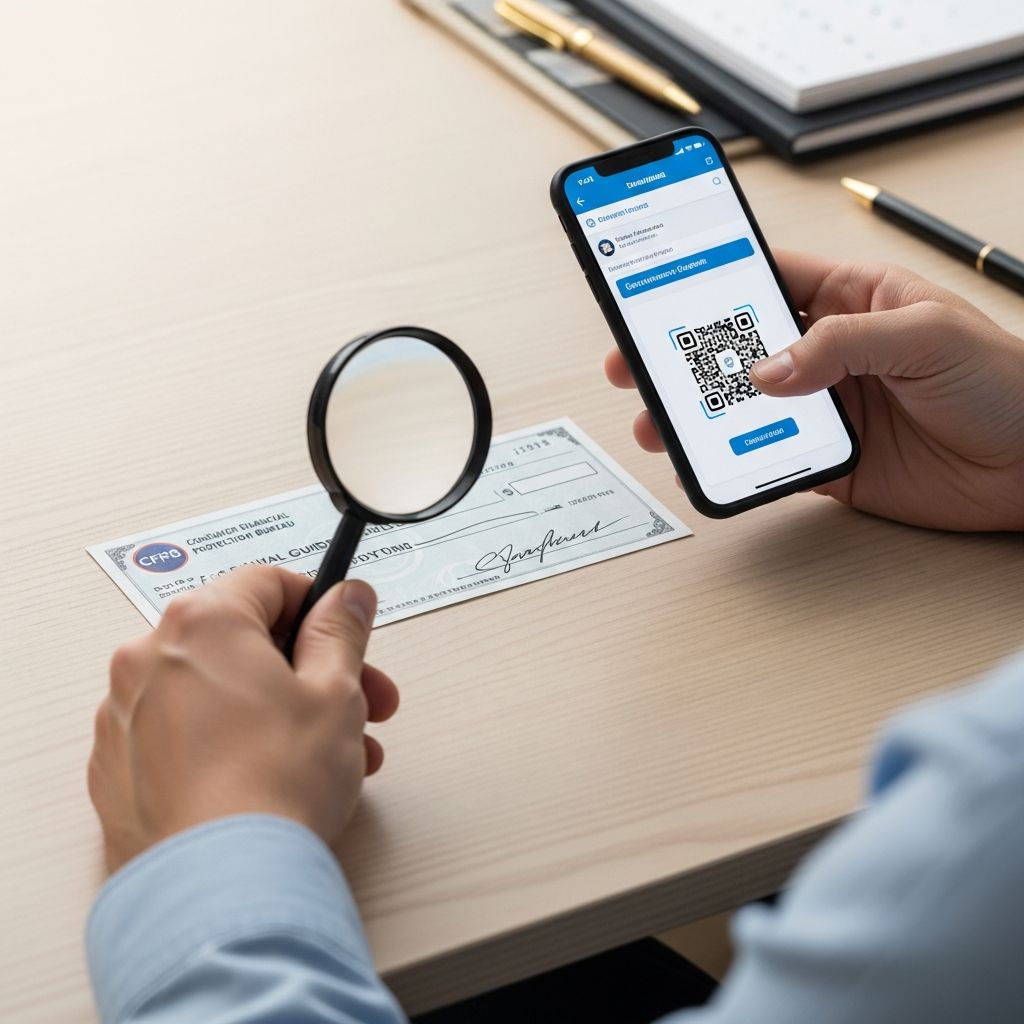
Many people are surprised to find a check in the mail that appears to come from the Consumer Financial Protection Bureau (CFPB) or from a company that the CFPB has taken action against. When that happens, it is smart to be cautious. This guide explains why you might receive such a payment, how to confirm whether it is legitimate, the most common warning signs of scams, and what steps you can take to protect yourself and your legal rights.
1. Why the CFPB Sends Checks to Consumers
The CFPB is a U.S. government agency that enforces federal consumer financial laws. When it takes enforcement action against a financial company and obtains money for consumers, these funds can be distributed as refunds or compensation to people who were harmed by illegal practices.
If you receive a genuine CFPB-related check, it is usually because:
- You were affected by a company’s unlawful conduct and were identified in that company’s records as a harmed consumer.
- The CFPB or a court ordered the company to pay redress (refunds or compensation) to affected consumers.
- A third-party payments administrator was hired to process and mail payments on behalf of the CFPB or the defendant company.
In some cases, instead of a check, you might receive a claim form first, asking you to provide limited information or documentation to confirm that you are eligible for payment. This is more likely when a company’s records are incomplete or when the amount you are owed must be calculated based on your responses.
2. Key Features of a Legitimate CFPB-Related Payment
No two cases are exactly the same, but authentic CFPB-related payments share several characteristics. You can use these features as a quick checklist before taking any next steps.
2.1 What a Real Payment Typically Includes
- Clear identification of the case — The letter or notice that comes with the check usually names the company or case and may describe the type of product involved (for example, credit card add-on products or illegal fees).
- The CFPB’s name and logo — You may see the CFPB identified as the source of the enforcement action, even if the check is issued by a separate payments administrator.
- Instructions that do not require upfront payment — Legitimate materials will not require you to send money, purchase gift cards, or pay “processing fees” to receive or deposit your check.
- Contact information for a payments administrator — You might see a toll-free number, email address, or website where you can confirm details about the case and your payment.
2.2 Things You Will Not Be Asked to Do
Government agencies consistently warn about red-flag requests associated with fraud, including imposter scams. In legitimate CFPB redress programs, you should not be asked to:
- Pay any money to receive your refund — The CFPB states that it will not require upfront fees, and genuine government payments are not conditioned on you paying taxes or service charges first.
- Provide sensitive data as a condition to cash a check — You should not be asked for your bank login, full Social Security number, or credit card numbers in order to deposit or cash a CFPB-related check.
- Return part of the funds — Scammers sometimes send fake checks and ask you to send back a portion via wire transfer or gift card. When the check later bounces, you are left owing the bank. Government agencies warn never to send money back on this basis.
3. Step-by-Step: How to Verify a CFPB Check
If you are unsure whether your check is genuine, use the following process before attempting to deposit it.
3.1 Compare Your Letter to Official Case Information
The CFPB publishes information about its enforcement actions, including certain details about redress and payments. You can:
- Locate the case name or company identified in your letter.
- Visit the CFPB’s official website and search its enforcement or “payments” pages for a case with the same name.
- Check whether the description of the case (industry, type of product, and timeline) matches what is in your letter.
3.2 Contact the Payments Administrator Using Official Details
For many large cases, the CFPB uses outside payments administrators to handle claims and checks. Instead of relying only on contact details printed in your letter:
- Use contact information for the administrator listed on the CFPB’s official case page.
- Call or email the administrator and provide only the information they need to confirm your identity and the check number.
- Ask them directly whether the check is authentic and whether it has been issued in your name.
3.3 Confirm the Check With Your Bank
Your bank may help review the check’s routing and account information and may be able to identify obvious red flags, such as mismatched account details or known scam patterns. This is not a substitute for confirming the case with the CFPB or the administrator, but it can provide an extra layer of protection.
3.4 Watch for Classic Scam Warning Signs
Federal agencies highlight several warning signs that suggest contact may be fraudulent. If any of the following occur in connection with your check, take them as serious red flags:
- You are told to act immediately or risk losing the money.
- Someone asks you to pay “taxes,” “release fees,” or “processing charges” before you can deposit the check.
- You are asked to provide account passwords, PINs, or full Social Security numbers over the phone or via email.
- The caller or sender refuses to provide verifiable information about the case or their organization.
4. Claim Forms, Online Portals, and Documentation Requests
In some enforcement matters, you may receive a claim form instead of, or in addition to, a check. The purpose of a claim form is often to confirm that you are the correct person and to gather the data needed to calculate your share of the redress.
4.1 When Claim Forms Are Used
Claim forms may be used when:
- The company’s records are incomplete or outdated.
- The amount owed to each consumer depends on additional information, such as account balances during a certain period.
- The settlement requires consumers to certify certain facts before receiving a payment.
4.2 Safely Completing a Claim Form
To complete a claim form safely:
- Access any online claim portal only through a link or web address you find on the CFPB’s official case page or on a trusted government site.
- Provide only the information the form clearly needs to verify your eligibility (for example, partial Social Security digits or account numbers as specified).
- Do not email sensitive documents unless the instructions explicitly describe a secure process such as an encrypted upload portal.
5. Government Imposter Scams: How Fraudsters Imitate the CFPB
Scammers frequently pretend to be from government agencies, including the CFPB and the Federal Trade Commission (FTC), in an attempt to steal money or personal information. According to government guidance, scammers may contact you by phone, text, social media, email, messaging apps, or mail.
5.1 Typical Imposter Tactics
| Scam Tactic | How It Usually Looks | Why It’s a Red Flag |
|---|---|---|
| Fake prize or lawsuit payout | You are told you won a lottery, sweepstakes, or class-action settlement run by a government agency. | Federal agencies and the CFPB do not call to announce lottery winnings and do not ask for fees to claim prizes. |
| Upfront fee demands | You must pay “taxes,” “release fees,” or “verification fees” before receiving funds. | Government agencies do not require upfront payment to send you money or to release a legitimate refund. |
| Pressure to act now | You are told an offer is good “only today” or that law enforcement action is imminent. | High-pressure tactics are classic indicators of scams designed to stop you from verifying the story. |
| Requests for sensitive data | The caller or sender asks for full Social Security number, bank login, or payment card numbers. | CFPB and similar agencies warn not to share such details with unexpected callers or messages. |
5.2 How to Respond to Suspicious Contacts
- Do not send money by wire transfer, payment app, cryptocurrency, courier, or gift card in response to an unexpected demand.
- Hang up and independently verify the agency’s phone number using its official website, not using the number given by the caller.
- Report suspected scams to the FTC, your state attorney general, or directly to the CFPB for consumer finance-related scams.
6. What If You Think You Should Have Received a Check?
Sometimes people learn that the CFPB has taken action against a company they used but they do not receive a payment. Several factors can explain this:
- The enforcement action did not result in monetary redress for every affected consumer.
- You might not meet the eligibility criteria established in the settlement or court order.
- Your records may not appear in the company data used to identify harmed consumers.
If you believe you may be eligible:
- Review the CFPB’s description of the enforcement action to see who qualifies for compensation.
- Reach out to the payments administrator listed on the official case page, if one is identified.
- Contact the CFPB directly using contact information from its official website if you still have questions.
7. Your Legal Rights After Cashing a CFPB Check
Receiving or depositing a refund check from an enforcement action usually does not automatically prevent you from pursuing your own legal claims against the company. In many CFPB cases, cashing a payment does not waive your right to seek additional relief through private legal action.
However, the specific effect on your rights can depend on the terms of the settlement or court order. For guidance on your options, you may consider:
- Contacting a private attorney experienced in consumer law.
- Looking for nonprofit legal aid providers that offer free or low-cost help to eligible clients.
- If you are a servicemember, speaking with a Judge Advocate General (JAG) office for advice tailored to your situation.
8. Practical Safety Tips for Any Unexpected Check
The same good habits that protect you from other scams apply when you receive an unexpected check, even if it appears to be from a government agency.
- Be skeptical of “too good to be true” offers — Federal consumer agencies repeatedly emphasize that if an offer sounds far better than expected, it deserves careful verification.
- Slow down and double-check — Scammers want you to act quickly. Taking time to research the case and confirm details is one of your best defenses.
- Protect your personal information — Follow official guidance not to share account numbers, passwords, or full Social Security numbers with people you do not know or trust.
- Review your accounts — After depositing any large or unexpected check, monitor your bank and credit card accounts for unusual activity and report suspicious transactions right away.
9. Frequently Asked Questions (FAQs)
Q1: I got a phone call saying the CFPB owes me money and I must pay a fee first. Is this real?
No. Guidance from the CFPB and other federal agencies makes clear that legitimate government payments do not require you to pay fees or taxes upfront, and the CFPB does not call consumers to demand payment in order to release funds.
Q2: My check mentions a payments administrator, not the CFPB. Is that normal?
Yes. In many enforcement cases, an outside company is hired to manage claims and send checks. You should still verify that the administrator is connected to an official CFPB case by checking the CFPB’s website and using the contact information listed there.
Q3: Can a real CFPB-related check bounce?
While system or bank errors can occur in rare situations, official payments in CFPB enforcement matters are funded as part of court orders or settlements and are generally valid. If your bank raises concerns, contact the payments administrator and confirm the check using the official case information.
Q4: The letter uses the term “Consumer Protection Bureau” instead of “Consumer Financial Protection Bureau.” Is that a problem?
It can be. Federal agencies warn that scammers sometimes use incorrect or misleading agency names to sound official. If the name does not match exactly, do not rely on the letter alone. Instead, independently check the CFPB’s website and verify any case or contact details.
Q5: Where can I learn more about scams involving government agencies and refunds?
The CFPB and the FTC provide consumer education pages on fraud and imposter scams, including how to recognize fake debt collection, prize, and refund schemes. Reviewing these materials can help you and your family spot and avoid future scams.
References
- Got a check in the mail from the CFPB? Here’s how to tell if it’s legit — Consumer Financial Protection Bureau. 2023-03-27. https://www.consumerfinance.gov/about-us/blog/got-check-mail-cfpb-heres-how-tell-if-its-legit/
- Fraud and scams — Consumer Financial Protection Bureau. 2024-02-01 (last updated). https://www.consumerfinance.gov/consumer-tools/fraud/
- How to spot a scammer — Consumer Financial Protection Bureau. 2023-10-11. https://www.consumerfinance.gov/about-us/blog/how-spot-scammer/
- Beware of new CFPB imposter scams — Consumer Financial Protection Bureau. 2023-04-06. https://www.consumerfinance.gov/about-us/blog/beware-of-new-cfpb-imposter-scams/
- What are some classic warning signs of possible fraud and scams? — Consumer Financial Protection Bureau. 2023-06-15. https://www.consumerfinance.gov/ask-cfpb/what-are-some-classic-warning-signs-of-possible-fraud-and-scams-en-2094/
Similar Articles








Read full bio of Sneha Tete




