
Using a Credit Card at an ATM: Costs, Limits, and Safer Options
Learn how withdrawing cash with a credit card works, why it’s costly, and what alternatives can save you money and avoid debt traps.
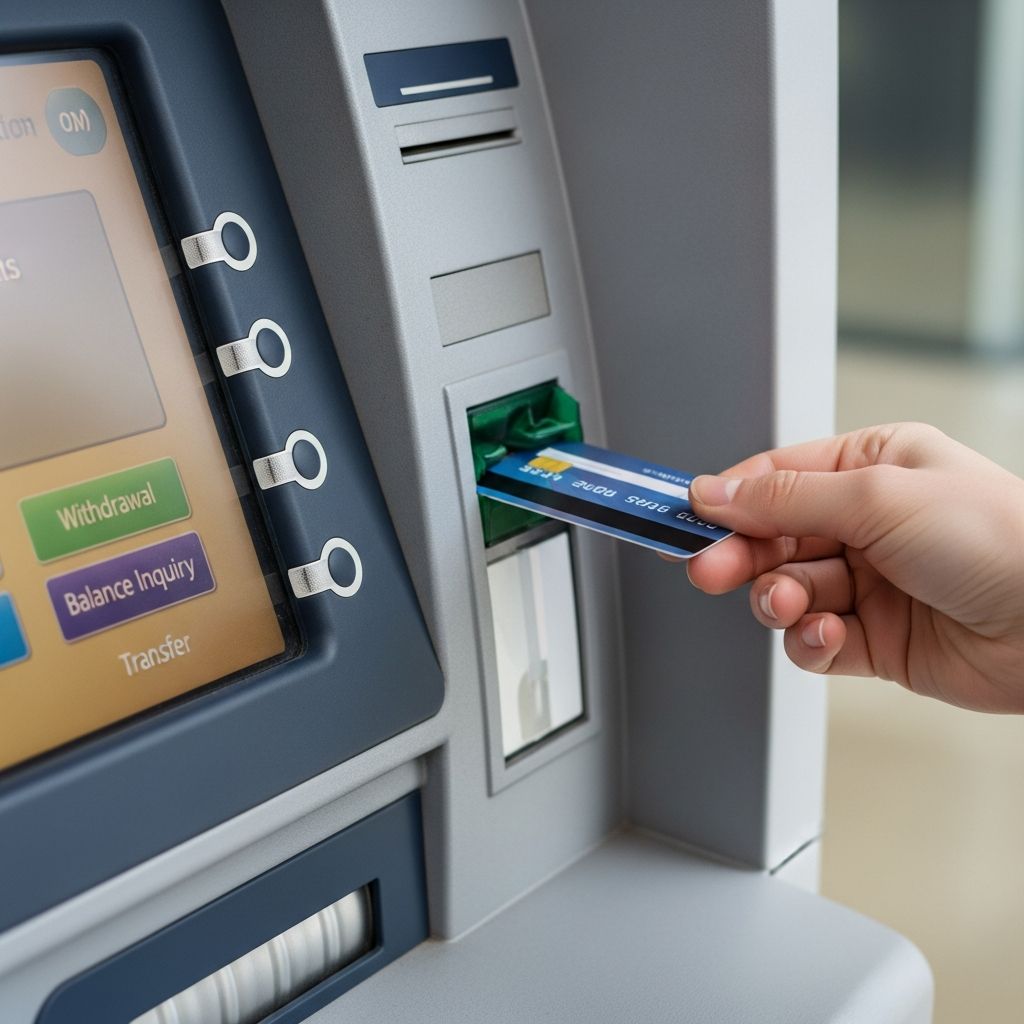
Many credit cards allow you to withdraw cash from an ATM, but these transactions are usually treated as cash advances, which are among the most expensive ways to borrow money from your card issuer. Before you rely on your credit card for quick cash, it’s important to understand how cash advances work, what they cost, and when they might (or might not) make sense.
Can You Withdraw Cash From a Credit Card at an ATM?
In most cases, yes, you can withdraw money from a credit card at an ATM. The withdrawal is processed as a cash advance rather than a standard purchase. Instead of pulling funds from a checking account like a debit card, the ATM withdrawal draws against your credit line.
However, being allowed to take out cash does not mean it is always possible or wise. You may run into one or more of the following:
- A separate, lower cash advance limit that is already used up
- An overall credit limit that you’re close to or have exceeded
- Issuer-specific rules that restrict cash advances on certain card types
- Lack of a PIN, which is usually required for ATM access
If your attempt is declined, check your latest statement or online account, or contact your card issuer using the number on the back of your card.
What Is a Credit Card Cash Advance?
A cash advance is a transaction in which you use your credit card to obtain cash instead of buying goods or services. From the card issuer’s perspective, this is a short-term loan that starts accruing interest immediately and often carries higher costs than regular purchases.
Common ways to complete a cash advance include:
- ATM withdrawal: Using your credit card and PIN at an ATM to get cash.
- Bank or credit union teller: Requesting a cash advance in person at a participating financial institution.
- Convenience checks: Writing special checks linked to your credit card account.
All of these methods typically share the same drawbacks: high fees, higher interest rates, and no interest-free grace period.
How Cash Advances Differ From Regular Credit Card Purchases
| Feature | Regular Purchase | Cash Advance |
|---|---|---|
| Typical APR (interest rate) | Standard purchase APR | Usually higher APR than purchases |
| Grace period | Often has an interest-free period if paid in full by due date | Interest typically starts immediately, no grace period |
| Transaction fee | Often none (or small foreign/merchant fees) | Cash advance fee, plus possible ATM fee |
| Source of funds | Purchase charged to your credit line | Cash drawn against your credit line (short-term loan) |
| Effect on available credit | Reduces standard credit limit | Reduces both overall limit and separate cash advance limit |
Cash Advance Limits: Why You May Not Get the Amount You Expect
Many issuers set a separate cash advance limit that is lower than your overall credit limit. For example, a card with a total limit of $10,000 might cap cash advances at $2,000. Once you hit that cash limit (through ATM withdrawals, teller advances, or convenience checks), additional cash attempts may be declined even if you still have room under your total credit limit.
Key points about cash advance limits include:
- Your cash advance limit is usually listed on your statement or online account.
- The limit may be changed by your issuer based on your credit profile and account usage.
- Some card types or accounts may have no cash advance feature at all.
Remember that ATMs and bank branches may also impose their own daily withdrawal caps, separate from your card’s limits.
Fees and Interest: Why Cash Advances Are So Expensive
Cash advances are costly because they combine several types of charges at once. Typical costs include:
- Cash advance fee: Often a flat dollar amount or a percentage of the transaction (for example, 3%–5%) added on top of the amount you withdraw.
- Higher cash advance APR: A higher interest rate than your purchase APR, applied from the date of the transaction.
- No grace period: Interest usually begins accruing immediately; paying your bill in full by the due date does not erase this accrued interest.
- ATM surcharge: The ATM operator may charge its own fee, especially if the machine is out of your bank’s network.
Because of these combined costs, a relatively small withdrawal can quickly become expensive if you do not repay it quickly.
Step-by-Step: How to Withdraw Cash From a Credit Card at an ATM
If you decide a cash advance is necessary, taking a few steps ahead of time can help limit surprises and added costs.
1. Confirm Your Eligibility and Limits
- Review your most recent statement or log into your online or mobile account.
- Locate your cash advance limit and current balance.
- Confirm that the planned withdrawal will not exceed your limit or put you over your total credit line.
2. Check Your Card’s Terms and Fees
- Look up the cash advance APR in your cardholder agreement or on your statement.
- Identify the cash advance fee formula (percentage vs. flat fee).
- Find out whether other types of transactions (such as convenience checks) share the same limit and rate.
3. Obtain or Confirm Your PIN
- Most issuers require a personal identification number (PIN) to use a credit card at an ATM.
- If you do not know your PIN, request or reset it through your online account or by phone; the issuer may mail or text it to you.
4. Use an ATM That Accepts Your Card
- Choose an ATM that displays the network symbols on the back of your card (for example, Visa, Mastercard, or a specific bank network).
- Be prepared for possible ATM operator fees, which may be shown on the screen before you complete the transaction.
5. Complete the Cash Advance
- Insert your card and enter your credit card PIN.
- Select the option for cash advance or cash withdrawal, and then choose the credit option if prompted.
- Enter the amount you wish to withdraw, staying below your available cash limit.
- Review and accept the fees shown on the screen.
- Take your cash, card, and receipt, and store them securely.
Why Cash Advances Can Hurt Your Finances
Because cash advances are more expensive than many other forms of borrowing, relying on them can weaken your overall financial health.
- Faster debt growth: High APRs and immediate interest charges mean your balance can grow quickly if you pay only the minimum.
- Higher utilization ratio: Large cash advances increase the percentage of your available credit that you’re using, which can negatively affect your credit scores if sustained over time.
- Fewer protections: Unlike disputed card purchases, cash advances represent direct borrowing; consumer protections that apply to purchases may not help if you regret taking out cash.
- Cycle of dependency: Using cash advances to cover basic expenses can signal that your budget is out of balance and may lead to recurring, costly borrowing.
When a Cash Advance Might Be Considered
Despite the drawbacks, there are situations where a cash advance could be a last-resort option. For example:
- You face an urgent emergency expense and have exhausted safer, cheaper options.
- You need funds in a location where other forms of payment are temporarily unavailable.
- You have a clear, realistic plan to repay the advance quickly, minimizing interest charges.
Even in these scenarios, it is important to compare all available alternatives first.
Safer and Cheaper Alternatives to Credit Card Cash Advances
Before you take a cash advance, consider other ways to access money that may carry lower fees and interest charges.
- Use a debit card and checking account: Withdrawing from your own bank account at an in-network ATM often avoids cash advance fees and may avoid ATM surcharges as well.
- Ask your bank about overdraft policies: While overdrafts can be costly, some accounts offer lower-cost overdraft lines of credit compared with cash advance APRs.
- Personal loans: A small personal loan from a bank, credit union, or reputable lender may offer a lower interest rate and fixed repayment schedule.
- Payment arrangements: For bills such as utilities, medical expenses, or rent, ask about payment plans, due date extensions, or hardship options.
- Borrowing from savings: If you have savings set aside, using those funds for a true emergency can be cheaper than paying cash advance interest and fees.
Managing a Cash Advance If You Already Took One
If you have already withdrawn cash from your credit card, you can still reduce the long-term cost by managing the debt proactively.
- Pay more than the minimum: Aim to pay the cash advance portion of your balance as quickly as possible; making only minimum payments can keep you in debt for a long time.
- Direct extra payments strategically: Some card issuers apply excess payments first to balances with higher interest rates; review your statement or ask your issuer how payments are allocated.
- Track your fees and interest: Monitoring how much the advance is costing you may help you prioritize paying it off.
- Avoid additional advances: Taking repeated cash advances can compound interest and fees, making repayment more difficult.
Frequently Asked Questions (FAQs)
Do I always need a PIN to get cash from my credit card?
For ATM withdrawals, you almost always need a credit card PIN. Some in-branch cash advances may not require a PIN but could require government-issued identification instead. If you do not have a PIN, contact your issuer through your online account or customer service line.
Why was my credit card cash advance declined at the ATM?
Common reasons include:
- Reaching your cash advance limit
- Exceeding your overall credit limit
- Attempting to withdraw more than the ATM’s maximum per transaction or per day
- Not having a valid PIN or entering it incorrectly
- Issuer-specific restrictions on cash advances for your card type
Check your statement or call your issuer for details.
Do cash advances affect my credit score?
The act of taking a cash advance is not usually reported as a separate item, but the resulting higher balance and utilization ratio can influence your credit scores if it raises your total debt relative to your credit limits. Consistently high utilization or missed payments can harm your credit over time.
Is there any grace period on cash advances?
Most cards do not offer a grace period on cash advances; interest usually starts accruing on the transaction date. This is different from many purchases, which may not accrue interest if you pay the statement balance in full by the due date.
Are cash advance fees the same on all credit cards?
No. Each issuer sets its own fee structure and interest rates for cash advances. The fee may be a flat dollar amount, a percentage of the transaction, or the greater of the two. Always review your card’s terms and conditions before using it for cash.
Can I avoid cash advance fees by using a bank branch instead of an ATM?
Visiting a bank branch may help you avoid some ATM surcharges, but the transaction is usually still treated as a cash advance with the same cash advance fee and APR defined in your credit card agreement. Confirm with both your card issuer and the bank before proceeding.
References
- Can I withdraw money from my credit card at an ATM? — Consumer Financial Protection Bureau. 2024-01-18. https://www.consumerfinance.gov/ask-cfpb/can-i-withdraw-money-from-my-credit-card-at-an-atm-en-34/
- What is a Credit Card Cash Advance and the Associated Fees? — Bank of America (Better Money Habits). 2023-06-01. https://bettermoneyhabits.bankofamerica.com/en/credit/what-is-a-credit-card-cash-advance
- Can you use a credit card at an ATM? — Capital One. 2023-10-05. https://www.capitalone.com/learn-grow/money-management/can-you-use-a-credit-card-at-an-atm/
- How to Get Cash From a Credit Card — Citibank. 2023-09-12. https://www.citi.com/credit-cards/understanding-credit-cards/how-to-get-cash-from-a-credit-card
- How to get cash from a credit card at the ATM — Bankrate. 2024-02-20. https://www.bankrate.com/credit-cards/advice/how-to-get-cash-from-a-credit-card/
- What Is a Cash Advance? — Citizens Bank. 2023-03-15. https://www.citizensbank.com/learning/what-is-a-cash-advance.aspx
- Can I use my Card to withdraw cash at an ATM? — American Express. 2023-08-09. https://www.americanexpress.com/us/customer-service/faq.withdraw-cash-atm.html
Similar Articles








Read full bio of Sneha Tete




