
Understanding Your Rights to Fair Lending and Credit
Learn how U.S. fair lending laws protect you from credit discrimination and what to do if you think your rights were violated.
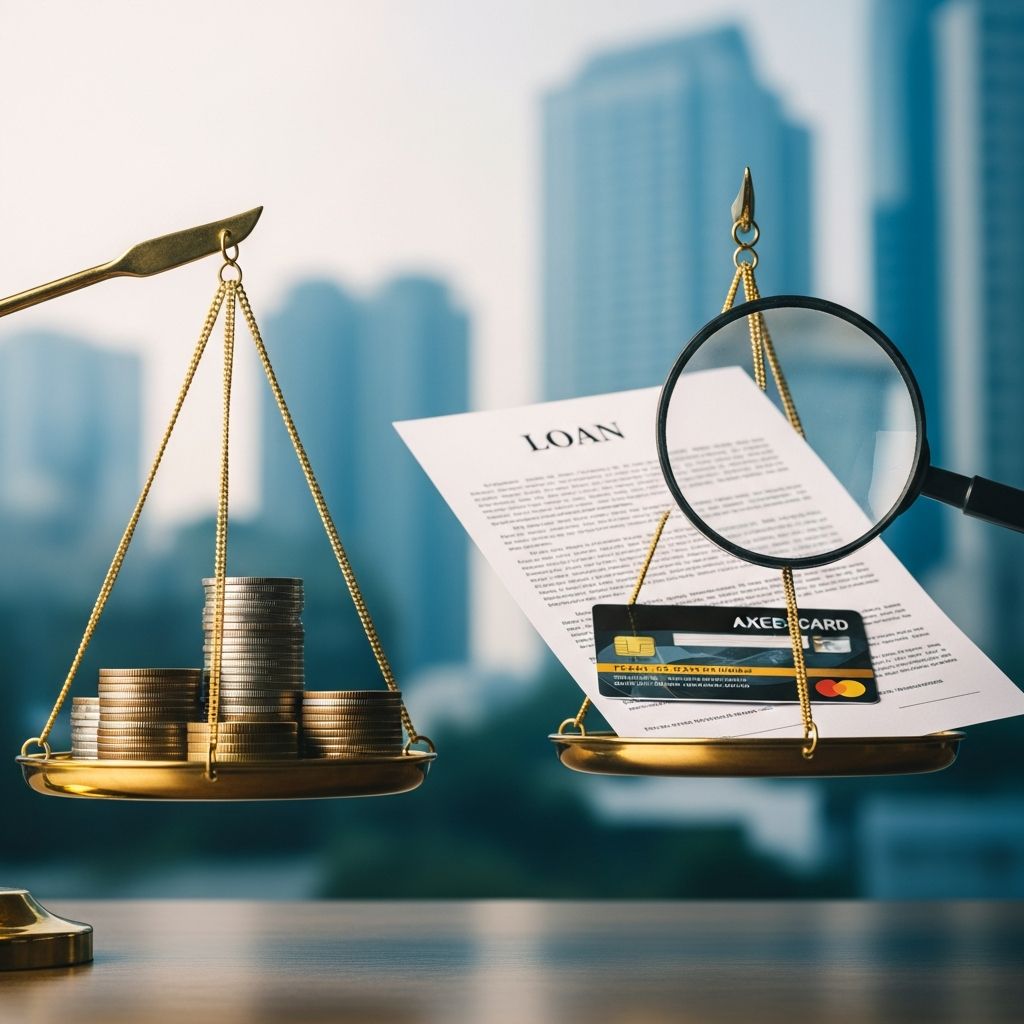
Access to credit can shape nearly every part of your financial life, from getting a credit card or car loan to buying a home or starting a small business. Federal fair lending laws are designed to ensure that these opportunities are offered on a fair and equal basis, without discrimination or bias.
This guide explains what fair lending means, the legal protections you have, how to recognize possible discrimination, and what steps you can take if you believe you were treated unfairly.
1. What Fair Lending Means in Everyday Life
Fair lending is the principle that every qualified consumer should have an equal chance to obtain credit and be evaluated based on their creditworthiness—not on who they are or where they come from.
These protections apply to almost any situation where you seek or use credit, including:
- Credit cards and charge cards
- Auto and personal loans
- Mortgages and home equity loans or lines of credit
- Student loans
- Small business or commercial loans
- Store financing or buy-now-pay-later plans
Fair lending laws cover the entire credit relationship, not just approval or denial. That includes advertising, how your application is handled, the terms and pricing of your loan, and how your account is serviced over time.
2. Key Federal Laws that Protect You
Several major federal laws work together to protect consumers from credit discrimination.
2.1 Equal Credit Opportunity Act (ECOA)
The Equal Credit Opportunity Act (ECOA) makes it illegal for a creditor to discriminate in any aspect of a credit transaction. It applies to any organization that regularly extends credit, such as banks, credit unions, finance companies, credit card issuers, and many retailers.
Under ECOA, a creditor generally cannot base decisions on:
- Race or color
- Religion
- National origin
- Sex, including sexual orientation and gender identity
- Marital status
- Age (if you are old enough to enter into a contract)
- Receipt of income from public assistance programs
- Exercising your rights under consumer credit laws (for example, disputing an error)
ECOA is implemented by the Consumer Financial Protection Bureau’s Regulation B, which contains detailed rules on how creditors must treat applicants and what is prohibited.
2.2 Fair Housing Act (FHA)
The Fair Housing Act (FHA) prohibits discrimination in housing-related credit, such as home purchase loans, refinances, and home improvement loans.
For these types of credit, it is illegal to discriminate because of:
- Race
- Color
- Religion
- Sex
- National origin
- Disability
- Familial status (for example, having children under 18)
Together, ECOA and the Fair Housing Act form the core of federal fair lending protections.
2.3 Who Enforces These Laws?
Fair lending laws are enforced by several federal agencies, which may investigate and take action when violations are found.
- Consumer Financial Protection Bureau (CFPB) – Oversees many nonbank lenders and large banks for consumer financial products, and writes key regulations like Regulation B.
- Department of Justice (DOJ) – Brings civil enforcement cases, including major fair lending and redlining matters.
- Banking regulators (FDIC, Federal Reserve, OCC, NCUA) – Examine banks and credit unions for compliance and can require corrective action or penalties.
3. What Credit Discrimination Can Look Like
Credit discrimination does not always look obvious. It can be overt, such as a lender saying it avoids lending in certain neighborhoods, or subtle, such as offering worse terms to some applicants without a clear, legitimate reason.
3.1 Disparate Treatment vs. Disparate Impact
Fair lending cases often involve two main legal theories.
| Type of discrimination | What it means | Example (simplified) |
|---|---|---|
| Disparate treatment | Intentionally or knowingly treating people differently because of a protected characteristic. | A lender charges higher fees only to applicants from a certain racial group, even though their credit profiles are similar. |
| Disparate impact | A neutral policy that is applied to everyone but disproportionately harms a protected group, without a strong business justification. | A minimum loan amount that effectively excludes most properties in predominantly minority neighborhoods, even if borrowers are qualified. |
3.2 Examples of Potentially Illegal Conduct
According to federal regulators, it may be illegal for a creditor to:
- Discourage you from applying for credit based on a protected characteristic
- Refuse to provide information or assistance about credit products to some people but not others
- Use different standards to approve or deny applications for similar borrowers
- Offer higher interest rates, larger fees, or worse terms to certain groups without a legitimate credit-related reason
- Close accounts or reduce credit limits in a discriminatory way
- Provide poorer customer service or more aggressive collection practices to borrowers from certain backgrounds
3.3 Redlining and Neighborhood-Level Discrimination
Redlining refers to denying or limiting credit services to certain neighborhoods because of the race, color, or national origin of the people living there, rather than the creditworthiness of individual applicants.
The Department of Justice has recently launched a nationwide initiative to combat redlining, securing settlements that direct hundreds of millions of dollars in lending and assistance to affected communities.
4. Warning Signs You May Be Facing Credit Discrimination
Sometimes discrimination is only clear when regulators analyze data across many loans. Still, there are practical warning signs consumers can watch for.
4.1 Red Flags During the Application Process
- You are discouraged from applying or told not to bother because you “probably won’t qualify.”
- The lender seems unwilling to explain terms or answer questions, while being more helpful to other people.
- You are steered toward a higher-cost product when you appear to qualify for a standard, lower-cost option.
- The lender makes comments about your race, national origin, age, gender, disability, or family plans that feel negative or unrelated to your credit profile.
4.2 Suspicious Outcomes or Terms
- You are denied credit even though you seem to meet advertised requirements and have a solid credit history.
- You are offered a loan or card, but with a significantly higher rate or fees than you expected, without clear explanation.
- Your friend or colleague with similar income, credit, and debt levels gets better terms from the same lender.
- Your account is closed or credit limit reduced without a clear, consistent reason (for example, when others with similar profiles were not affected).
None of these signs alone proves discrimination, but they are strong reasons to ask questions, request explanations, and consider filing a complaint.
5. What Lenders Are Allowed to Consider
While certain factors are off-limits, lenders are allowed—and expected—to consider legitimate credit-related information when they review your application.
Commonly used, lawful factors include:
- Your credit history and credit scores
- Your income and stability of income
- Your existing debts and debt-to-income ratio
- The value and condition of any collateral (such as a home or car)
- Your employment history
In some situations, lenders may consider age in a limited way when it directly relates to a legitimate credit risk (for example, when evaluating the length of time before retirement), but they cannot use age simply to deny or worsen terms if you otherwise qualify.
6. Steps to Take if You Think You Were Discriminated Against
If something feels unfair, you do not have to guess what happened. Federal law gives you specific rights and tools to question a decision and seek help.
6.1 Ask for an Explanation or Adverse Action Notice
When a creditor denies your application, reduces your credit line, or otherwise takes certain negative actions, you often have the right to an adverse action notice explaining why.
- This notice must state the main reasons for the decision, such as “too many recent late payments” or “high debt-to-income ratio.”
- If you do not receive a notice, you can request one within the required time limits.
- Review the reasons carefully and compare them to your credit reports.
6.2 Check Your Credit Reports
Errors in your credit reports can lead to adverse decisions that may look like discrimination but result from inaccurate information. Review your reports from the major consumer reporting agencies and dispute any errors you find.
6.3 Document What Happened
Good records can make it easier for agencies or attorneys to evaluate your situation.
- Write down dates, times, and names of employees you spoke with.
- Save emails, letters, loan offers, and any advertising materials you relied on.
- Note what you were told in person, by phone, or online.
6.4 File a Complaint or Seek Help
You can submit a complaint to federal regulators or contact agencies that enforce fair lending laws.
- Consumer Financial Protection Bureau (CFPB) – Accepts complaints about many types of consumer financial products and can send them to the company for a response.
- Department of Justice (DOJ) – Investigates patterns or practices of discrimination, including redlining, and may bring enforcement actions.
- Bank regulators – FDIC, Federal Reserve, OCC, and NCUA each handle complaints about the institutions they supervise.
- State and local agencies – Many states have their own fair lending or civil rights laws with additional protections.
You may also consider consulting a private attorney or legal aid organization, especially if you suffered financial harm or believe there is a pattern of unfair treatment.
7. How Lenders Work to Comply with Fair Lending Laws
Financial institutions are expected to maintain strong compliance programs to prevent discrimination and detect issues before they harm consumers.
7.1 Internal Policies and Training
- Written fair lending policies that apply to all stages of the credit process
- Regular employee training on ECOA, the Fair Housing Act, and related rules
- Clear procedures for handling applications consistently and answering consumer questions
7.2 Ongoing Monitoring and Review
- Review of loan data for potential disparities in approval rates, pricing, or terms across different groups
- Checks on marketing, advertising, and online targeting to avoid discriminatory outcomes
- Audits of third-party partners, such as brokers or dealers, that may interact with consumers
Regulators like the FDIC and the Federal Reserve conduct fair lending examinations and may require institutions to correct problems, compensate affected borrowers, or pay penalties when violations are found.
8. Practical Tips for Protecting Yourself as a Borrower
Knowing your rights is only part of the picture. These practical steps can help you reduce your risk and respond effectively if something goes wrong.
- Shop around. Compare offers from more than one lender. If one offer seems much worse than another, ask why.
- Ask questions. Request clear explanations of fees, interest rates, and reasons for any denials or adverse changes.
- Keep records. Save copies of advertisements, disclosures, and correspondence in case you need them later.
- Build your credit profile. Pay on time, keep balances relatively low, and monitor your reports for errors.
- Trust your instincts. If something feels off or unfair, document it and consider filing a complaint.
Frequently Asked Questions (FAQs)
Q1: Does fair lending law guarantee that my loan will be approved?
No. Fair lending laws do not require lenders to approve every application. They require creditors to evaluate you based on legitimate credit factors and treat you the same way they treat other applicants with similar qualifications, without discrimination based on protected characteristics.
Q2: Can a lender ask about my marital status or spouse?
In some cases, yes—but only for specific, lawful reasons. For example, a lender may need information about your spouse when you are applying for joint credit or relying on a spouse’s income. They cannot use your marital status to deny credit or give you worse terms if you otherwise qualify.
Q3: Is it discrimination if I am offered a higher rate because of my credit score?
Not usually. Lenders are allowed to base rates and terms on credit scores and other risk-related factors. It may be a problem if similarly qualified people from a different protected group routinely receive better terms without a legitimate credit-related reason.
Q4: What if my entire neighborhood seems to have trouble getting home loans?
If lenders avoid making loans in certain neighborhoods because of the race, color, or national origin of residents, that may be illegal redlining. You can report your concerns to federal or state agencies, which can examine broader patterns and data that individuals cannot easily see.
Q5: Can I be treated differently because I receive public assistance income?
No. ECOA specifically prohibits discrimination because all or part of your income comes from public assistance, such as Social Security, disability benefits, or certain other programs, as long as the income is stable and likely to continue.
References
- What protections do I have against credit discrimination? — Consumer Financial Protection Bureau. 2024-02-01. https://www.consumerfinance.gov/fair-lending/
- Fair Lending Laws and Regulations (Consumer Compliance Examination Manual) — Federal Deposit Insurance Corporation. 2023-01-01. https://www.fdic.gov/resources/supervision-and-examinations/consumer-compliance-examination-manual/documents/4/iv-1-1.pdf
- NCUA’s Fair Lending Guide — National Credit Union Administration. 2022-11-01. https://ncua.gov/files/publications/regulations/fair-lending-guide.pdf
- Fair Lending Enforcement — U.S. Department of Justice, Civil Rights Division. 2024-04-15. https://www.justice.gov/crt/fair-lending-enforcement
- What protections do I have against credit discrimination? — Consumer Financial Protection Bureau. 2024-02-01. https://www.consumerfinance.gov/fair-lending/
- Fair Lending: Overview (Consumer Compliance Handbook) — Board of Governors of the Federal Reserve System. 2006-01-01. https://www.federalreserve.gov/boarddocs/supmanual/cch/fair_lend_over.pdf
- The Fair Lending Implications of Targeted, Internet Marketing — Consumer Compliance Outlook, Federal Reserve Bank of Philadelphia. 2019-10-01. https://www.consumercomplianceoutlook.org/2019/third-issue/from-catalogs-to-clicks-the-fair-lending-implications-of-targeted-internet-marketing/
- Fair Lending — Office of the Comptroller of the Currency. 2023-06-01. https://www.occ.treas.gov/topics/consumers-and-communities/consumer-protection/fair-lending/index-fair-lending.html
- Fair Lending — Federal Deposit Insurance Corporation. 2023-05-01. https://www.fdic.gov/banker-resource-center/fair-lending
Similar Articles








Read full bio of medha deb




