
Understanding U.S. Return and Refund Laws by State
Learn how U.S. state laws regulate customer returns and refunds, disclosure duties, and your rights when purchases go wrong.
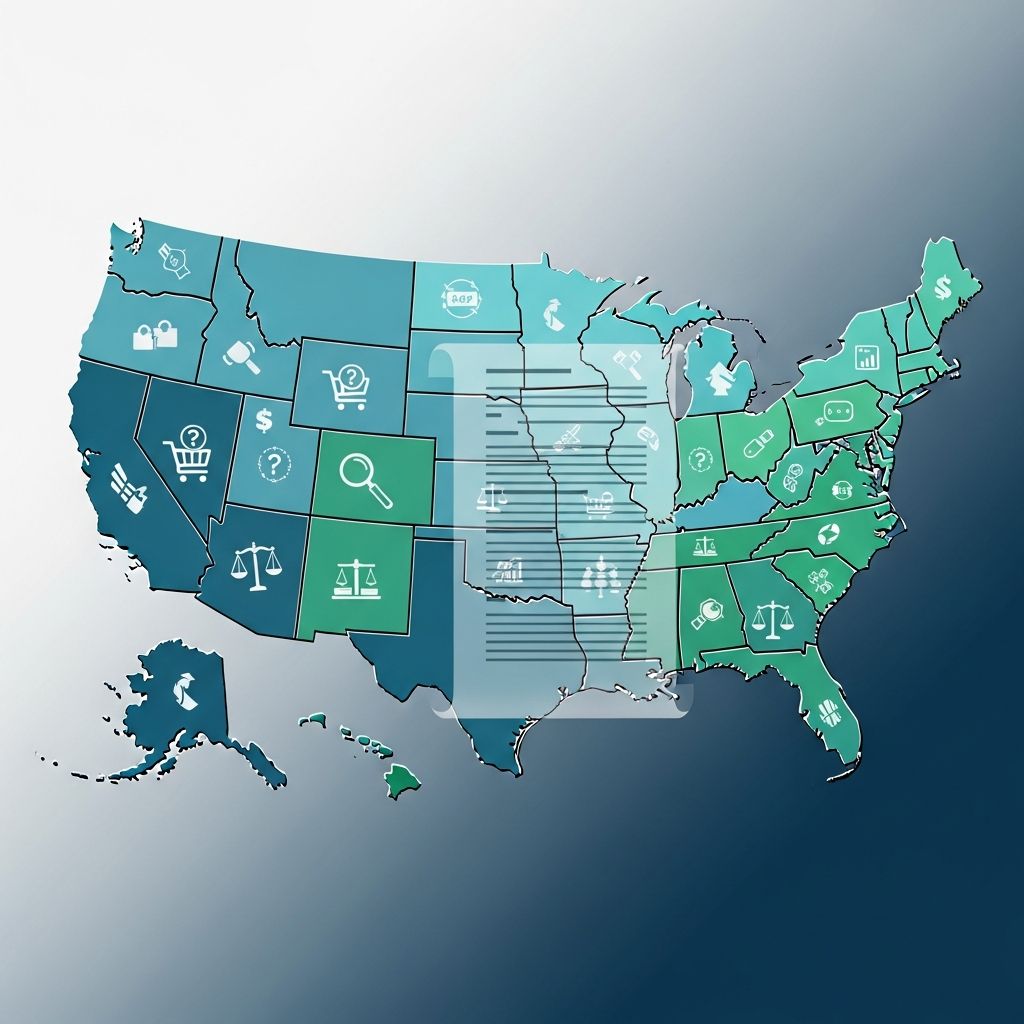
Most shoppers assume they can always take an item back if it does not work out. In reality, return and refund rights in the United States are heavily shaped by state law, and the rules can change the moment you cross a state line. Retailers, in turn, must navigate a complex landscape of disclosure obligations, exceptions, and time limits to avoid violating consumer protection laws.
This guide explains how customer returns and refunds work across the U.S., how state laws differ, and what both buyers and sellers should know to protect themselves.
1. Federal Baseline: What the Law Requires Nationwide
There is no broad federal statute that forces stores to accept returns on all purchases. Instead, federal law offers a narrow safety net and leaves most specifics to the states.
At the federal level, consumers generally have rights to a refund or other remedy when:
- The item is defective or not as described, which may violate warranty law or be considered deceptive under the Federal Trade Commission (FTC) Act.
- A specific cooling-off period applies, such as for certain door-to-door or off-premises sales.
- The seller breaches the contract in some other material way, such as failing to deliver what was promised.
The FTC also requires that when a business promises a return or refund option, it must honor that promise and represent the policy truthfully in advertising and at the time of sale.
2. How State Laws Shape Return and Refund Policies
While federal rules set a minimal baseline, state consumer protection laws control most of what happens when you attempt to return a purchase.
States tend to fall into three broad categories:
- Default refund-right states – A customer gets a refund or exchange within a set period unless the store clearly posts a different policy.
- Disclosure-focused states – The store may largely set its own rules but must post the policy prominently, especially if returns are limited or refused.
- Broad retailer-discretion states – Merchants can decide their return rules, with minimal statutory guidance, provided they do not act deceptively or violate other consumer laws.
2.1 Typical Elements States Regulate
Common topics covered by state return and refund laws include:
- Whether a store must post its policy conspicuously at the point of sale.
- How long a customer has to return an item if no policy is posted (for example, 7, 10, 20, or 30 days).
- Whether a customer is entitled to a cash refund, store credit, or exchange by default.
- Special protections for distance sales, door-to-door sales, or sales that follow marketing calls.
- Requirements to disclose restocking fees or conditions such as “as is” or “final sale.”
3. Comparing Common State Approaches
The details vary widely, but many states use similar tools. The simplified comparison below highlights some typical models used in different jurisdictions.
| State Model (Example) | Default Consumer Right if No Policy is Posted | Key Retailer Duty | Notes / Typical Exceptions |
|---|---|---|---|
| “Refund-by-default” (e.g., California-like) | Refund or exchange within a short period (often about 7 days) for unused goods. | Post any more restrictive policy clearly at or before purchase. | Perishables and customized goods often excluded. |
| “Reasonable-time” standard (e.g., Maryland/Minnesota-like) | Return allowed within a “reasonable period” unless a policy is posted. | Disclose a stricter policy in a manner that is conspicuous to shoppers. | What counts as “reasonable” can depend on the product type. |
| Mandatory posting for no-refund (e.g., Florida/Ohio-like) | Refund within a defined window (for example 7–10 days) if no policy is displayed. | Display a “no refund” or restrictive policy sign at point of sale. | Distance or telemarketing sales may have additional cooling-off rules. |
| Retailer-discretion with disclosure (several states) | No automatic right to return absent defect or deception. | Follow general truth-in-advertising and unfair practices laws. | Must honor written warranties and defect remedies. |
4. Policy Posting and “No Refund” Notices
A central theme in many return and refund statutes is conspicuous disclosure. Laws in multiple states make refund rights turn on whether the retailer did an adequate job of informing buyers about any restrictions.
4.1 What Counts as “Conspicuous”?
Although the wording differs by state, a refund policy is more likely to be valid when:
- It is presented on a sign at the cash register, entrance, or on the product display.
- The text is large, readable, and noticeable without the customer having to search for it.
- Online, it is linked or displayed before checkout, not buried after payment.
Where a retailer fails to post a clear policy, several states grant customers a right to return goods for a refund or exchange for a specified period or for a “reasonable time.”
4.2 Limits on “All Sales Final” Clauses
Many states allow “no refund” or “all sales final” policies, but they often come with conditions:
- The policy must be disclosed before purchase, not printed only on the receipt.
- Some states require that even a no-refund store must still offer a remedy for defective or misrepresented products.
- For particular types of transactions (door-to-door sales, health club contracts, telemarketing sales), state or federal laws may override a general “no refund” disclaimer and grant a statutory cancellation period.
5. Exceptions: When Return Laws Usually Do Not Apply
Even in states with strong default refund protections, lawmakers frequently exclude certain categories of goods or situations.
Common exceptions include:
- Perishable items – Food, fresh flowers, or products with short shelf lives are often excluded.
- Customized or special-order goods – Items tailored to the buyer’s specifications are less likely to be returnable.
- Intimate or hygiene products – For health reasons, these are commonly treated as final sale if the packaging is opened.
- Digital downloads – Once accessed or downloaded, many states leave refund rules to contract terms and federal copyright law, with no automatic return right.
- “As is” or used items – If properly disclosed, an “as is” label can reduce or eliminate obligations to accept returns except in cases of fraud.
6. Distance, Door-to-Door, and Telemarketing Sales
Transactions made outside a traditional brick-and-mortar store often trigger special statutory protections.
6.1 Cooling-Off Rules for Off-Premises Sales
Federal law provides a limited 3-day cooling-off period for certain door-to-door sales, giving consumers time to cancel without penalty in covered situations. Many states build on this baseline, extending or tailoring the right to:
- Home solicitation sales above a specified dollar amount.
- Gym memberships, timeshares, or campground memberships.
- Some high-pressure in-person sales conducted away from the retailer’s usual place of business.
6.2 Telemarketing and Online Purchases
State law often imposes extra requirements for sales made by phone or other remote channels:
- Certain states provide a short refund window for sales arising from marketing calls if the customer sends written notice or returns the goods within that period.
- For e-commerce, no federal statute forces online merchants to accept returns on non-defective goods, but state law still applies, and sellers must honor their posted policies and warranties.
- Consumers misled by online advertising or refund promises may seek relief under general unfair or deceptive acts and practices (UDAP) statutes enforced by state attorneys general.
7. Practical Tips for Consumers
Because return and refund laws vary, shoppers benefit from a strategic approach every time they buy:
- Check the policy before paying. Look for signs at the counter, on the receipt, on packaging, or on the checkout page online.
- Keep your proof of purchase. Many state laws require a receipt or similar evidence to exercise refund rights.
- Do not use the item if you might return it. Statutes commonly limit default refund rights to unused, undamaged goods.
- Act quickly. If your state grants a refund window (for example, 7, 10, or 30 days), missing the deadline can destroy your rights.
- Escalate disputes properly. If a store will not honor its policy, consider writing a complaint, contacting the state attorney general or consumer protection office, or filing in small claims court.
8. Compliance Strategies for Retailers
Businesses that sell to U.S. consumers should treat return and refund compliance as part of their overall legal risk management.
8.1 Drafting a Clear Policy
An effective, compliant policy should:
- State the time limit for returns (for example, 14, 30, or 60 days).
- Specify whether customers receive a cash refund, credit, or exchange only.
- Explain condition requirements (unopened, with tags, original packaging).
- Highlight non-returnable items and “as is” sales separately.
- Disclose any restocking or handling fees and the circumstances in which they apply.
8.2 Displaying the Policy Properly
To satisfy many state disclosure rules and reduce disputes:
- Post signs with the return and refund rules at checkout and, if possible, near key product displays.
- Include the policy (or a clear summary) on receipts, invoices, and customer order confirmations.
- On websites, link the policy at the footer and present it before the customer completes checkout.
- Train staff to explain unusual limitations (for example, no refunds on clearance electronics).
8.3 Handling Problem Transactions
When a customer is unhappy with a purchase, a structured approach reduces legal risk:
- Review your policy and the applicable state law before denying a return.
- Document communications with the customer, including any offers to repair, replace, or credit.
- Consider offering a goodwill adjustment even when not legally required to preserve reputation and avoid formal complaints.
9. Frequently Asked Questions (FAQs)
Q1: Are U.S. stores legally required to accept returns on everything?
No. There is no general federal law requiring stores to take back all products. Many states allow retailers to set their own rules, provided they do not mislead customers and they follow any state-specific disclosure or defect rules.
Q2: If there is no posted policy, do I automatically get a refund?
Not always, but in several states, failure to post a policy gives consumers a default right to return usable, non-exempt items within a set time or within a “reasonable” period. The exact outcome depends on the law in the state where you bought the item.
Q3: Can a store refuse to refund a defective item?
In many states, even a “no refund” store must provide a remedy when goods are defective or not as described, especially if written or implied warranties apply. That remedy may be a repair, replacement, or refund, depending on the circumstances and local law.
Q4: Do online purchases have special return rights?
There is no broad federal right to return perfectly good items bought online. However, online merchants must honor their advertised policies, comply with state consumer protection laws, and provide refunds when required by warranty or deception rules.
Q5: Where can I check my state’s specific rules?
Start with your state attorney general’s or consumer protection agency’s website, which often summarizes local refund and return requirements and provides complaint procedures. You may also consult a consumer law attorney for purchases involving large sums or complex contracts.
References
- Returns and Refund Laws in the U.S. — PrivacyPolicies.com. 2022-08-01. https://www.privacypolicies.com/blog/return-refund-laws-usa/
- Return and Refund Laws in the U.S. — TermsFeed. 2022-03-15. https://www.termsfeed.com/blog/return-refund-laws-usa/
- Customer Return and Refund Laws in the U.S. — FreePrivacyPolicy.com. 2022-06-10. https://www.freeprivacypolicy.com/blog/return-refund-us-laws/
- Refund Policies — California Department of Justice, Office of the Attorney General. 2021-05-05. https://oag.ca.gov/consumers/general/refunds
- Retail Refunds and Returns — Consumer Action. 2020-11-20. https://www.consumer-action.org/helpdesk/articles/retail_refunds_and_returns
- Legal Considerations for Returns and Refunds in E-commerce — LawInfo. 2023-04-12. https://www.lawinfo.com/resources/consumer-protection/legal-considerations-for-returns-and-refunds-in-e-commerce.html
- Solving Problems with a Business: Returns, Refunds, and Other Resolutions — Federal Trade Commission. 2022-01-27. https://consumer.ftc.gov/articles/solving-problems-business-returns-refunds-and-other-resolutions
Similar Articles








Read full bio of Sneha Tete




