
Understanding Fair Credit Reporting File Disclosures
Learn how Fair Credit Reporting Act file disclosure rules protect your access to the information consumer reporting agencies hold about you.
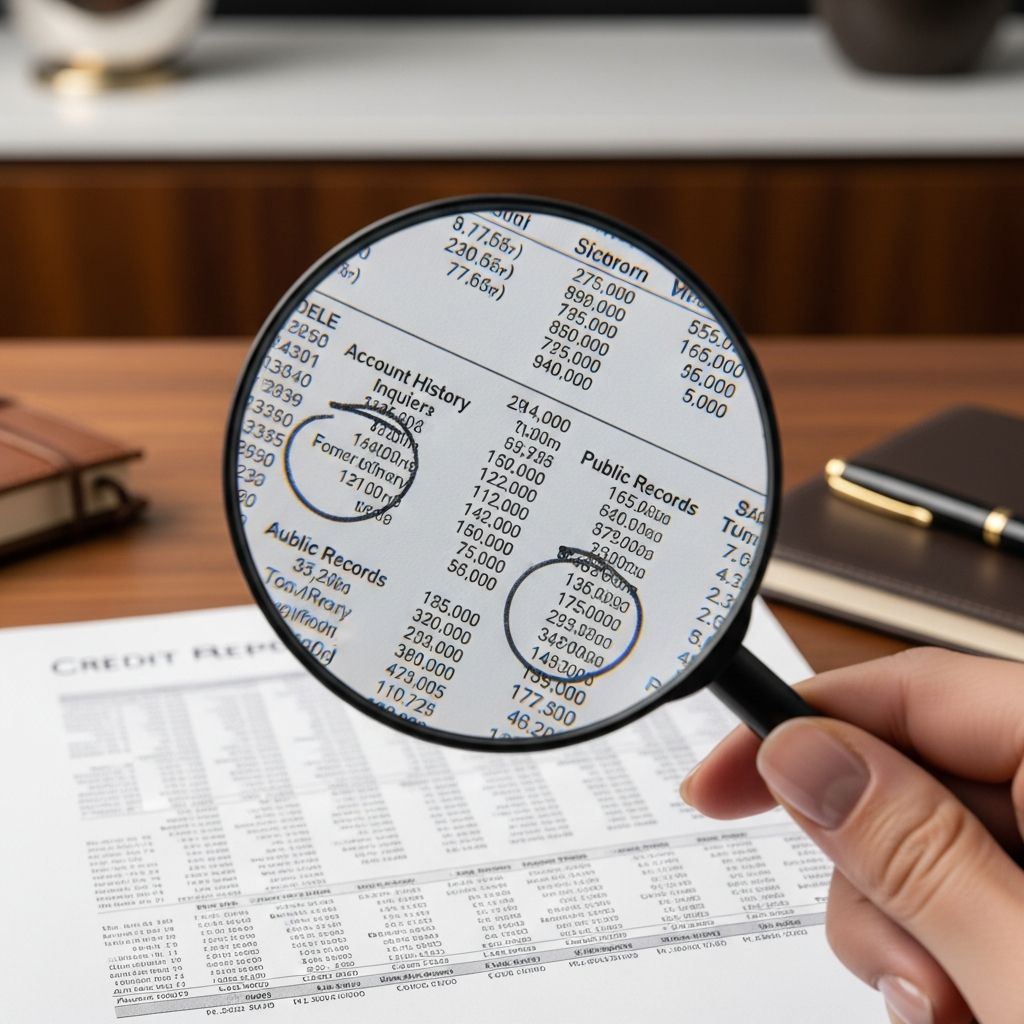
The Fair Credit Reporting Act (FCRA) gives you powerful rights to see and understand the information that consumer reporting agencies (CRAs) maintain about you. Recent guidance from the Consumer Financial Protection Bureau (CFPB) clarifies these rights, especially your right to a full file disclosure and how CRAs must respond when you ask to see your information.
This guide explains what a file disclosure is, how your request can trigger it, what must be included, and what obligations CRAs have regarding accuracy and sources of information.
1. What Is a File Disclosure and Why It Matters
Under FCRA section 609(a), a file disclosure is the complete set of information about you that a consumer reporting agency has recorded and retained at the time you ask. It is broader than a simple summary or a commonly marketed “credit score” product.
1.1 File vs. Consumer Report
| Concept | Description | Who Receives It |
|---|---|---|
| Consumer report | Information a CRA provides to a third party (such as a lender or employer) to evaluate you for credit, employment, insurance, housing, or other purposes. | Businesses, employers, landlords, and other authorized users |
| File disclosure | All information the CRA has on you in its records at the time of your request, plus required details like sources of information, certain scores, and recipients in some cases. | You (the consumer) or your authorized representative |
1.2 Why Access to Your File Is Critical
- Detecting errors: You cannot correct inaccurate data if you do not know it exists.
- Spotting identity theft: Unrecognized accounts or inquiries in your file can be early indicators of fraud.
- Understanding denials: If you are denied credit, housing, employment, or insurance, your file may explain why.
- Preparing disputes: A complete file disclosure helps you provide targeted documentation when disputing errors.
2. When Your Request Triggers a File Disclosure
FCRA section 609(a) requires a CRA to disclose all information in your file upon your request, if you properly identify yourself. The CFPB has clarified that you do not need to use magic words such as “complete file disclosure” to trigger this obligation.
2.1 No Special Legal Phrases Required
According to the CFPB’s advisory opinion, a CRA must treat your communication as a request for file disclosure if, in substance, you are asking to see the information in your file and you provide sufficient identifying information.
Examples of language that can reasonably trigger your rights include:
- “I want a copy of my credit report.”
- “Please send me my consumer report.”
- “I would like to see the records you have about me.”
- “Give me all the information in my file.”
The CRA cannot refuse to provide a full file disclosure simply because you did not use exact statutory terms.
2.2 Identification and Reasonable Procedures
CRAs are allowed to require proper identification before giving you access, to protect your privacy and prevent fraud. Common requirements include:
- Your full name, including middle initial and suffix, if any
- Current and previous addresses
- Date of birth
- Social Security number or last four digits
Regulations allow CRAs to require reasonable notice and identification and to limit in-person disclosures to normal business hours, as long as they do not undermine your substantive rights.
3. What Must Be Included in a File Disclosure
Section 609(a) requires CRAs to provide specific categories of information, not just a high-level summary. The advisory opinion emphasizes that CRAs must disclose the underlying information that forms the basis for any summaries or scores they present.
3.1 “All Information in the Consumer’s File”
The term “file” includes all information on you that the CRA records and retains, regardless of the format or system used. This can include:
- Tradeline information (credit accounts, balances, payment history)
- Public records relevant to credit decisions, such as certain bankruptcies or judgments
- Collection accounts and charge-offs
- Inquiries from creditors and other users of consumer reports
- Specialty data, such as bank account screening or check-writing history, when maintained by a CRA
The CRA must present this information in a way that allows you to meaningfully understand what is in your file and how it may be interpreted by users.
3.2 Required Additional Disclosures
FCRA and related regulations also require CRAs, in certain situations, to disclose more than raw data. Depending on the type of report and context, a file disclosure may need to include:
- Sources of information, including both original and intermediary sources (discussed in detail below)
- The identity of recipients of your consumer report in a specified time period
- Credit scores and key factors that adversely affected those scores, in contexts where scores are used for credit decisions
- Information about your rights under FCRA and how to dispute inaccuracies
3.3 Formats and Accessibility
Regulators expect CRAs to provide file disclosures in formats consumers can reasonably understand. This means that, when possible, information should be shown:
- In clear, plain language, avoiding unnecessary technical jargon
- In a structure similar to what users of the report see (for example, lenders or employers), so you can understand how they will interpret it
- With adequate explanations of codes, abbreviations, or numeric risk scores
4. Disclosure of Information Sources: Original and Intermediary
One of the CFPB’s central clarifications concerns sources of information. Section 609(a)(2) requires CRAs to disclose the “sources of the information” in your file when you request your disclosure.
4.1 Original Source vs. Intermediary
According to the CFPB advisory opinion, CRAs must disclose:
- The original source, such as the lender, debt collector, court, employer, or other organization that first created or furnished the information; and
- Any intermediary or vendor that transmitted or processed the information before it reached the CRA.
This is especially important in modern data ecosystems, where third-party vendors aggregate or standardize data before passing it on to CRAs.
4.2 Why Source Disclosure Matters to Consumers
Knowing every source linked to each item in your file helps you:
- Identify who to contact when disputing an error, since both the CRA and the furnisher of information have responsibilities under FCRA.
- Trace data flows when information has passed through multiple layers of vendors or data brokers.
- Assess reliability of information based on its origin (for example, whether it came from court records, a bank, or a collection agency).
The CFPB emphasizes that consumers do not need to specifically request “all sources” to trigger the CRA’s duty to disclose both original and intermediary sources.
5. Accuracy Duties and Their Relationship to File Disclosure
Although file disclosure rules come from section 609(a), they interact closely with accuracy requirements in section 607(b), which requires CRAs to follow “reasonable procedures to assure maximum possible accuracy” of the information they report.
5.1 Reasonable Procedures for Accuracy
Regulators, including the CFPB and banking supervisors, expect CRAs to maintain procedures that:
- Reduce duplicate entries for the same account or event
- Include updated dispositions of events like arrests, evictions, or lawsuits when available
- Exclude information that has been expunged, sealed, or restricted from public access under applicable law
- Promptly update or correct data following consumer disputes and verifications
5.2 How File Disclosure Supports Accuracy
Your access to file disclosures is a key enforcement mechanism for accuracy:
- By comparing your file to your own records, you can identify outdated or incorrect items.
- Detailed source information allows you to challenge inaccuracies with both the CRA and the furnisher.
- Patterns of errors reported by consumers can signal systemic issues that regulators may investigate.
6. Costs, Free Reports, and Access Channels
FCRA section 612 regulates what CRAs can charge for disclosures and establishes important circumstances in which file disclosures must be free.
6.1 Free Annual Reports
Under federal law and Regulation V, you are entitled to a free annual consumer report from each nationwide consumer reporting agency through a centralized system. This entitlement covers your basic right to see what is in your file at least once per year.
6.2 Situations Where File Disclosure Is Free
According to the Federal Trade Commission’s summary of your rights, you are entitled to a free file disclosure in several circumstances, including when:
- A company takes adverse action against you (such as denying credit, employment, or insurance) based on information in your report.
- You are a victim of identity theft and place a fraud alert in your file.
- Your file contains inaccurate information because of fraud.
- You are unemployed and plan to apply for employment within a certain time frame.
- You are on public assistance.
6.3 Reasonable Charges and $8 Cap
When a CRA is permitted to charge a fee for a FCRA section 609 disclosure, section 612(f)(1)(A) caps that charge. A CRA may collect a reasonable amount, but the fee cannot exceed $8, and the agency must tell you the amount before providing the disclosure.
7. How to Request and Use Your File Disclosure
Putting your rights into action requires a clear, practical approach. While specific procedures vary by CRA, some best practices are consistent.
7.1 Steps to Request Your File Disclosure
- Identify the CRA(s): Determine whether you need reports from nationwide CRAs, specialty CRAs (such as employment or tenant screening), or bank account screening companies.
- Choose a channel: Most CRAs allow requests by mail, phone, online portals, or in person.
- Provide identification: Supply the information requested to verify your identity, such as your name, address, date of birth, and Social Security number.
- State your request clearly: Use straightforward language requesting your credit report, consumer report, or all information in your file.
- Keep records: Retain copies of your request, any confirmation numbers, and the date and time of your contact.
7.2 Reviewing the Disclosure for Problems
Once you receive your file disclosure, review it carefully for:
- Accounts you do not recognize (possible identity theft)
- Incorrect balances or payment histories
- Duplicate listings of the same debt
- Outdated negative information that should no longer appear, based on FCRA time limits
- Mismatched personal information (wrong address, name variations you have never used)
If you find errors, FCRA gives you the right to dispute them with the CRA and, in many cases, with the furnisher of the information.
8. Frequently Asked Questions (FAQs)
Q1: Is my credit score the same as a file disclosure?
No. A credit score is a numerical summary of certain information in your file, calculated using a scoring model. A file disclosure is the full set of information the CRA maintains about you, along with required details such as sources and, in some cases, users of your report.
Q2: Do I have to say “609 disclosure” or “complete file” to get all my information?
No. The CFPB has clarified that CRAs must treat a broad range of consumer requests as triggering the file disclosure requirement, as long as you are clearly asking to see the information the CRA has about you and you properly identify yourself.
Q3: Can a CRA refuse to tell me where it got a particular item of information?
Under FCRA section 609(a), CRAs must disclose the sources of information in your file. The CFPB has stated that this includes both the original source and any intermediary or vendor sources, not just one or the other.
Q4: How often can I get my report for free?
At a minimum, you are entitled to one free annual consumer report from each nationwide CRA, plus additional free disclosures in situations such as adverse actions, identity theft, or when you receive public assistance, as described in federal summaries of consumers’ FCRA rights.
Q5: What should I do if my file disclosure shows inaccurate information?
You may submit a dispute to the CRA explaining what is wrong and providing documentation. Under FCRA, CRAs must investigate disputes within specified timeframes and correct or delete information that cannot be verified. Furnishers of information also have obligations when you dispute data they provided.
References
- Fair Credit Reporting; File Disclosure — Consumer Financial Protection Bureau. 2024-01-23. https://www.consumerfinance.gov/rules-policy/final-rules/fair-credit-reporting-file-disclosure/
- Fair Credit Reporting; File Disclosure — Federal Register (CFPB Advisory Opinion). 2024-01-23. https://www.federalregister.gov/documents/2024/01/23/2024-00786/fair-credit-reporting-file-disclosure
- Fair Credit Reporting Act Disclosures — Consumer Financial Protection Bureau. 2023-01-01. https://www.consumerfinance.gov/rules-policy/final-rules/fair-credit-reporting-act-disclosures/
- Fair Credit Reporting Act (Regulation V) – Federal Consumer Financial Protection Guide — National Credit Union Administration. 2023-06-01. https://ncua.gov/regulation-supervision/manuals-guides/federal-consumer-financial-protection-guide/compliance-management/lending-regulations/fair-credit-reporting-act-regulation-v
- A Summary of Your Rights Under the Fair Credit Reporting Act — Federal Trade Commission. 2018-09-01. https://www.consumer.ftc.gov/sites/default/files/articles/pdf/pdf-0096-fair-credit-reporting-act.pdf
- Fair Credit Reporting — Comptroller’s Handbook — Office of the Comptroller of the Currency. 2019-08-01. https://www.occ.gov/publications-and-resources/publications/comptrollers-handbook/files/fair-credit-reporting/pub-ch-fair-credit-reporting.pdf
Similar Articles








Read full bio of medha deb




