
Understanding Credit Scores and Why They Matter
Learn what a credit score is, how it’s calculated, and practical steps you can take today to build, protect, and improve your credit profile.
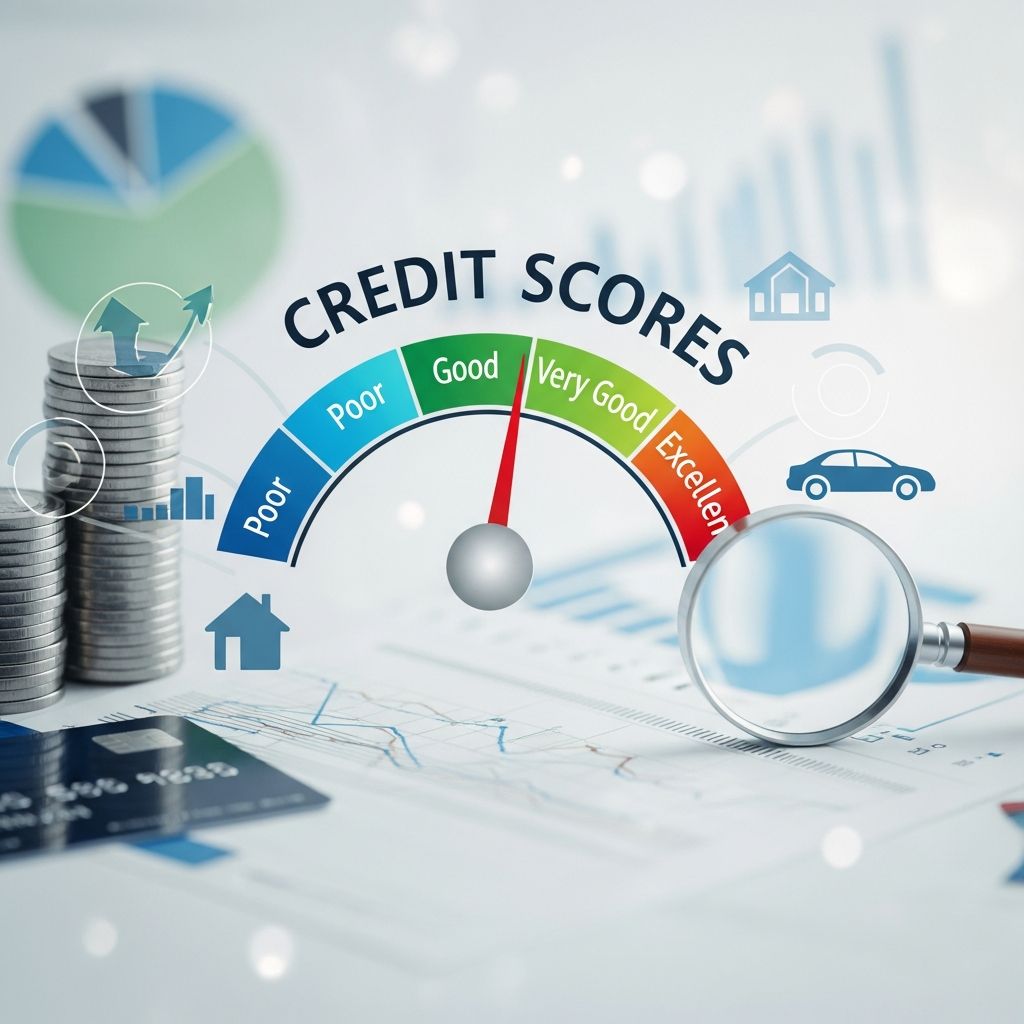
A credit score is a three-digit number that predicts how likely you are to repay your debts on time, based on the information in your credit reports. Lenders, landlords, and even some insurers use this number to estimate how risky it might be to do business with you.
Because credit scores influence whether you are approved for credit and the cost of borrowing, understanding how they work is a key part of managing your money wisely.
What a Credit Score Really Represents
At its core, a credit score is a prediction of your future credit behavior—especially whether you’ll make payments as agreed. Scoring models analyze your past behavior as recorded in your credit reports and compare it to the behavior of millions of other consumers to estimate risk.
- Typical range: Most general-purpose credit scores fall between 300 and 850.
- Higher score: Suggests you are less likely to miss payments or default, so you’re seen as lower risk.
- Lower score: Suggests a higher likelihood of serious delinquencies or non-payment, so you’re seen as higher risk.
While the exact formulas are proprietary, the logic is consistent: past credit behavior is used to forecast how you will handle future credit.
Who Creates and Uses Your Credit Score?
Your credit score is not created by your bank or your landlord directly. It is produced by credit scoring companies using information from one or more of your credit reports.
- Credit bureaus (credit reporting companies): Equifax, Experian, and TransUnion collect and maintain your credit reports.
- Scoring companies: FICO and VantageScore are two major providers of credit scoring models.
- Users of scores:
- Lenders (credit cards, auto loans, personal loans, mortgages)
- Landlords and property managers (tenant screening)
- Insurance companies using credit-based insurance scores in some states
- Certain utilities and service providers, in limited cases
These companies do not all use the same model or the same data on the same day, which is why your credit score can differ from one source to another.
Credit Score vs. Credit Report
Your credit report and your credit score are related but not the same thing.
| Feature | Credit Report | Credit Score |
|---|---|---|
| What it is | A detailed record of your borrowing history and current credit accounts | A three-digit number summarizing your credit risk based on your report |
| Who creates it | Credit bureaus (Equifax, Experian, TransUnion) | Scoring companies (e.g., FICO, VantageScore) |
| Main purpose | Provide raw data about how you manage credit | Help lenders make fast, consistent decisions about risk |
| Contents | Accounts, balances, payment history, public records, inquiries | Only the numeric score plus a few reason codes |
| Can you view it? | Yes, you are entitled to see your credit reports | Yes, but you may need to use specific services or lenders |
Scoring formulas take the information in your report, assign weights to different items, and then calculate a number that represents your overall risk profile.
Key Factors That Influence Your Credit Score
Even though each model has its own formula, several common factors almost always matter. For widely used models such as FICO, five broad categories tend to be especially important.
1. Payment History
Your payment history describes whether you have paid past credit obligations on time, and it is usually the single most influential factor.
- On-time payments tend to help your score.
- Late payments, especially 30 days or more past due, can hurt your score and may stay on your report for years.
- Serious negative events such as collections, foreclosures, and bankruptcies are considered major risk indicators and are heavily weighted.
Establishing a long record of paying all your bills on time is one of the most effective ways to build strong credit.
2. Amounts Owed and Credit Utilization
The amounts you owe across your accounts, and how much of your available credit you use, give lenders insight into how heavily you rely on credit.
- Total debt: High overall balances can signal greater risk.
- Credit utilization ratio: The percentage of your revolving credit limits (like credit cards) you are currently using; lower is generally better.
- Maxed-out or over-limit cards: Often viewed negatively, as they may indicate financial stress.
Many experts recommend trying to keep your revolving balances well below your total limits to avoid looking overextended.
3. Length of Credit History
How long you have been using credit helps scoring models gauge the stability of your borrowing behavior.
- Age of your oldest account
- Average age of all accounts
- How long major accounts have been active
A longer, consistently positive history usually supports higher scores. Closing older accounts or opening several new ones at once can shorten your average age and may have a temporary negative effect.
4. Types of Credit (Credit Mix)
Your credit mix refers to the different kinds of credit accounts you have, such as revolving accounts and installment loans.
- Revolving credit: Credit cards and lines of credit with flexible balances and limits.
- Installment loans: Mortgages, auto loans, student loans, and personal loans with fixed payments.
Having experience managing more than one type of account responsibly can slightly benefit your score, though it is usually less important than payment history or amounts owed.
5. New Credit and Inquiries
Applying for new credit can affect your score in a few different ways.
- Recent applications: Multiple applications for new credit over a short period may signal increased risk.
- Hard inquiries: When a lender checks your credit report as part of an application, it typically results in a hard inquiry that can cause a small, temporary dip in your score.
- New accounts: Opening new accounts can lower the average age of your credit history and change your overall profile.
Occasional applications are normal, but frequently seeking new credit may hurt your score, especially if you already have signs of financial strain.
Why You Have More Than One Credit Score
Many people are surprised to learn there is no single, universal credit score. You may have dozens of different scores at any given time.
Scores differ because of:
- Different scoring models: FICO, VantageScore, and others use their own formulas, and they may offer multiple versions for different purposes (such as mortgages or auto loans).
- Different credit bureaus: Each bureau may have slightly different information about you, so a score based on one report can differ from a score based on another.
- Different calculation dates: Your balances and account information change over time, so scores calculated on different days may not match exactly.
This is why you may see one number from your bank, another from a free monitoring service, and a different one used by a lender. All of them, however, aim to measure the same thing: your credit risk.
How Lenders and Others Use Your Credit Score
Your credit score can influence several important financial decisions made about you.
- Loan approvals: Lenders use scores to help decide whether to approve applications for credit cards, auto loans, personal loans, and mortgages.
- Interest rates: Higher scores often qualify for lower interest rates and better terms; lower scores may lead to higher rates or additional requirements.
- Credit limits: Scores can affect how much you are allowed to borrow or the size of your credit line.
- Housing decisions: Landlords may review scores as part of tenant screening.
- Insurance pricing: In some states, insurers use credit-based scores (distinct from lending scores) to help set premiums for auto or homeowners policies.
Because of this broad impact, credit scores can affect not only your access to credit but also your monthly expenses and long-term financial opportunities.
Practical Ways to Build and Improve Your Credit Score
While there is no quick fix, consistent behavior over time can significantly strengthen your credit profile. Many of the actions that improve your score also support overall financial health.
Core Habits That Support Strong Credit
- Pay every bill on time: Even one missed payment can damage your score, especially if it is more than 30 days late.
- Keep card balances relatively low: Avoid maxing out cards; aim to use only a modest portion of your available revolving credit.
- Limit new applications: Apply for new credit only when you genuinely need it, rather than frequently opening accounts.
- Maintain older accounts when appropriate: Long-standing accounts with positive histories can help your length-of-credit-history factor.
- Check your credit reports: Review reports regularly to make sure information is accurate and to spot signs of identity theft or errors.
Addressing Problems and Negative Events
If you already have negative marks, you can still improve your score over time:
- Bring accounts current: Getting past-due accounts back on track can help stop further damage, and your score can gradually recover as recent history improves.
- Reduce debt gradually: Paying down high balances can improve your utilization and lower perceived risk.
- Dispute errors: If you see information that is inaccurate, you have the right to dispute it with the credit bureaus and the furnisher of the data.
- Give it time: Most negative information does not last forever; its impact generally fades as you build a new record of positive behavior.
Common Myths About Credit Scores
Misunderstandings about credit scores are widespread. Here are a few clarifications that can help you make better decisions:
- Myth: I have only one true credit score.
Reality: You can have many different scores, depending on the scoring model, the bureau, and the date the score is calculated. - Myth: Checking my own score hurts my credit.
Reality: When you check your own credit using a reputable source, it is treated as a soft inquiry and does not affect your score. - Myth: Income directly determines my credit score.
Reality: Your salary is not part of your credit report and is not directly included in most credit scoring formulas. However, it can influence how much credit you can safely manage. - Myth: Paying cash for everything is the best way to have great credit.
Reality: If you never use credit, you may not have enough information in your report to generate a strong score, or any score at all. Responsible use of credit is usually required to build a robust credit history.
Frequently Asked Questions (FAQs)
Q1: What is considered a “good” credit score?
Different lenders may define “good” slightly differently, but many commonly used scoring models place good credit in the higher half of the 300–850 range, with better terms and interest rates often available as scores rise into the higher ranges.
Q2: How often does my credit score change?
There is no fixed schedule. Your score can change whenever new information is reported to the credit bureaus and a scoring model is run, such as when balances update, new accounts are opened, or payments are reported.
Q3: Does closing a credit card always hurt my score?
Closing a card can reduce your total available credit and may shorten your average account age, which can have a negative effect on your score. However, the impact depends on your overall profile, and in some situations closing an unused card may make sense for other reasons.
Q4: How long do negative items stay on my credit report?
Most negative information, such as late payments or collections, remains for several years. Its impact generally lessens over time, especially if you build a new pattern of on-time payments and responsible use of credit.
Q5: Can I improve my credit score quickly?
Small improvements may happen relatively quickly if, for example, you reduce high card balances or correct an error. But building or rebuilding strong credit usually takes consistent, positive behavior over many months and years.
References
- Credit Scores — MyCreditUnion.gov (National Credit Union Administration). 2023-06-01. https://mycreditunion.gov/manage-your-money/credit/credit-scores
- What’s in my FICO® Scores? — FICO (myFICO). 2023-04-10. https://www.myfico.com/credit-education/whats-in-your-credit-score
- How Your Credit Score Impacts Your Financial Future — FINRA. 2022-09-15. https://www.finra.org/investors/personal-finance/how-your-credit-score-impacts-your-financial-future
- What is a credit score? — Consumer Financial Protection Bureau. 2024-02-09. https://www.consumerfinance.gov/ask-cfpb/what-is-a-credit-score-en-315/
- Credit Scores — Federal Trade Commission Consumer Advice. 2022-10-18. https://consumer.ftc.gov/credit-scores
- Credit Scores Explained: What is a Good Score? — City National Bank. 2023-05-05. https://www.cnb.com/personal-banking/insights/credit-scores-explained.html
- What Affects Your Credit Scores? — Experian. 2023-11-21. https://www.experian.com/blogs/ask-experian/credit-education/score-basics/what-affects-your-credit-scores/
Similar Articles








Read full bio of medha deb




