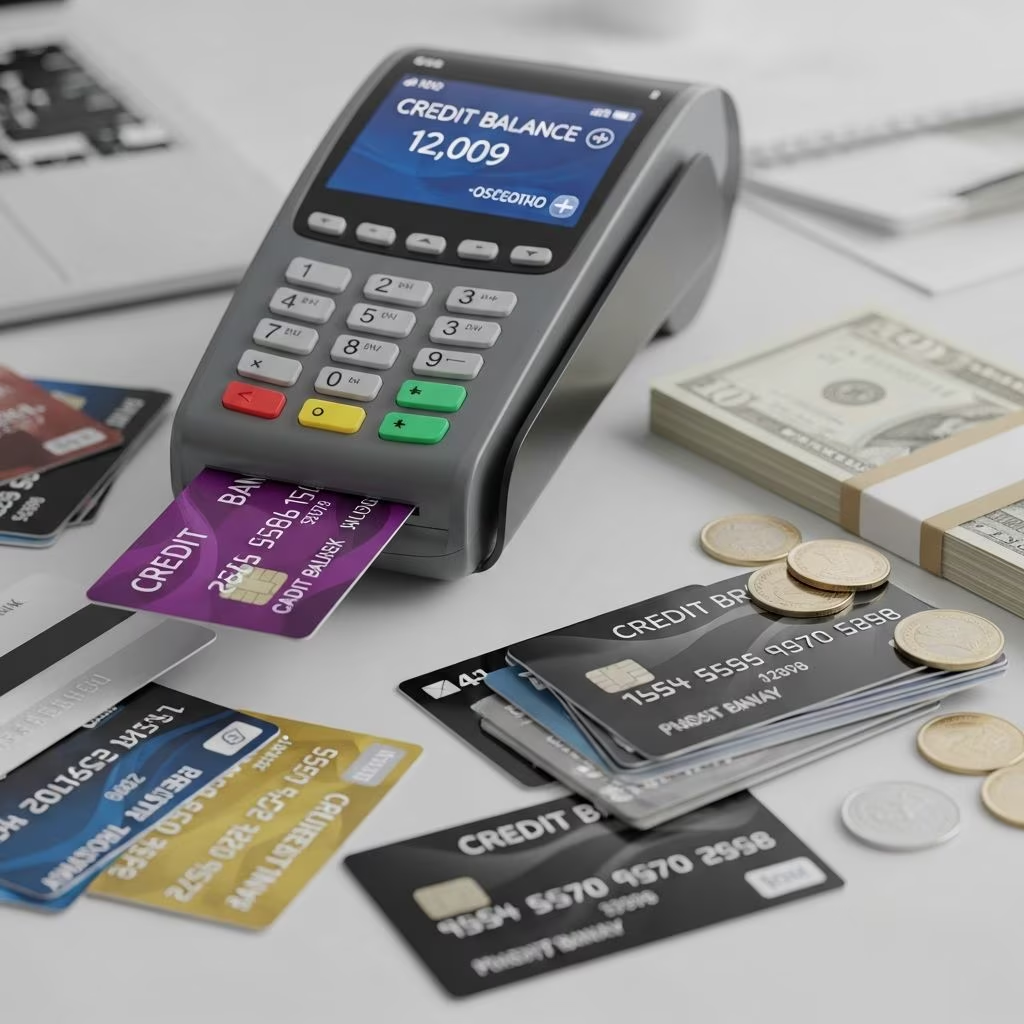
A credit balance on your credit card statement means the card issuer owes you money, instead of you owing them. It is essentially a negative balance or an amount that sits on your account as a surplus, ready to be used for future transactions or refunded to you.
Credit balances are common, but many cardholders are unsure what they represent, whether they are a problem, and how to handle them in a way that protects their finances and rights as consumers.
What Is a Credit Balance?
Normally, your credit card balance is a positive amount you owe to the card issuer. A credit balance flips that relationship: the issuer temporarily holds funds that belong to you. This shows on your statement as:
- A minus sign before the amount (for example,
- $75.00), or - An amount labeled as a credit or overpayment, depending on the issuer’s format.
In simple terms, if your account shows a credit balance of $100, you have $100 of your own money stored on the card account.
How a Credit Balance Can Occur
There are several routine situations that can lead to a credit balance. Most are harmless, and some are even intentional, but it is still important to understand how they arise.
1. Overpaying Your Credit Card Bill
If you accidentally pay more than your total outstanding balance, the excess becomes a credit balance. For example, if your balance is $350 and you send a payment of $400, the additional $50 will remain on the account as a surplus.
- This can happen when you round up payments or misread a statement.
- Online banking mistakes, such as typing an extra digit, may also create a large temporary credit balance.
2. Merchant Refunds and Returns
Refunds for returned or canceled purchases often post after you have already paid the bill. If you paid the full statement balance before the refund arrived, the refund will push the balance below zero, creating a credit balance.
- Refunds for travel, subscriptions, or disputed charges frequently show up this way.
- Some merchants issue partial refunds (such as for a price adjustment), which can still create or increase a credit balance.
3. Reversed Fees or Interest Adjustments
At times, a card issuer may reverse or credit back fees or interest—for example, as a courtesy or after a successful complaint. If this happens when you have already paid your bill in full, those credits may cause a credit balance.
- Reversed late fees, annual fees, or foreign transaction fees can all contribute.
- Promotional adjustments or goodwill credits from the issuer work the same way.
4. Rewards Redemptions Posted as Statement Credits
Many reward programs let you apply rewards points or cash back as statement credits. If you apply more rewards than the remaining balance, the excess will appear as a credit balance.
- For example, if you owe $20 and redeem $40 in rewards, you’ll end up with a $20 credit balance.
- Future purchases will draw from this surplus before your balance turns positive again.
How a Credit Balance Shows on Your Statement
Credit card statements present account information in standardized sections, which can help you locate and interpret a credit balance.
| Statement Area | What You May See | What It Means for a Credit Balance |
|---|---|---|
| Account summary / new balance | “New Balance: -$85.00” or “Credit Balance: $85.00” | Indicates the issuer owes you $85 and you do not have a payment due for purchases. |
| Payment due section | “Minimum payment due: $0” | No required payment for this cycle, although other obligations (like fees) could still apply. |
| Transactions list | Lines labeled as “Payment,” “Credit,” or “Refund” with negative amounts | These entries explain how the credit balance was created, such as overpayments or returned purchases. |
| Available credit | Raised limit relative to normal usage | The credit balance temporarily increases the amount you can charge without exceeding your limit. |
Does a Credit Balance Mean You Still Owe Money?
In most cases, a credit balance means the opposite: you do not owe anything for regular purchases at that moment. However, there are a few nuances to watch:
- Interest or fees from earlier cycles could still appear later, especially on cash advances or carried balances, even when the current balance is negative.
- Other products on the same account (like installment plans or promotional balances) may have separate payment requirements.
- If you maintain a credit balance unintentionally, you are effectively giving the issuer an interest-free loan with your own money.
Can You Spend a Credit Balance?
Yes. A credit balance acts like a preloaded cushion on your card:
- New purchases will first reduce the credit balance.
- You will not have a positive balance due until your spending exceeds the credit balance amount.
- Your “available credit” may temporarily appear higher than your formal credit limit because the surplus offsets new charges.
However, using a credit balance does not add to your rewards or create extra benefits. It simply draws down money that already belongs to you.
Your Rights When You Have a Credit Balance
In the United States, federal law provides specific protections when your credit card account shows a credit balance. Issuers generally must:
- Apply the credit to future charges, or
- Refund the balance to you on request, and in certain circumstances,
- Attempt to send a refund automatically if the credit balance remains for an extended period and is above a defined threshold.
These rules are part of broader consumer credit regulations designed to ensure that any surplus funds are returned to the cardholder and are not indefinitely retained by the issuer.
How to Request a Refund of a Credit Balance
If you do not want to keep a credit balance on the account, you can usually ask for the money back. Most issuers support several methods.
1. Call the Number on the Back of Your Card
The simplest approach is a direct phone call:
- Ask customer service to issue a refund of your credit balance.
- Confirm how the refund will be sent: check by mail, ACH transfer to a bank account, or another method the issuer offers.
- Verify your mailing address or bank details if a physical check or transfer is involved.
2. Use Online or Mobile Banking
Some issuers allow you to request a refund digitally:
- Log in to your online account or mobile app.
- Navigate to the help, chat, or secure message center.
- Submit a written request asking for a refund of the specific credit balance amount.
Online requests create a written record, which can be useful if there are delays or errors.
3. Watch for Automatic Refunds
Card issuers may proactively refund larger or long-standing credit balances, especially when required to do so by regulation for inactive accounts. If you receive an unexpected check from your card issuer, it may be a refund of an older credit balance.
Is It Safe to Leave a Credit Balance on Your Account?
Credit balances are not inherently dangerous, but they are generally not ideal to maintain on a long-term basis.
- No interest is paid to you on the surplus, so there is no financial benefit to storing money this way.
- Large credit balances can complicate accounting for returns, refunds, or disputes if you later close the account.
- If mail or contact information is outdated, you risk missing checks issued to clear old credit balances.
For small, short-term amounts—such as a $10 refund that you plan to use toward upcoming purchases—leaving the credit balance in place is usually harmless.
How a Credit Balance Interacts With Statement and Current Balances
To understand a credit balance fully, it helps to distinguish between two common balance types on credit card accounts: statement balance and current balance.
| Balance Type | What It Represents | Interaction With Credit Balance |
|---|---|---|
| Statement balance | The amount owed at the end of the last billing cycle; remains fixed until the next statement closes. | If the statement balance is negative, it reflects a credit balance as of the close of the cycle; typically no payment is required for purchases. |
| Current balance | The real-time balance, including all posted charges, payments, and credits since the last closing date. | A credit balance means the current balance is below zero. New activity will move it toward or above zero over time. |
For interest on new purchases, many issuers apply a grace period when you pay the statement balance in full each month by the due date. A short-lived credit balance does not usually change how that grace period works, but if you revolve other types of balances (like cash advances), interest rules may differ.
Best Practices for Managing Credit Balances
To make sure credit balances work for you and not against you, consider the following practices:
- Review each monthly statement carefully. Confirm whether your balance is positive or negative, and look closely at refunds, credits, or large payments.
- Correct overpayments quickly. If you accidentally pay a large amount more than you owe, contact your card issuer and request a refund instead of leaving the surplus indefinitely.
- Keep contact details up to date. Ensure your address, phone, and email information are current so that any automatic refunds or notices reach you.
- Avoid using your credit card like a prepaid card. Regularly loading large sums to create credit balances generally offers fewer protections and benefits than keeping money in a bank account or savings product.
- Track refunds from merchants. If a merchant promises a refund to your card, monitor your statements until the credit posts, and confirm that the final balance reflects what you expect.
Common Misunderstandings About Credit Balances
Because credit card billing can be complex, several myths or misunderstandings surround credit balances. Clarifying them can prevent costly mistakes.
- Myth: A credit balance always improves my credit score.
Credit scores typically consider your utilization ratio—the share of your available credit that you are using. While a low or zero balance can be helpful, a credit balance itself does not provide special scoring benefits beyond simply not carrying debt. - Myth: Keeping a credit balance guarantees I will never pay interest.
If you have other categories of balances, such as cash advances or previous cycles with unpaid balances, interest may still accrue regardless of a temporary credit balance on new purchases. - Myth: Issuers can keep my credit balance indefinitely.
Consumer credit rules generally require that issuers apply or refund credit balances and make reasonable efforts to return money that rightfully belongs to cardholders.
Frequently Asked Questions (FAQs)
Q: Do I need to make a payment if my card shows a credit balance?
If your current and statement balances are negative, you typically do not need to make a payment for standard purchases for that cycle. However, always read the statement to see whether other obligations, such as installment plans or fees, are due.
Q: Will a credit balance earn interest like a savings account?
No. Credit card accounts do not normally pay interest on credit balances, so leaving a surplus there long term does not help your savings grow.
Q: Can I transfer my credit balance to my bank account?
Many issuers will send a check or deposit a refund to your bank account if you request it. Contact customer service or use secure messaging through your online account to ask how they process refunds.
Q: How long will it take to receive my refund?
Processing times vary. Some issuers send checks within a few business days, while others may take a full billing cycle. If you have not received a promised refund within the timeframe given, follow up with the issuer.
Q: Could a credit balance ever be a sign of fraud?
On its own, a credit balance is usually harmless. However, if you see unfamiliar refunds, credits, or reversals that you did not authorize, contact your issuer immediately. Unexpected account activity—positive or negative—can sometimes indicate errors or fraud.
References
- Statement Balance vs. Current Balance: What’s the Difference? — Citibank, N.A. 2024-03-01. https://www.citi.com/credit-cards/understanding-credit-cards/statement-balance-vs-current-balance
- What Is the Statement Balance on a Credit Card? — Experian. 2023-09-12. https://www.experian.com/blogs/ask-experian/what-is-statement-balance/
- Statement balance vs. current balance: How they differ — Capital One Financial Corp. 2023-06-05. https://www.capitalone.com/learn-grow/money-management/statement-balance-vs-current-balance/
- How to read your credit card statement — Canadian Imperial Bank of Commerce (CIBC). 2022-11-10. https://www.cibc.com/en/personal-banking/credit-cards/how-to-read-your-credit-card-statement.html
- Understanding Your Credit Card Statement — Consolidated Credit. 2023-04-18. https://www.consolidatedcredit.org/how-to-use-a-credit-card/statement/