
Understanding Common Loan Terms: A Practical Guide
Learn the meaning of common loan terms so you can compare offers, avoid costly traps, and borrow money more confidently.
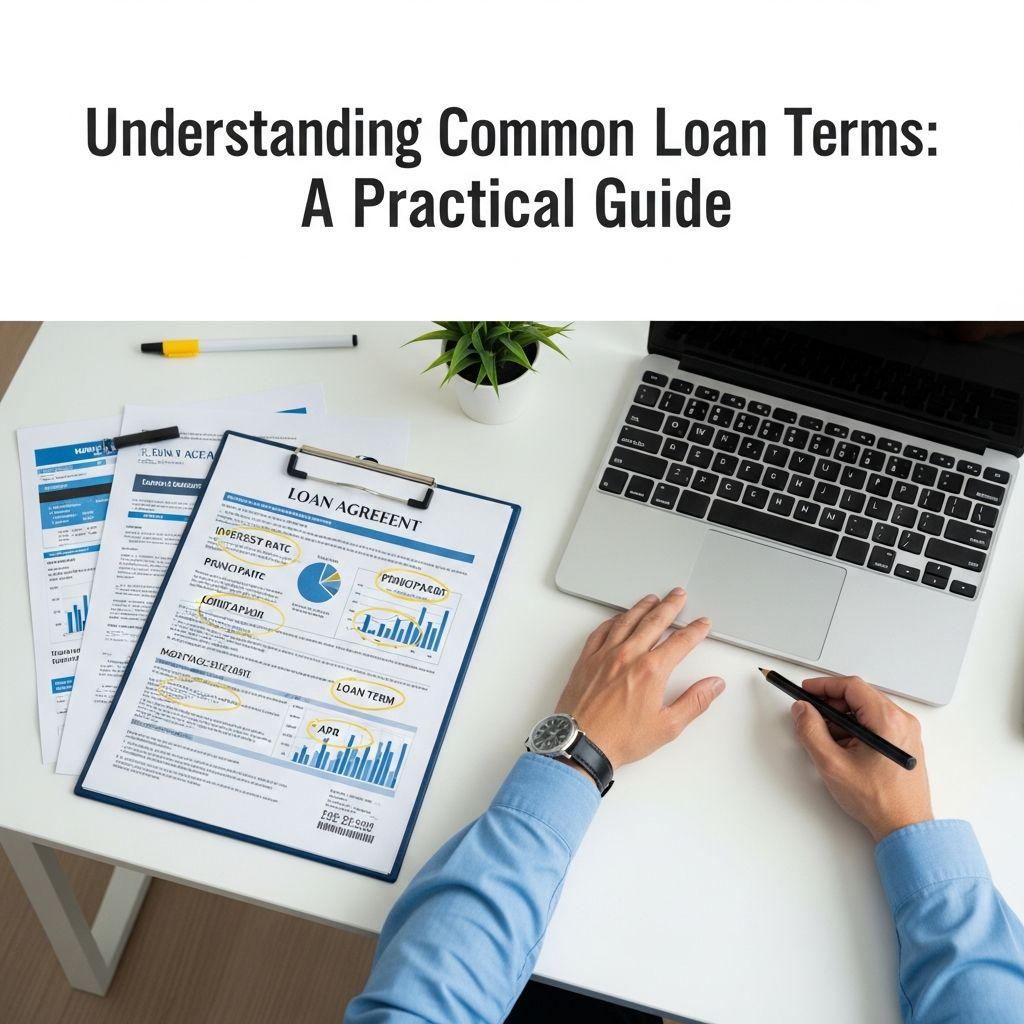
Loan agreements are full of specialized words that can make it hard to know what you are really agreeing to. This guide explains common loan terms in clear language so you can read contracts more confidently, compare offers accurately, and recognize warning signs of unfair lending.
1. Core Concepts in Any Loan Agreement
Most loans, whether for a car, credit card, personal loan, or mortgage, rely on a few core ideas. Knowing these key concepts will help you understand almost any credit product.
1.1 The Principal and Amount Financed
Principal is the basic amount of money you borrow before interest and many fees are added. Each payment you make usually contains a portion that reduces the principal and a portion that goes to interest.
Amount financed is the total starting balance the lender treats as your loan on day one. It often includes:
- The principal price of what you are buying (for example, a car or tuition)
- Certain finance charges that are rolled into the loan instead of paid up front
- Other amounts the lender agrees to pay on your behalf, such as some closing costs
The higher the amount financed, the more you are likely to pay in total interest over time, even if the interest rate stays the same.
1.2 Interest and the Cost of Borrowing
Interest is the price you pay to use someone else’s money. It is usually expressed as a yearly percentage of the unpaid principal balance.
Important points about interest:
- Interest is usually calculated daily or monthly based on the current principal balance.
- When you make each payment, the lender first satisfies interest that has built up since the last payment, then applies the rest to principal.
- If you miss payments, interest can continue to build and may be added to the principal in some loans (a process called capitalization). This increases what you owe over time.
1.3 Annual Percentage Rate (APR)
APR (Annual Percentage Rate) is a standardized measure of the yearly cost of borrowing, combining the interest rate with many required fees and charges. It is meant to help you compare different loan offers.
Key points about APR:
- APR is usually higher than the quoted “interest rate” because it includes more costs.
- Two loans with the same interest rate can have different APRs if one has higher fees.
- Federal law requires APR disclosures for many consumer credit products so borrowers can more easily compare offers.
1.4 Term and Repayment Schedule
The loan term is the period you have to repay the loan in full. It might be expressed in months (for example, 60 months) or years (for example, 5 years).
The repayment schedule sets out:
- How often you must pay (monthly, bi-weekly, or another frequency)
- The due dates for payments
- How the payment will be split between principal and interest over time
2. How Loans Are Paid Back: Amortization and Payment Types
Not all loans pay down in the same way. Understanding the structure of your payments helps you see how fast you are truly getting out of debt.
2.1 Amortizing vs. Non-Amortizing Loans
| Type of loan structure | How payments work | What happens to principal |
|---|---|---|
| Amortizing loan | You make regular payments that cover both interest and principal. | Principal steadily declines; the loan is fully paid off by the end of the term if all payments are made. |
| Interest-only or non-amortizing loan | Payments may initially cover only interest. | Principal does not go down during the interest-only period; a lump sum or higher payments are required later. |
2.2 Regular Installments
An installment is a scheduled payment on your loan. Most consumer loans use equal monthly installments. In many cases:
- The payment amount stays the same each month.
- The share that goes toward interest usually falls over time as principal is reduced.
- The share that goes toward principal generally increases as the loan ages.
2.3 Balloon Payments
A balloon payment is a final payment that is much larger than earlier payments. It may be required when:
- Payments during the term covered only interest or a small part of principal, or
- The loan was structured to keep monthly payments low but require a lump sum later.
Balloon payments can be risky if you might not be able to refinance or save enough to make the large final payment.
3. Fees, Penalties, and Other Charges
Interest is only one part of the cost of borrowing. Many loans also include fees and potential penalties. Reading this section of your contract carefully is essential.
3.1 Common Up-Front and Ongoing Fees
- Origination or documentation fee: A charge meant to cover the lender’s cost of evaluating your application, preparing paperwork, and opening the loan.
- Late payment fee: A fixed amount or percentage charged if you pay after the due date or grace period.
- Returned payment fee: A fee if your check or electronic payment is rejected by your bank.
3.2 Prepayment and Early-Termination Charges
A prepayment penalty or early payoff fee is a charge for paying the loan off ahead of schedule. Some lenders use these fees to recover interest they expected to earn in the future.
Before accepting a loan, find out:
- Whether any prepayment penalty applies
- How long it lasts (for example, only in the first few years)
- How it is calculated (flat fee, percentage of remaining balance, or sliding scale)
3.3 Capitalization of Interest
Capitalization occurs when unpaid interest is added to your principal balance. This can happen, for example, if you postpone payments during a hardship period on some student loans.
Once interest is capitalized:
- Your principal goes up.
- Future interest is calculated on the higher principal, increasing total cost over time.
4. Credit Risk, Security, and Collateral
Lenders care about the chances they will be repaid. The way a loan is secured and the rights they have if you default are central parts of the agreement.
4.1 Secured vs. Unsecured Credit
- Secured loan: A loan backed by collateral, such as a home or car.
If you default, the lender can take and sell the collateral, subject to legal procedures. - Unsecured loan: A loan with no specific property pledged. Credit cards and many personal loans fall in this category. Lenders may charge higher rates because there is no collateral.
4.2 Collateral and Liens
Collateral is property or assets you agree the lender can claim if you do not repay the loan.
A lien is the legal right or claim the lender holds in that property until the debt is repaid. For example:
- A mortgage gives the lender a lien on your home.
- A car loan often gives the lender a lien on the vehicle title.
Liens are usually recorded in public records. They must be resolved, typically by paying off the loan, before you can sell or refinance the property.
4.3 Cosigners and Joint Borrowers
A cosigner is a person who promises to repay the loan if the main borrower does not. Creditors might require a cosigner when:
- The primary borrower has limited credit history or low income.
- The loan amount is large relative to the borrower’s finances.
Both the borrower and cosigner are usually fully responsible for the debt. Missed payments can appear on both credit reports.
5. Loan Approval, Servicing, and Default
From application through the last payment, different stages of the loan process involve different rights and responsibilities.
5.1 Application and Underwriting
When you apply for a loan, you submit information about your income, debts, credit history, and sometimes assets. The lender’s review process, called underwriting, evaluates:
- Your ability to repay based on income and existing obligations
- Your past record of managing credit
- The value of any collateral offered
An approved application typically leads to a written offer outlining the amount, rate, term, and key conditions. Review this document carefully before signing.
5.2 Servicing and Account Management
Loan servicing is the ongoing management of your loan after it is made. The servicer may be the original lender or a different company. Its main tasks include:
- Sending bills and keeping track of payments
- Maintaining records of your balance and interest
- Managing escrow accounts for taxes or insurance when applicable
- Communicating about any changes, such as interest rate adjustments on certain mortgages
5.3 Default and Acceleration
Default occurs when you fail to meet the obligations in your loan contract, such as not making required payments for a certain period. The contract will usually define precisely when default is triggered.
Once a loan is in default, the lender may:
- Accelerate the debt, meaning it demands the entire remaining balance immediately rather than allowing gradual payments.
- Begin collection efforts, which can include reporting the default to credit bureaus, hiring collection agencies, or taking legal action.
- Enforce its rights against collateral, such as foreclosure on a home or repossession of a car, subject to state and federal law.
6. Recognizing and Avoiding Predatory Lending
Not all loans are offered on fair or transparent terms. Some lenders rely on confusing language or high-pressure tactics to make money from borrowers who do not fully understand what they are signing.
6.1 What Is Predatory Lending?
Predatory lending generally refers to practices where a lender charges far more than is justified by risk, hides or misrepresents terms, or structures the loan so that default or repeated refinancing is likely.
Examples of harmful practices can include:
- Targeting people who have limited financial knowledge with high-cost products
- Adding unnecessary products or fees to the loan without clear consent
- Stating that a loan is the “only” or “last chance” option when that may not be true
6.2 Warning Signs to Watch For
- Pressure to sign quickly without time to read the documents
- Large difference between what was promised verbally and the written contract
- Unclear or incomplete disclosure of APR, fees, and total cost over the life of the loan
- Very high fees compared with other lenders for similar products
- Repeated offers to refinance into new high-fee loans instead of helping solve payment problems
6.3 How to Protect Yourself
- Get written quotes from more than one lender and compare APRs and fees side by side.
- Ask for clarification of any term you do not understand; do not rely only on verbal explanations.
- Check whether the lender is licensed in your state using government or regulator resources where available.
- Seek nonprofit housing or credit counseling if you are unsure whether an offer is fair.
7. Practical Tips for Reading a Loan Contract
Even with a good glossary, loan documents can be long and detailed. Here are steps you can use to review them more effectively.
7.1 Sections to Read Especially Carefully
- Cost summary page: Look for the interest rate, APR, amount financed, and total of payments.
- Payment terms: Confirm the amount, due date, and number of payments.
- Variable rate rules (if any): See when and how your rate can change, and whether there are caps on increases.
- Fees and penalties: Note late fees, prepayment penalties, and any other charges that might apply.
- Default and remedies: Understand what counts as default and what the lender can do in that situation.
7.2 Questions to Ask Before You Sign
- Is the interest rate fixed or can it change? If it can change, when and by how much?
- Are there any balloon payments or lump sums due at the end?
- Can I pay extra principal without penalty, and if so, how do I ensure it is applied correctly?
- What happens if I lose my job or face a temporary hardship—are there options such as forbearance or modified payments?
Frequently Asked Questions (FAQs)
Q1: Why is APR more useful than just looking at the interest rate?
APR includes many required fees along with the interest rate, so it provides a more complete picture of the yearly cost of borrowing and allows you to compare different loan offers on a more equal basis.
Q2: If I pay extra each month, will I save money?
Paying more than the required amount and directing the extra toward principal can reduce your balance faster, which usually lowers the total interest you pay over the life of the loan. Be sure your lender applies extra payments to principal and check whether any prepayment penalty applies.
Q3: What happens if I miss a payment?
Missing a payment may trigger a late fee and could be reported to credit bureaus if the payment is significantly overdue. If you continue to miss payments, interest keeps building, and after a defined period the loan may be placed in default, which can lead to collection actions or loss of collateral.
Q4: How can I tell if a loan is predatory?
Look for extremely high fees, unclear or shifting terms, high-pressure sales tactics, or promises that you do not need to read or understand the paperwork. Comparing offers from reputable institutions and reviewing official disclosures carefully is one of the best defenses against abusive lending.
Q5: Is a cosigner the same as a reference?
No. A cosigner is legally responsible for repaying the loan if you do not, while a personal reference simply provides contact information and does not share financial responsibility.
References
- Glossary of Loan Terms — LawHelp.org DC. 2023-04-01. https://www.lawhelp.org/dc/resource/glossary-of-loan-terms
- COMMON LOAN TERMS DEFINED — Vermont Community Loan Fund. 2021-06-01. https://www.investinvermont.org/publications/Glossary%20of%20Loan%20Terms.pdf
- Glossary of Loan Terminology — Harvard Law School Student Financial Services. 2024-01-15. https://hls.harvard.edu/sfs/financial-aid/student-loans/glossary-of-loan-terminology/
- Loan terminology glossary — University of California Office of the President. 2022-09-30. https://www.ucop.edu/loan-programs/resources/loan-terminology-glossary.html
- Mortgages key terms — Consumer Financial Protection Bureau. 2023-02-01. https://www.consumerfinance.gov/consumer-tools/mortgages/answers/key-terms/
- Glossary of Key Terms — Fannie Mae. 2023-05-10. https://yourhome.fanniemae.com/calculators-tools/glossary-key-terms
Similar Articles








Read full bio of Sneha Tete




