
Understanding Auto Loan Credit Insurance
Learn how optional auto loan credit insurance works, what it covers, what it costs, and how to decide if it fits your financial needs.
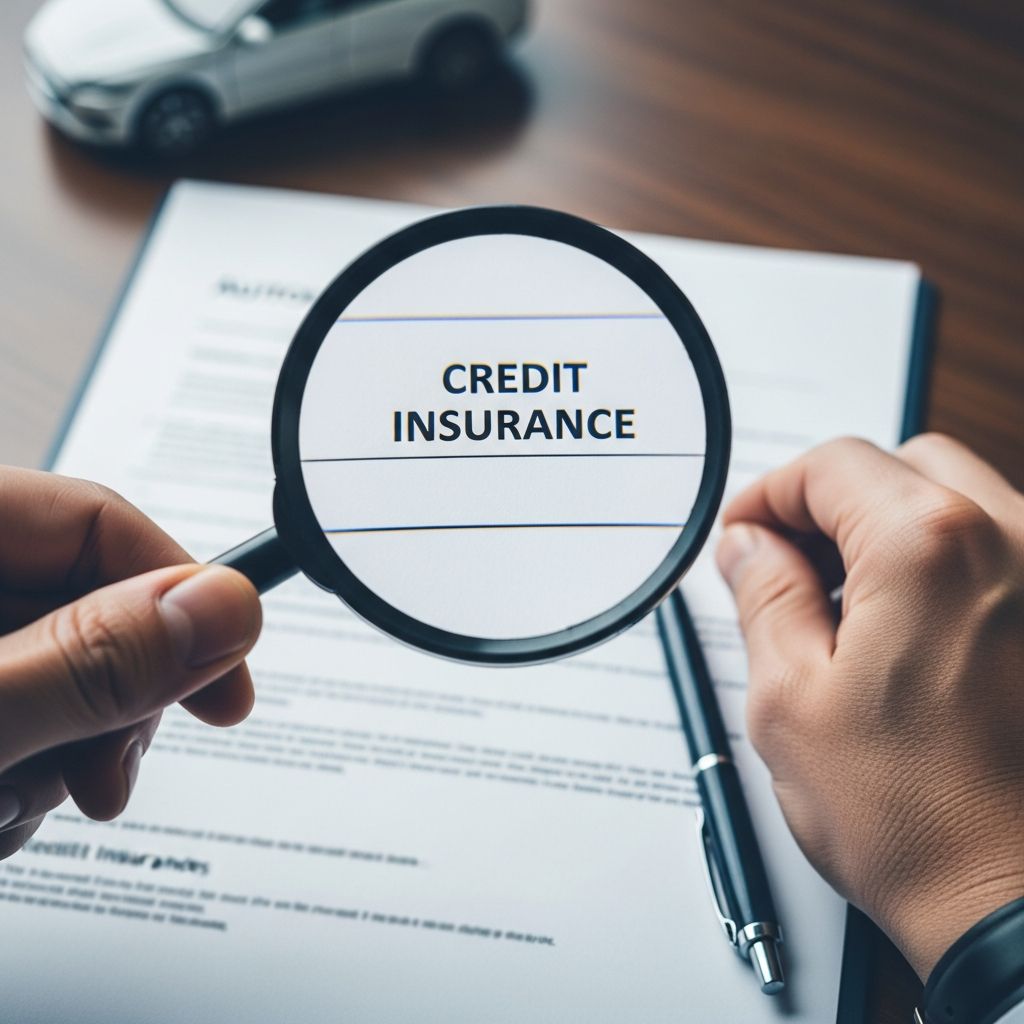
When you finance a car, the lender or dealer may offer you credit insurance as an extra product. This coverage is marketed as protection in case you die, become disabled, or lose your job and cannot make payments on your auto loan. While these products can sound reassuring, they are optional, can be expensive, and often provide limited value compared with other forms of insurance and savings.
This guide explains how auto loan credit insurance works, the kinds of coverage you might see, and the key questions to ask before you agree to add it to your loan.
What Is Credit Insurance on an Auto Loan?
Credit insurance is a type of insurance that is tied directly to a specific loan or credit obligation, such as an auto loan. If certain events occur that prevent you from making payments—such as death, disability, or involuntary unemployment—the insurance pays benefits directly to your lender, not to you.
In the context of car financing, credit insurance is usually offered at the dealership or by the lender at the same time you sign your loan contract. It is sold as an add-on and is not required by federal law for you to get a loan.
- Purpose: Protects the lender by ensuring some or all of the loan is paid if you cannot pay.
- Who is paid: Benefits are paid directly to the creditor, not to your bank account.
- When it pays: After a covered event specified in the policy (for example, death or qualifying disability).
- How it’s sold: Typically offered when you sign for the loan and may be rolled into the loan amount.
Main Types of Auto Loan Credit Insurance
Credit insurance is not one single product. It is usually sold in one or more of four basic forms, depending on the lender and your state’s rules.
| Type of credit insurance | What it usually covers | Who receives the payment |
|---|---|---|
| Credit life insurance | Pays off all or part of the remaining loan balance if you die during the coverage period. | Payment goes to the lender or creditor to satisfy the loan. |
| Credit disability insurance | Makes monthly loan payments (usually for a limited period) if you become disabled and cannot work, as defined by the policy. | Payments are made directly to the lender. |
| Involuntary unemployment insurance | Makes a specified number of monthly payments if you lose your job through no fault of your own, such as a layoff. | Payments go to the lender to keep the loan current. |
| Credit property insurance | Insures the vehicle that secures the loan if it is stolen or destroyed during the coverage period; typically pays either the value of the vehicle or the remaining loan balance, whichever is less. | Payment is made to the lender or according to the policy terms. |
How Credit Insurance Is Added to Your Auto Loan
Dealers and lenders often present credit insurance as an extra line item within your finance paperwork. The cost may be charged as:
- A single premium added to your total loan amount at the time you sign.
- An ongoing monthly premium included in your regular loan payment.
When the premium is financed as part of your auto loan, you pay interest on that premium over the life of the loan, increasing your total cost. Because the coverage is typically bundled with other add-ons such as extended warranties and gap coverage, buyers may not always realize how much they are paying just for credit insurance.
Why Lenders Offer Credit Insurance
From a lender’s perspective, credit insurance helps reduce the risk that a borrower will stop paying after a serious life event such as death, disability, or job loss. In theory, this can protect your credit record and your family from having to find money to pay off the loan.However, these policies primarily safeguard the lender’s investment rather than providing comprehensive protection to you.
- Lender benefits: Higher likelihood that the loan will be repaid, and extra revenue from selling the insurance.
- Your potential benefit: Some peace of mind that certain payments may be covered in narrowly defined situations.
- Key limitation: Benefits are usually limited in amount, in time, and in what events qualify as a claim.
How Credit Insurance Affects the Cost of Your Loan
Adding credit insurance to an auto loan changes the total cost of borrowing in several ways.
Higher Loan Principal and Interest
When the insurance premium is rolled into the loan, the amount you borrow goes up. Because interest is charged on the higher amount, you will pay more over time. This can be important if you are already stretching your budget to afford the car payment.
Cost vs. Coverage Value
Credit insurance often provides relatively limited coverage compared with traditional life or disability insurance, yet it can be expensive per dollar of coverage. Many state insurance departments point out that you may be able to get broader protection for your household by buying a regular life or disability policy instead of credit-specific coverage.
- Coverage usually applies only to one specific loan.
- Benefits typically end when the loan is repaid or when the policy term ends.
- There may be caps on the maximum monthly benefit or total payout.
Common Limitations and Eligibility Rules
Credit insurance comes with detailed terms and conditions. These can significantly affect whether your claim will be paid.
- Eligibility requirements: Some products have age limits, employment requirements, or health questions. Certain pre-existing medical conditions may be excluded.
- Waiting periods: Disability and unemployment coverage may not start paying benefits until you have been disabled or unemployed for a set period (for example, 30 days).
- Benefit limits: Policies often limit the number of payments they will make, such as a maximum of 12 or 24 monthly payments per claim.
- Exclusions: Voluntary resignations, firings for cause, or certain types of injuries or illnesses may not qualify as covered events.
Because of these restrictions, some borrowers pay for credit insurance but later learn that their particular situation does not meet the policy requirements.
Is Credit Insurance Required to Get an Auto Loan?
In general, credit insurance is optional. You cannot legally be required to purchase optional credit insurance in order to qualify for a loan, although a lender may require that you carry certain other forms of insurance, such as regular auto physical damage coverage, to protect the vehicle used as collateral.
If anyone tells you that approval for financing depends on buying a specific optional credit insurance product, this may be an unfair or deceptive practice. In such cases, consumers can contact federal or state regulators, such as consumer financial protection agencies, state insurance departments, or attorneys general, to seek help or file a complaint.
Key Questions to Ask Before You Buy
Before adding credit insurance to an auto loan, it is important to slow down, review the documents, and ask direct questions. Consider using this checklist:
- Is this coverage required to get the loan, or is it voluntary?
- Exactly which events are covered and which are excluded?
- How much will it increase my monthly payment and the total cost of the loan?
- Is the premium paid up front and financed, or billed monthly?
- Does the policy have age limits or health, employment, or hours-worked requirements?
- What is the maximum number of payments the insurer will make?
- Can I cancel and receive a partial refund if I pay off, refinance, or sell the car early?
Your Right to Cancel and Seek Refunds
In many cases, you have the right to cancel your credit insurance coverage before the end of the loan. Federal and state rules, as well as the insurance contract itself, may entitle you to a partial refund if you cancel early, sell the car, refinance, or prepay the loan.
- Review your loan and insurance paperwork for cancellation procedures.
- Contact the lender, dealer, or insurance provider to request cancellation in writing.
- Ask whether you are owed a refund of any unearned premium and how it will be credited (for example, as a reduction of your loan balance).
If you no longer have your documents, your lender or the dealership where you bought the car may be able to provide copies or confirm the coverage details.
Alternatives to Auto Loan Credit Insurance
Because credit insurance can be expensive relative to the protection it offers, it is worth considering other options that may protect you and your family more broadly.
- Term life insurance: A regular term life policy can provide a death benefit large enough to cover multiple financial needs, including your auto loan and other debts, often at a lower cost per dollar of coverage.
- Disability income insurance: Traditional disability insurance replaces a portion of your income if you cannot work due to a covered disability, allowing you to keep paying all your bills, not just your car payment.
- Emergency savings: Building a savings cushion can help you cover loan payments after a job loss or illness without paying premiums or interest on an add-on product.
- Existing employer benefits: Some employers provide life, disability, or severance benefits that may reduce the need for credit insurance.
Comparing the cost and benefits of these alternatives with the credit insurance offered at the dealership can help you decide which option best fits your situation.
Tips for Evaluating Credit Insurance Offers
Use these practical steps when you encounter a credit insurance pitch during car financing:
- Take your time: Do not feel pressured to decide immediately while you are signing paperwork. Ask for copies of all proposed terms so you can review them.
- Separate the car price and add-ons: Negotiate the price of the vehicle and financing terms first. Then consider add-on products like credit insurance separately so you can clearly see their cost.
- Compare quotes: If you think you might want this type of protection, ask an insurance agent or your existing insurer for quotes on alternative coverage.
- Check state rules: State insurance departments often publish guides on credit insurance and may set maximum rates or other consumer protections.
- Watch for bundling: Confirm that optional products are not being added without your clear consent, and make sure you understand each line item on your contract.
Frequently Asked Questions (FAQs)
Q1: Does credit insurance improve my chances of getting approved for a car loan?
In general, lenders evaluate applications based on your credit, income, and the value of the vehicle, not on whether you buy optional credit insurance. While lenders may prefer the added protection, you should not be required to purchase it to receive credit.
Q2: If I have life insurance already, do I still need credit life insurance?
Many state insurance regulators note that consumers with sufficient existing life insurance may not need separate credit life coverage, because their current policy benefit could be used to pay off debts, including the car loan. Instead of buying duplicate coverage, updating your beneficiaries or adjusting your existing policy may be more cost-effective.
Q3: Can the lender force me to buy credit insurance from a particular company?
If a lender legitimately requires some type of insurance to protect a loan, consumer guidance from state regulators emphasizes that you usually have the right to choose the insurer and policy, as long as it meets the lender’s minimum requirements. You are typically not required to buy from the lender or dealership itself.
Q4: What should I do if I think credit insurance was added without my permission?
Start by requesting copies of your signed contract and any insurance forms. If you find that coverage was added without your clear consent or was misrepresented, contact the lender or dealer in writing to dispute the charge. You can also contact federal consumer protection agencies and your state insurance regulator to file a complaint and seek assistance.
Q5: How do I know whether the cost of credit insurance is reasonable?
Compare the total premium and added interest cost to the maximum benefit the policy could pay. Then compare that to the cost and benefits of other options, such as term life or disability insurance. Many official consumer guides suggest that if the premium is high relative to the possible payout, the product may not be a good value compared to alternatives.
References
- What is credit insurance for an auto loan? — Consumer Financial Protection Bureau. 2023-06-01. https://www.consumerfinance.gov/ask-cfpb/what-is-credit-insurance-for-an-auto-loan-en-799/
- credit insurance — Legal Information Institute, Cornell Law School. 2023-05-10. https://www.law.cornell.edu/wex/credit_insurance
- Credit Life & Credit Disability Insurance — Ohio Department of Insurance. 2022-08-15. https://insurance.ohio.gov/consumers/life-and-annuity/credit-life-credit-disability
- Credit Insurance — National Association of Insurance Commissioners (NAIC). 2022-11-03. https://content.naic.org/article/consumer-insight-credit-insurance
- Credit Insurance — Nevada Division of Insurance. 2021-09-30. https://doi.nv.gov/Consumers/Credit-Insurance/
- Credit insurance — Washington State Office of the Insurance Commissioner. 2022-07-18. https://www.insurance.wa.gov/insurance-resources/credit-insurance/credit-insurance
- What You Should Know Before You Purchase Credit Insurance — Maryland Insurance Administration. 2020-10-01. https://insurance.maryland.gov/consumer/documents/publicnew/what-is-credit-insurance.pdf
Similar Articles








Read full bio of medha deb




