Texas Small Estate Affidavit: 6 Steps To File In 2025
Master the Texas small estate affidavit process: eligibility, step-by-step filing, and tips to bypass full probate efficiently.
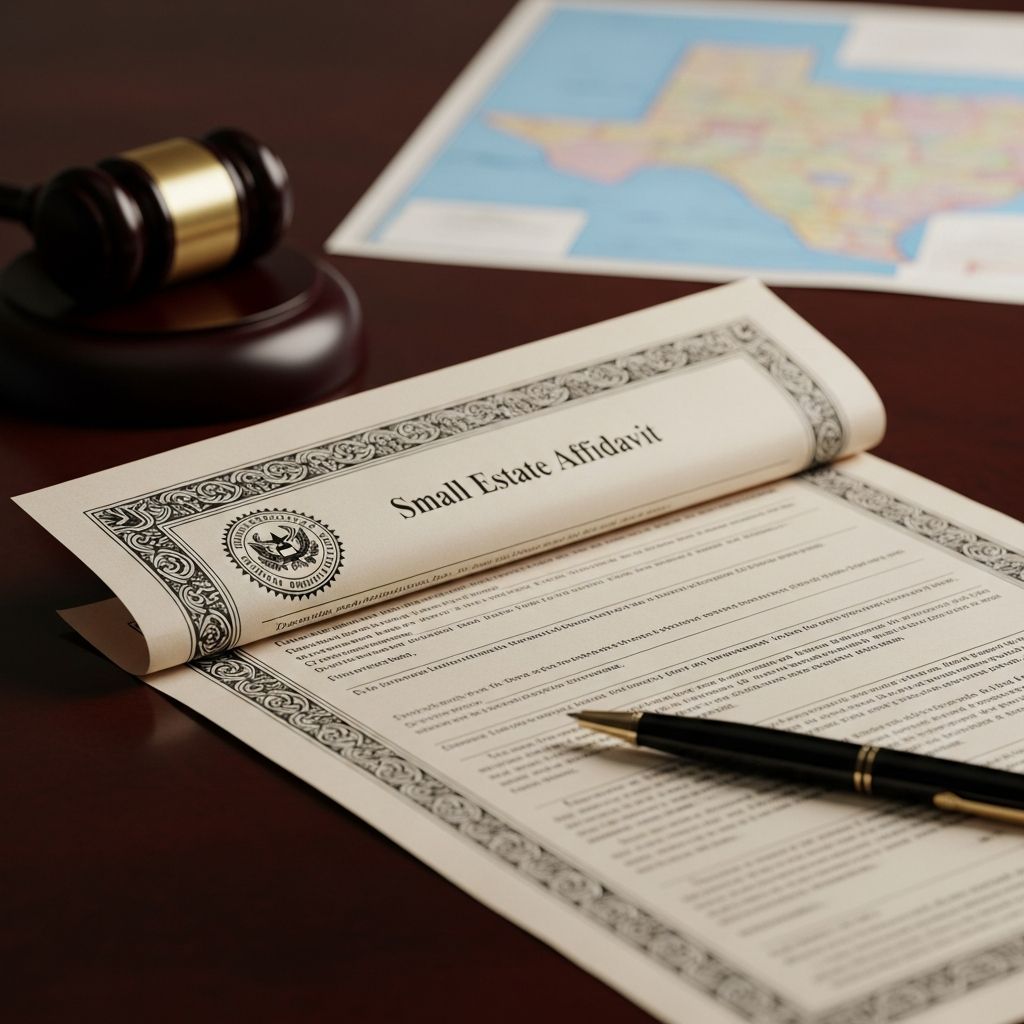
Navigating the aftermath of a loved one’s passing can be overwhelming, especially when handling their remaining assets. In Texas, the small estate affidavit offers a streamlined alternative to traditional probate for modest estates. This method allows heirs to claim property without court-supervised administration, saving time and costs. Governed by Texas Estates Code Chapter 205, it applies to intestate estates—those without a valid will—valued at $75,000 or less, excluding homestead and exempt property.
Understanding Small Estate Affidavits in Texas
A small estate affidavit is a sworn legal document that heirs and witnesses use to affirm the estate’s details and their right to inherit. It bypasses formal probate by providing banks, title companies, and other institutions with proof of transfer authority once approved. This process is ideal for simple estates with personal property, bank accounts, or vehicles, but not real estate sales requiring court orders.
Texas law sets strict limits to qualify: the decedent must have died intestate, at least 30 days must have passed since death, no probate petition filed, and all debts paid or provided for. The $75,000 cap focuses on non-exempt assets, protecting family homes and personal allowances.
Key Eligibility Criteria
To use this procedure, confirm these requirements:
- Intestate Death: No valid will exists.
- Time Elapsed: More than 30 days post-death.
- No Probate Initiated: No application for personal representative.
- Asset Value: Total non-exempt assets ≤ $75,000.
- Debts Handled: Estate solvent after paying claims, excluding homestead liens.
Homestead exemption covers the family residence if occupied by a spouse, minor child, or unmarried adult child living with the decedent. Exempt property includes vehicles, household goods, and retirement accounts up to certain values.
Valuing the Estate Correctly
Accurate valuation is crucial to avoid rejection. List all assets like cash, accounts, vehicles (with VINs), furnishings, and non-homestead realty. Exclude homestead (provide legal description if claimed) and exempt items. Debts must be detailed: credit cards, medical bills, utilities—with last four account digits.



The Future of AI: Preventing a Big Tech Monopoly >

| Asset Type | Included in $75K Limit? | Examples |
|---|---|---|
| Homestead | No | Primary residence |
| Exempt Personal Property | No | Furniture, car, retirement funds |
| Bank Accounts | Yes | Checking, savings |
| Vehicles (non-exempt) | Yes | Extra cars |
| Real Property (non-homestead) | Yes | Rental properties |
If married, specify community vs. separate property with supporting facts.
Preparing the Affidavit Documentation
Gather these essentials before drafting:
- Death certificate copy.
- Funeral expense receipts.
- Heir oath or family tree proving succession.
- Asset inventory with values/descriptions.
- Debt ledger.
The affidavit itself details decedent info, heirship facts, assets/liabilities, and distributee rights. All adult heirs, their guardians for minors/incapacitated, and two disinterested witnesses (non-heirs) must sign before a notary.
Step-by-Step Filing Process
Follow these steps methodically:
- Collect Data: Compile family history, assets, debts. Use county-specific forms if available.
- Draft Affidavit: Include all required elements; attach extra sheets if needed.
- Notarize Signatures: Heirs and witnesses sign under oath.
- File in Court: Submit to probate court in decedent’s county of residence (or property location if no residence). Include filing fee, Civil Case Information Sheet.
- Await Review: Court verifies compliance (Texas Estates Code §205.003); may approve or reject.
- Distribute Assets: Use certified copy to transfer titles/accounts.
Filing fees vary by county; expect $200–$400 plus copies.
Common Pitfalls and How to Avoid Them
Rejections often stem from incomplete info:
- Inadequate Heirship Proof: Provide full lineage.
- Asset/Debt Omissions: List everything precisely.
- Wrong County: Confirm jurisdiction.
- Premature Filing: Wait 30+ days.
- Disinterested Witness Issues: Avoid heirs/beneficiaries.
If contested or complex (e.g., unknown heirs), full probate may be needed.
After Approval: Transferring Property
Court-stamped affidavit authorizes transfers. Banks release funds; DMV handles vehicles. For stocks or safe deposit boxes, present with ID. Real property deeds may require additional affidavits but can’t convey title via small estate alone—consult for sales.
Distribute per intestate laws: spouse/children first, then parents/siblings.
When to Seek Professional Help
DIY suits simple cases, but attorneys aid complexities like disputes, non-obvious heirship, or high debts. Firms like Sheehan Law PLLC specialize in this. Costs: $500–$2,000 vs. probate’s 3–7% of estate.
Frequently Asked Questions
Can a small estate affidavit transfer real estate in Texas?
No, it facilitates claims on personal property/bank accounts but not full title transfer for land sales.
What is the exact value limit?
$75,000 excluding homestead and exempt property.
Do all heirs need to sign?
Yes, competent adult distributees; guardians for others.
How long does approval take?
Typically 2–6 weeks, depending on court backlog.
Is there a standard form?
County-specific; check probate clerk (e.g., Parker/Dallas checklists).
Recent Updates and Legal References
As of 2025, the $75,000 threshold holds; always verify local rules. Texas Estates Code §205 governs.
References
- How to File a Small Estate Affidavit in Texas Without a Formal Probate Process — Everything Probate. 2023. https://everythingprobate.com/how-to-file-a-small-estate-affidavit-in-texas-without-a-formal-probate-process/
- Small Estates Affidavits in Texas — Sheehan Law PLLC. 2024. https://www.farrensheehanlaw.com/probate-small-estates-affidavits/
- Small Estate Affidavits — Delta County, TX (.gov). 2025-01-15. https://www.deltacountytx.com/county-court/page/small-estate-affidavits
- What Is a Small Estate Affidavit in Texas — W. Thompson Law. 2025-08-01. https://www.wthompsonlaw.com/what-is-a-small-estate-affidavit-in-texas/
- Small Estate Affidavit Checklist — Parker County, TX (.gov). 2023. https://www.parkercountytx.gov/DocumentCenter/View/5988/Small-Estate-Affidavit-Checklist
- Dallas County Small Estate Affidavit Checklist — Dallas County, TX (.gov). 2024. https://www.dallascounty.org/Assets/uploads/docs/courts/probate/Dallas-County-Small-Estate-Checklist.pdf
Similar Articles








Read full bio of Sneha Tete