
Texas Deeds: Quitclaim vs Warranty Guide
Master the differences between quitclaim and warranty deeds in Texas to protect your property transactions and avoid costly risks.
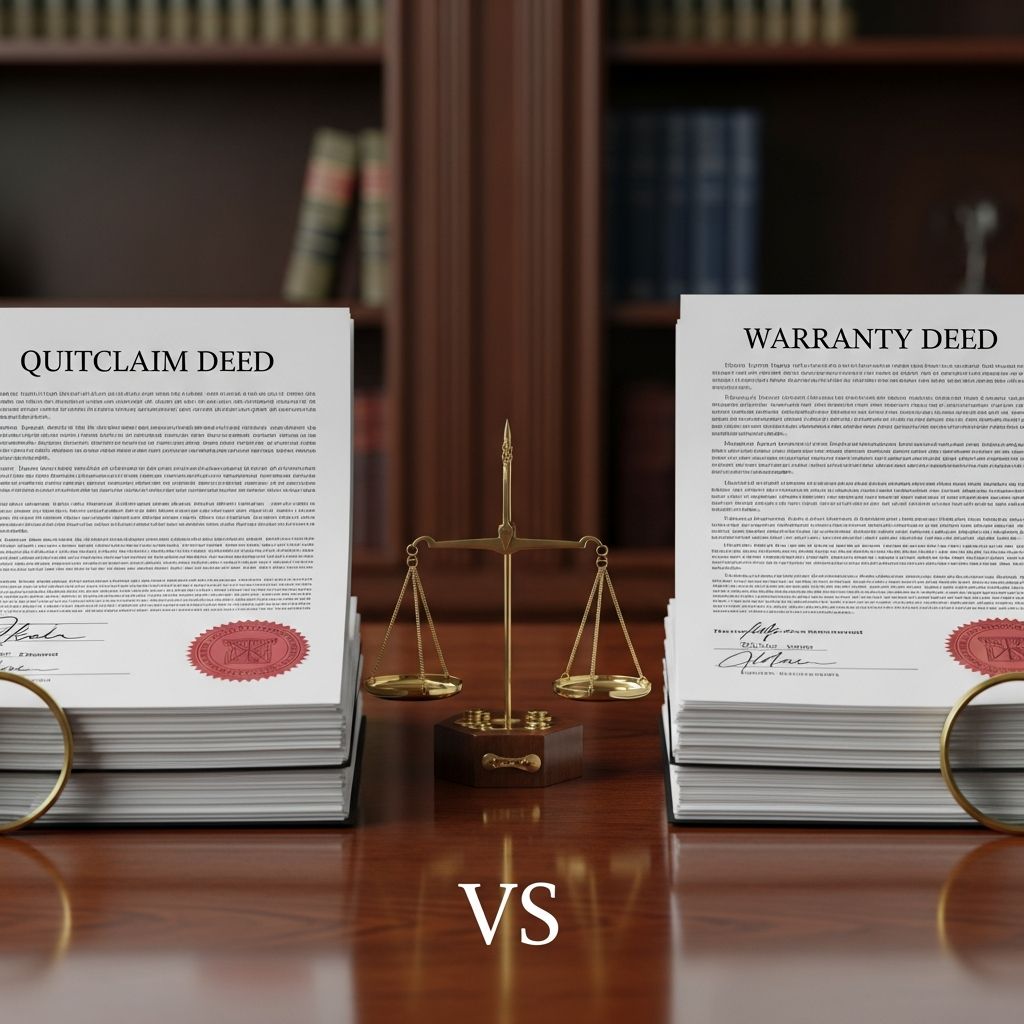
Transferring property ownership in Texas requires careful selection of the appropriate deed to ensure legal validity and protection for all parties involved. Quitclaim deeds and warranty deeds represent two primary options, each carrying distinct implications for risk, guarantees, and suitability in various scenarios.
Understanding Property Deeds in Texas Real Estate
Deeds serve as legal instruments that formally convey ownership rights from one party—the grantor—to another, known as the grantee. In Texas, these documents must meet specific statutory requirements, including proper execution, acknowledgment before a notary, and recording with the county clerk to provide public notice of the transfer.
The choice of deed directly influences the level of assurance regarding the property’s title quality. Title refers to the legal right to own and possess the property, free from competing claims or encumbrances such as liens or easements.
Defining the Quitclaim Deed
A quitclaim deed operates on a simple principle: the grantor relinquishes any interest they may hold in the property without affirming the extent or validity of that interest. This instrument conveys whatever ownership the grantor possesses—if any—without representations about liens, encumbrances, or third-party claims.
Commonly described as a ‘quit and claim’ transfer, it essentially states: ‘I release any claim I have to you, but I make no promises about what that claim entails.’ This no-warranty approach suits situations where trust exists between parties or when clearing potential clouds on title.
- No title guarantees: Grantor does not warrant clear ownership or freedom from defects.
- Interest-only transfer: Only passes the grantor’s current stake, which could be partial or nonexistent.
- Risk borne by grantee: Buyer accepts potential title issues without recourse against the seller.
Defining the Warranty Deed
In contrast, a warranty deed provides robust assurances from the grantor to the grantee. The seller explicitly covenants that they hold valid title, possess authority to convey it, and that the property remains free from undisclosed defects.
Texas warranty deeds typically fall into two categories: general and special. A general warranty deed offers comprehensive covenants covering the entire chain of title, while a special warranty limits assurances to the grantor’s period of ownership.
- Clear title covenant: Property free of liens, mortgages, or judgments known to the grantor.
- Right to convey: Grantor legally owns and can transfer full fee simple interest.
- Defense of title: Seller obligated to defend against future claims.
Core Distinctions: A Side-by-Side Analysis
The fundamental divergence lies in the protective covenants embedded within each deed type. Below is a comparative table highlighting key attributes:
| Aspect | Quitclaim Deed | Warranty Deed |
|---|---|---|
| Guarantees Provided | None | Full or limited title warranties |
| Risk Allocation | Entirely on buyer | Primarily on seller |
| Ideal for Arms-Length Deals | No | Yes |
| Legal Recourse if Defects Found | Limited/none | Available against grantor |
| Due Diligence Required | Minimal | Extensive (title search, insurance) |
Protections and Liabilities Explained
Warranty deeds impose ongoing liability on the grantor, incentivizing thorough title resolution prior to transfer. If defects emerge post-conveyance, the buyer may pursue remedies including damages or title cure. Quitclaim deeds, however, leave grantees without such leverage, as no covenants exist to breach.
Texas law recognizes that quitclaim deeds signal potential title weaknesses, potentially complicating future marketability compared to deeds without warranties. This statutory nuance underscores the importance of context in deed selection.
Practical Scenarios for Each Deed Type
Quitclaim deeds find utility in non-adversarial transfers:
- Family property divisions or gifts.
- Spousal transfers during marriage or divorce.
- Correcting minor title irregularities among known owners.
- Placing property into a trust or LLC.
Warranty deeds dominate standard real estate transactions:
- Conventional home purchases from unrelated parties.
- Commercial property sales requiring lender financing.
- Situations demanding verifiable title history.
Professionals strongly advise against quitclaims in high-value, arms-length deals due to their inherent risks.
Legal Requirements for Valid Execution in Texas
Both deed types necessitate:
- Written document identifying grantor, grantee, and property via legal description.
- Grantor’s signature, notarized acknowledgment.
- Recording in the county where property sits within reasonable time.
Quitclaims demand no title abstract or insurance, streamlining preparation but heightening exposure. Warranty deeds pair with title commitments, surveys, and policies to mitigate risks.
Risks and Mitigation Strategies
Buyers accepting quitclaim deeds face exposure to undisclosed heirs, forgotten liens, or boundary disputes. Mitigation involves independent title searches and insurance, though recovery remains challenging.
Sellers using warranty deeds assume perpetual defense obligations, resolvable via title insurance shifting liability to underwriters. Buyers benefit from dual protections: seller covenants plus insurer backing.
Financial and Tax Implications
Quitclaim transfers often occur without consideration, potentially triggering gift tax reporting if exceeding annual exclusions. Warranty deeds in sales invoke capital gains considerations based on basis and sale price.
Recording fees, transfer taxes, and potential homestead exemptions apply similarly, but warranty transactions incur higher closing costs from title work.
Recent Texas Legislative Considerations
Texas statutes provide limited protections for quitclaim grantees after four years, aiming to balance notice with marketability. However, warranty deeds remain the gold standard for robust title assurance.
Frequently Asked Questions
Can a quitclaim deed transfer full ownership in Texas?
Yes, if the grantor holds full fee simple title, but without guarantees, confirming this requires separate verification.
Is title insurance necessary with warranty deeds?
Highly recommended; it complements seller warranties and protects against pre-grantor defects in general warranties.
Why avoid quitclaim deeds in property sales?
They offer zero seller accountability for title flaws, exposing buyers to unrecoverable losses in arms-length deals.
What distinguishes general from special warranty deeds?
General covers the full title history; special limits to grantor’s ownership period.
Do quitclaim deeds affect mortgage eligibility?
Often problematic; lenders prefer warranty deeds assuring clear, marketable title.
Steps to Choose and Prepare the Right Deed
1. Assess relationship and trust level between parties.
2. Conduct preliminary title review.
3. Consult Texas real estate attorney.
4. Select deed matching risk profile.
5. Execute with proper formalities.
6. Record promptly.
Engaging legal counsel ensures compliance and alignment with objectives.
References
- Warranty Deed vs. Quit Claim Deed: What’s the Difference? — THLG Law. 2023-05-15. https://thlg.law/blog/difference-between-quit-claim-and-warranty-deed
- Warranty Deed vs. Quitclaim Deed: How are they different? — Rhodes Law Firm. 2022-11-10. https://www.rhodeslaw.com/warranty-deed-vs-quitclaim-deed-how-are-they-different/
- Property Deed Basics — Texas Law Help. 2024-01-22. https://texaslawhelp.org/article/property-deed-basics
- Five Points: Warranty Deed or Quitclaim Deed? — Rattikin Law. 2023-08-07. https://www.rattikinlaw.com/five-points-warranty-deed-or-quitclaim-deed
- The Differences Between Quitclaim Deeds and Warranty Deeds — Feldman Law. 2023-03-20. https://feldman.law/news/the-differences-between-quitclaim-deeds-and-warranty-deeds/
Similar Articles








Read full bio of Sneha Tete




