
Student Debt: Key Reforms To Close The Racial Wealth Gap Now
Exploring why student debt cancellation is a critical racial justice mandate.
Introduction: The Myth of the Great Equalizer
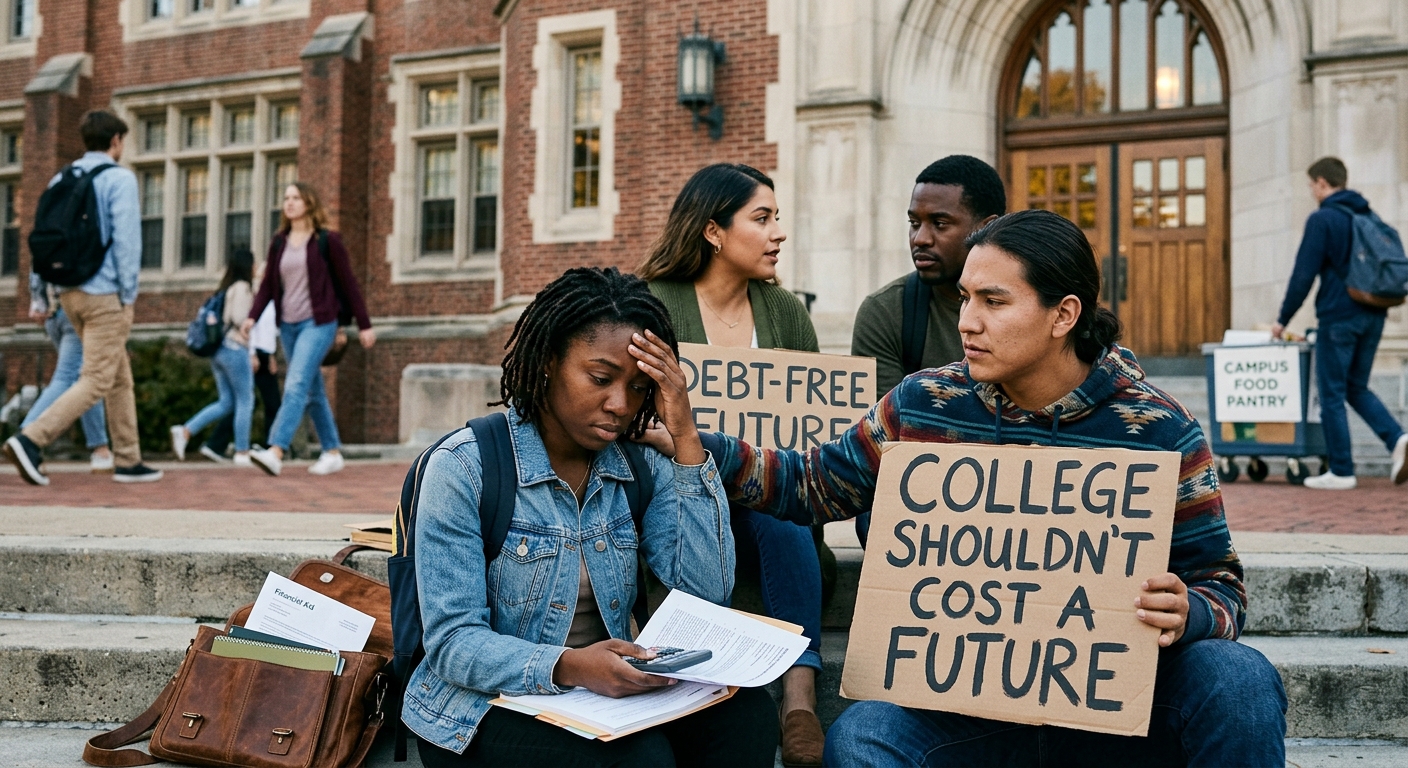
For generations, higher education has been heralded as the ultimate engine of socioeconomic mobility in the United States—the great equalizer designed to level the playing field for all citizens regardless of their demographic background. However, the modern reality of financing a college degree paints a starkly different and troubling picture. Instead of acting as a catalyst for parity, the current higher education funding system, which is overwhelmingly predicated on student loans, has become a powerful amplifier of existing economic inequalities. When one examines the demographics of who holds this debt and who struggles the most to repay it, a clear and undeniable truth emerges: the student loan crisis is fundamentally a racial justice issue.
For communities of color, particularly Black and Hispanic Americans, the promise of upward mobility through higher education is frequently offset by the debilitating, long-term burden of educational debt . Because these communities have been historically excluded from wealth-building mechanisms, they are forced to borrow more money to achieve the same degrees as their white counterparts. Consequently, addressing the student debt crisis is no longer merely a matter of general economic stimulus; it is a critical civil rights imperative that demands bold, decisive policy intervention at the highest levels of government.
The Anatomy of the Racial Wealth Gap
To accurately comprehend the disparate impact of student loans, it is essential to first analyze the racial wealth gap. Unlike income, which measures the amount of money earned over a specific period, wealth represents accumulated assets minus liabilities—a financial safety net built over generations. In the United States, generations of discriminatory policies, including housing redlining, predatory lending, segregated labor markets, and the unequal administration of the G.I. Bill, have systematically prevented Black and Brown families from accumulating intergenerational wealth.
Research indicates that the average white family in the United States possesses roughly ten times the accumulated wealth of the average Black family . This staggering disparity directly influences how students finance their higher education. Because they lack a familial financial safety net, students of color are disproportionately forced to rely on borrowed capital to cover tuition, housing, textbooks, and daily living expenses. They generally cannot depend on parental contributions to minimize their initial loan amounts, nor can they rely on family assistance for aggressive repayment strategies post-graduation. Thus, the racial wealth gap creates a vicious cycle: historical financial deprivation necessitates higher borrowing, and the resulting massive debt prevents the accumulation of future wealth, effectively locking a new generation into financial precarity.
By the Numbers: How Debt Disproportionately Impacts Black Borrowers
The statistical evidence surrounding student debt highlights profound and persistent racial disparities. Black college graduates not only borrow at significantly higher rates, but they also take on substantially larger loan balances than their white peers. According to longitudinal data analyzed by researchers at the Brookings Institution, the student debt gap widens dramatically in the crucial early years following graduation .
| Metric / Demographic | Average White Graduate | Average Black Graduate |
|---|---|---|
| Average Debt at Graduation | $16,000 | $23,400 |
| Average Debt 4 Years Post-Graduation | $28,006 | $52,726 |
Four years after earning a bachelor’s degree, the average Black graduate owes nearly twice as much as their white counterpart . This staggering divergence is driven by several compounding factors: higher initial interest accumulation, a frequent need to enroll in expensive graduate programs to remain competitive in a biased labor market, and ongoing wage discrimination that severely limits earning potential. The Federal Reserve Board’s annual assessments consistently demonstrate that Black and Hispanic borrowers face higher rates of financial distress, meaning they are far more likely to fall behind on their payments or default entirely . A default carries severe, long-lasting consequences, including damaged credit scores, wage garnishment, and the inability to secure stable housing, which further marginalizes already vulnerable populations.
Systemic Defunding and the Shift to Loan-Dependent Education
The ballooning of the modern student debt crisis is not merely a byproduct of poor individual financial choices; it is the direct result of systemic, structural policy shifts over the last several decades. To truly understand how this system evolved, it is critical to look back at the higher education funding models of the mid-20th century. During that era, robust state government appropriations ensured that tuition at public institutions remained highly accessible. Programs like the original G.I. Bill provided massive educational subsidies, though these were largely distributed in racially exclusionary ways that primarily benefited white veterans.
As the Civil Rights Movement achieved legislative victories and higher education became increasingly integrated, a noticeable and damaging policy shift occurred. State legislatures across the country began to aggressively pull back funding for their public university systems. This systematic defunding forced universities to offset their operational costs by raising tuition at unprecedented rates.
Consequently, the federal government pivoted from providing direct grant aid to issuing and guaranteeing student loans. The Pell Grant, originally established to ensure low-income students could afford college without incurring massive debt, has seen its purchasing power severely erode over time. In the 1980s, the maximum Pell Grant covered over 75 percent of the cost of a four-year public university; today, it barely covers 30 percent. This policy choice effectively transformed higher education from a publicly subsidized good into a privately debt-financed commodity. It is a cruel irony that just as marginalized communities gained formal access to higher education, the financial mechanism to achieve it became punitive, ensuring that students of color would have to mortgage their futures to participate in the American economy.
The Scope of Presidential Authority: Can Executive Action Fix It?
Given the persistent legislative gridlock in Congress, civil rights advocates and legal scholars have increasingly looked to the executive branch to implement comprehensive student loan relief. The central legal argument for unilateral executive action hinges primarily on the Higher Education Act (HEA) of 1965 . Under the HEA, the Secretary of Education is granted broad, discretionary statutory power to “compromise, waive, or release” any right, title, claim, lien, or demand related to federal student loans.
Proponents of executive action argue that this statutory language clearly and explicitly authorizes the executive branch to cancel student debt without needing any further approval from a divided Congress. While opponents frequently cite concerns over executive overreach—pointing to recent Supreme Court rulings that heavily restricted the use of the separate HEROES Act for emergency pandemic-related debt cancellation—the HEA remains a viable and largely untested avenue for targeted or broad-based structural relief.
Executive action is seen by civil rights organizations as the most efficient mechanism to bypass partisan obstruction and deliver immediate, life-changing financial relief to millions of Americans. By directing the Department of Education to exercise its compromise authority, the President could strike a historic blow against systemic financial inequality and make good on the promise of equitable opportunity.
Economic and Social Dividends of Debt Forgiveness
The macroeconomic implications of broad student debt cancellation are profound and deeply transformative. Opponents frequently characterize loan forgiveness as an elite bailout for wealthy doctors and lawyers, but empirical economic data entirely refutes this narrative. The most severe consequences of student debt—such as default, forced forbearance, and ruined credit—are heavily concentrated among lower-wealth borrowers who attempted to use education to escape generational poverty. Broad-based debt relief would serve as a powerful, bottom-up economic stimulus.
By removing hundreds of dollars in mandatory monthly liabilities, the federal government would immediately increase the disposable income of millions of everyday Americans. These funds would flow directly back into local economies through basic consumer spending. Furthermore, debt cancellation removes a primary barrier to homeownership, which remains the principal vehicle for wealth accumulation in the United States. For Black borrowers, who have been historically locked out of the housing market by redlining and predatory lending, eliminating student debt is a crucial step toward achieving mortgage eligibility. It also frees up vital capital for entrepreneurship, allowing individuals to start small businesses and invest in their communities. Ultimately, addressing the student loan crisis is a necessary intervention to halt the widening of the racial wealth divide.
Alternative Solutions and Policy Counterarguments
Despite the highly compelling case for broad cancellation, responsible policymakers must also consider alternative solutions and address valid economic criticisms. Critics of broad forgiveness argue that it is regressive or that injecting capital into the economy could fuel inflation. However, evidence shows that targeted relief—such as eliminating a set amount of debt specifically for low-to-middle-income earners or Pell Grant recipients—disproportionately benefits historically marginalized groups without drastically impacting macroeconomic inflation.
Beyond immediate cancellation, long-term systemic reforms are strictly necessary to prevent the debt crisis from regenerating for the next generation of students. Key policy alternatives include:
- Revamping Income-Driven Repayment (IDR): Creating far more generous repayment terms, such as lower percentage caps on discretionary income, protecting a larger portion of base earnings, and instituting shorter timelines to total forgiveness.
- Doubling the Pell Grant: Restoring the original purchasing power of federal grants to significantly reduce the reliance on loans for future low-income students.
- Holding Institutions Accountable: Implementing much stricter financial oversight for predatory for-profit colleges that specifically target vulnerable minority students with high-cost, low-return degrees.
Conclusion
The prevailing narrative that student debt is merely an individual financial choice entirely ignores the deep-rooted systemic inequities that define the modern American economic landscape. Because the immense racial wealth gap forces students of color to borrow more, and systemic biases make it structurally harder for them to repay those loans, student debt is inextricably linked to the fight for racial justice. While comprehensive legislative reform in Congress remains the ultimate goal for sustainable higher education funding, the executive branch possesses both the statutory authority and the moral imperative to act immediately. Meaningful debt cancellation is not just about erasing numbers on a federal ledger; it is about fundamentally restoring the promise of equal opportunity and dismantling one of the most significant contemporary barriers to racial equity in the United States.
Frequently Asked Questions (FAQs)
How does student debt affect the racial wealth gap?
Because Black and Hispanic families have historically been excluded from conventional wealth-building opportunities like homeownership, their students must borrow significantly more to attend college. The resulting massive debt limits their ability to buy homes, save for retirement, or invest, actively widening the racial wealth gap with each passing generation.
Does the President have the legal power to cancel student debt?
Many prominent legal scholars argue that the Higher Education Act of 1965 explicitly gives the Secretary of Education the discretionary authority to compromise, settle, or waive federal student loan debts. While this authority has been contested politically, it remains a robust legal avenue for executive action.
Why are default rates much higher among borrowers of color?
Borrowers of color frequently face systemic wage discrimination, possess lower generational family wealth to fall back on, and start with much higher initial loan balances. These compounded financial pressures make it significantly harder to keep up with monthly payments, directly leading to higher rates of delinquency and default.
Wouldn’t canceling student loans only benefit the wealthy?
No. While some high earners do hold debt, the most crippling debt burdens—relative to overall income and household wealth—are overwhelmingly held by low- and middle-income borrowers, particularly Black women. Strategic cancellation would disproportionately uplift historically marginalized communities rather than the ultra-wealthy.
References
- Report on the Economic Well-Being of U.S. Households in 2023 – Higher Education and Student Loans — Federal Reserve Board. 2024-05. https://www.federalreserve.gov/publications/2024-economic-well-being-of-us-households-in-2023-higher-education.htm
- Higher Education Act of 1965 — U.S. Department of Education. 1965 (Updated). https://www2.ed.gov/policy/highered/leg/hea65/index.html
- Black-white disparity in student loan debt more than triples after graduation — Brookings Institution. 2016-10-20. https://www.brookings.edu/articles/black-white-disparity-in-student-loan-debt-more-than-triples-after-graduation/
- Student loans, the racial wealth divide, and why we need full student debt cancellation — Brookings Institution. 2021-06-23. https://www.brookings.edu/articles/student-loans-the-racial-wealth-divide-and-why-we-need-full-student-debt-cancellation/
- 5 facts about student loans — Pew Research Center. 2024-09-18. https://www.pewresearch.org/short-reads/2024/09/18/5-facts-about-student-loans/
Similar Articles








Read full bio of medha deb




