
Stopping Junk Debt Lawsuits: Inside the CFPB’s Crackdown
How the CFPB’s action against a high-volume lawsuit mill reshapes debt collection and protects consumers from unsupported claims.
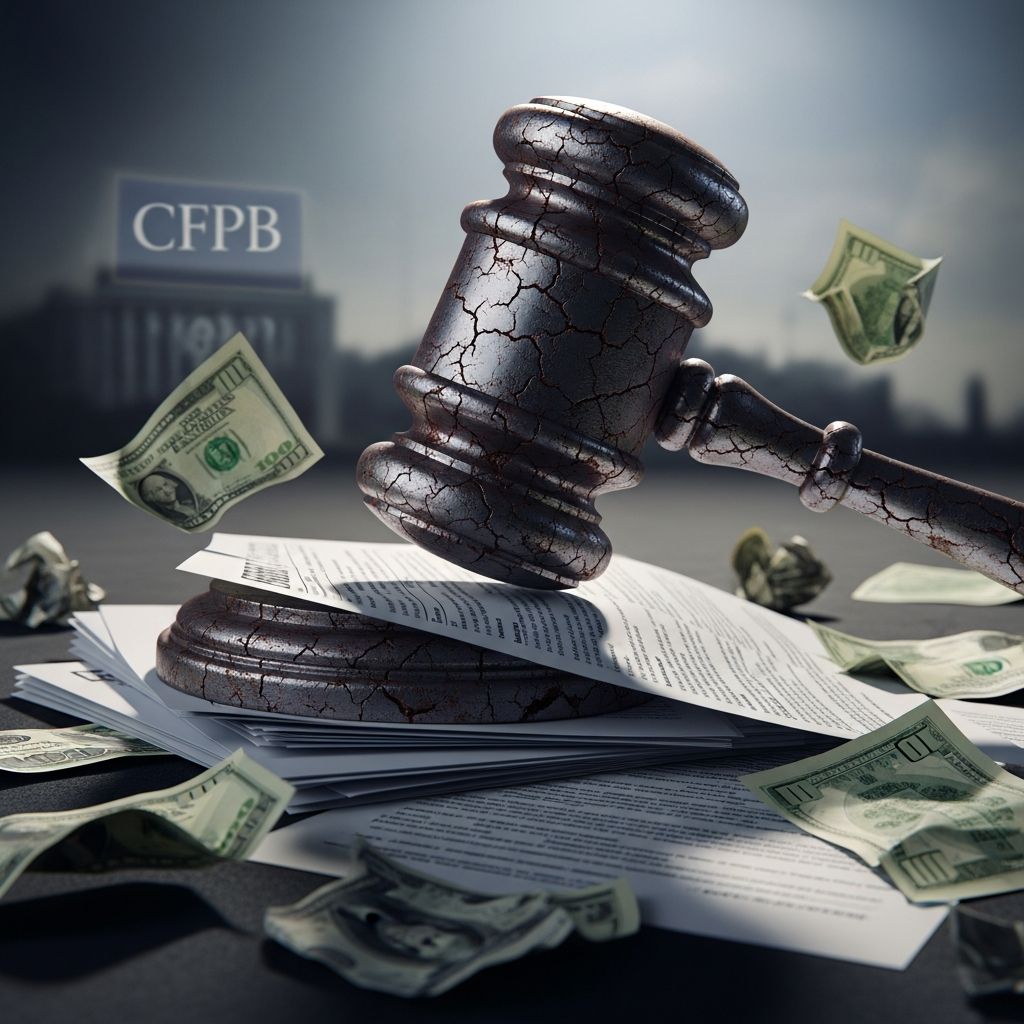
The Consumer Financial Protection Bureau (CFPB) has taken significant enforcement action against a high-volume debt collection law firm that filed large numbers of lawsuits without adequate documentation or meaningful attorney review. This move targets what regulators describe as a lawsuit mill, where cases are mass-produced to pressure consumers into paying alleged debts, sometimes without clear proof those debts are valid.
This article explains what junk debt lawsuits are, why the CFPB intervened, what the settlement requires, and what the case means for consumers, creditors, and courts across the United States.
Junk Debt Lawsuits and “Lawsuit Mills” Explained
Debt collection in court is legal when done properly, but problems arise when collectors rely on incomplete records, errors, or automation instead of careful legal review.
Junk debt lawsuits typically have one or more of these characteristics:
- Lack of detailed documentation supporting the amount, ownership, or existence of the debt
- Reliance on generic spreadsheets or summary data instead of original account-level records
- Errors in the consumer’s identity, balance, or payment history
- Filing against consumers after the statute of limitations has expired
- Use of boilerplate affidavits signed by people with no real knowledge of the account
A debt collection lawsuit mill is a law firm or operation that files extremely large volumes of such cases, with minimal attorney involvement, often supported by automated systems that generate complaints based on bulk data.
| Feature | Legitimate Collection Lawsuit | Junk Debt Lawsuit Mill |
|---|---|---|
| Documentation | Account statements, contracts, and clear proof of ownership | Summary data, incomplete records, or missing original documents |
| Attorney review | Individualized, case-by-case legal analysis | Minimal review; sometimes seconds or no real review at all |
| Volume of filings | Consistent with staff capacity | Tens or hundreds of thousands of cases over short periods |
| Consumer impact | Disputes resolved based on evidence | High default judgment rates when consumers do not respond |
The CFPB’s Case Against a High-Volume Law Firm
In the enforcement action that inspired this article, the CFPB alleged that a New York-based law firm, Forster & Garbus, LLP, functioned as a debt collection mill for major creditors, including national credit card companies.
Key allegations from the CFPB’s lawsuit included:
- From 2014 to 2016, fewer than a dozen attorneys at the firm filed more than 99,000 debt collection lawsuits.
- The firm held documents supporting only a fraction of the debts it sued consumers over.
- The firm falsely suggested that attorneys had meaningfully reviewed the cases before filing, despite the enormous volume per lawyer.
The CFPB alleged that these practices violated:
- The Fair Debt Collection Practices Act (FDCPA), which prohibits using false, deceptive, or misleading representations in debt collection.
- The Consumer Financial Protection Act (CFPA), which bans unfair, deceptive, or abusive acts or practices in consumer financial markets.
Why High-Volume Lawsuits Are So Harmful
High-volume litigation by debt collectors can severely disadvantage consumers, especially those with limited legal knowledge or resources.
Common harms include:
- Default judgments: Many consumers do not respond to lawsuits, leading courts to enter default judgments that can result in wage garnishment or bank account seizures, even when the underlying debt is inaccurate or unproven.
- Intimidation and confusion: The mere threat of a lawsuit or the receipt of court papers can push consumers to pay out of fear, even if they question whether they owe the debt.
- Errors and mistaken identity: In mass-litigation systems, data errors can lead to suits against the wrong person or for the wrong amount.
- Unequal access to justice: Debt collectors often have dedicated counsel, while consumers are largely unrepresented and may not understand how to defend themselves.
The Settlement: New Guardrails on Debt Collection Lawsuits
The CFPB reached a proposed settlement with Forster & Garbus that, if approved by the court, would impose detailed conditions on how the firm can file new debt collection lawsuits.
Stronger Documentation Requirements
Under the settlement, the firm would be prohibited from filing a new lawsuit against a consumer unless it possesses specific documentation supporting the debt, such as:
- Information identifying the original creditor
- Evidentiary support showing the consumer incurred or authorized the debt
- Records reflecting the current balance and relevant transactions
- Proof of ownership when the debt has been sold or assigned
These requirements reflect broader regulatory expectations that debt buyers and collectors must be able to substantiate debts before litigation, not simply rely on bare data fields or assumptions.
Meaningful Attorney Review
One of the core issues in the case was the alleged misrepresentation that attorneys had conducted meaningful review of each case. The settlement would require the firm to certify that an attorney whose name appears on the complaint has:
- Reviewed the supporting documentation for the individual account
- Verified that the facts alleged in the complaint match the documentation
- Determined that the claim is legally and factually suitable for filing in court
This type of requirement is designed to prevent the practice of attorneys signing thousands of complaints with only cursory or no real analysis, a pattern regulators have criticized in multiple enforcement actions.
Dismissal of Pending Noncompliant Lawsuits
The proposed order would also compel the firm to review its existing lawsuits. Any pending lawsuit in which the firm cannot certify compliance with the documentation and attorney review standards within a set period (for example, 120 days) must be dismissed.
This retroactive component is important because it addresses harm already in progress: consumers currently facing unsupported suits would see those cases dropped if they do not meet the new standards.
Monetary Penalties and the Victims Relief Fund
As part of the settlement, Forster & Garbus would pay a civil penalty of $100,000, to be deposited into the CFPB’s victims relief fund. This fund is used to provide monetary relief to harmed consumers when direct restitution from the wrongdoer is impracticable or insufficient.
How This Case Fits Into Broader CFPB Enforcement
The Forster & Garbus settlement is not an isolated case. The CFPB has taken similar actions against other firms and debt buyers for mass-producing lawsuits without adequate proof or review.
For example, the Bureau previously took action against:
- A New Jersey law firm and a debt buyer that filed hundreds of thousands of lawsuits relying heavily on automated systems and non-attorney staff, where attorneys often spent less than a minute reviewing each case.
- A large debt collection law firm accused of operating like a factory and relying on questionable affidavits and high case volume, resulting in tens or hundreds of thousands of filings with minimal attorney involvement.
Across these actions, the CFPB has emphasized several themes:
- Litigation is not a shortcut to bypass documentation requirements.
- Attorneys cannot simply lend their names to mass-generated lawsuits without real legal work.
- Debt buyers and servicers must maintain and review reliable information before suing.
- Large financial institutions that hire such firms may themselves face regulatory scrutiny.
What This Means for Consumers
Consumers facing debt collection lawsuits may benefit from these enforcement actions in several concrete ways.
Stronger Evidence Before Lawsuits Are Filed
Where orders like the one in the Forster & Garbus case apply, collectors must have:
- Clear proof of the debt’s existence and amount
- Documentation of ownership if the debt was sold
- Attorney review that goes beyond rubber-stamping
This reduces the likelihood of lawsuits based on incorrect data, time-barred accounts, or misidentified consumers.
Greater Incentive to Resolve Disputes Outside of Court
When litigation must meet higher standards, collectors may:
- Invest more in pre-suit investigation and documentation
- Be more open to resolving disputes through communication, repayment plans, or corrections
- Refrain from suing when they lack adequate evidence
Improved Transparency About Legal Representation
Consumers should not be misled into believing an attorney has meaningfully reviewed their case if that has not occurred. Enforcement of meaningful attorney review requirements reinforces the integrity of court filings and helps ensure that legal documents represent genuine professional judgment rather than automated output.
Practical Steps for Consumers Sued for a Debt
Even with stronger rules, consumers may still face aggressive collection litigation. If you are sued for a debt, consider these practical steps:
- Do not ignore the lawsuit. Failing to respond can result in a default judgment that is difficult to reverse.
- Review the complaint carefully. Check the amount, creditor’s name, dates, and your personal information for accuracy.
- Ask for documentation. You can request account-level documents, contracts, and proof the plaintiff owns the debt.
- Seek legal advice. Nonprofit legal services, legal aid organizations, and consumer law attorneys may help you understand your options.
- Consider defenses. Common defenses include mistaken identity, incorrect amount, prior payment, identity theft, or expiration of the statute of limitations.
The CFPB also operates a complaint system where consumers can report problems with debt collectors and other financial companies, and it has published guidance on debt collection rights.
Implications for Creditors and Law Firms
While the Forster & Garbus settlement focuses on one firm, it has broader implications for creditors and collection lawyers nationwide.
- Upstream responsibility. Major lenders that rely on high-volume firms may be subject to heightened regulatory attention, especially if they supply flawed data or tolerate weak documentation practices.
- Compliance expectations. Law firms must design systems that allow for case-by-case attorney review, maintain robust records, and avoid misleading courts about the extent of legal work performed.
- Data integrity. Debt sellers and buyers must invest in data accuracy, chain-of-title documentation, and quality controls before accounts enter the litigation pipeline.
Frequently Asked Questions (FAQs)
Q1: What is the CFPB, and why is it involved in debt collection lawsuits?
The Consumer Financial Protection Bureau is a U.S. federal agency created after the financial crisis to supervise consumer financial markets and enforce federal consumer financial laws. It oversees banks, debt collectors, and other financial entities, and it can take enforcement action when companies engage in unfair, deceptive, or abusive practices, including in debt collection litigation.
Q2: What laws govern abusive debt collection litigation?
Two key federal laws apply. The Fair Debt Collection Practices Act (FDCPA) bans false, deceptive, or misleading practices in debt collection, including in court filings and communications. The Consumer Financial Protection Act (CFPA) prohibits unfair, deceptive, or abusive acts or practices in consumer financial markets and gives the CFPB enforcement authority.
Q3: How does this case affect my existing debt?
The settlement does not erase legitimate debts, but it requires the law firm involved to dismiss pending lawsuits that do not meet documentation and attorney review standards and to meet stricter conditions before filing future suits. If your account is involved in an affected case, the lawsuit may be dismissed, but the underlying debt might still exist and could be collected through other lawful means.
Q4: Can I be sued if the collector does not have all the documents?
Collectors must comply with applicable law and any regulatory orders. In enforcement cases like this one, the firm is barred from filing lawsuits unless it has specific supporting records and an attorney has meaningfully reviewed them. Outside such orders, courts and state laws vary, but lack of documentation can be a powerful defense, and consumers can challenge unsupported claims.
Q5: Where can I get help if I am facing a debt collection lawsuit?
Consumers can seek assistance from legal aid organizations, consumer law attorneys, state bar referral services, and nonprofit counseling agencies. The CFPB also provides educational materials and accepts complaints related to debt collection problems, which can help regulators identify patterns of abuse.
References
- CFPB Takes Action to Halt Debt Collection Mill From Bombarding Consumers With Junk Lawsuits — Consumer Financial Protection Bureau. 2023-01-11. https://www.consumerfinance.gov/about-us/newsroom/cfpb-takes-action-to-halt-debt-collection-mill-from-bombarding-consumers-with-junk-lawsuits/
- CFPB Sues Junk Debt Collection Lawsuit Mill — American Bankruptcy Institute (summarizing CFPB action). 2014-07-14. https://www.abi.org/feed-item/cfpb-sues-junk-debt-collection-lawsuit-mill
- CFPB Takes Action to Halt Illegal Debt Collection Practices by Lawsuit Mill and Debt Buyer — Consumer Financial Protection Bureau. 2016-04-25. https://www.consumerfinance.gov/about-us/newsroom/cfpb-takes-action-halt-illegal-debt-collection-practices-lawsuit-mill-and-debt-buyer/
- CFPB Files Suit Against Debt Collection Lawsuit Mill — Consumer Financial Protection Bureau (archived via Davis Wright Tremaine LLP). 2014-07-14. https://www.dwt.com/files/paymentlawadvisor/2014/10/Frederick-J.-Hanna-Associates-Press-Release-2014.07.14.pdf
- U.S. House Bill Would Allow Lawyers to Abuse Consumers in Debt Collection Courts — National Consumer Law Center. 2017-05-01. https://www.nclc.org/wp-content/uploads/2022/09/ib-debt-collection-abuse.pdf
- The Debt Mills: How State Courts Grind Through Consumer Debt Cases — GBH News. 2024-09-03. https://www.wgbh.org/news/local/2024-09-03/the-debt-mills-how-state-courts-grind-through-consumer-debt-cases
- What Is a Debt Lawsuit Mill? — Rahman Legal. 2022-03-15. https://www.rahmanlegal.com/blog/what-is-a-debt-lawsuit-mill/
Similar Articles








Read full bio of medha deb




