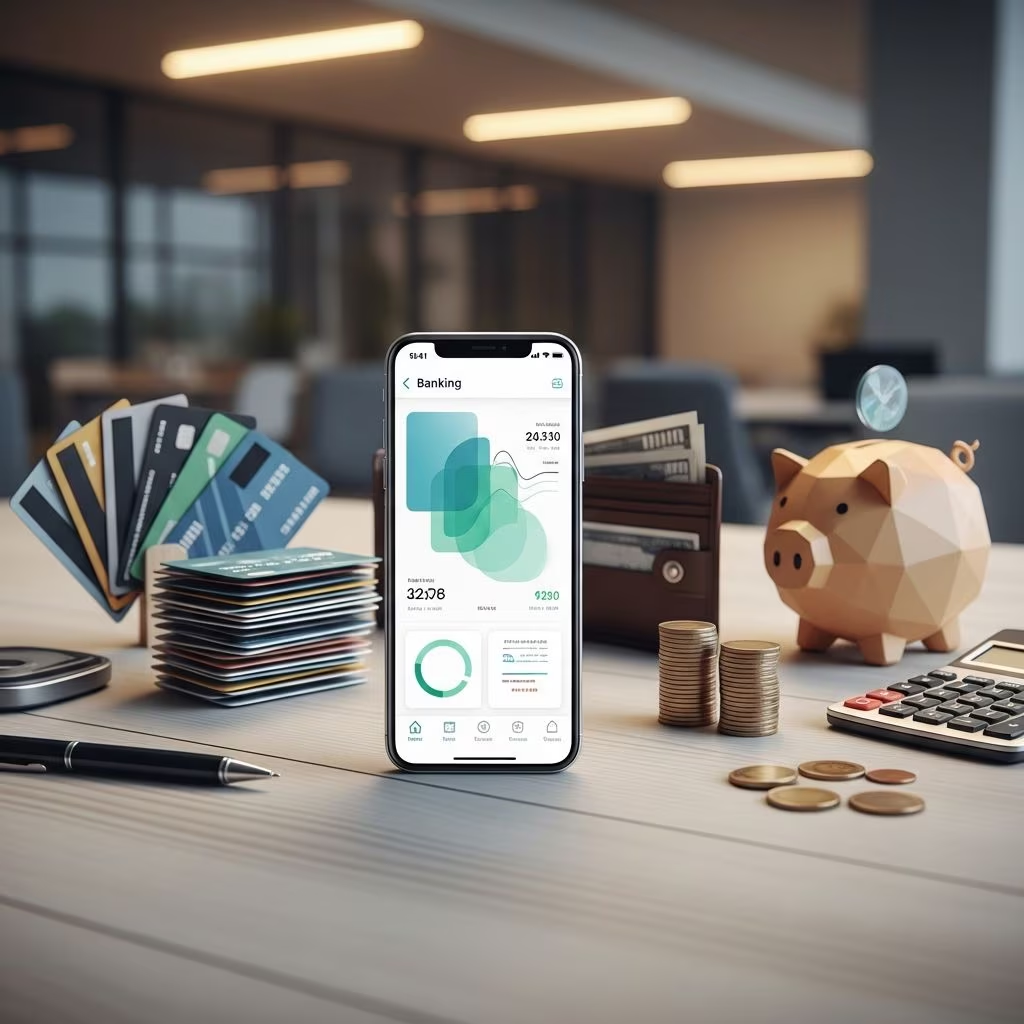
Bank accounts are the foundation of everyday money management. Choosing the right accounts and understanding how they work can help you pay bills securely, save for goals, and avoid expensive fees.
This guide explains the main types of accounts, key features to compare, how to open an account, and practical strategies for using and protecting your banking tools.
Why Bank Accounts Matter for Your Financial Life
Keeping your money in a regulated financial institution offers benefits that cash or prepaid cards alone cannot provide.
- Safety: Most deposit accounts at banks and credit unions in the U.S. are insured up to at least $250,000 per depositor, per institution, per ownership category.
- Convenience: Direct deposit, mobile apps, ATMs, and electronic bill pay allow you to move and use money quickly.
- Recordkeeping: Statements and transaction histories help you track spending, prepare taxes, and prove payments.
- Gateway to other services: Many loans, credit cards, and investment products require a checking or savings relationship first.
Overview of the Main Types of Bank Accounts
Financial institutions typically offer several core account types for personal banking. Understanding their purpose helps you decide which combination fits your needs.
| Account Type | Primary Purpose | Access to Funds | Typical Interest |
|---|---|---|---|
| Checking | Daily spending and bill payment | High – debit card, ATM, electronic transfers, checks | Low or none, depending on institution |
| Savings | Short- to medium-term saving, emergency funds | Moderate – transfers and withdrawals, sometimes limited | Usually higher than checking, varies by bank and rate environment |
| Money Market | Larger balances that need some liquidity | Moderate – may include checks or debit card with limited transactions | Often higher than basic savings but may require higher minimum balance |
| Certificate of Deposit (CD) | Locking in funds for a set term for higher interest | Low – early withdrawals usually face penalties | Generally higher fixed rate for a specified term |
Checking Accounts: Your Everyday Money Hub
A checking account is usually the center of your day-to-day finances. It is designed for frequent transactions rather than long-term storage of large balances.
Typical features of checking accounts
- Direct deposit for paychecks, benefits, or tax refunds.
- Debit card for in-store and online purchases.
- ATM access for cash withdrawals and sometimes deposits.
- Electronic bill pay and transfers to other accounts.
- Paper checks (some accounts are checkless by design).
Some checking accounts pay interest, but many do not or pay only a small rate. In exchange, they may offer broader access or lower minimum balances.
Common checking account costs
- Monthly maintenance fees: Often waived if you meet requirements such as direct deposit or a minimum balance.
- Overdraft and non-sufficient funds (NSF) fees: Charges when transactions exceed your available balance, although some accounts are designed with no overdraft.
- Out-of-network ATM fees: Additional costs when using machines outside your bank’s network.
- Foreign transaction fees: Fees for international card use or currency conversion.
Savings Accounts: Building a Cash Cushion
Savings accounts are intended for money you do not plan to spend immediately, such as an emergency fund or a near-term goal like a car, vacation, or security deposit.
Key characteristics of savings accounts
- Interest earnings: Most savings accounts pay interest, with rates varying by institution and economic conditions.
- Reduced transaction frequency: They are not intended for constant spending; some banks limit how often you can transfer or withdraw.
- Goal-based saving: Many people use separate savings accounts for different goals (for example, taxes, travel, or emergency savings).
When a savings account is useful
- Creating a starter emergency fund to cover unexpected expenses.
- Setting aside money for irregular bills like insurance premiums.
- Parking cash that you do not want to keep in checking but need to access within months instead of years.
Money Market Accounts and CDs: Options for Larger Balances
For people holding higher balances or saving for more defined goals, money market accounts and certificates of deposit offer additional choices.
Money market deposit accounts
A money market account combines elements of checking and savings. Funds are typically insured like other deposit accounts.
- Often pay higher interest than standard savings for larger balances.
- May include limited check-writing or debit card access.
- Can have higher minimum balance requirements.
They can be a good fit for medium-term savings where you want a bit more yield but still need some flexibility.
Certificates of deposit (CDs)
CDs are time deposits where you agree to leave your money in the account for a set term, which can range from a few months to several years.
- Generally offer higher interest than regular savings for the same institution and time period.
- Rates are usually fixed for the term, providing certainty about earnings.
- Taking money out before maturity typically triggers an early withdrawal penalty.
CDs can be useful for funds you know you will not need until a specific future date, such as a planned tuition payment or home renovation.
How to Choose the Right Bank or Credit Union
The institution you select can influence your fees, convenience, and level of consumer protections and services.
Factors to compare
- Account safety: Confirm that a bank is insured by the Federal Deposit Insurance Corporation (FDIC) or a credit union by the National Credit Union Administration (NCUA).
- Fee structure: Compare monthly fees, overdraft policies, ATM charges, and other common costs.
- Access and technology: Look at branch locations, ATM networks, mobile app quality, and online tools.
- Customer service: Consider support hours, responsiveness, and language options.
- Account options: Determine whether they offer low-cost or Bank On 6certified accounts if you want a safer, simpler entry-level product.
Checklist: Information You May Need to Open an Account
Opening a new account usually requires some basic personal and identification details. Having these ready can make the process faster, whether you apply online or in person.
- Legal name and date of birth.
- Residential address and contact information (phone and email).
- Government-issued photo ID (such as a driver 6s license, state ID, or passport).
- Social Security number or other taxpayer identification number, as applicable.
- Proof of address if different from your ID (for example, a utility bill or lease).
- Initial deposit amount and how you will fund it (cash, check, transfer from another institution).
Some banks may also ask about your employment, income, or how you plan to use the account. They may check your history with previous bank accounts through specialty reporting agencies.
Understanding Common Account Fees and Policies
Carefully reviewing the fee schedule and account agreement before you open an account can help you avoid surprises later.
Typical fees to review
- Monthly service fees: Ask what the fee is and how you can avoid it (for example, setting up direct deposit or maintaining a minimum balance).
- Overdraft and NSF fees: Understand when they are charged and whether you can opt out of overdraft for debit card purchases.
- ATM and transaction fees: Look for free or low-cost ATM access and any charges for transfers or payments.
- Paper statement fees: Some institutions charge for mailed statements if you do not choose electronic delivery.
- Inactivity or closure fees: Check for costs tied to low activity or closing an account early.
Ask for a clear fee disclosure and keep a copy. Comparing these documents across institutions can make it easier to spot more affordable options.
Practical Tips to Use Your Accounts Wisely
Once your accounts are open, how you manage them can make the difference between saving money and paying unnecessary charges.
- Monitor your balance often: Use mobile alerts or online banking to track your available funds before making purchases.
- Set up automatic transfers to savings: Moving a set amount each payday helps you build savings without having to think about it.
- Align due dates with paydays: Scheduling bill payments just after you are paid can reduce the chance of missed or late payments.
- Limit overdraft use: Treat overdraft, if offered, as a back-up rather than a regular tool for spending.
- Review statements monthly: Check for unauthorized transactions, unexpected fees, or subscription charges you no longer need.
Protecting Yourself When Using Bank Accounts
Financial institutions invest heavily in security, but you also play an important role in protecting your accounts and personal information.
Steps to reduce risk
- Use strong, unique passwords and enable multifactor authentication where available.
- Avoid logging into your accounts from unsecured public Widash;Fi networks.
- Never share one-time passcodes, PINs, or full login details with anyone, even if they claim to be from your bank.
- Turn on alerts for large transactions, online logins, or changes to your contact information.
- Report a lost or stolen debit card immediately to limit potential fraud losses.
If you spot suspicious activity, contact your institution right away and follow its dispute process. Federal rules provide certain protections for unauthorized electronic transfers when you report them promptly.
Special Considerations for Low-Cost and Safer Accounts
Some consumers want a simple, low-fee account with guardrails that make it harder to incur overdraft or penalty fees. Public and industry initiatives have encouraged banks and credit unions to offer such options.
- Low opening deposit: Designed for people who may not have large upfront funds.
- No overdraft feature: Transactions are declined if you lack funds, helping you avoid overdraft fees.
- Transparent fee caps: Clear, limited fees for services such as out-of-network ATMs or paper statements.
- Modern access: Debit card, online banking, and mobile app support as standard features.
If you have had difficulties with accounts in the past or are opening your first account, these products can be a safer, more predictable starting point.
Frequently Asked Questions About Bank Accounts
Q: How many bank accounts should I have?
A: Many people use at least one checking account for everyday spending and one savings account for emergencies or goals. Beyond that, the right number depends on your income, financial complexity, and whether separate accounts help you stay organized.
Q: What is the difference between a bank and a credit union?
A: Banks are typically for-profit institutions, while credit unions are member-owned cooperatives. Both can offer insured deposit accounts, loans, and similar services, but membership rules, fee structures, and interest rates may differ.
Q: Do I need good credit to open a checking or savings account?
A: Traditional credit scores are not always required. However, many institutions review your history with previous bank accounts through specialized reporting agencies and may deny applications if there are unresolved issues such as unpaid fees or suspected fraud.
Q: What happens if my bank fails?
A: If your deposits are within federal insurance limits at an FDIC-insured bank or NCUA-insured credit union, your funds are generally protected even if the institution closes. Regulators typically arrange for another institution to take over insured deposits or pay them out directly.
Q: Is it safe to use mobile banking apps?
A: Reputable institutions use encryption and other security measures for mobile access, and federal guidance encourages strong cybersecurity practices. Using your own secure device, updating software regularly, and enabling multifactor authentication help increase safety.
References
- Bank accounts and services — Consumer Financial Protection Bureau. 2024-01-10. https://www.consumerfinance.gov/consumer-tools/bank-accounts/
- Deposit Accounts — Federal Deposit Insurance Corporation (FDIC). 2023-09-12. https://www.fdic.gov/consumer-resource-center/deposit-accounts
- Understanding the Different Types of Bank Accounts — PNC Bank. 2023-05-15. https://www.pnc.com/insights/personal-finance/spend/types-of-bank-accounts.html
- The Most Common Types of Bank Accounts — Affinity Federal Credit Union. 2023-06-20. https://www.affinityfcu.com/financial-wellbeing/blog/personal-banking/the-most-common-types-of-bank-accounts
- Choosing a Bank Account — American Bankers Association. 2022-11-03. https://www.aba.com/advocacy/community-programs/consumer-resources/manage-your-money/choosing-safe-affordable-account