
Smart Credit Card Use and How to Dispute Charges
Learn to use credit cards wisely, spot billing problems early, and dispute questionable charges with confidence.
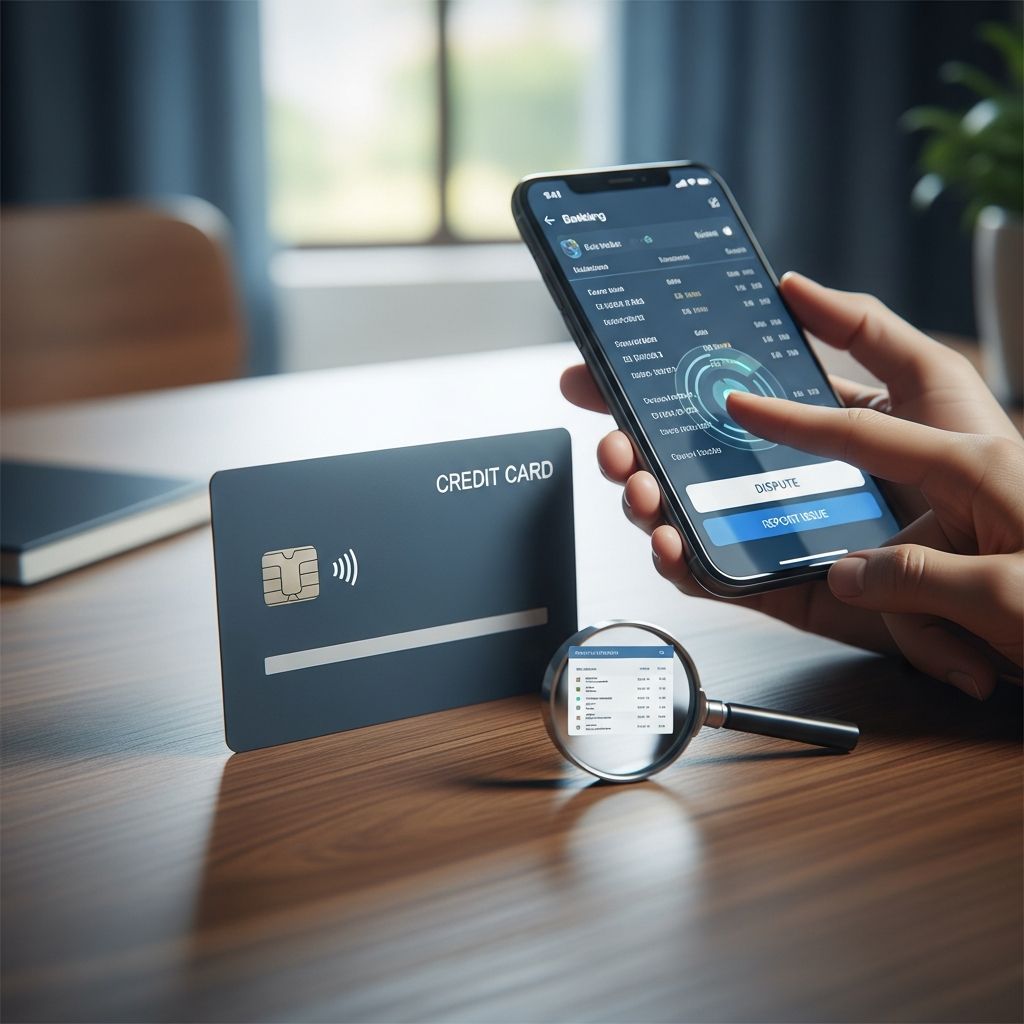
Credit cards can be powerful tools for managing money, building credit, and handling emergencies. Used carelessly, they can also lead to costly interest, fees, and unexpected charges. Knowing how to use a card wisely and how to challenge a wrong charge gives you real control over your account.
This guide explains everyday credit card basics, how to spot problems on your bill, and the exact steps for disputing charges under federal protections such as the Fair Credit Billing Act (FCBA).
1. Understanding How Credit Cards Work
A credit card lets you borrow money up to a set limit and repay it later. You agree to the card issuer’s terms when you open the account, including how interest and fees will be charged.
- Credit limit: The maximum amount you can charge on the card at one time.
- Billing cycle: The period (often about 30 days) covered by each statement.
- Statement due date: When at least the minimum payment must be received.
- APR (Annual Percentage Rate): The yearly cost of borrowing, including interest and certain fees.
If you pay your full balance by the due date each month, many cards give you a grace period where new purchases do not accrue interest. If you carry a balance, new purchases may start accruing interest immediately.
2. Using Credit Cards Responsibly
Responsible use reduces the risk of surprise charges, late fees, and damage to your credit profile.
2.1 Practical habits for everyday use
- Charge only what you can reasonably pay off in the next few months.
- Set up automatic payments for at least the minimum due to avoid late fees.
- Turn on alerts for large transactions, online purchases, or foreign charges.
- Avoid using credit cards to cover ongoing budget gaps month after month.
2.2 Why minimum payments are risky
Paying only the minimum keeps the account current but can be very expensive. Interest accumulates on the unpaid balance, making it harder to get out of debt. Many statements show how long payoff would take with only minimum payments, which can be several years for even modest balances.
3. Reading and Checking Your Credit Card Statement
Careful review of every statement is your first line of defense against billing errors and fraud. Federal guidance recommends checking each statement promptly and keeping copies of your records for reference.
3.1 Key parts of a typical statement
| Section | What it shows | Why it matters |
|---|---|---|
| Account summary | Previous balance, payments, credits, new charges, fees, interest, new balance | Quick view of how your balance changed this cycle |
| Payment information | Minimum payment due and due date | Missing this date can trigger late fees and penalty APRs |
| Transaction list | Each purchase, refund, cash advance, fee, and payment | Where you identify unauthorized or incorrect charges |
| Interest and fee details | How much interest and what fees were charged | Helps you understand the real cost of carrying a balance |
3.2 What to look for when you review
- Transactions you do not recognize or did not authorize.
- Charges that are higher than what you agreed to pay.
- Duplicate charges for the same purchase.
- Returns or credits that never appeared.
- Fees or interest that do not match your card terms.
Reviewing promptly matters because federal law typically gives you 60 days from the date a statement with an error is sent to raise a formal dispute for many types of billing errors.
4. Common Problems on Credit Card Bills
Not every unexpected charge is fraud. Some are merchant mistakes or misunderstandings. Knowing the most frequent issues helps you respond quickly.
- Unauthorized transactions – Charges made without your permission, including stolen card use or account takeover.
- Billing errors – Wrong amounts, charges for goods you never received, or credits that were not posted.
- Quality or service disputes – You received something materially different from what was promised, or a service was not provided as agreed.
- Subscription problems – Free trials that turn into paid plans, or recurring charges after you canceled.
For many non-fraud issues, starting with the merchant is often the fastest path to a fix, but you still have rights through your card issuer if that does not work.
5. Your Legal Rights Under the Fair Credit Billing Act
The Fair Credit Billing Act (FCBA), enforced by agencies such as the Consumer Financial Protection Bureau (CFPB), gives cardholders important protections when dealing with certain billing errors.
5.1 What counts as a billing error
Under federal rules, potential billing errors include:
- Unauthorized charges (you did not make or approve the transaction).
- Charges for goods or services not delivered as agreed.
- Math errors on the statement.
- Failure to post payments or credits correctly.
- Failure to send the bill to your current address if you properly notified the issuer.
5.2 Deadlines that protect your rights
- You generally must send a written billing error notice to your card issuer within 60 days after the statement containing the error was sent.
- The issuer must acknowledge your written dispute within 30 days, unless the problem is resolved sooner.
- The investigation must be completed within two billing cycles (but no more than 90 days) after receiving your notice.
During the investigation, you may withhold payment of the disputed amount and related finance charges, but you must pay the undisputed part of your bill.
6. Step-by-Step: How to Dispute a Credit Card Charge
Federal guidance and major card issuers describe a similar process: act quickly, document clearly, and follow up in writing.
6.1 Step 1 – Confirm the problem
- Compare the charge to your receipts or order confirmations.
- Ask authorized users if they made the purchase.
- Search your email for subscription sign-ups or renewals.
If you still do not recognize or agree with the transaction, treat it as a potential error or unauthorized charge.
6.2 Step 2 – Contact the merchant (when appropriate)
For non-fraud issues (wrong amount, not-as-described purchase, missing refunds), many banks recommend that you try to resolve things directly with the seller first:
- Call or email the business using the contact information on your receipt or their website.
- Explain the problem factually and request a refund, replacement, or correction.
- Keep records of dates, names, and what was promised.
If the merchant does not respond, disagrees, or refuses to fix the issue, you can escalate to your card issuer.
6.3 Step 3 – Notify your card issuer quickly
Issuers usually allow disputes by phone, secure message, website, or mobile app.
- Call the number on the back of your card for urgent fraud concerns.
- Ask whether they recommend filing online, in the app, or by mail in your situation.
- Request a replacement card if your number may be compromised.
Even if you start the process electronically, federal agencies recommend a written notice mailed to the billing inquiries address to fully preserve your FCBA rights.
6.4 Step 4 – Send a written billing error notice
To be covered by FCBA protections, your written notice should:
- Include your name, address, and account number (use only the last digits for security if mailing).
- Identify the exact charge you are disputing: date, amount, and merchant name.
- Explain clearly why you believe there is an error or why you are disputing the charge.
- Attach copies (not originals) of receipts, statements, or emails that support your position.
- Be sent to the issuer’s billing inquiries address, not the payment address, within 60 days of the statement date.
Send the letter by a trackable mail method if possible and keep copies of everything for your records.
6.5 Step 5 – What happens during the investigation
Once your issuer receives your notice, federal rules require them to investigate and either correct the error or explain in writing why they believe the bill is accurate. According to major credit bureaus, card issuers often:
- Place a temporary credit on your account for the disputed amount while they investigate.
- Request information from the merchant, card network, or other parties.
- Send you follow-up questions or requests for additional documents.
During this process, you do not have to pay the disputed amount or related interest, but you must continue paying the undisputed portion of your bill on time.
6.6 Step 6 – Final decision and next steps
- If the issuer finds in your favor: They must correct the error and make any temporary credit permanent, including related fees or interest that resulted from the issue.
- If the issuer sides with the merchant: They must explain their findings in writing. They may remove the temporary credit and add the amount back to your balance, and you will be responsible for paying it, plus applicable finance charges.
If you still disagree, you can contact the issuer again with any new information or consider filing a complaint with a government agency such as the CFPB, which accepts consumer complaints about credit card billing and dispute handling.
7. Preventing Disputes and Fraud Before They Happen
Prevention is easier than resolving a complex dispute. Many of the same practices that keep your information safe also reduce billing headaches.
7.1 Protecting your card information
- Use strong, unique passwords and multifactor authentication for your online banking and card apps.
- Avoid entering card details on public or shared computers.
- Be cautious when saving your card on websites; use virtual card numbers if your bank offers them.
- Shred old statements and mail that show account details.
7.2 Reducing billing surprises
- Read return and cancellation policies before you buy.
- Take screenshots or save order confirmations when purchasing online.
- Maintain a simple record (digital or paper) of major purchases and recurring subscriptions.
- Set calendar reminders a few days before free trials end so you can cancel in time if you choose.
8. FAQs About Credit Card Disputes
Q: How long do I have to dispute a charge?
A: For many billing errors covered by the FCBA, you must send a written dispute within 60 days after the statement with the error was sent. Some issuers allow more time for internal dispute processes, but federal protections are tied to that 60-day window.
Q: Will disputing a charge hurt my credit score?
A: The act of disputing generally does not by itself affect your credit score. However, if you stop making required payments on the undisputed portion of your balance, late payments could be reported and harm your credit.
Q: Should I pay the disputed amount while the bank investigates?
A: Under federal rules, you may withhold payment of the disputed amount and related interest while the investigation is pending, but you must continue to pay the undisputed part of your bill on time to avoid late fees and negative credit reporting.
Q: What if I see a small test charge I don’t recognize?
A: Fraudsters sometimes run small “test” transactions to see if a card number is active. Report any suspicious charge to your issuer immediately so they can block future use and issue a new card if needed.
Q: Is a dispute the same as a chargeback?
A: From a consumer perspective, you generally just file a dispute with your card issuer. Behind the scenes, the issuer may pursue a chargeback through the card network to recover funds from the merchant’s bank, following rules set by networks like Visa and Mastercard.
References
- How do I dispute a charge on my credit card bill? — Consumer Financial Protection Bureau. 2023-05-10. https://www.consumerfinance.gov/ask-cfpb/how-do-i-dispute-a-charge-on-my-credit-card-bill-en-61/
- How to Dispute a Credit Card Charge — Experian. 2024-01-30. https://www.experian.com/blogs/ask-experian/how-to-dispute-credit-card-charge/
- Credit card dispute process — Capital One Help Center. 2024-02-01. https://www.capitalone.com/help-center/fraud-disputes/dispute-credit-charge/
- How do chargebacks work? — Ethoca. 2022-11-15. https://www.ethoca.com/blog/a-step-by-step-guide-for-understanding-the-credit-card-chargeback-process
- Dispute Resolution — Visa. 2023-06-01. https://usa.visa.com/support/small-business/dispute-resolution.html
Similar Articles








Read full bio of medha deb




