
Resolving Credit Card Billing Errors: A Complete Guide
Master your rights when facing billing mistakes on credit cards with this comprehensive dispute resolution guide.
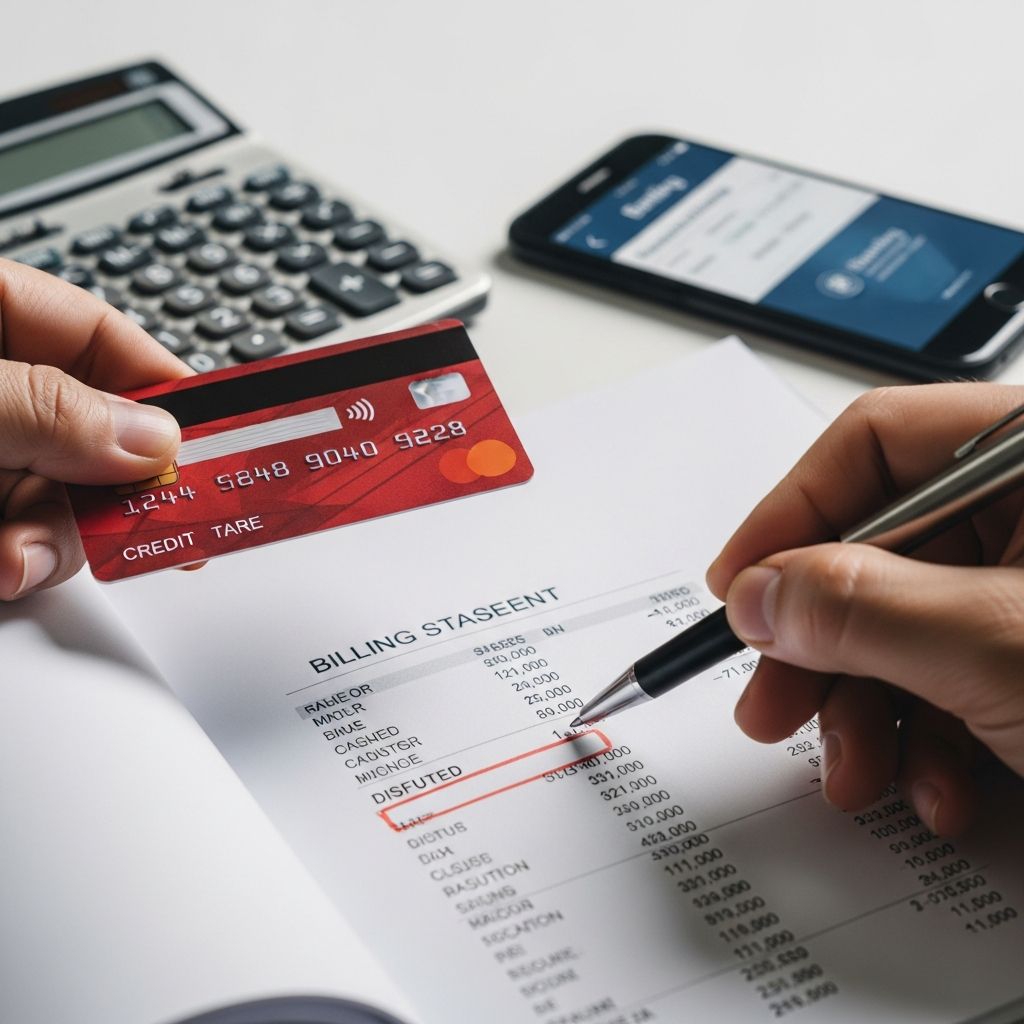
Understanding Billing Errors and Your Consumer Rights
Every month, millions of credit card statements arrive in mailboxes and inboxes, and while most are accurate, errors do occur. From unauthorized charges and incorrect amounts to missing credits and undelivered merchandise, billing mistakes can significantly impact your finances and credit standing. The good news is that federal law provides robust protections for consumers who discover these errors. The Fair Credit Billing Act establishes clear procedures that creditors must follow when investigating disputes, ensuring you’re not left holding the bag for mistakes that aren’t yours.
Understanding your rights begins with recognizing what qualifies as a billing error under federal consumer protection laws. Not every problem with your statement falls into this category, which is why it’s essential to distinguish between true billing errors and other types of payment disputes. Once you understand what protections apply to your situation, you can take decisive action to correct the problem.
Identifying What Qualifies as a Billing Error
Federal consumer protection law recognizes several distinct categories of billing errors. The first and most straightforward involves unauthorized charges—purchases you never made or approved. These might result from fraud, identity theft, or simple merchant errors where your card information was misused.
Mathematical mistakes represent another common error type. These occur when a creditor miscalculates interest charges, fails to properly apply a payment, or makes arithmetic errors when compiling your statement. Additionally, incorrect transaction dates or amounts appearing on your statement constitute billing errors, even if the merchant eventually charges the correct amount.
The third category encompasses charges for goods or services you rejected, never received, or that weren’t delivered as promised. If you ordered merchandise that arrived damaged, didn’t match the description, or was never shipped despite being charged, this qualifies as a billing error requiring investigation.
Creditor failures to properly record transactions also create billing errors. When a company fails to post a payment you made on time, neglects to credit a return to your account, or doesn’t account for other legitimate adjustments, these omissions demand correction. Similarly, if a creditor fails to send your bill to your current address—and you provided written notice of your address change at least twenty days before the billing period ended—this administrative failure qualifies as a billing error.
Finally, situations where you specifically request an explanation, clarification, or written proof of a purchase are treated as billing error inquiries, even if no actual error occurred. Creditors must still respond to these requests within the required timeframes.
The Critical 60-Day Notification Window
Time is absolutely critical when addressing billing errors. Federal law imposes a strict 60-day deadline from the date the first statement containing the error appeared in your billing cycle. This deadline is not a gentle guideline—it’s a firm requirement for obtaining the full protections of the Fair Credit Billing Act. If you discover an error on January 15th’s statement, you must notify your credit card company in writing by March 16th to maintain your consumer protections.
Many consumers believe that calling their credit card company orally satisfies the notification requirement, but this is incorrect. While it’s certainly wise to call immediately and explain the problem, federal law specifically requires written notification. A phone call creates no official record and doesn’t trigger the company’s obligation to acknowledge receipt or meet investigation deadlines.
The written notice should be sent to the address designated for billing inquiries, not the payment processing address where you typically mail checks. This distinction matters because billing departments maintain records of disputes separately from payment processing, ensuring your letter reaches the appropriate department that handles these matters.
Crafting Your Dispute Letter: Essential Components
Your written dispute notice should include specific information to ensure proper handling. Begin by clearly stating your full name, complete account number, and the address associated with your account. Include the date of your letter and provide a detailed description of the error, explaining exactly what went wrong and why you believe it’s incorrect.
Include the transaction date, merchant name, and amount in dispute. If the error involves a missing credit or payment, specify when you made the payment and provide proof of payment. For unauthorized charges, explain that you never authorized the transaction. For merchandise that wasn’t delivered or arrived damaged, describe what should have happened versus what actually occurred.
Attach copies—not originals—of supporting documentation. This might include receipts showing what you actually paid, shipping confirmations proving merchandise wasn’t delivered, correspondence with the merchant about damaged goods, payment stubs demonstrating you submitted funds, or email exchanges discussing the issue. The more evidence you provide, the stronger your case becomes.
Keep meticulous copies of everything you send. Many experts recommend using certified mail with return receipt requested, which provides concrete proof that the creditor received your dispute within the required timeframe. This documentation becomes invaluable if disputes about when the letter arrived later emerge.
What Happens After You Submit Your Dispute
Upon receiving your written dispute notice, your credit card company must acknowledge receipt within 30 days, unless it has already corrected the error within that timeframe. This acknowledgment should inform you that they received your dispute and explain what steps they’ll take to investigate.
The company then has two billing cycles, but no more than 90 days total, to complete its investigation and respond with a resolution. During this investigation period, the company cannot legally take collection action against you for the disputed amount. You’re protected from harassment, lawsuits, or credit reporting related to that charge during the investigation phase.
If the company determines within the 90-day window that an error occurred, it must correct the error and remove the disputed charge, related interest, and any late fees resulting from the error. If the company concludes the charge was accurate, it must send you a written explanation of why it believes the original bill was correct. This explanation should include the amount you owe and the due date.
Some companies offer provisional crediting during the investigation period, particularly if they need the full 45 days to complete their review. In these cases, they may credit the disputed amount to your account temporarily while investigating, removing your obligation to pay that amount during the dispute period.
What If You Disagree With the Company’s Decision?
If you receive the company’s explanation but remain convinced an error occurred, you have additional rights. You can submit a follow-up letter within 10 days of receiving their response, explaining why you still believe the charge is incorrect and why you refuse to pay it.
It’s important to understand that once you submit this follow-up dispute, the creditor may pursue collection activities. However, if they do report your account as delinquent to credit bureaus, they must simultaneously report that you dispute the charge. This notation protects your credit standing by indicating that the account status is disputed rather than simply delinquent.
If you remain unsatisfied with the resolution, you can file a complaint with the Consumer Financial Protection Bureau, which oversees creditor compliance with federal billing error laws. The CFPB can investigate whether your creditor properly followed required procedures and can take enforcement action if violations occurred.
Creditor Failures and Your Remedies
Federal law imposes significant consequences on creditors who fail to follow proper dispute procedures. If a company doesn’t acknowledge receipt of your dispute within 30 days, fails to complete investigation within 90 days, or doesn’t provide adequate explanation of its findings, it forfeits the right to collect the disputed amount and associated charges.
In California specifically, if a creditor misses the 90-day deadline, you have no obligation to pay any portion of the disputed balance. In other states, creditors can forfeit up to $50 of the amount in dispute if they violate procedural requirements. These penalty provisions exist to incentivize creditors to take billing disputes seriously and process them carefully.
Understanding Chargebacks Versus Billing Error Disputes
It’s important to distinguish between billing error disputes under federal law and chargebacks through credit card networks. A billing error dispute is a formal process with specific timelines and protections, handled between you and your creditor under the Fair Credit Billing Act. A chargeback is a separate mechanism where the credit card network itself may reverse a charge based on your dispute.
Some situations may qualify for both processes. However, using the formal billing error dispute process typically offers better protections and documentation. Always attempt the official billing error process first, as it provides the most comprehensive consumer protections.
Building Your Documentation Trail
Throughout any dispute, maintain meticulous records. Create a dedicated folder containing copies of the disputed statement, your original dispute letter, certified mail receipts, the company’s acknowledgment letter, their investigation response, copies of all supporting documents, and notes of any phone conversations including dates, times, and the names of representatives you spoke with.
Writing down conversation details helps if you later need to prove you gave the company information about your address change or other relevant facts. These notes, combined with written correspondence, create a comprehensive record that protects you if the dispute escalates or requires intervention by regulatory agencies.
Protecting Your Credit During Disputes
One concern many consumers have is how a dispute affects their credit report. The law provides protection here as well. A creditor cannot report you as delinquent simply because you’re disputing a charge. If they do report the account to credit bureaus, that report must note that the balance is disputed.
Additionally, during the investigation period, no credit damage can result from the disputed amount. However, if the company ultimately determines no error occurred and you still refuse to pay, they can then pursue collection activities, which would affect your credit.
Common Scenarios and How to Address Them
Unauthorized Charges: When someone makes a purchase without authorization, immediately report it as fraud. Provide documentation showing you didn’t authorize the transaction, such as your own receipt proving you were elsewhere, confirmation that the merchant doesn’t exist, or evidence of identity theft.
Duplicate Charges: If you see the same charge twice on your statement, include both transaction reference numbers in your dispute letter and explain that one appears to be duplicate processing.
Merchandise Issues: For items that didn’t arrive or arrived damaged, include any correspondence with the merchant, tracking information showing non-delivery, photos of damage, and the original sales receipt or order confirmation.
Subscription Cancellations: If you cancelled a subscription but continued being charged, provide evidence of your cancellation request such as email confirmations or screenshots of cancellation completion.
FAQs About Credit Card Billing Error Disputes
Q: How long does a billing error dispute typically take to resolve?
A: Creditors have up to 90 days to investigate and respond to your dispute, though many resolve faster. The company must acknowledge receipt within 30 days and provide their findings within two billing cycles or 90 days, whichever comes first.
Q: Can I dispute a charge after the 60-day deadline?
A: You lose the specific protections of the Fair Credit Billing Act if you miss the 60-day deadline, but you may still contact your card company to request resolution. However, without legal protections, the company has no obligation to investigate or respond.
Q: Do I have to pay interest on the disputed amount while my claim is being investigated?
A: No. The creditor cannot charge interest or late fees on the disputed amount during the investigation period. If the error is found in your favor, any interest or fees charged during the dispute must be removed.
Q: What if I only discover the error months after it appeared on my statement?
A: Unfortunately, you’ve missed the 60-day window for federal protections. However, contact your card company anyway—many resolve issues out of goodwill, and you may have other remedies depending on the circumstances.
Q: Should I pay the disputed charge amount while disputing it?
A: No. Once you’ve submitted a written dispute, you should not pay the disputed amount. Paying it may waive your right to dispute. Pay all undisputed charges on time to avoid additional late fees and credit damage.
Q: Can a creditor report me as delinquent while my dispute is pending?
A: No. During the investigation period, the creditor cannot report you as delinquent on the disputed amount. If they later report an account as delinquent after determining no error occurred, they must note that you disputed the charge.
References
- How to Dispute a Billing Error on Your Debit or Credit Card Statement — Antheme AP. https://www.anthemeap.com/hd/find-legal-support/resources/credit-repair-and-debt/legal-assist/how-to-dispute-a-billing-error-on-your-debit-or-credit-card-statement
- How do I dispute a charge on my credit card bill? — Consumer Financial Protection Bureau. https://www.consumerfinance.gov/ask-cfpb/how-do-i-dispute-a-charge-on-my-credit-card-bill-en-61/
- Using Credit Cards and Disputing Charges — Federal Trade Commission. https://consumer.ftc.gov/articles/using-credit-cards-and-disputing-charges
- Understanding the Fair Credit Billing Act Podcast Transcript — Fairfax County Government. https://www.fairfaxcounty.gov/cableconsumer/csd/credit-cards-understanding-the-fair-credit-billing-act
- § 1026.13 Billing error resolution — Consumer Financial Protection Bureau. https://www.consumerfinance.gov/rules-policy/regulations/1026/13
- How to Dispute a Credit Card Charge — Experian. https://www.experian.com/blogs/ask-experian/how-to-dispute-credit-card-charge/
- How to Dispute a Bill in New Jersey: A Consumer’s Guide — DocDraft. https://www.docdraft.ai/legal-guides/disputing-a-bill/new-jersey
Similar Articles








Read full bio of Sneha Tete




