
Permanent Free Weekly Credit Reports: A Practical Guide
Learn how to use your new permanent right to free weekly credit reports to protect your credit, catch errors, and fight fraud.
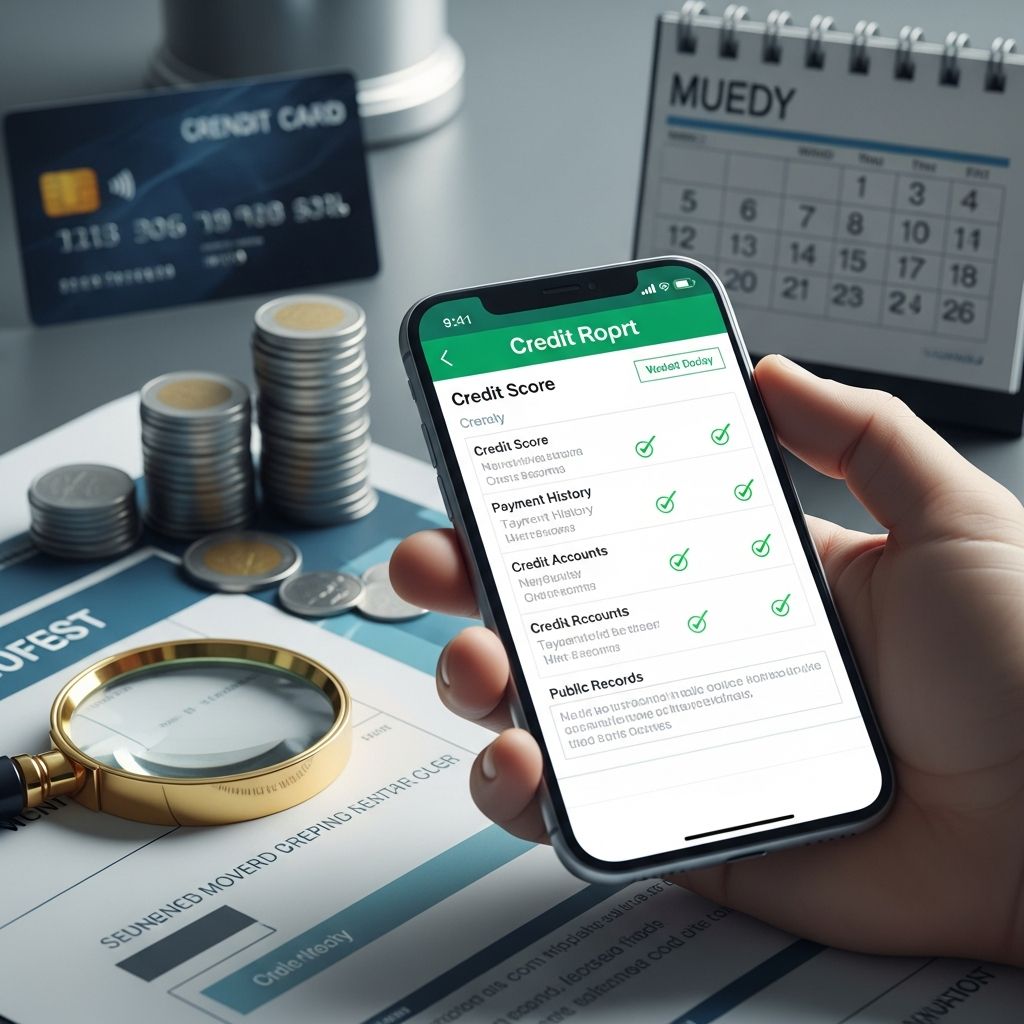
Consumers in the United States now have permanent access to free weekly credit reports from each of the three nationwide credit reporting agencies: Equifax, Experian, and TransUnion. This change gives you powerful tools to monitor your financial reputation, spot mistakes early, and respond quickly to identity theft or fraud.
1. What Changed and Why It Matters
For many years, federal law guaranteed everyone one free credit report every 12 months from each of the three major credit bureaus. During the COVID-19 pandemic, the bureaus temporarily expanded this to free weekly reports to help people manage sudden financial disruptions. That temporary measure has now been made permanent, meaning you can request a free report from each bureau once a week at no cost.
This shift matters because your credit reports influence many key parts of your financial life:
- Loan approvals and interest rates for mortgages, auto loans, and personal loans
- Credit card approvals and credit limits
- Rental housing applications and security deposits
- Insurance pricing in some states
- Certain employment background checks, with your permission
2. Credit Report vs. Credit Score: Know the Difference
People often mix up credit reports and credit scores, but they are not the same thing.
| Feature | Credit Report | Credit Score |
|---|---|---|
| What it is | Detailed record of your credit accounts and history | Numerical summary of your credit risk based on report data |
| Who provides it | Equifax, Experian, TransUnion | Various scoring companies (for example, FICO, VantageScore) |
| Included in free weekly access? | Yes – full reports from all three bureaus | No – scores are often separate products |
| How lenders use it | To review your full borrowing and payment history | To quickly gauge your likelihood of repaying on time |
When you request reports through the official program, you are getting reports only, not your credit score. However, reviewing your reports regularly still helps you understand what drives your scores and how to improve them.
3. What Information Appears in a Credit Report?
Your credit report is essentially a financial profile compiled from information furnished by lenders, collection agencies, and public record sources. Although the exact layout differs between bureaus, reports usually include:
- Personal identification
- Name (and sometimes variations of your name)
- Current and previous addresses
- Social Security number (partially masked)
- Date of birth
- Current or past employers
- Credit accounts (trade lines)
- Credit cards
- Auto, student, personal, and mortgage loans
- Credit limits or loan amounts, balances, and payment history
- Account status (open, closed, paid, charged-off, etc.)
- Collection accounts
- Debts that have been sent to collection agencies
- Original creditor and collection agency information
- Public record information (to the extent permitted by law)
- Some types of bankruptcies and related court data
- Inquiries
- “Hard” inquiries from applications for credit
- “Soft” inquiries from account reviews, pre-approved offers, or your own checks
Credit reports do not include your income, your bank account balances, or your credit score.
4. The Only Official Site for Free Weekly Credit Reports
To use your permanent free weekly access, you must request reports through the official, government-authorized portal:
- AnnualCreditReport.com – the only site explicitly designated by federal law and federal agencies for free reports from all three bureaus.
Other sites may offer “free” reports or scores but can require subscriptions, collect data for marketing, or in worst cases attempt to steal personal information. U.S. government guidance specifically directs consumers to AnnualCreditReport.com or the phone and mail options related to that program.
4.1 Ways to Order Your Free Reports
You can get your reports in several convenient ways linked to the same official program.
- Online: Visit the authorized website and complete the request form for one, two, or all three bureaus at once.
- By phone: Call the toll-free number listed on U.S. government guidance for AnnualCreditReport.com and follow the prompts.
- By mail: Print and complete the official request form and mail it to the address specified in federal resources.
Regardless of how you order, you will not be asked to pay for your weekly reports from Equifax, Experian, or TransUnion through this program.
5. How Often Should You Check Your Reports?
With weekly access, you have flexibility. You do not need to request a report every week, but the option is there when you need it.
Common approaches include:
- Quarterly schedule: Pull one bureau every month on a rotating basis (for example, Equifax in January, Experian in February, TransUnion in March). This spreads monitoring throughout the year.
- Monthly review: Request all three once a month if you are rebuilding credit, dealing with recent fraud, or preparing for a major loan.
- Event-based checks: Order reports before applying for a mortgage or auto loan, after a data breach notice, or if you see unfamiliar activity on accounts.
Regular reviews make it easier to catch problems while they are still small, rather than discovering them when you are denied credit or offered only high interest rates.
6. What to Look For When Reviewing Your Reports
Once you have your reports, review them carefully. Key things to watch for include:
- Identity details
- Check that your name, address, and date of birth are correct.
- Look for addresses or employers you do not recognize.
- Account accuracy
- Verify that each listed account belongs to you.
- Confirm that balances, credit limits, and payment histories are accurate.
- Make sure closed accounts you requested to close are reported correctly.
- Negative information
- Late or missed payments you believe are incorrect.
- Collection accounts for debts you do not recognize or that were already paid.
- Bankruptcies or other public records that appear wrong or outdated.
- Inquiries
- Hard inquiries from lenders you did not apply with (possible fraud).
- Multiple recent hard inquiries you do not remember authorizing.
Discrepancies between bureaus are common because not all lenders report to all three. That is why reviewing each bureau’s report matters.
7. Using Your Reports to Protect Against Identity Theft
Credit reports are one of your most important early-warning systems for identity theft. Unfamiliar accounts or inquiries can indicate that someone is using your information to open credit in your name.
If you suspect identity theft based on your report:
- Contact the affected lender or creditor immediately.
- Consider placing a fraud alert or credit freeze with the bureaus, as permitted under federal law.
- Review government guidance on creating an identity theft report and recovery plan.
- Continue pulling free weekly reports to monitor for additional suspicious activity.
8. What If You Find an Error?
Federal law gives you the right to dispute inaccurate or incomplete information on your credit reports. When you submit a dispute, the credit bureau must investigate, usually within 30 days, and update or remove information that cannot be verified.
Basic steps to dispute an error include:
- Identify the specific item (for example, wrong late payment, incorrect balance, or account that is not yours).
- Gather supporting documents such as statements, payment confirmations, or letters from lenders.
- Submit your dispute to the credit bureau that shows the error, either online, by mail, or as directed on your report.
- Consider also disputing directly with the lender or collection agency that furnished the information.
- Keep copies of all correspondence and note dates and reference numbers.
If the investigation confirms the error, the bureau must correct it on your report, and in many cases send corrected information to recent recipients of your report.
9. Extra Free Reports in Special Situations
In addition to the permanent weekly access for everyone, federal law and regulations provide extra rights to free reports if certain events occur.
You may be entitled to additional free copies of your credit reports if:
- You are unemployed and plan to look for a job within 60 days.
- You receive public assistance benefits.
- You believe your report contains inaccuracies because of fraud or identity theft.
- You are denied credit, insurance, or employment based on your report, in which case the notice you receive should explain how to request a free copy within a limited time.
These extra rights coexist with your permanent weekly access and can help during times of financial stress or after fraud.
10. Practical Tips for Making the Most of Weekly Access
Having more frequent access is most helpful if you use it strategically. Consider these practical ideas:
- Create a review routine
- Set calendar reminders to download and review reports on a consistent schedule.
- Keep a simple checklist: identity info, accounts, negative items, inquiries.
- Secure your copies
- If you save reports digitally, encrypt or password-protect the files.
- If you print them, store in a safe place and shred when no longer needed.
- Track changes over time
- Note when paid-off debts fall off or when on-time payment history grows.
- Watch how closing or opening accounts changes your overall picture.
- Coordinate with score tools
- If your bank or card issuer offers a free credit score, compare changes in your score with updates in your reports to see what drives improvements or declines.
11. Frequently Asked Questions (FAQs)
Q1: Is it really free to get weekly reports from all three bureaus?
Yes. The three nationwide credit reporting agencies have permanently extended free weekly access to credit reports through the official AnnualCreditReport.com program. You do not need to pay any fee to receive these weekly reports.
Q2: Will checking my own credit reports hurt my credit score?
No. Pulling your own credit reports through the authorized program is considered a soft inquiry and does not affect your credit scores. Only hard inquiries from applying for new credit may have a small, temporary effect.
Q3: Do these free weekly reports include my credit score?
No. The free weekly access provides your credit reports, which are detailed records of your credit history, but not your numerical credit score. Some lenders, banks, or credit card issuers offer free credit scores separately, often updated monthly or weekly.
Q4: Why are there differences between my Equifax, Experian, and TransUnion reports?
Not all lenders and collection agencies report to all three bureaus, and they may report on different schedules. As a result, an account or balance might appear on one report before another, or might never appear with a particular bureau. That is why it is important to review all three.
Q5: How long does negative information stay on my credit reports?
In many cases, negative information such as late payments, certain collection accounts, and some types of bankruptcy can remain on your reports for up to seven to ten years, depending on the item and applicable law. Over time, the impact of older negative items generally decreases, especially as you build a strong recent payment history.
References
- You now have permanent access to free weekly credit reports — Federal Trade Commission. 2023-10-13. https://consumer.ftc.gov/node/76826
- How to Get Your Free Credit Reports From the Major Credit Bureaus — NerdWallet. 2023-10-24. https://www.nerdwallet.com/finance/learn/how-to-use-annualcreditreport-com
- Learn about your credit report and how to get a copy — USA.gov. 2024-03-12. https://www.usa.gov/credit-reports
- Get a Free Credit Report — Equifax. 2024-02-01. https://www.equifax.com/personal/credit-report-services/free-credit-reports/
- Get Free Credit Reports From All 3 Credit Bureaus — Experian. 2024-04-05. https://www.experian.com/blogs/ask-experian/credit-education/report-basics/my-credit-report/
- Credit Bureaus Offer Permanent, Free Weekly Credit Report Access — Consumer Reports. 2023-09-21. https://www.consumerreports.org/money/credit-scores-reports/credit-bureaus-permanent-free-weekly-credit-report-access-a2226546788/
Similar Articles








Read full bio of medha deb




