
HOA Foreclosure Rights and Protections in Ohio
Understand how Ohio homeowners associations can foreclose on properties and your legal defenses.
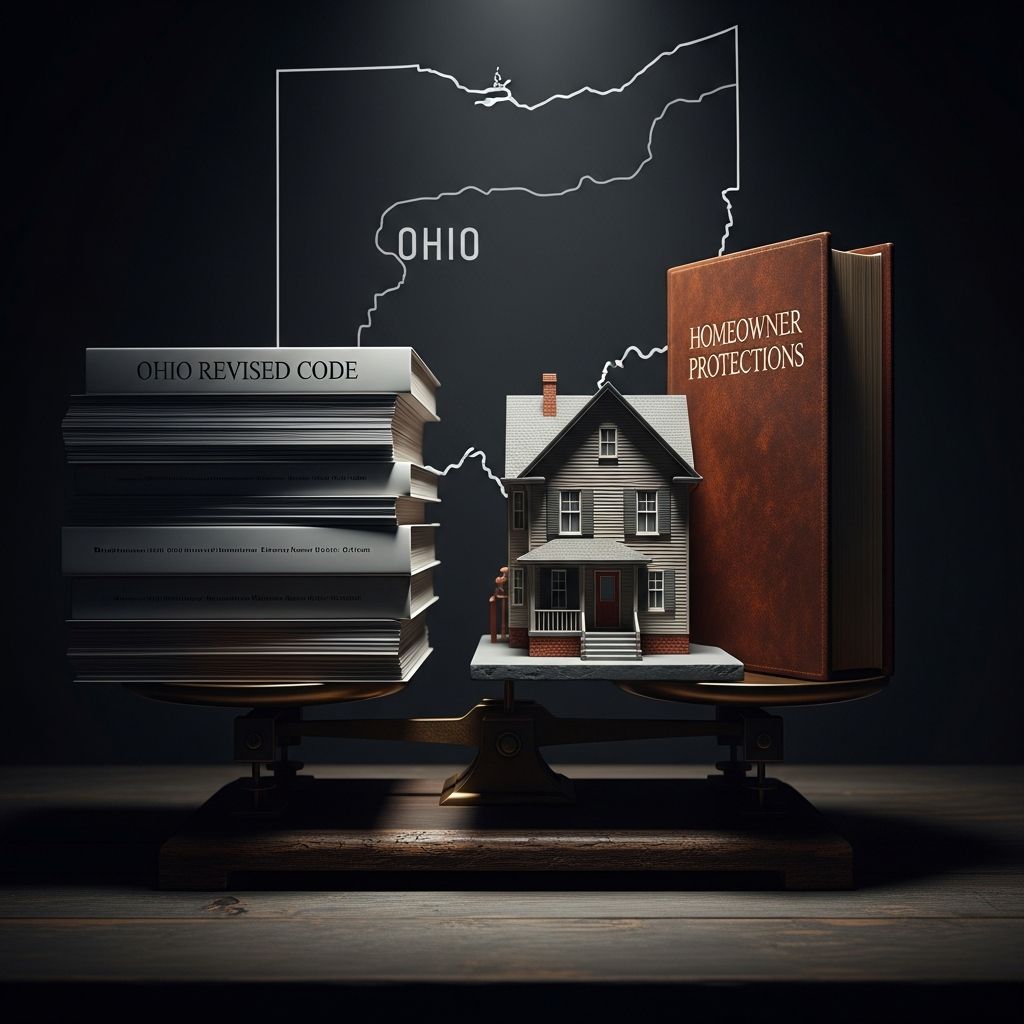
Understanding HOA Foreclosure Authority in Ohio
Homeowners’ associations and condominium owners’ associations in Ohio possess the legal authority to initiate foreclosure proceedings against properties when owners fail to maintain current payments on their assessments and related fees. This foreclosure power exists independently of a homeowner’s mortgage status, meaning that even property owners who remain current on their mortgage obligations can face foreclosure if they fall behind on HOA assessments. The right to foreclose stems from state law provisions that grant associations specific remedies for collecting unpaid dues, and this authority applies across the state unless the association’s governing documents explicitly prohibit such action.
The foreclosure mechanism available to Ohio associations operates similarly to the process used by mortgage lenders. An association cannot foreclose simply because it wishes to do so; rather, it must follow prescribed legal procedures and satisfy specific statutory requirements. Understanding these requirements is essential for homeowners who may be at risk of losing their property through an association foreclosure.
The Lien Process: Creating the Foundation for Foreclosure
Before an HOA or COA can pursue foreclosure, it must first establish a lien against the property. A lien serves as a legal claim on the real estate that protects the association’s financial interest and creates a cloud on the property’s title. In Ohio, an association becomes entitled to file a lien once the assessment amount reaches ten days past due. This relatively short grace period means that homeowners must act quickly to address payment delinquencies before a lien is recorded against their property.
The lien becomes legally effective and enforceable only after the association records a certificate of lien in the county records office where the property is located. This recording step is crucial because it provides public notice of the association’s claim and creates a legal encumbrance on the title. Once recorded, the lien can cloud the property’s title, making it significantly more difficult for the homeowner to sell the property, refinance an existing mortgage, or even obtain a home equity line of credit.
What Costs and Charges Can Be Included in a Lien
Ohio law permits associations to include various charges and costs in their lien unless the governing documents specify otherwise. The types of expenses that may be included typically encompass:
- All unpaid regular assessments and special assessments
- Interest charges accrued on the unpaid balance at the rate established by the association
- Late fees and penalties imposed under the association’s rules
- Collection costs and attorney’s fees incurred by the association
- Administrative costs related to lien preparation and recording
The ability to include these ancillary costs means that a relatively modest unpaid assessment can quickly balloon into a substantially larger debt obligation. A homeowner who owes $500 in assessments might find themselves facing a lien for significantly more once late fees, attorney’s fees, and collection costs are added. This escalation underscores the importance of addressing payment issues before they progress to the lien stage.
Timeline Requirements for Initiating Foreclosure
Ohio law imposes an important temporal limitation on HOA and COA foreclosure authority. An association must initiate foreclosure proceedings within five years after recording the lien certificate in the county records. If the association fails to commence foreclosure within this five-year window, the lien becomes invalid and unenforceable. This requirement prevents associations from maintaining indefinite liens on properties and provides homeowners with a degree of certainty regarding their long-term exposure to foreclosure risk.
The five-year deadline is measured from the date the lien is recorded, not from the date assessments first became delinquent. Therefore, if an association records a lien and then does nothing for five years, it loses the right to foreclose. This timeline requirement may provide strategic opportunities for homeowners facing foreclosure, particularly if the association has delayed action for an extended period.
The Foreclosure Mechanism: Court-Supervised Process
When an HOA or COA decides to foreclose, it must employ the same procedure used for mortgage foreclosures in Ohio. This requirement ensures that homeowners receive consistent legal protections across different types of foreclosures. The process typically involves the following steps:
- Filing a foreclosure action — The association must file a lawsuit in the appropriate court with jurisdiction over the property
- Proper notice — The homeowner must receive written notice of the foreclosure action, providing an opportunity to respond and defend against the claim
- Court proceedings — The homeowner may challenge the foreclosure, dispute the amount owed, or raise legal defenses
- Court judgment — If the association prevails, the court issues an order authorizing foreclosure
- Sheriff’s sale — The property is sold at a public auction conducted by the county sheriff to recover the unpaid assessments
This court-supervised approach differs from some non-judicial foreclosure procedures and provides homeowners with a formal opportunity to contest the association’s claims before losing their property.
Lien Priority and Its Impact on Foreclosure Outcomes
A critical factor determining whether an HOA or COA foreclosure will actually result in the loss of a property relates to lien priority. The priority of a lien determines the order in which claims against the property are satisfied from the proceeds of a foreclosure sale. In Ohio, an HOA lien or COA lien automatically has priority over liens recorded at a later date. However, important exceptions exist to this general rule.
The primary exception involves mortgages and deeds of trust. In most circumstances, the mortgage lender’s lien will have priority over the association’s lien, meaning the mortgage lender is paid first from foreclosure proceeds. This priority structure exists because the mortgage lender typically records its lien before the association files its lien. After the first lienholder receives payment in full, any remaining proceeds go to the second lienholder, and the process continues through the chain of lienholders.
A critical practical consequence of this priority arrangement is that an HOA or COA foreclosure will usually not eliminate or discharge an existing mortgage. The property typically cannot be sold free of the mortgage debt through an association foreclosure. This reality means that in many situations, a homeowner facing HOA foreclosure will also be dealing with the mortgage lender’s interest in the property.
Adjusting Lien Priority Through Governing Documents
While the default lien priority rules apply in most situations, the association’s governing documents or state law may provide mechanisms to adjust priority in specific circumstances. These adjustments can sometimes benefit homeowners by reducing the likelihood of foreclosure or the consequences of foreclosure. Homeowners facing foreclosure should carefully review their association’s declaration and bylaws to determine whether any priority modifications exist.
Legal Defenses and Homeowner Protections
Homeowners facing an HOA or COA foreclosure action should not assume the association will automatically prevail. Ohio law and general foreclosure principles provide homeowners with several potential defenses and protections. Common defenses include challenges based on the association’s conduct or decision-making processes:
- The association charged excessive or unreasonable assessment amounts
- The association imposed improper fees that exceed authorized limits
- The association failed to follow required procedures under state law or the governing documents
- The association did not provide proper notice before taking lien or foreclosure action
- The calculation of the amount owed contains mathematical or accounting errors
- The association violated fair dealing and good faith obligations
These defenses may not eliminate the entire debt obligation, but they can potentially reduce the amount owed or delay the foreclosure process, providing time for the homeowner to negotiate a payment plan or arrange alternative financing.
Homeowner Rights and Documentation Access
Ohio law provides homeowners with certain rights to access information and documents from their associations. Members are entitled to review the Declaration of Covenants, Conditions, and Restrictions, the association’s bylaws, and meeting minutes. This access allows homeowners to understand their obligations, verify that assessments are properly calculated, and determine whether the association is operating in compliance with its governing documents.
Additionally, homeowners have the right to receive proper written notice before foreclosure proceedings commence. This notice requirement ensures that homeowners are aware of delinquencies and have an opportunity to cure payment deficiencies before the association escalates to lien filing or foreclosure action.
Practical Steps for Homeowners Facing Foreclosure
A homeowner who receives notice of HOA or COA foreclosure action should take prompt action to protect their interests. First, the homeowner should carefully review all documentation provided by the association to verify that the amount claimed is accurate. Second, the homeowner should respond to the foreclosure lawsuit within the required timeframe, either personally or through legal counsel. Third, the homeowner should consider negotiating with the association to establish a payment plan or settlement agreement that allows resolution of the delinquency without foreclosure.
Consulting with an attorney who specializes in foreclosure defense and HOA law is highly advisable. An attorney can evaluate the association’s compliance with legal requirements, identify potential defenses, and represent the homeowner’s interests throughout the process.
Frequently Asked Questions
Q: Can an HOA foreclose on my home even if I am current with my mortgage payments?
A: Yes. An HOA’s right to foreclose depends on your payment status with the association, not your mortgage lender. Even homeowners who remain completely current with mortgage payments can lose their homes to HOA foreclosure if they fall significantly behind on association assessments.
Q: How much behind do I need to be on assessments before the HOA can file a lien?
A: An HOA or COA can file a lien once the assessment amount reaches just ten days late. This means the lien can be recorded very quickly after a missed payment, making it important to address delinquencies promptly.
Q: Can the HOA include attorney’s fees and collection costs in the lien amount?
A: Yes, unless the governing documents provide otherwise. Ohio law permits associations to include attorney’s fees, collection costs, late fees, and interest charges in the lien, which can significantly increase the total amount owed.
Q: What happens to my mortgage if the HOA forecloses?
A: In most situations, the mortgage lender’s lien has priority over the HOA lien, meaning the mortgage will not be discharged through HOA foreclosure. The mortgage lender will typically be paid first from foreclosure sale proceeds.
Q: How long does the HOA have to start foreclosure after recording a lien?
A: The HOA must initiate foreclosure proceedings within five years after the lien is recorded. If the association fails to file foreclosure within this timeframe, the lien becomes invalid and unenforceable.
Q: Can I challenge the amount the HOA claims I owe in foreclosure?
A: Yes. Homeowners have the right to respond to foreclosure lawsuits, challenge the accuracy of the amount claimed, and raise defenses based on the association’s conduct or failure to follow required procedures.
Q: What should I do if I receive a foreclosure notice from my HOA?
A: Contact an attorney immediately, verify the accuracy of the claimed debt, respond to the foreclosure lawsuit within the required timeframe, and consider negotiating with the association regarding a payment plan or settlement.
References
- Ohio Revised Code § 5312.12 — Ohio General Assembly. Accessed January 17, 2026. https://codes.ohio.gov/ohio-revised-code/section-5312.12
- Ohio Revised Code § 5311.18 — Ohio General Assembly. Accessed January 17, 2026. https://codes.ohio.gov/ohio-revised-code/section-5311.18
- Ohio HOA and COA Foreclosures — Nolo. https://www.nolo.com/legal-encyclopedia/ohio-hoa-foreclosures.html
- Laws on HOA Foreclosures: A Columbus, OH Guide — Columbus Association Management. https://www.columbusassociationmanagement.com/blog/laws-on-hoa-foreclosures-a-columbus-oh-guide
- Ohio HOA Laws and Regulations – 2026 Guide — Steadily. January 2026. https://www.steadily.com/blog/ohio-hoa-laws-regulations
Similar Articles








Read full bio of medha deb




