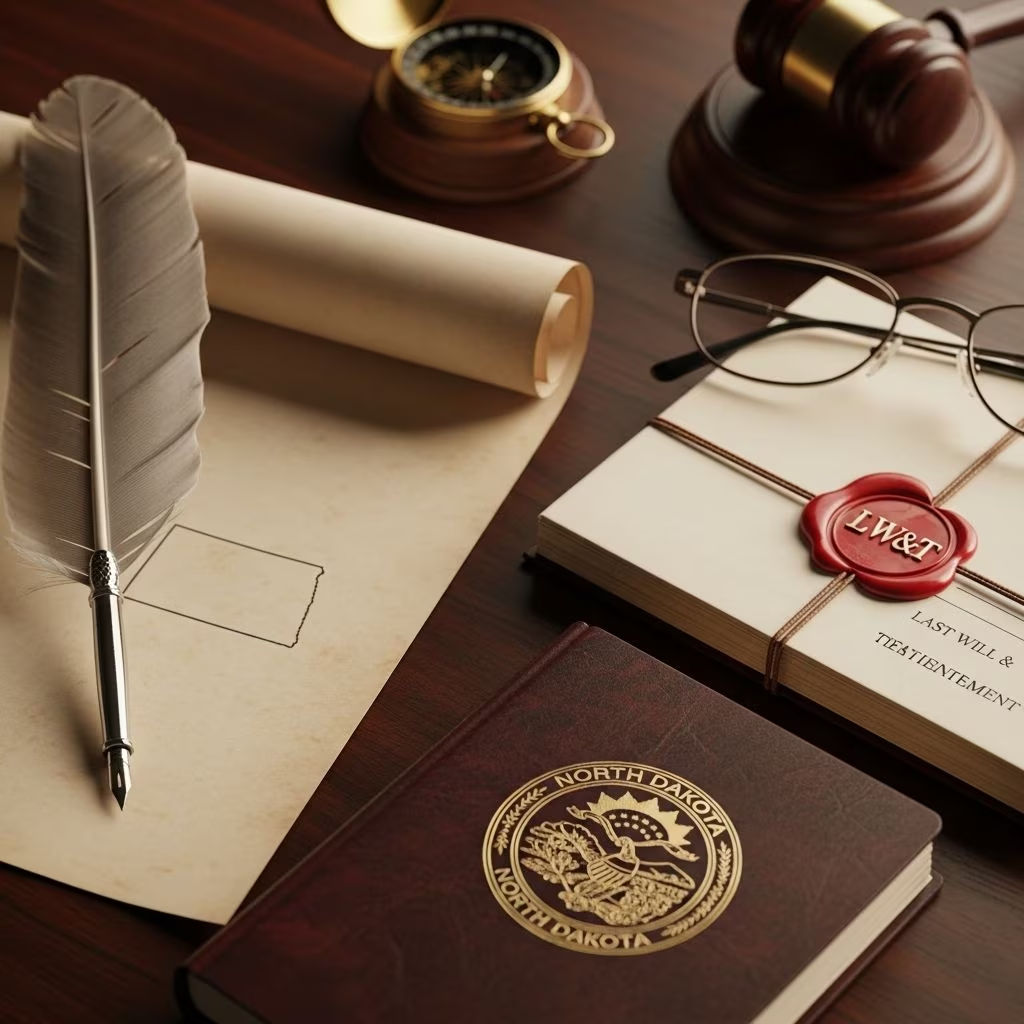
Planning for the distribution of your assets after death is a critical step in estate planning. In North Dakota, a last will and testament allows individuals to specify how their property should be handled, appoint guardians for minor children, and designate an executor to manage the process. Governed by the North Dakota Century Code Title 30.1, Uniform Probate Code, Chapter 8, these documents ensure your wishes are legally binding when properly executed.
Legal Eligibility to Create a Will
To draft a valid will in North Dakota, the creator—known as the testator—must meet specific criteria. Any adult aged 18 or older, or a lawfully married minor, qualifies if they are of sound mind. Sound mind means the individual understands the nature of their assets, recognizes their natural heirs, and comprehends the effects of the will.
Competency is presumed unless proven otherwise through prior legal adjudication of incompetence. This threshold ensures that only those with mental capacity can dictate their estate’s future, protecting against challenges based on diminished capacity.
Essential Components of a Valid Will
A North Dakota will must be in writing, either typed or handwritten, and include key elements: identification of the testator, specific bequests of property, naming of beneficiaries, appointment of an executor, and provisions for any minor children or pets if desired. The document should clearly revoke prior wills to avoid conflicts.
- Declaration of Intent: State explicitly that this is your last will and testament, revoking all previous versions.
- Asset Distribution: Detail specific items (specific bequests), percentages of the estate (general bequests), or residues to heirs.
- Executor Appointment: Name a trusted person to oversee probate; include alternates.
- Guardian Designation: For parents, specify guardians for minors.
Clarity in language prevents disputes, as courts interpret ambiguous terms strictly under state law.
Execution Requirements for Formal Wills
Formal witnessed wills demand strict adherence to execution rules for validity. The testator must sign the document in the presence of at least two competent witnesses, who then sign in each other’s and the testator’s presence within a reasonable time. Alternatively, the testator can acknowledge the will before a notary public.
If the testator cannot sign due to physical limitations, another person may do so under their conscious direction and presence. Witnesses should be disinterested parties—those not named as beneficiaries—to minimize conflict claims, though interested witnesses are not disqualified.
| Execution Method | Requirements | Advantages |
|---|---|---|
| Witnessed Signing | Testator signs; 2+ witnesses sign in presence | Strong evidentiary value in probate |
| Notary Acknowledgment | Testator acknowledges before notary | Simplifies proof; no witness testimony needed if self-proved |
| Directed Signature | Proxy signs in testator’s presence/direction | Accommodates disabilities |
Holographic Wills: Handwritten Alternatives
North Dakota uniquely recognizes holographic wills, which are entirely handwritten by the testator and signed by them. No witnesses or notary are required, making this option convenient for emergencies. However, all material provisions—including bequests and signature—must be in the testator’s handwriting for validity.
Courts scrutinize holographic wills closely for authenticity, often requiring handwriting analysis. While flexible, they risk invalidation if incomplete or unclear, so formal wills are preferable for complex estates.
Self-Proving Affidavits for Streamlined Probate
To bypass witness testimony during probate, attach a self-proving affidavit. The testator and witnesses swear before a notary that the will was executed properly, confirming the testator’s soundness of mind and voluntariness. This affidavit, integrated or attached, renders the will ‘self-proved,’ facilitating informal probate.
Self-proving status presumes authenticity unless contested, saving time and costs in North Dakota courts.
Appointing and Empowering Your Executor
The executor, or personal representative, administers the estate: collecting assets, paying debts, filing taxes, and distributing inheritances. Choose someone reliable, organized, and preferably local. North Dakota law permits any competent adult, including out-of-state residents, but in-state is ideal for efficiency.
Executors serve with or without court supervision in informal probate. They must act prudently, facing liability for mismanagement. Provide them with asset lists, account details, and contact information to ease duties.
- Primary Executor: First choice.
- Successor: Backup if primary cannot serve.
- Powers: Specify broad authority to sell property, borrow funds, etc.
Common Will Provisions and Bequests
North Dakota wills support diverse bequests: specific (e.g., family heirlooms to named individuals), general (e.g., fixed sums), and residuary (remainder of estate). Separate writings can amend tangible personal property distributions if referenced in the will.
Include clauses for simultaneous death, no-contest (disinherits challengers), and debt payment from the estate before distributions. For blended families, consider trusts to protect inheritances.
Revoking or Amending Your Will
Wills are ambulatory, revocable until death. Revocation occurs via a new will expressly revoking priors, physical destruction with intent (burning, tearing), or revocatory acts in the testator’s presence.
Codicils amend specific parts without rewriting the entire document, but require same formalities. Subsequent wills presume replacement if fully dispositive, or supplementation otherwise, rebuttable by evidence.
Life changes like marriage, divorce, births, or asset shifts necessitate updates to reflect intentions.
Probate Process in North Dakota
Upon death, the executor files the will with the district court in the county of residence. North Dakota’s Uniform Probate Code favors informal probate for uncontested estates: supervised only if issues arise. Creditors get four months to claim debts post-notice.
- Filing Petition: Submit will and death certificate.
- Notice: To heirs and creditors.
- Inventory: Appraise assets.
- Distribution: After debts/taxes.
- Closing: Court approval.
Small estates under $50,000 may use simplified affidavits, avoiding full probate.
Special Considerations for Families and Assets
Parents must name guardians for minors; courts appoint if absent. Pets lack legal inheritance rights, but trusts can fund care. Joint property with survivorship passes outside the will. Update for divorce, as ex-spouses are presumed revoked unless specified.
Digital assets require specific provisions or powers of attorney. Taxes: North Dakota has no estate tax, but federal may apply over exemptions.
Intestacy: Dying Without a Will
Intestate succession prioritizes spouse, children, parents, siblings per NDCC 30.1-09. Community property rules apply to marital assets. A will overrides this, ensuring control.
Frequently Asked Questions
Can I use an out-of-state will in North Dakota?
Yes, if validly executed under that state’s laws.
Do witnesses need to be North Dakota residents?
No, but disinterested parties are recommended.
Is notarization mandatory?
No, but useful for acknowledgment or self-proving.
How often should I review my will?
After major life events like births, deaths, marriages, or moves.
Can I disinherit my spouse?
Limited by elective share rights.
What if my holographic will is lost?
Proof of content and handwriting needed for probate.
References
- Basic Requirements for a Last Will and Testament in North Dakota — LawInfo. Accessed 2026. https://www.lawinfo.com/resources/wills/north-dakota/
- North Dakota Last Will and Testament Guide — German Law. Accessed 2026. https://germanlawgf.com/blog/wills/north-dakota-last-will-and-testament-guide/
- North Dakota Century Code Title 30.1 Chapter 8: Wills — North Dakota Legislative Branch. Accessed 2026. https://ndlegis.gov/cencode/t30-1c08.pdf
- A Legal Research Guide for North Dakota Wills — North Dakota Courts. 2025-01. https://www.ndcourts.gov/Media/Default/Legal%20Resources/Legal%20Self%20Help/Probate/Wills%20Research%20Guide.pdf
- How to Make a Will in North Dakota — Nolo. 2024. https://www.nolo.com/legal-encyclopedia/north-dakota-make-will-31737.html