
Nevada Crash Laws: 5 Key Steps To Protect Your Claim
Essential guide to Nevada's crash reporting, fault rules, insurance mandates, and claim deadlines for drivers.
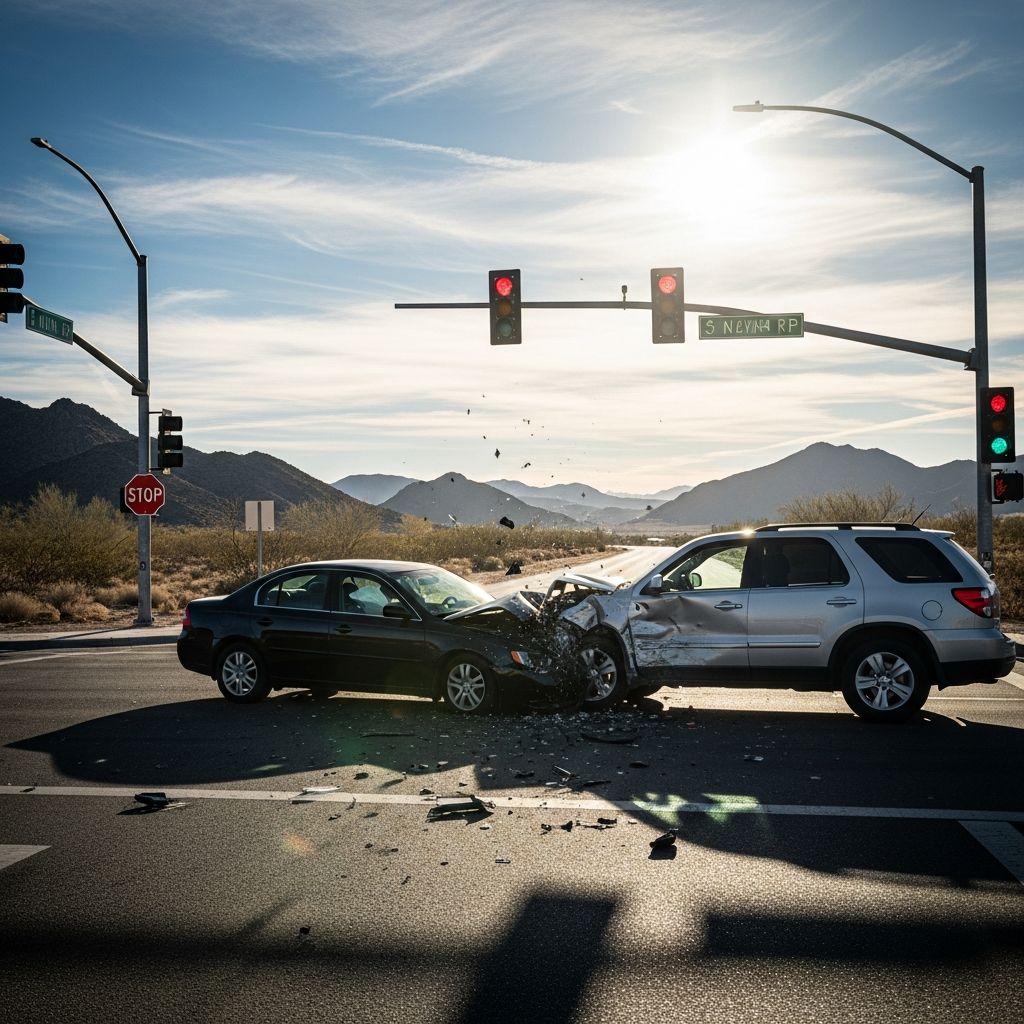
Nevada operates under a fault-based system for vehicle crashes, meaning the driver responsible for causing the incident bears financial liability for damages and injuries. This approach contrasts with no-fault states, holding negligent parties accountable through their insurance or personal assets.
Understanding Fault Determination in Nevada Crashes
In Nevada, crashes are resolved by identifying the at-fault driver, who must compensate victims for losses including medical expenses, vehicle repairs, and lost income. Courts and insurers investigate factors like speeding, failure to yield, distracted driving, or DUI to assign responsibility.
Nevada emphasizes preventability, with recent legislation shifting terminology from ‘accidents’ to ‘crashes’ to underscore that most incidents stem from driver error rather than inevitability.
Modified Comparative Negligence: The 50% Bar Rule
Nevada follows modified comparative negligence under NRS 41.141, allowing recovery if a driver’s fault is less than 50%. Compensation reduces proportionally to the claimant’s fault percentage. For instance, if damages total $100,000 and you’re 20% at fault, recovery is $80,000. Exceeding 50% fault bars recovery entirely.
| Scenario | Your Fault % | Total Damages | Recoverable Amount |
|---|---|---|---|
| Minor contribution | 10% | $50,000 | $45,000 |
| Shared fault | 40% | $100,000 | $60,000 |
| Major fault | 60% | $75,000 | $0 (barred) |
This rule promotes careful driving while providing recourse for partially responsible victims.
Mandatory Insurance Coverage Requirements
Nevada mandates minimum liability insurance per NRS 485.185: $25,000 bodily injury per person, $50,000 per accident, and $20,000 property damage. Proof is required for registration, renewal, or post-crash police requests.
Violations trigger fines ($600–$1,000 first offense), license suspension, registration hold, or vehicle impoundment. Uninsured drivers risk personal liability for crashes.
- Bodily Injury (Per Person): $25,000 covers medical and related costs for one individual.
- Bodily Injury (Per Accident): $50,000 total for multiple victims.
- Property Damage: $20,000 for vehicle and other losses.
Immediate Post-Crash Responsibilities
Drivers must stop immediately, provide aid to injured parties, and exchange information (name, address, vehicle details, insurance). Leaving the scene with injury/death is a felony; even minor crashes require stopping.
Key actions include:
- Ensuring safety by moving vehicles if possible.
- Calling 911 for injuries or major damage.
- Documenting the scene with photos of vehicles, injuries, road conditions, and skid marks.
- Obtaining witness statements and officer details if police arrive.
Official Reporting Obligations
Under NRS 484E.030, report crashes involving injury, death, or $750+ property damage. If police do not respond, submit DMV Form SR-1 within 10 days. Failure risks license suspension.
Police reports detail diagrams, citations, fault opinions, witnesses, and conditions, serving as critical evidence for claims.
Deadlines for Filing Claims and Lawsuits
Personal injury lawsuits must file within 2 years (NRS 11.190); property damage within 3 years. For a March 15, 2024 crash, injury claims due by March 15, 2026; property by March 15, 2027.
Exceptions include minors (tolled until adulthood), wrongful death, or delayed injury discovery. Early filing preserves evidence like witness memories and vehicle conditions.
Steps to Build a Strong Claim After a Crash
- Seek Medical Care: Document all treatments; delays can weaken claims.
- Notify Insurance: Report promptly without admitting fault.
- Gather Evidence: Photos, reports, medical records, wage statements.
- Avoid Statements: Limit discussions with insurers until consulting an attorney.
- Track Damages: Include economic (bills, repairs) and non-economic (pain, suffering) losses.
Special Considerations for Vulnerable Drivers
Teen drivers under Graduated Driver Licensing face passenger limits and curfews; parents may share liability for family vehicle use. Trucks must maintain 500 feet following distance in single-lane traffic.
Hit-and-Run Consequences
Fleeing injury/death scenes constitutes a felony with severe penalties. Even property-only hit-and-runs require information exchange.
Frequently Asked Questions
Q: Is Nevada an at-fault state for crashes?
A: Yes, Nevada is at-fault; the responsible driver pays via insurance.
Q: What if I’m partially at fault?
A: Recover if under 50% fault, reduced by your share.
Q: When must I file a DMV report?
A: Within 10 days for $750+ damage or injuries if no police response.
Q: What are minimum insurance limits?
A: $25k/$50k bodily injury, $20k property damage.
Q: How long to sue for injuries?
A: 2 years from crash date.
Navigating Claims Effectively
Understanding these laws empowers drivers to protect rights post-crash. Consult professionals for case-specific advice, as nuances like evidence strength impact outcomes. Proactive steps maximize fair compensation while complying with obligations.
References
- How Long After a Car Accident Can You File a Claim in Nevada? — Joey Gilbert Law. 2024. https://joeygilbertlaw.com/blog/how-long-after-a-car-accident-can-you-file-a-claim-in-nevada/
- Police Reports After Car Accident or Injury in Nevada 2026 — Sam & Ash Law. 2026. https://samandashlaw.com/resources/police-reports-after-car-accident-or-injury-in-nevada-2026-how-to-get-yours-why-it-matters/
- Nevada Car Accident Laws: What You Need to Know — Karns & Karns. N/A. https://www.karnsandkarns.com/nevada-car-accident-laws-what-you-need-to-know/
- Nevada Car Accident Laws — Nolo. N/A. https://www.nolo.com/legal-encyclopedia/nevada-car-accident-laws.html
- Nevada Car Accident Laws You Should Know — Blake Friedman Law. N/A. https://blakefriedmanlaw.com/nevada-car-accident-laws/
- Nevada Car Accident Laws — Vegas Valley Law. N/A. https://vegasvalleylaw.com/blog/nevada-car-accident-laws/
Similar Articles








Read full bio of Sneha Tete




