
Driven into Debt: Municipal Fines & Equality
Exploring how vehicle impoundment and municipal debt drive inequality.
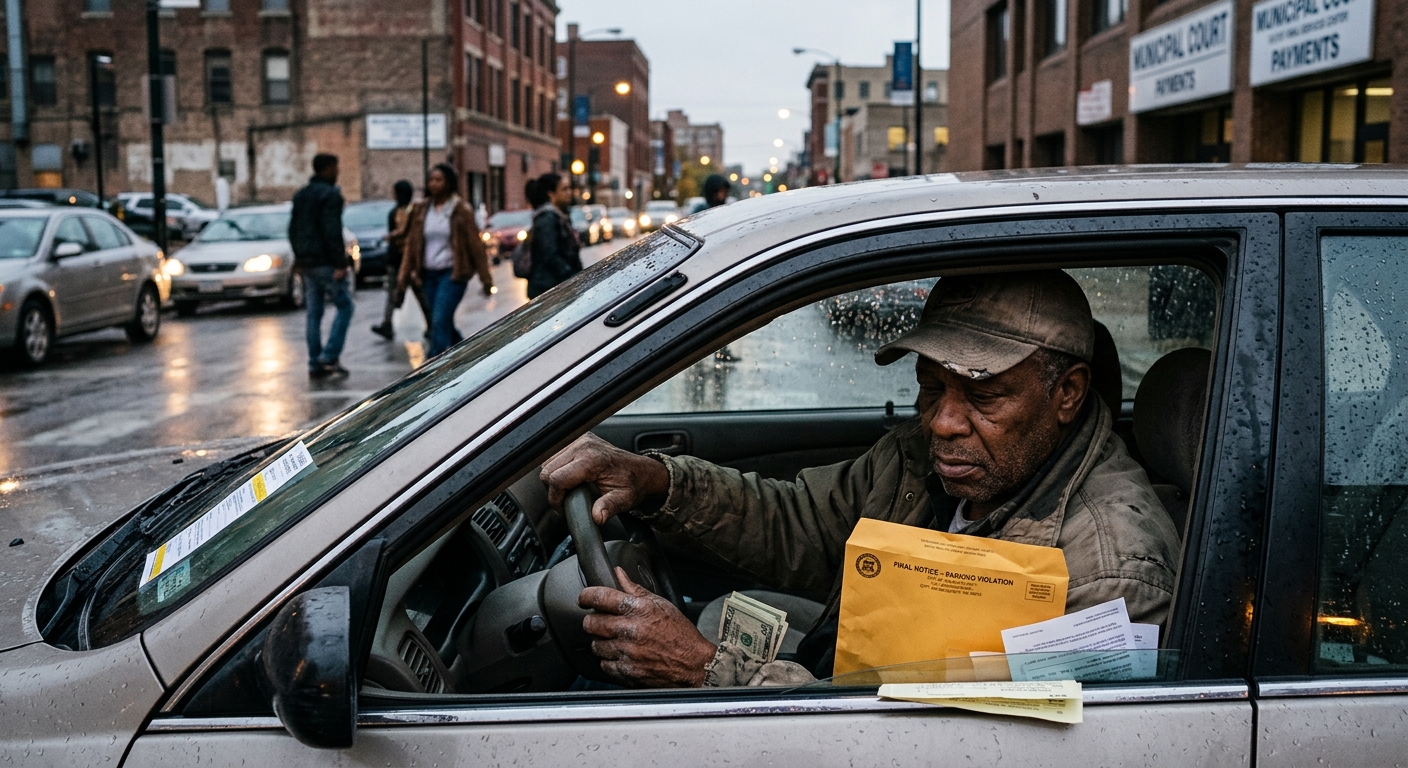
The automobile is often heralded as a symbol of American freedom and mobility, yet for millions of low-income individuals, it has increasingly become a liability tightly linked to overwhelming municipal debt. For many families, losing access to a personal vehicle does not just mean a minor inconvenience or a change in commuting habits; it signifies an immediate threat to their livelihood, housing stability, and overall economic survival. When local governments seize cars to collect unpaid tickets or traffic fines, the practice sets off a cascading series of financial catastrophes. This comprehensive overview delves deeply into the intricacies of municipal fine collection, the refuge that economically distressed individuals seek in the bankruptcy system, the impact of recent judicial interpretations—including significant Supreme Court rulings—and the broader implications for racial justice and economic equity in the United States.
The Escalation of Municipal Debt: From Minor Infractions to Major Crises
Municipalities across the country rely heavily on various revenue streams to fund essential public services, infrastructure, and administrative overhead. While property taxes, sales taxes, and state grants are traditional and progressive methods of funding, the past several decades have seen a steady, widespread increase in municipal reliance on fines, fees, and civil forfeitures. What begins as a relatively minor infraction—such as a single parking ticket, an expired vehicle registration, or an automated red-light camera citation—can quickly spiral entirely out of control for an individual living paycheck to paycheck.
Many local governments impose steep late fees, collection surcharges, and compounding interest on unpaid tickets. If an individual lacks the liquid savings to pay a $50 ticket immediately, that initial amount can effortlessly double or triple within a matter of weeks. Once a specific, often surprisingly low threshold of debt is reached, cities employ aggressive collection tactics. One of the most severe methods is the deployment of the “boot” (a heavy device that physically immobilizes the vehicle) or outright impoundment, where the vehicle is towed to a city lot.
The logic from the municipality’s perspective is straightforward: holding a valuable, essential asset hostage forces the debtor to prioritize paying the city. However, this strategy is inherently flawed because it assumes the debtor possesses the hidden financial capacity to clear the debt and is merely choosing not to. In reality, the vast majority of people who fail to pay minor traffic citations do so because they are experiencing genuine, severe financial hardship, not out of malice or defiance.
Chapter 13 Bankruptcy: A Shield Under Siege
Faced with the sudden loss of their primary mode of transportation and lacking the funds to reclaim it, financially distressed individuals frequently turn to the federal bankruptcy system as a last resort for relief. Chapter 13 bankruptcy is particularly relevant and widely utilized in these exact scenarios. Unlike Chapter 7 bankruptcy, which typically involves liquidating a debtor’s non-exempt assets to discharge unsecured debt entirely, Chapter 13 allows debtors to reorganize their financial obligations. It enables them to establish a court-approved repayment plan, allowing them to pay off a portion of their debts over a period of three to five years while retaining their essential property.
One of the most powerful and immediate features of filing for any form of bankruptcy is the “automatic stay.” This critical legal provision functions as a sweeping, immediate injunction that halts all collection activities, foreclosures, wage garnishments, and property repossessions the exact moment a bankruptcy petition is officially filed with the court. For years, debtors successfully relied on the automatic stay to force municipalities to release impounded vehicles back into their possession. The foundational premise was logical: the vehicle was essential for the debtor to commute to work, generate an income, and thereby fulfill the financial obligations outlined in their new Chapter 13 repayment plan.
The Supreme Court Verdict: Navigating the Complexities of the Automatic Stay
The long-held assumption among many bankruptcy courts that an automatic stay inherently forces creditors to return previously seized property was vigorously challenged in the legal arena. This conflict ultimately culminated in a defining Supreme Court case in 2021, known as City of Chicago v. Fulton. The core legal dispute centered on whether a creditor’s “mere retention” of property that was lawfully seized prior to a bankruptcy filing violated Section 362(a)(3) of the U.S. Bankruptcy Code, which explicitly prohibits any act to exercise control over property of the bankruptcy estate.
In a unanimous decision that sent shockwaves through consumer bankruptcy practices, the Supreme Court ruled that passively holding onto an impounded vehicle does not violate the automatic stay. The Court determined through a textual interpretation that the statute requires an “affirmative act” to alter the status quo of the estate. By merely keeping a previously seized vehicle parked in a municipal impound lot, the creditor is maintaining the pre-bankruptcy status quo, not committing a new act of control.
While debtors still possess legal avenues to recover their seized vehicles—most notably by filing a formal motion for turnover under Section 542 of the Bankruptcy Code—the Supreme Court’s ruling significantly shifted the balance of power back toward municipal creditors. It effectively removed the immediate, automatic mechanism for a vehicle’s return, forcing debtors into a slower, more complex, and often financially burdensome adversarial legal procedure to regain their cars. In the context of employment, where missing a few days of work can result in termination, this legal delay can be utterly devastating.
Systemic Inequities: The Disproportionate Burden on Communities of Color
The aggressive enforcement of municipal fines and the subsequent impoundment of vehicles do not occur in a societal vacuum; they are deeply entangled with the systemic racial and economic inequities that have historically plagued many American cities. Extensive academic research, alongside comprehensive data analysis from civil rights organizations, consistently reveals that these aggressive collection practices disproportionately and heavily impact Black and Latino communities.
Empirical studies demonstrate that neighborhoods with higher concentrations of minority residents receive a disproportionate volume of traffic citations and automated speed or red-light camera tickets compared to predominantly white neighborhoods, even when adjusting for traffic volume and accident rates. This stark discrepancy is often rooted in complex systemic issues, including historical neighborhood disinvestment, unequal policing strategies, targeted traffic enforcement, and the strategic placement of revenue-generating traffic cameras in lower-income zip codes.
When municipalities rely on punitive fines to plug structural budget deficits, the financial burden is predominantly shouldered by those statistically least able to bear it. Policy analysts note that the failure to pay these initial municipal debts leads directly to vehicle impoundment and driver’s license suspensions, which act as a formidable barrier to employment, education, and wealth accumulation for marginalized groups. Consequently, these debt collection practices effectively function as a regressive tax, systematically extracting generational wealth from low-income communities of color and widening the existing racial wealth gap.
The Economic Catch-22: Losing the Means to Repay
The administrative practice of impounding vehicles for outstanding municipal debt creates a paradoxical and counterproductive economic cycle. The fundamental premise of debt collection is recovering funds, yet to pay off accumulated fines, an individual must have a steady source of income. To maintain that employment, the individual typically needs a reliable vehicle. By actively seizing the vehicle, the municipality directly destroys the debtor’s primary ability to generate the revenue necessary to satisfy the very debt they are attempting to collect.
This vicious catch-22 is particularly pronounced in vast metropolitan regions or rural areas with chronically inadequate public transportation infrastructure. Without access to a car, a worker might lose their job entirely, incur disciplinary action for chronic lateness, or be forced to accept significantly lower-paying work within walking distance of their home. The downstream socioeconomic effects are profound: a sudden loss of income can quickly lead to housing instability, food insecurity, reliance on state or federal public assistance programs, and severe psychological distress.
Furthermore, while the targeted car sits idle in an impound lot, it relentlessly accrues daily storage fees, driving the already struggling debtor further into an inescapable financial hole. If the vehicle is ultimately deemed abandoned and auctioned off by the city, it is frequently sold for pennies on the dollar. This leaves the individual entirely without transportation and, insultingly, frequently still legally burdened by a substantial deficiency balance that the auction failed to cover.
Charting a New Course: Policy Alternatives and Reforms
Addressing the highly destructive cycle of municipal debt and vehicle impoundment requires comprehensive, forward-thinking policy reform at both the local government and federal legislative levels. Recognizing the severe collateral damage inflicted by these practices, several progressive municipalities and legal advocacy groups have proposed, and in some cases successfully implemented, alternative approaches to civic debt collection.
- Implementation of Ability-to-Pay Assessments: Local municipal courts and administrative bodies can introduce formalized mechanisms that evaluate an individual’s actual financial situation before levying massive compounding fines. Sliding scale systems that legally adjust fine amounts based on verifiable income ensure that penalties remain proportionate to the offense and do not induce immediate financial ruin.
- Debt Amnesty Programs: Periodic municipal amnesty initiatives allow local residents to settle their outstanding tickets at a significantly reduced rate without the paralyzing fear of compounding late fees or sudden vehicle impoundment. This strategy not only generates an immediate influx of revenue for the city but also efficiently clears thousands of legally uncollectible debts from municipal ledgers.
- Ending Debt-Based License Suspensions and Impoundments: A rapidly growing national movement advocates for strictly separating traffic safety enforcement from municipal debt collection. By legally restricting vehicle impoundments and driver’s license suspensions strictly to cases involving serious public safety risks (such as reckless driving, severe moving violations, or driving under the influence), rather than utilizing them as a penalty for unpaid parking fines, cities can keep residents safely on the road and actively participating in the workforce.
- Reforming the Bankruptcy Code: In the direct aftermath of the Supreme Court’s stringent interpretation in Fulton, legal scholars and federal lawmakers have actively debated potential legislative amendments to the U.S. Bankruptcy Code. Explicitly updating the language to link the filing of an automatic stay to the immediate, mandatory return of essential assets—like primary vehicles—would provide low-income debtors with a much more genuine opportunity to reorganize their finances and achieve the foundational “fresh start” that the bankruptcy system was originally designed to offer.
Frequently Asked Questions (FAQs)
What exactly is an automatic stay in the context of bankruptcy?
An automatic stay is an immediate and powerful legal injunction that automatically goes into effect the precise moment an individual or business officially files a petition for bankruptcy. It generally halts all external collection efforts, creditor harassment, property foreclosures, wage garnishments, and repossession activities by creditors. Its primary purpose is to provide the financially distressed debtor with a temporary “breathing spell” to reorganize their obligations or liquidate their finances under the court’s protection.
Can a city or municipality legally keep my car if I file for Chapter 13 bankruptcy?
Following the Supreme Court’s unanimous 2021 ruling in City of Chicago v. Fulton, a creditor or municipality that lawfully impounded a vehicle prior to the actual bankruptcy filing is not legally required to automatically return it solely based on the implementation of the automatic stay. However, debtors are not entirely without recourse; they can still file a specific, formalized motion or initiate an adversary proceeding under Section 542 of the Bankruptcy Code to actively compel the turnover of the property. It is important to note that this specific process takes additional time, resources, and legal effort.
Why do vehicle impoundments disproportionately impact minority groups?
Extensive sociological research and municipal data indicate that traffic fine enforcement, including the frequency of traffic stops and the geographical placement of automated ticketing cameras, heavily targets or disproportionately affects neighborhoods with higher populations of people of color. When combined with the systemic, historical racial wealth gap, minority residents are statistically much less likely to have the liquid emergency savings required to pay off compounding tickets immediately, which tragically leads to significantly higher rates of devastating vehicle impoundments.
Are there viable alternatives to impoundment for collecting municipal debt?
Yes. Many forward-thinking jurisdictions are actively transitioning toward more equitable, sustainable debt collection models. These progressive alternatives include implementing income-based sliding scales for traffic fines, offering legitimate community service alternatives to monetary payments for indigent individuals, creating structured, long-term payment plans that do not accrue exorbitant interest, and permanently ending the draconian practice of suspending driver’s licenses or seizing essential assets purely for financial, non-safety-related debts.
Conclusion
The severe collision between local municipal revenue strategies, federal bankruptcy protections, and fundamental civil rights creates a highly complex legal web that consistently ensnares the nation’s most economically vulnerable citizens. The administrative practice of impounding vehicles for unpaid local fines is far more than just a standard bureaucratic debt collection tool; it is a proven catalyst for long-term financial ruin that starkly and disproportionately impacts communities of color. While recent judicial interpretations from the nation’s highest court have considerably narrowed the immediate, vital protections historically offered by consumer bankruptcy, the overarching issue demands a much broader, systemic policy reckoning. For local governments across the country, the primary challenge moving forward is to ethically balance their valid fiscal requirements with the fundamental economic well-being of their residents. By adopting progressive, humane reforms that prioritize an individual’s ability to maintain their employment and economic stability, society can definitively shift away from overly punitive measures and move toward a balanced system of justice that truly serves and uplifts all communities.
References
- City of Chicago, Illinois v. Fulton, 592 U.S. 154 — Supreme Court of the United States. 2021-01-14. https://www.supremecourt.gov/opinions/20pdf/19-357_6k47.pdf
- Fines and Forfeitures and Racial Disparities — Tax Policy Center. 2020-08-14. https://www.taxpolicycenter.org/taxvox/fines-and-forfeitures-and-racial-disparities
- The racial composition of road users, traffic citations, and police stops — National Institutes of Health (PMC). 2024-06-03. https://www.ncbi.nlm.nih.gov/pmc/articles/PMC11161314/
- TICKET TO DEBT: CITY OF CHICAGO V. FULTON AND THE TWO-TRACK CONSUMER BANKRUPTCY SYSTEM — Columbia Law Review. 2023-12-02. https://columbialawreview.org/content/ticket-to-debt-city-of-chicago-v-fulton-and-the-two-track-consumer-bankruptcy-system/
Similar Articles








Read full bio of Sneha Tete




