
Mississippi Foreclosure Guide: Key Steps For Homeowners In 2025
Essential overview of Mississippi's foreclosure rules, processes, borrower rights, and strategies to halt proceedings effectively.
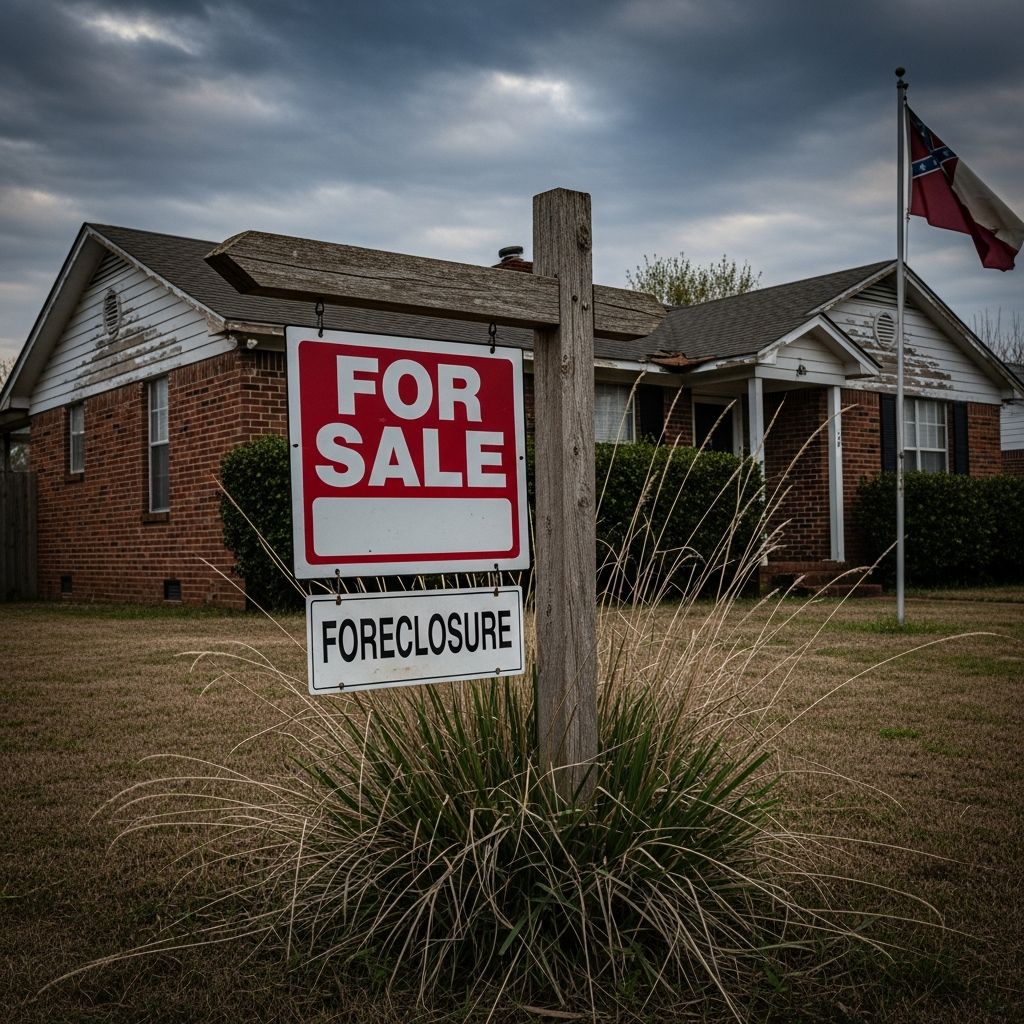
Mississippi operates one of the nation’s faster foreclosure systems, often concluding in as little as 60 days for straightforward cases, primarily through nonjudicial means that prioritize efficiency for lenders while offering borrowers limited but actionable safeguards.
Overview of Foreclosure Triggers and Timelines
Foreclosure typically activates after a borrower misses payments for over 120 days, aligning with federal guidelines, though certain violations like due-on-sale clauses can prompt earlier action. State statutes impose a six-year limit from the loan’s acceleration or maturity date for initiating proceedings, ensuring lenders act promptly.
Most residential mortgages in Mississippi use deeds of trust with power-of-sale provisions, enabling swift nonjudicial foreclosures without court involvement unless complications arise. This streamlined approach benefits lenders in routine defaults but leaves borrowers with fewer procedural hurdles to contest the process.
Nonjudicial Foreclosure: The Dominant Pathway
Nonjudicial foreclosure dominates Mississippi’s landscape, allowing trustees to handle sales after default declaration and a cure period, usually 30 days. Lenders first accelerate the loan balance, conduct title searches for issues like unpaid taxes or liens, and file a substitution of trustee if needed.
Notice requirements mandate publication in a local newspaper for three consecutive weeks prior to the sale, plus posting at the county courthouse door—no direct mailed notice to borrowers is statutorily required, though deeds of trust often stipulate a breach letter at least 45 days before acceleration. Federal law enforces a 120-day delinquency wait before starting.
Sales occur at public auction where lenders commonly submit credit bids matching the debt owed, securing the property without cash outlay. The highest bidder takes ownership, and winners can pursue eviction post-sale. Critically, Mississippi denies post-sale redemption rights, meaning borrowers cannot reclaim the home after auction.
Judicial Foreclosure: Court-Supervised Alternative
When deeds lack power-of-sale clauses or complexities demand oversight, lenders pursue judicial foreclosure by filing a complaint for court-ordered sale. Courts appoint a special commissioner to oversee proceedings, granting high insurability to resulting deeds due to judicial validation.
Post-judgment, the process mirrors nonjudicial: publish notices and auction the property. The commissioner files a sale report for court approval before deeding the property, adding layers of scrutiny beneficial in disputed cases. Borrowers must file a written answer to contest; defaulting hands victory to lenders.
Borrower Defenses and Reinstatement Opportunities
Until sale completion, borrowers can reinstate by paying all past-due amounts, including interest and fees—Mississippi Code §89-1-59 permits this without frequency limits for installment loans. A newer statute caps certain reinstatements at twice per 24 months.
- Deed in Lieu: Voluntarily transfer property to lender, forgiving remaining debt.
- Forbearance Agreements: Temporary payment pauses or reductions.
- Loan Modifications: Restructuring terms via loss mitigation programs.
- Refinancing: Secure new financing to pay off the defaulted loan.
- Property Sale: Market the home before excessive delinquency accrues.
Bankruptcy filing immediately halts proceedings via automatic stay, ideal for imminent sales.
Deficiency Judgments and Lender Recovery
Post-sale shortfalls—where auction proceeds fall below debt—can lead to deficiency judgments if lenders sue within one year. Courts assess bid reasonableness against fair market value, especially for self-bids. Mississippi permits personal liability collection on these judgments.
| Aspect | Nonjudicial | Judicial |
|---|---|---|
| Timeline | 60+ days post-120 delinquency | Longer due to court docket |
| Court Role | None | Full oversight |
| Notice | Publish/post 3 weeks | Plus lawsuit service |
| Deficiency | Separate suit within 1 year | Possible in judgment |
| Redemption | No post-sale right | No post-sale right |
Special Protections in Disaster Scenarios
Following events like hurricanes or floods, governors can declare disasters and enact up to two-year foreclosure moratoriums. Eligible homeowners petition courts for injunctions, potentially paying escrow for taxes, insurance, and interest during stays. These measures provide breathing room but demand proactive filings.
Frequently Asked Questions
How long after missed payments can foreclosure begin in Mississippi?
Typically after 120 days of delinquency per federal rules, though servicers may act sooner on certain breaches.
Can I get my home back after a foreclosure sale?
No, Mississippi offers no post-sale redemption period for nonjudicial or judicial foreclosures.
What notice will I receive before foreclosure?
Deeds often require 45-day breach letters; statutory notices involve public publication and courthouse posting, not always direct mail.
Are deficiency judgments allowed?
Yes, via lawsuit within one year if the sale bid approximates fair market value.
How does bankruptcy affect foreclosure?
Filing triggers an automatic stay, stopping sales immediately; Chapter 13 may enable cure plans.
What’s the difference between judicial and nonjudicial?
Nonjudicial skips court for speed; judicial involves lawsuits for complex validations.
Strategic Considerations for Homeowners
Facing default demands swift evaluation of options. Contact servicers early for loss mitigation, as delays compound issues. Legal aid via centers like Mississippi Center for Legal Services offers free guidance. For commercial properties, nuances mirror residential but may involve tailored judicial paths.
Understanding timelines proves crucial: six-year statutes bar late claims, while reinstatement windows close at sale. Title issues uncovered pre-sale can derail lenders, buying time. Post-2025 statutory references confirm ongoing efficiency.
In summary, Mississippi balances lender rights with borrower reinstatement paths, eschewing redemption to expedite resolutions. Proactive steps define outcomes in this rapid framework.
References
- HOME FORECLOSURE IN MISSISSIPPI — Bond & Botes Law Offices. 2025. https://www.bondnbotes.com/blog/home-foreclosure-mississippi
- Mississippi Foreclosure Laws and Procedures — Nolo. 2025-01-17. https://www.nolo.com/legal-encyclopedia/summary-mississippis-foreclosure-laws.html
- Mississippi Foreclosure Basics — National Law Review. 2025. https://natlawreview.com/article/mississippi-foreclosure-basics
- Save Your Property: Foreclosure Laws in Mississippi — The Rollins Firm. 2025. https://www.therollinsfirm.com/save-your-property-foreclosure-laws-in-mississippi/
- Foreclosure Laws in Mississippi — LawInfo.com. 2025. https://www.lawinfo.com/resources/foreclosure/mississippi/
- Mississippi Foreclosure Basics — Jones Walker LLP. 2025. https://www.joneswalker.com/en/insights/mississippi-foreclosure-basics.html
- Mississippi Mortgage Servicing Requirements — Butler Snow. 2025. https://www.butlersnow.com/news-and-events/mississippi-mortgage-servicing-requirements
Similar Articles








Read full bio of medha deb




