
LLC Tax Filing: No Activity Rules for 2026
Navigate 2026 tax rules for inactive LLCs: Learn filing requirements by classification to avoid penalties and claim deductions.
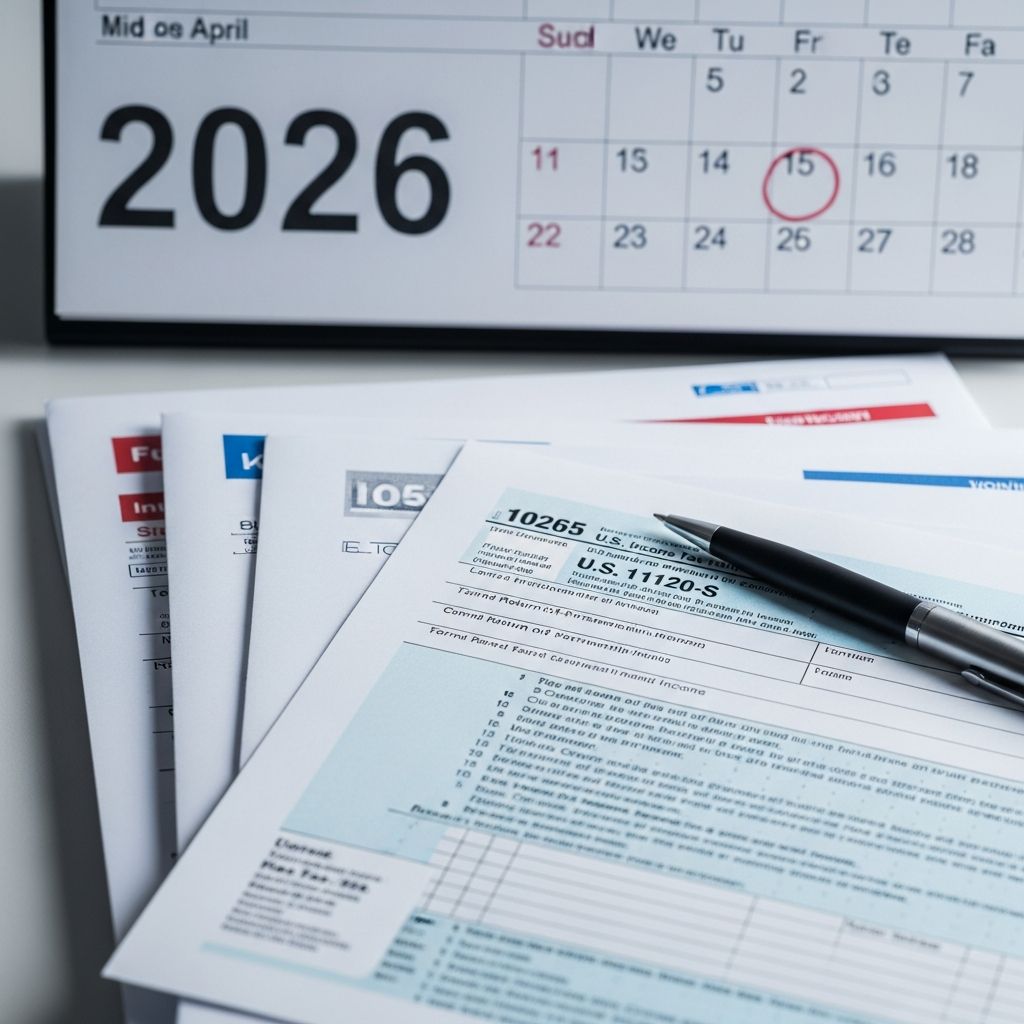
Limited liability companies (LLCs) offer flexibility in structure and taxation, but even during periods of complete inactivity, federal tax obligations may apply. In 2026, whether your LLC needs to file a return hinges on its tax classification, any deductible expenses, and IRS guidelines. Understanding these rules prevents penalties and preserves your business’s good standing.
Why Inactive LLCs Face Tax Scrutiny
Newly formed LLCs often sit idle before launching, while established ones may pause operations due to market shifts or strategic decisions. Despite zero revenue, the IRS treats LLCs based on their elected or default tax status. Failing to file when required can trigger fines up to $220 per shareholder per month for partnerships or $205 for corporations, escalating quickly.
Inactivity doesn’t dissolve tax duties. For instance, organizational costs like state filing fees or bank charges count as expenses, potentially mandating a return to claim them. Proactive filing also documents dormancy, reducing audit risks if the IRS questions your EIN’s status.
Tax Classifications for LLCs Explained
LLCs aren’t taxed as a distinct entity by default; their classification dictates filing needs:
- Single-Member LLC (Disregarded Entity): Treated as a sole proprietorship. Income/expenses flow to the owner’s Form 1040.
- Multi-Member LLC (Partnership): Pass-through entity requiring informational returns.
- Corporate Election (C-Corp or S-Corp): Files like traditional corporations via Forms 8832 or 2553.
| Classification | Default Trigger | Form Required | No Activity Filing? |
|---|---|---|---|
| Single-Member | Income > $400 or expenses | Schedule C (1040) | Only if expenses |
| Partnership | Any income or expenses | Form 1065 | Only if expenses |
| C-Corp | Always | Form 1120 | Yes, annually |
| S-Corp | Always | Form 1120S | Yes, annually |
This table summarizes 2026 federal requirements; state rules vary.
Filing Rules for Single-Member LLCs with Zero Activity
Single-member LLCs report via the owner’s personal return. No separate LLC return exists unless corporate status is elected. If no income and no expenses exceed de minimis thresholds, skip Schedule C. However, startup costs (up to $5,000 deductible) or minor fees like registered agent services necessitate filing to claim them.
Recommendation: File Schedule C anyway. It establishes a record, carries forward losses, and avoids IRS inquiries about unreported activity. For 2026, report $0 gross receipts and itemize deductions like:
- State formation fees
- Legal/consulting costs
- Office supplies
- Bank maintenance charges
Threshold: Self-employment tax kicks in above $400 net earnings, but pure inactivity sidesteps this.
Partnership-Taxed Multi-Member LLCs: When to Skip Filing
Multi-member LLCs default to partnership taxation, filing Form 1065 to allocate income/losses via Schedule K-1 to members. Pure dormancy—no income, no claimed expenses—waives this requirement. The IRS views such LLCs as non-operational for pass-through purposes.
Caveat: Any planned deductions (e.g., amortized organization costs) trigger filing. Partners receive K-1s even with zeros, informing their personal returns. Deadlines: March 15 (or September extension). Penalties for late filing apply only if required.
Corporate-Taxed LLCs: Mandatory Annual Returns
LLCs electing C-corp or S-corp status face strict rules. All corporations file annually, regardless of activity. C-corps use Form 1120 (21% flat rate on taxable income, but $0 for inactivity). S-corps file Form 1120S, issuing K-1s to shareholders.
Even dormant, report to maintain status. Exemptions are rare (e.g., certain inactive shells), but consult IRS Pub 542. Florida, for example, exempts disregarded single-member LLCs from state corporate returns.
Step-by-Step: Preparing Your 2026 No-Income LLC Return
- Verify Classification: Check Form 8832/2553 filings or defaults.
- Gather Records: Bank statements, receipts for any costs.
- Select Forms: Match to classification (see table).
- Report Zeros: Enter $0 income; list deductions.
- Issue K-1s: For partnerships/S-corps.
- E-File or Mail: Use IRS Free File or software; deadlines April 15 (individuals), March 15 (businesses).
- State Compliance: Check secretary of state; some require annual reports.
Software like TurboTax or H&R Block simplifies zero-activity filings.
Potential Penalties and How to Avoid Them
Non-filing penalties:
- Partnerships: $220 per partner/month (max 12 months).
- Corporations: $205/month (min $545).
- Failure-to-file interest accrues.
First-time abatement possible; reasonable cause (e.g., new EIN oversight) helps. File extensions via Form 7004, but pay any owed taxes.
State-Specific Considerations for Inactive LLCs
Federal rules dominate, but states add layers. Florida disregards single-member LLCs for corporate tax. California demands $800 minimum franchise tax for all LLCs, active or not. Texas has no income tax but requires Public Information Reports. Always cross-check your state’s revenue department.
Benefits of Filing Even When Not Required
Voluntary filing:
- Claims startup deductions (up to $5,000 immediate, rest amortized).
- Carries net operating losses forward.
- Proves dormancy, easing future reactivations.
- Reduces audit flags on EINs.
Frequently Asked Questions
What if my LLC just got its EIN but did no business?
New EINs often require a first-year return to validate. File zeros to comply.
Can I dissolve an inactive LLC to skip taxes?
Dissolution ends obligations but involves state fees/paperwork. Better for long-term inactivity.
Do state annual reports count as tax filings?
No; they’re separate for good standing, not IRS taxes.
What about employment/payroll taxes with no activity?
No employees mean no filings; confirm via Form 941 if applicable.
Is TurboTax sufficient for LLC no-income returns?
Yes, for simple cases; pros handle elections/complexities.
Planning Ahead: Reactivating Your LLC
When resuming operations, prior zero returns provide a clean baseline. Track all costs meticulously. Consult CPAs for elections changing classifications midstream.
In summary, 2026 brings no major shifts, but vigilance ensures compliance. Tailor actions to your LLC’s setup for peace of mind.
References
- Single Member Limited Liability Companies — Internal Revenue Service. 2023-10-12. https://www.irs.gov/businesses/small-businesses-self-employed/single-member-limited-liability-companies
- Entities 4 — Internal Revenue Service. 2024-02-15. https://www.irs.gov/faqs/small-business-self-employed-other-business/entities/entities-4
- Corporate Income Tax — Florida Department of Revenue. 2025-01-20. https://floridarevenue.com/taxes/taxesfees/Pages/corporate.aspx
- Is filing business taxes with no income necessary? — H&R Block. 2025-11-05. https://www.hrblock.com/tax-center/income/other-income/filing-business-taxes-with-no-income/
Similar Articles








Read full bio of medha deb




