
Understanding LLC Member Compensation Strategies
Master LLC member compensation: guaranteed payments, tax implications, and strategic planning.
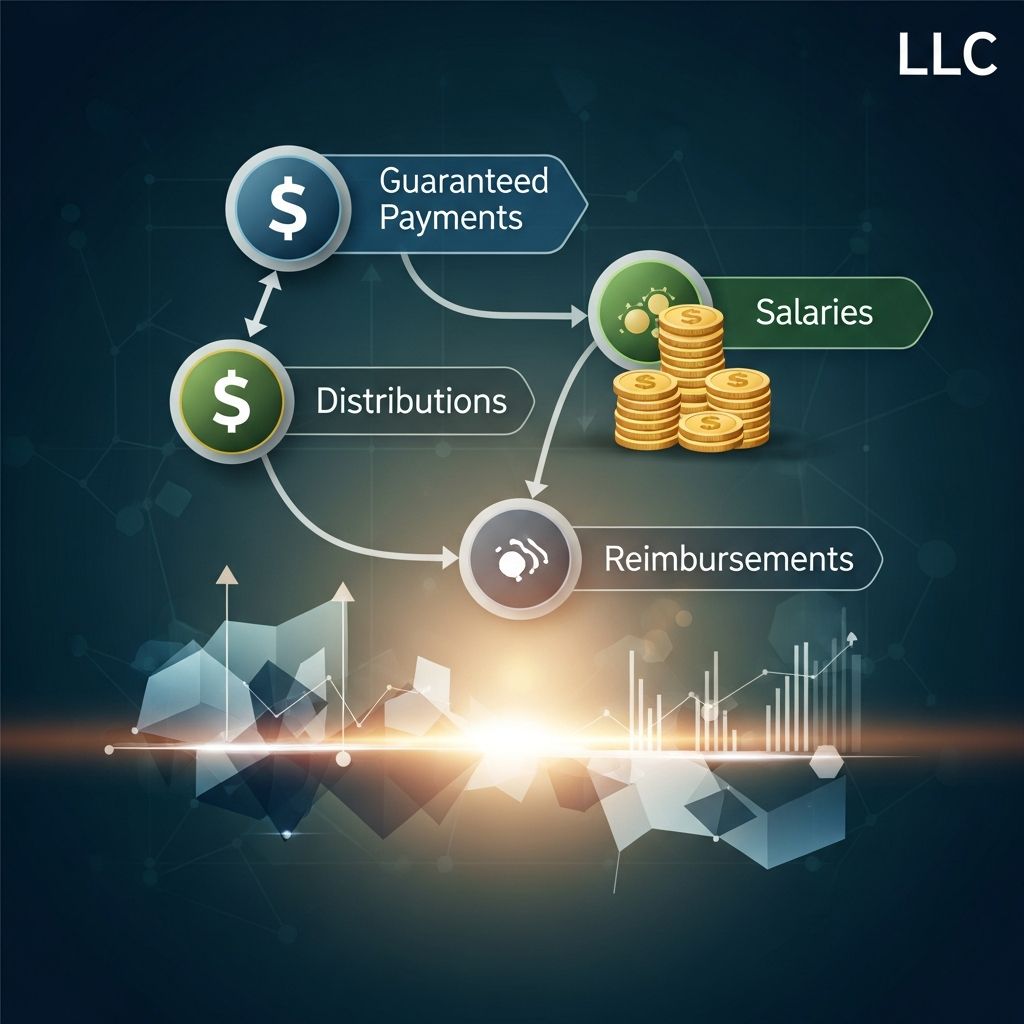
Compensating LLC Members: Beyond Simple Profit Sharing
Limited liability companies offer flexible ownership structures, but one challenge emerges quickly: how do members receive regular income when profit distributions may be infrequent or unpredictable? Unlike traditional corporations where employees receive regular salaries with automatic payroll tax withholding, LLC members occupy a unique tax position. They cannot simply draw wages like employees, yet they often need consistent income to cover personal expenses and plan their finances. This structural reality has given rise to an important compensation mechanism known as guaranteed payments, which functions as the partnership equivalent of a salary while maintaining the LLC’s tax-advantaged pass-through entity status.
The Fundamental Nature of Guaranteed Payments
A guaranteed payment represents a predetermined amount that an LLC contractually agrees to distribute to a member in exchange for services rendered or capital contributed to the business. Unlike profit-sharing distributions, which fluctuate based on company performance and are only available when profits exist, guaranteed payments must be made regardless of whether the LLC operates profitably or at a loss. This distinction creates predictable income streams for members who actively participate in business operations and depend on the company for their livelihood.
The IRS defines guaranteed payments as amounts paid to a partner acting in their capacity as a partner, where payment is not contingent on partnership income. This definitional clarity matters significantly because it establishes the foundation for proper tax treatment and regulatory compliance. Members may receive guaranteed payments for various reasons: compensation for management services, return on capital invested, or recognition of their essential role in business success. What unites all these scenarios is the unconditional nature of the payment obligation.
Think of guaranteed payments as providing financial stability. A member might receive a guaranteed minimum of $24,000 annually ($2,000 monthly) regardless of company profitability. If the LLC generates substantial profits, the member also receives their distributive share of remaining earnings. Conversely, if the business struggles financially, the guaranteed payment still flows to the member, though the company simultaneously incurs a loss that passes through to all owners’ tax returns.
Distinguishing Guaranteed Payments from Other Compensation Methods
LLC members can access multiple compensation pathways, each with distinct tax and structural implications. Understanding these differences proves essential for optimal financial planning and tax compliance.
Guaranteed Payments vs. Profit Distributions: Guaranteed payments function like fixed salary components, while profit distributions represent the member’s proportional share of remaining business earnings after expenses and guaranteed payments are deducted. If an LLC generates $150,000 in net income and owes a member $36,000 in guaranteed payments, that amount is deducted first, leaving $114,000 to distribute according to profit-sharing percentages. A member with a 25% profit share would receive $28,500 in distributions plus their $36,000 guaranteed payment, totaling $64,500.
Guaranteed Payments vs. W-2 Wages: Members employed by the LLC in non-ownership capacities may receive W-2 wages subject to standard payroll taxes and withholding. These differ fundamentally from guaranteed payments. A member could simultaneously receive W-2 wages for work as a general manager and guaranteed payments for their ownership role—each taxed and reported differently. W-2 wages involve employer withholding of income and FICA taxes, while guaranteed payments do not.
Guaranteed Payments vs. Distributions Based on Capital Contributions: Some operating agreements allow members to receive returns on their invested capital separate from operational profits. These capital return distributions differ from guaranteed payments, which compensate ongoing services or participation rather than simply returning invested funds.
Tax Treatment and Reporting Requirements
The tax treatment of guaranteed payments differs substantially from W-2 wages, creating both advantages and obligations for LLC members and the business itself.
For the LLC: Guaranteed payments function as tax-deductible business expenses that reduce the company’s net taxable income. When an LLC reports its financial position using Form 1065 (U.S. Return of Partnership Income), guaranteed payments appear as a deductible expense on line 10, similar to other operational costs. This deduction lowers the LLC’s overall taxable income, which is particularly advantageous because LLCs typically do not pay federal income tax themselves. Instead, income and deductions pass through to members’ personal returns.
For Members: Guaranteed payments are treated as ordinary income on the member’s personal tax return, reported on Schedule E of Form 1040. Members must recognize this income in the tax year in which the LLC made the payment. Additionally, guaranteed payments are subject to self-employment tax at the rate of 15.3%, covering both Social Security and Medicare obligations. Unlike W-2 employees, members pay the entire self-employment tax themselves rather than splitting it with an employer. However, they may deduct half of self-employment tax paid on their Form 1040.
No income tax withholding occurs on guaranteed payments. Members must make quarterly estimated tax payments to the IRS to avoid underpayment penalties and interest charges. This requires careful cash flow planning and coordination with accountants or tax preparers familiar with pass-through entity taxation.
Operating Agreement Essentials: Documenting Compensation Arrangements
Guaranteed payments must be formally documented in the LLC’s operating agreement before or at the time of company formation. The IRS does not permit retroactive addition of guaranteed payments to an existing LLC without proper documentation and potential tax complications. This requirement serves multiple purposes: it demonstrates the legitimate business purpose of the payments, establishes clear expectations among members, and creates an audit trail should the IRS examine the LLC’s tax returns.
Critical Elements to Include:
- Recipient Identification: Specify precisely which members receive guaranteed payments. Not all members need qualify; typically, only those actively engaged in business operations receive them.
- Payment Amount: Define the exact dollar amount or establish a calculation method. Examples include “$5,000 per month,” “$60,000 annually,” or “2% of gross revenue with a minimum floor of $50,000.”
- Payment Schedule: Specify whether payments occur monthly, quarterly, semi-annually, or annually. Payment frequency affects member cash flow planning and estimated tax payment obligations.
- Conditions and Modifications: Address whether circumstances could modify or suspend payments, such as a member’s withdrawal from the business, material breach of operating agreement terms, or financial hardship thresholds.
- Relationship to Profit Distributions: Clarify whether guaranteed payments are credited against profit distributions (reducing amounts owed from profit sharing) or exist independently in addition to distributions.
- Contingencies: Describe how the company handles guaranteed payments if cash becomes insufficient, whether the LLC borrows funds, delays payments, or allows them to accumulate as obligations.
A properly drafted operating agreement provision might read: “Managing Member shall receive guaranteed payments of $7,500 per month for services rendered to the Company, payable on the first business day of each month. Such payments shall be made regardless of Company profitability and shall be in addition to, not credited against, Managing Member’s distributive share of Company profits.”
Financial Planning Considerations and Strategic Implementation
Structuring guaranteed payments requires balancing multiple considerations: member financial needs, company cash flow capacity, tax efficiency, and equity among multiple members with different roles.
Cash Flow Stability: Guaranteed payments must be sustainable from operational cash flow. Unlike profit distributions, which adjust automatically when business performance fluctuates, guaranteed payments represent fixed obligations. An LLC struggling with cash flow cannot suspend or reduce guaranteed payments without violating the operating agreement and potentially breaching member agreements. Careful financial projections should precede implementing guaranteed payments.
Equity Among Members: When some members receive guaranteed payments and others do not, potential friction can develop. The operating agreement should articulate the rationale—typically that certain members actively work in the business while others serve passive investor roles. Alternatively, all members might receive modest guaranteed payments reflecting their anticipated participation levels, with remaining income distributed by profit-sharing percentages.
Tax Efficiency: While guaranteed payments are self-employment tax obligations for members, they provide business deductions reducing the LLC’s overall taxable income passed to all members. This creates a complex trade-off: the member receiving guaranteed payments bears full self-employment tax on that amount, but this deduction benefits all members by reducing their collective tax burden. Overall tax positioning depends on individual circumstances, including other income sources, deduction availability, and tax bracket positions.
Attracting and Retaining Key Members: Guaranteed payments demonstrate commitment to member compensation, making LLC membership more attractive to potential partners or managers. Rather than depending entirely on profit distributions that may never materialize, members can count on reliable income. This predictability helps attract quality managers and dedicated partners.
Practical Examples and Common Scenarios
Scenario 1 – Profitable Year Exceeding Guaranteed Minimum: An LLC with three equal members provides one member with a $24,000 annual guaranteed payment in exchange for daily operational management. During a successful year, the LLC generates $300,000 in net income. The managing member receives their $24,000 guaranteed payment plus their one-third share of remaining income ($276,000 ÷ 3 = $92,000), totaling $116,000 in compensation. The other members each receive $92,000 in distributions.
Scenario 2 – Unprofitable Year Requiring Guaranteed Payments: In a challenging year, the same LLC generates only $60,000 in net income. After paying the managing member’s $24,000 guaranteed payment, only $36,000 remains. Depending on operating agreement language, this $36,000 might be distributed equally (each member receives $12,000) or according to profit-sharing percentages. The managing member receives their guaranteed $24,000 plus their share of remaining funds, while the LLC simultaneously shows a pass-through loss that all three members must recognize on their tax returns.
Scenario 3 – Mixed Compensation Structure: An LLC employs one member as an office manager earning a $45,000 W-2 salary, while that same member receives a $12,000 annual guaranteed payment for their ownership role. The W-2 portion involves standard payroll tax withholding and FICA taxes. The guaranteed payment is reported separately on their K-1 form and subject to self-employment tax. This dual compensation structure accounts for their dual roles: employee and owner.
Reporting Guaranteed Payments to Tax Authorities
Proper reporting prevents IRS complications and audit risks. The reporting process involves multiple forms coordinating across business and personal returns.
For the LLC: Form 1065 (U.S. Return of Partnership Income) reports guaranteed payments on line 10 as a deductible business expense. This reduces the LLC’s net income before allocation to members. Schedule K-1 statements then break down each member’s allocation of income, losses, deductions, and guaranteed payments.
For Individual Members: Each member receives a Schedule K-1 reporting their share of LLC income, their guaranteed payment amount, and their distributive share of profits or losses. Members then report this information on their personal Form 1040 return, typically on Schedule E (Supplemental Income and Loss). The guaranteed payment amount from Schedule K-1 transfers to Schedule SE (Self-Employment Tax), where the member calculates their self-employment tax obligation.
Guaranteed payments must be reported in the LLC’s tax year in which they were paid, not accrued. If an LLC pays a December guaranteed payment in January of the following year, it reports in the next year’s tax return. This timing distinction matters for cash-basis accounting.
Modifying or Terminating Guaranteed Payments
Business circumstances change, requiring modifications to compensation arrangements. The operating agreement should address amendment procedures. Generally, modifications require unanimous member consent or the percentage threshold specified in the operating agreement (often 75% or 80% of members). Any changes should be documented in writing and attached to the operating agreement.
If a member departs the LLC, their guaranteed payments typically cease unless the operating agreement specifies otherwise. Successor members or new management may establish different guaranteed payment arrangements reflecting their roles and contributions.
Frequently Asked Questions
Q: Can an LLC change guaranteed payments after formation?
A: Yes, but changes require proper amendment procedures outlined in the operating agreement, typically unanimous consent or a specified member vote. Changes should be documented in writing and attached to the operating agreement to maintain clear records.
Q: What happens if an LLC cannot afford guaranteed payments?
A: The LLC must still pay them as they are contractual obligations. If cash flow is insufficient, the LLC may need to borrow funds or allow payments to accumulate as a liability. Operating agreements may include provisions addressing this scenario.
Q: Are guaranteed payments subject to FICA taxes?
A: No. The LLC does not pay FICA taxes on guaranteed payments. However, members pay self-employment tax (15.3%) on guaranteed payments when filing personal returns.
Q: Can a member receive both a salary and guaranteed payments?
A: Yes. A member employed by the LLC in a specific capacity can receive W-2 wages, while also receiving guaranteed payments for their ownership role. These are reported separately and taxed differently.
Q: How do guaranteed payments affect the LLC’s tax classification?
A: Guaranteed payments do not change the LLC’s tax classification. They simply represent deductible business expenses for pass-through taxation purposes.
Q: Must all LLC members receive guaranteed payments?
A: No. Operating agreements can specify that only certain members—typically those actively working in the business—receive guaranteed payments while others receive only profit distributions.
References
- The Basics of LLC Guaranteed Payments — LegalZoom. 2026. https://www.legalzoom.com/articles/the-basics-of-llc-guaranteed-payments
- What Are Guaranteed Payments LLC? — GoCardless. 2026. https://gocardless.com/en-us/guides/posts/what-are-guaranteed-payments-llc/
- What Are Guaranteed Payments? — NetSuite. 2026. https://www.netsuite.com/portal/resource/articles/accounting/guaranteed-payments.shtml
- Guaranteed Payments in LLCs: A Complete Guide for Business Owners — BeanCount. January 18, 2026. https://beancount.io/blog/2026/01/18/guaranteed-payments-llc-complete-guide
- Guaranteed Payments vs Distributions: What You Need to Know — Bright Pearl. 2026. https://www.brightpearl.com/blog/guaranteed-payments-vs-distributions
Similar Articles








Read full bio of Sneha Tete




