
Limited Warranty Deeds: 4 Steps To Prepare And Execute
Discover when and why to use limited warranty deeds in property transfers for balanced protection and liability.
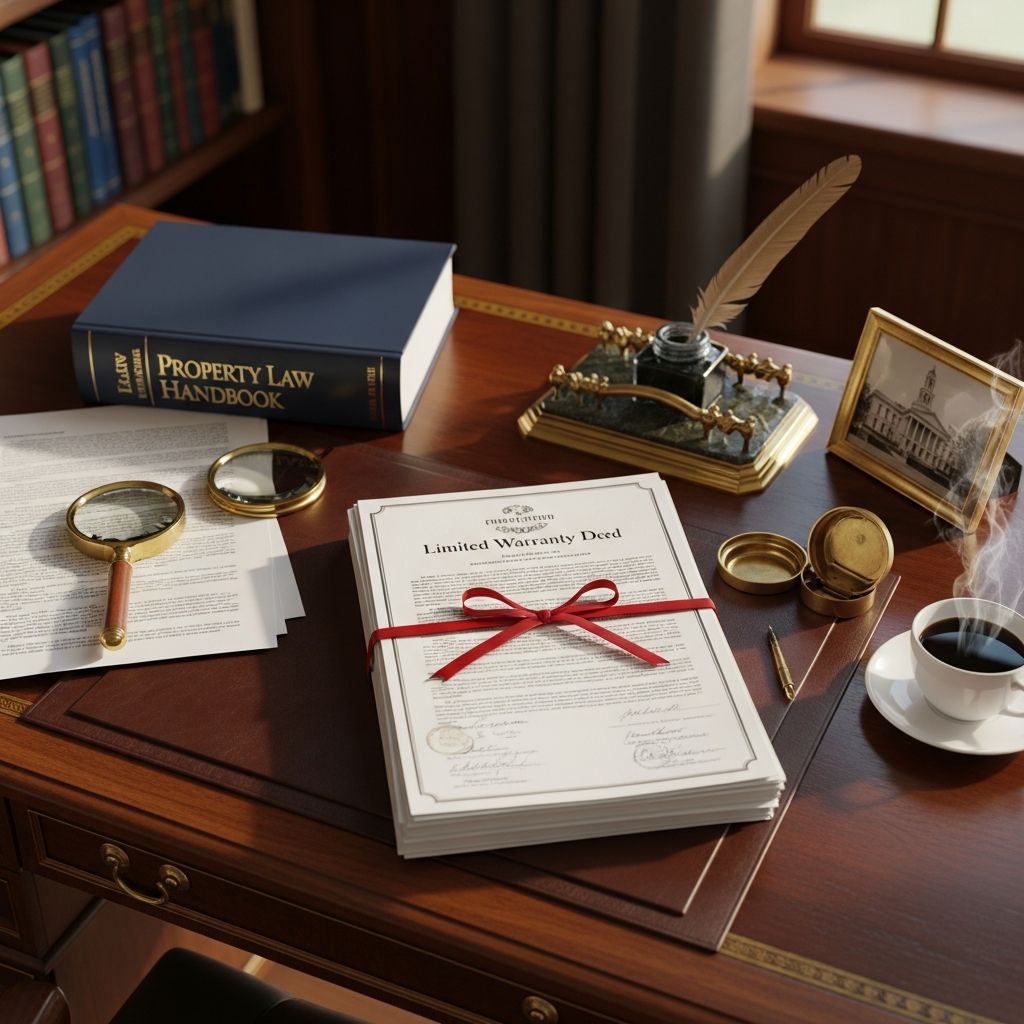
Limited warranty deeds, also known as special warranty deeds, provide a middle ground in property ownership transfers by offering targeted assurances about the title during the seller’s period of ownership. These instruments balance buyer protection with seller liability limitations, making them suitable for specific transaction types.
Core Purpose and Functionality
The primary role of a
limited warranty deed
is to legally shift property ownership from the grantor (seller) to the grantee (buyer) while warranting that no defects or encumbrances were introduced by the grantor during their tenure. Unlike broader guarantees, this deed assures the title is clear of issues like liens or disputes arising solely from the grantor’s actions or omissions.- Title Transfer: Executes the ownership change with precise legal language.
- Period-Specific Warranty: Covers only the grantor’s ownership era, shielding buyers from problems created then.
- Disclosure Requirement: Mandates listing any known encumbrances on the deed itself.
This structure ensures transparency, as buyers know the scope of protections upfront, often paired with title insurance for fuller coverage.
How Limited Warranty Deeds Differ from Other Deeds
Understanding distinctions helps select the right deed for transactions. Here’s a comparison:
| Deed Type | Warranty Scope | Buyer Protection Level | Common Uses |
|---|---|---|---|
| General Warranty Deed | Entire title history | Highest | Standard residential sales |
| Limited Warranty Deed | Grantor’s ownership only | Moderate | Foreclosures, commercial deals |
| Quitclaim Deed | None | Lowest | Family transfers, quick sales |
A general warranty deed defends against all historical claims, providing maximum security but exposing sellers to broad liability. Quitclaim deeds transfer interest without assurances, ideal for low-risk, intra-family moves. Limited warranty deeds fill the gap, offering reliability without full historical vetting.
Ideal Scenarios for Using Limited Warranty Deeds
These deeds shine in high-risk or complex sales where full warranties are impractical.
Distressed Property Transactions
In short sales, tax auctions, and bank-owned (REO) properties, sellers like lenders use limited warranty deeds to cap liability for prior unknown issues. Buyers accept this for discounted prices, relying on inspections and insurance.
Commercial Property Deals
Commercial real estate often involves layered histories; limited warranties protect sellers from pre-ownership claims while assuring current clarity. This is standard in multi-party flips or developments.
Estate and Probate Transfers
Executors transferring estate properties via probate courts favor these deeds to avoid guaranteeing distant histories they may not know. Note: Personal representative deeds may supersede in some states.
Government and Institutional Sales
Agencies like HUD or Fannie Mae routinely employ them, limiting exposure to their holding period.
Key Components of a Valid Limited Warranty Deed
A properly drafted deed includes essential elements for enforceability.
- Parties’ Details: Full legal names and addresses of grantor and grantee.
- Property Description: Exact legal description matching prior records.
- Conveyance Statement: Phrases like “remises, releases, and conveys” affirm transfer intent.
- Warranty Language: Specifies coverage for grantor’s period, noting any exceptions.
- Signatures and Notarization: Grantor (and spouse if required) signs before a notary; recording follows.
State laws vary; for example, Ohio requires conveyance fees with exemptions.
Buyer Considerations and Protections
Buyers receiving limited warranty deeds get assurances against grantor-era defects, with remedies via the grantor or title insurer if issues arise. Pre-grantor problems fall to insurance alone. Always review for disclosed encumbrances and conduct due diligence.
Steps to Prepare and Execute a Limited Warranty Deed
- Gather Information: Compile parties’ details and property specs.
- Draft the Document: Use professionals for compliance; include all clauses.
- Sign and Notarize: Ensure all required parties acknowledge.
- Record the Deed: File with county recorder for public notice and validity.
Professionals mitigate errors, ensuring smooth closings.
Potential Risks and Mitigation Strategies
Sellers benefit from capped liability but must disclose known issues accurately to avoid fraud claims. Buyers mitigate via title searches, surveys, and insurance. In trusts, these deeds preserve existing policies.
Frequently Asked Questions
Is a limited warranty deed safe for homebuyers?
Yes, for targeted scenarios; it protects against seller-induced issues, bolstered by title insurance for broader coverage.
Can spouses be required to sign?
Often yes, to waive potential marital claims and clear title.
Are they common in residential sales?
Less so than general warranties; more prevalent in commercial or distressed properties.
What if a title defect predates the seller?
The seller isn’t liable; buyer recourse is through insurance.
Do all states recognize them equally?
Terms vary; some call them special warranty deeds, but core function aligns.
Conclusion: Choosing the Right Deed for Your Transaction
Limited warranty deeds offer pragmatic solutions for nuanced real estate deals, prioritizing efficiency and fairness. Consult legal experts to match deeds to your needs.
References
- Limited Warranty Deeds: What You Need to Know — Affordable Legal Services LLC. 2023. https://www.affordablelegalservicesllc.com/limited-warranty-deeds-what-you-need-to-know/
- How Does a Limited Warranty Deed Work? — Deeds.com. 2023. https://www.deeds.com/articles/how-does-a-limited-warranty-deed-work/
- Different Deeds Mean Different Things — Ohio State University Farm Office. 2023-09-28. https://farmoffice.osu.edu/blog/thu-09282023-953pm/different-deeds-mean-different-things
- Understanding Warranty Deeds in Real Estate Transactions — Ozarks Law Firm. 2023. https://ozarkslawfirm.com/what-is-a-warranty-deed-on-a-house/
Similar Articles








Read full bio of Sneha Tete




