
Legal Guide to Drunk Driving Accidents and Victim Compensation
Understand your legal options, rights, and potential compensation after a drunk driving accident caused by an impaired motorist.
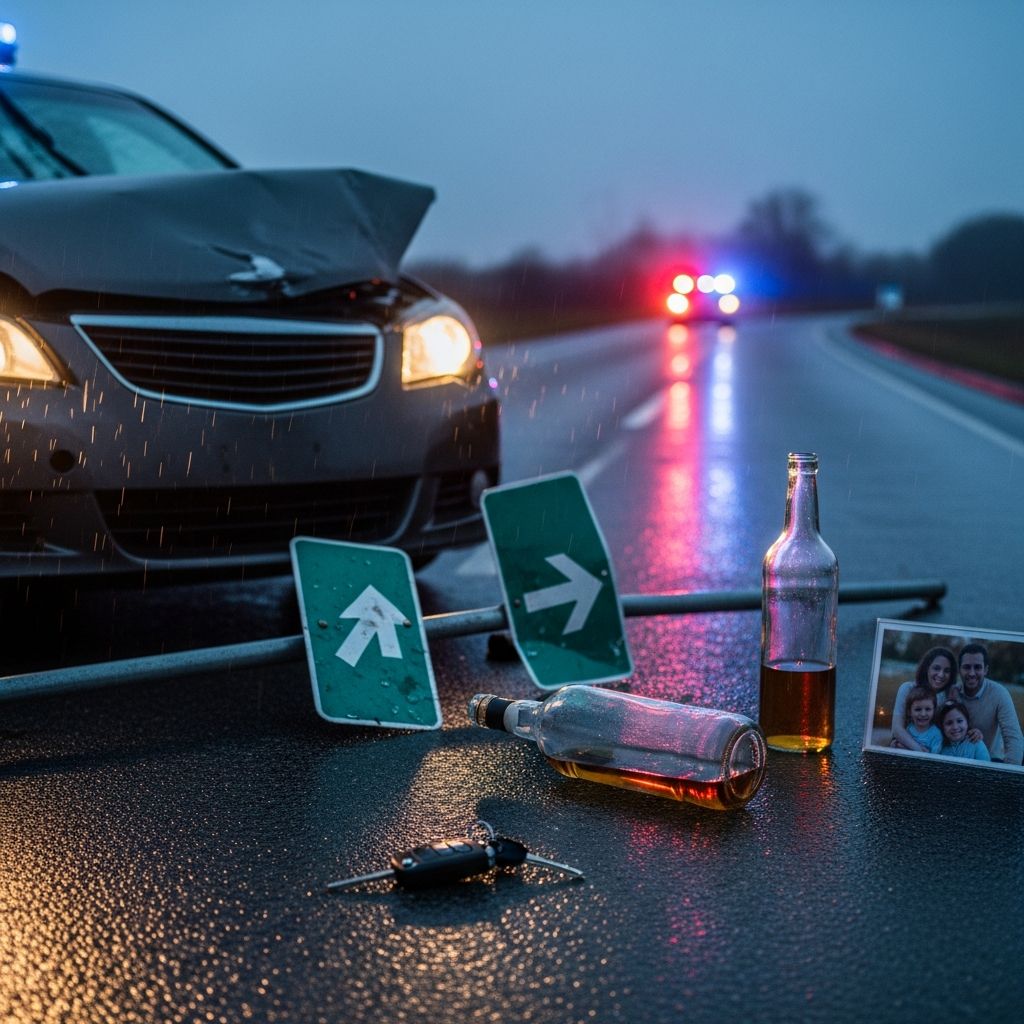
Alcohol-impaired driving collisions combine serious physical harm with complex legal questions. When a driver chooses to operate a vehicle while intoxicated, they may face criminal prosecution, civil lawsuits, insurance disputes, and potential claims from multiple injured parties. This guide explains how the law treats drunk driving crashes, what victims must prove, and which avenues of compensation may be available.
Understanding Drunk Driving in the Legal System
Most jurisdictions make it a crime to drive with a blood alcohol concentration (BAC) at or above a statutorily defined limit, often 0.08% for adult drivers, with stricter standards for commercial drivers and minors.
In a crash involving an impaired driver, two overlapping systems come into play:
- Criminal law – The government prosecutes the impaired driver for violating DUI or DWI statutes.
- Civil law – Injured people and surviving families pursue money damages from the at-fault driver and potentially other responsible parties.
These systems proceed independently. A driver can be criminally prosecuted and also be sued in civil court over the same collision.
Criminal Consequences After a Drunk Driving Crash
A DUI-related crash often triggers enhanced criminal penalties compared with a routine traffic offense.
Typical Criminal Charges
- Standard DUI/DWI – Operating a vehicle with an unlawful BAC or while impaired by alcohol or drugs.
- DUI with property damage or minor injury – Often treated as a higher-level misdemeanor when a crash causes damage or non-serious harm.
- DUI causing serious bodily injury – Frequently classified as a felony, with potential multi-year prison sentences and high fines.
- DUI manslaughter or vehicular homicide – When a death occurs, charges may include felony DUI manslaughter or vehicular homicide, often carrying lengthy prison terms.
Common Criminal Penalties
Actual penalties vary by state and by factors such as prior offenses, injury severity, BAC level, and presence of minors in the vehicle, but may include:
- Jail or prison time, from a few days to decades for fatal cases.
- Substantial fines and court costs.
- Mandatory license suspension or revocation.
- Ignition interlock device requirements on any vehicle the offender drives.
- Probation, community service, and mandatory alcohol education or treatment programs.
These criminal penalties punish the offender and aim to deter future violations. They do not, by themselves, pay a victim’s medical bills or replace lost income; that relief comes primarily through civil and insurance claims.
Civil Liability: How Victims Seek Compensation
Civil cases after a drunk driving accident are usually based on negligence. A driver is negligent when they fail to use reasonable care and thereby cause harm to others. Because DUI laws are designed to protect the public, violating those laws often supports a claim of negligence per se, meaning the violation itself is treated as unreasonable conduct.
Core Elements of a Civil Claim
To win a civil drunk driving case, an injured person generally must show:
- Duty – The driver owed a duty to operate the vehicle safely and obey traffic and DUI laws.
- Breach – The driver breached that duty by driving while impaired or above the legal BAC limit.
- Causation – The impaired driving was a substantial factor in causing the collision and resulting injuries.
- Damages – The victim suffered measurable losses (economic and/or non-economic).
A criminal DUI conviction is powerful evidence in a civil case and may create a presumption of negligence under state law, but victims may still pursue claims even when the driver is not convicted or pleads to a lesser offense.
Parties Who May Be Legally Responsible
While the intoxicated driver is usually the primary defendant, liability can extend to others depending on local law and the facts of the incident.
| Potential Defendant | Basis for Liability |
|---|---|
| Impaired driver | Driving under the influence, violating traffic rules, or otherwise operating the vehicle negligently. |
| Vehicle owner | Permitting an intoxicated or unfit person to drive their vehicle; may be liable under owner-responsibility or negligent entrustment rules. |
| Bar, restaurant, or alcohol vendor | Possible liability under dram shop laws for unlawfully serving minors or visibly intoxicated patrons, depending on state statute. |
| Social host | In some states, adults who serve alcohol to minors at social gatherings can face civil liability. |
| Employer | If the impaired driver was acting within the scope of employment (e.g., company vehicle, work-related errand) at the time of the crash. |
Dram Shop and Alcohol Provider Liability
Many states have dram shop statutes that allow injured people to seek compensation from businesses that illegally sold or served alcohol to a person who later caused a crash, such as selling to a minor or to someone who was clearly intoxicated.
Key features of dram shop laws often include:
- Liability only for specified unlawful sales (for example, willful service to minors or obviously intoxicated patrons).
- Shorter time limits to bring claims compared with standard injury cases in some states.
- Additional proof requirements, such as witness testimony or receipts, to show where and how the alcohol was provided.
Types of Compensation Available to Victims
In a successful civil claim, an injured person may recover various categories of damages.
Economic Damages
- Medical expenses – Emergency care, hospitalization, surgery, rehabilitation, medications, mobility devices, and future medical treatment reasonably anticipated.
- Lost wages – Income lost during recovery time away from work.
- Reduced earning capacity – Long-term or permanent impact on the victim’s ability to work or advance in their career.
- Property damage – Repair or replacement of vehicles and other damaged property.
- Out-of-pocket costs – Travel to medical appointments, home or vehicle modifications, hiring help for household tasks.
Non-Economic Damages
- Pain and suffering – Physical pain, emotional distress, anxiety, depression, and trauma associated with the crash.
- Loss of enjoyment of life – Inability to participate in hobbies, family activities, or daily pleasures as before.
- Scarring and disfigurement – Lasting visible injuries and their psychological impact.
- Loss of consortium – Harm to the marital relationship, brought by spouses of severely injured victims in some jurisdictions.
Punitive Damages
Courts in many states may award punitive damages when a defendant’s conduct demonstrates gross negligence, reckless disregard for safety, or intentional wrongdoing. Driving with a very high BAC, ignoring prior DUI convictions, or fleeing the scene may support such claims.
Punitive damages are not meant to compensate the victim for specific losses; they are designed to punish the wrongdoer and send a deterrent message to others.
How Insurance Coverage Affects Drunk Driving Claims
Insurance plays a central role in recovering compensation after a drunk driving crash. The exact process depends heavily on the state’s insurance system.
At-Fault vs. No-Fault Systems
- At-fault (tort) states – Injured people typically seek payment directly from the at-fault driver’s liability insurer. If insurance limits are insufficient, victims may pursue the driver personally.
- No-fault (personal injury protection) states – Each driver’s own insurer initially covers medical bills and certain losses, regardless of fault, up to policy limits. Victims can usually sue the drunk driver if their injuries exceed a statutory “serious injury” threshold.
Possible Insurance Policies Involved
- Liability coverage held by the impaired driver, which may pay for injuries and property damage suffered by others.
- Uninsured/underinsured motorist (UM/UIM) coverage on the victim’s policy, providing a crucial safety net if the drunk driver has no insurance or inadequate limits.
- Commercial policies for crashes involving company vehicles, delivery drivers, or rideshare services, potentially offering higher policy limits.
- Dram shop or general liability policies for bars, restaurants, or event venues sued under alcohol liability laws.
Comparative Fault and Limits on the Drunk Driver’s Own Recovery
Injured people sometimes share part of the blame for a collision. Many states use a comparative negligence system, which reduces a victim’s compensation in proportion to their percentage of fault. In some jurisdictions, intoxicated plaintiffs face additional restrictions on recovering damages if their own impairment substantially contributed to their injuries.
While comparative fault can reduce the drunk driver’s ability to recover for their own injuries, it does not generally prevent innocent passengers, pedestrians, or occupants of other vehicles from seeking full compensation for the harm they suffered.
Key Steps for Victims After a Drunk Driving Crash
Immediate actions can significantly influence the strength of any future legal claim. Safety should be the first priority, but as soon as conditions allow, consider the following:
- Call emergency services to report the collision and request medical assistance.
- Cooperate with police and provide factual information; the police report and any DUI testing results can later support your claim.
- Seek prompt medical evaluation, even if injuries seem minor, to document any trauma and rule out hidden conditions such as internal bleeding or concussions.
- Collect evidence, including photographs of the scene, vehicles, injuries, and contact information for witnesses, when it is safe to do so.
- Notify your insurer in accordance with policy requirements, but avoid detailed recorded statements before understanding your rights.
- Consult a qualified attorney experienced in drunk driving or personal injury cases to assess potential defendants, available insurance, and filing deadlines.
Time Limits for Filing Claims
All states impose statutes of limitations that set deadlines for filing personal injury or wrongful death lawsuits. The precise time frame varies by jurisdiction and by claim type, but it is common for injury claims to have deadlines measured in years from the date of the crash.
Missing the applicable statute of limitations usually results in permanent loss of the right to pursue compensation in court. Because evidence can be lost and witnesses’ memories fade, starting the legal process early greatly improves the chances of a successful claim.
Wrongful Death Claims After a Fatal Drunk Driving Collision
When a drunk driving crash results in death, certain surviving family members may bring a wrongful death claim under state law. These lawsuits are typically governed by specific statutes that determine who may sue, what damages are available, and how any recovery is distributed among survivors.
Common Beneficiaries and Recoverable Losses
- Eligible survivors often include spouses, children, and sometimes parents or other dependents, depending on state law.
- Economic losses may cover funeral and burial expenses, loss of the decedent’s expected earnings, and loss of household services.
- Non-economic losses may include loss of companionship, guidance, and emotional support provided by the deceased.
The standard of proof in a wrongful death civil case is generally lower than in a criminal prosecution, so a family may succeed in civil court even if the driver was acquitted of criminal charges.
Frequently Asked Questions (FAQs)
Q1: Do I need a DUI conviction to bring a civil claim?
No. A criminal conviction can strengthen a civil case, but it is not a prerequisite. A victim can recover by proving impairment and negligence through other evidence, including witness testimony, field sobriety tests, and the circumstances of the crash.
Q2: Can I sue a bar or restaurant that overserved the drunk driver?
Possibly. Many states have dram shop laws allowing claims against alcohol vendors that unlawfully serve minors or visibly intoxicated patrons who later injure others. These claims have specific statutory requirements and deadlines, so legal advice is essential.
Q3: What if the drunk driver has no insurance or low policy limits?
You may be able to turn to your own uninsured/underinsured motorist coverage, pursue additional defendants such as a vehicle owner or business, or, in some situations, seek payment directly from the driver’s personal assets. The feasibility of each option depends on local law and the defendant’s financial situation.
Q4: How long will my case take to resolve?
Timing varies widely. Straightforward cases with clear liability and adequate insurance may settle in months, while complex claims involving severe injuries, multiple defendants, or disputed liability may take several years to reach trial or settlement.
Q5: Can a drunk driver recover damages for their own injuries?
In some states, an intoxicated driver’s own fault may significantly reduce or even bar recovery if their impairment was a major factor in causing the crash. Comparative negligence rules and special statutes can limit such claims.
References
- Florida DUI and Administrative Suspension Laws — Florida Department of Highway Safety and Motor Vehicles. 2023-05-01. https://www.flhsmv.gov/driver-licenses-id-cards/education-courses/dui-and-iid/florida-dui-administrative-suspension-laws/
- DUI Injuries – The Law in Florida — Bruce L. Scheiner, Attorneys for the Injured. 2022-04-15. https://www.blslawyers.com/practice-areas/car-accidents/causes-of-car-accidents/drunk-driving-wrecks/dui-injuries-the-law-in-florida/
- Drunk Driving Accidents in Miami: Legal Consequences and Victim’s Rights — Lett Law Firm. 2023-08-10. https://www.lettlawfirm.com/drunk-driving-accidents-in-miami-legal-consequences-and-victim-s-rights
- The Impact of Drunk Driving on Personal Injury Claims in Florida — The Law Place. 2023-03-20. https://www.thelawplace.com/areas-we-serve/florida/the-impact-of-drunk-driving-on-personal-injury-claims-in-florida/
- What Are Your Legal Rights After a Drunk Driving Accident in Florida? — Pendas Law Firm. 2022-11-05. https://www.pendaslaw.com/what-are-your-legal-rights-after-a-drunk-driving-accident-in-florida/
- How Drunk Driving Impacts Legal Claims and Compensation — Oldham & Smith. 2022-09-01. https://oldhamsmith.com/blog/how-drunk-driving-impacts-legal-claims-and-compensation/
- Injured by a Drunk Driver? 7 Powerful Reasons Legal Support Matters — Wayne Hardee Law. 2021-06-18. https://www.waynehardeelaw.com/auto-accidents/injured-by-a-drunk-driver/
Similar Articles








Read full bio of Sneha Tete




