
Key Mortgage Documents To Review Before Closing
Understand every major mortgage document you should receive and review before closing so you can sign with confidence.
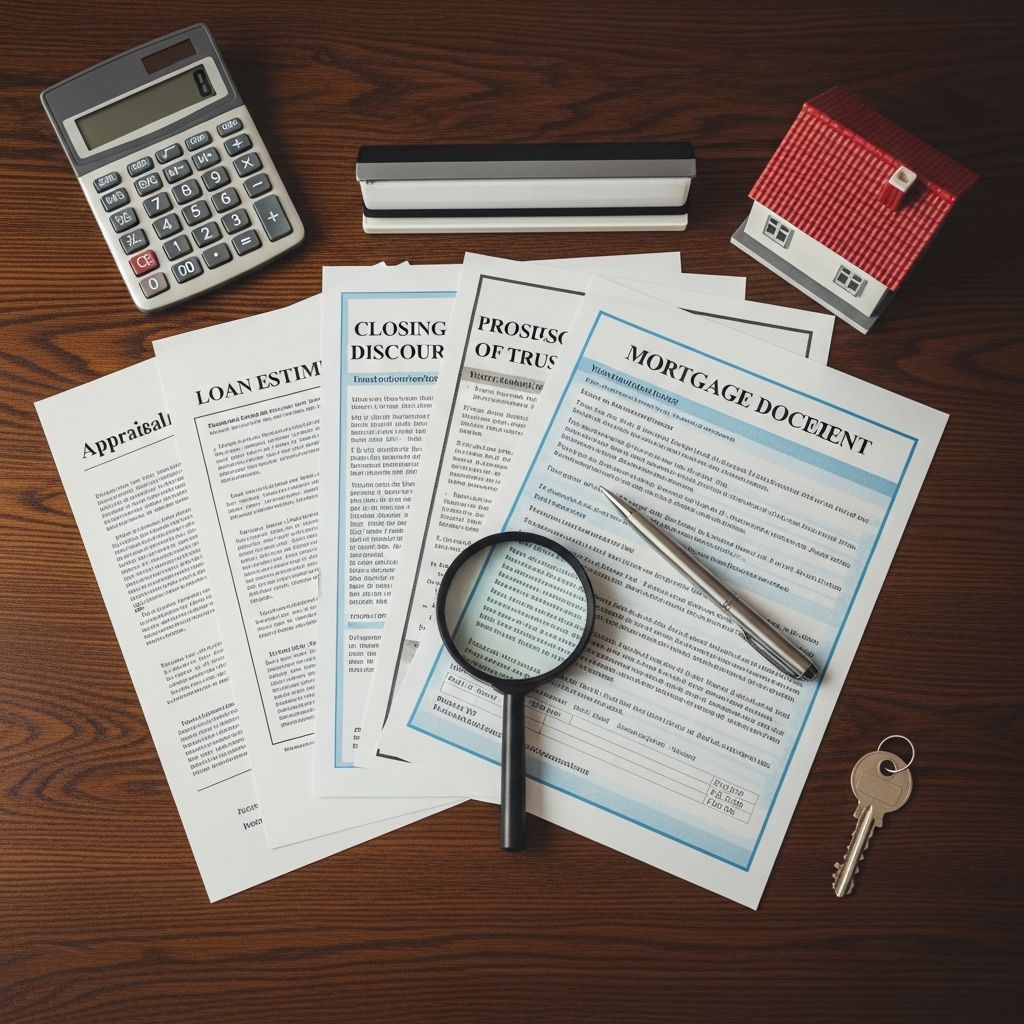
Before you sign your final mortgage paperwork, you are entitled to receive and review several critical documents. Knowing what they are, when you should get them, and how to read them helps you avoid costly surprises and gives you time to ask questions or correct errors.
This guide explains the key documents you should receive before a mortgage closing, what each document does, and practical tips for reviewing your paperwork so you can sign with confidence.
Why Reviewing Closing Documents Matters
Closing on a mortgage involves a large financial commitment and a stack of legally binding forms. Taking time to review your documents before closing helps you:
- Confirm the final loan terms match what your lender promised, including interest rate, payment amount, and costs.
- Spot errors such as misspelled names, incorrect loan amounts, or wrong property information.
- Understand your obligations, like when payments are due and what happens if you pay late.
- Protect yourself from last-minute surprises in fees or loan features you did not agree to.
Federal rules require that certain core documents be provided to you in advance of closing, especially for most closed-end consumer mortgages secured by a home.
Core Documents You Should Receive Before Closing
While each lender’s package can look a bit different, most homebuyers should expect to receive at least the following before closing:
- Closing Disclosure (required for most closed-end mortgages)
- Promissory Note
- Mortgage, Security Instrument, or Deed of Trust
- Deed (for a purchase transaction)
In addition, you may see related forms and disclosures, such as your final loan application, an escrow account disclosure, and various state or federal notices.
Understanding the Closing Disclosure
The Closing Disclosure is the centerpiece of your closing package. It summarizes your loan terms and all closing costs in one standardized form.
Timing Requirements for Your Closing Disclosure
For most home purchase and refinance mortgages covered by federal disclosure rules, the lender must give you the Closing Disclosure at least three business days before closing. This time is meant to let you review the details and compare them with your earlier Loan Estimate.
Key Sections to Review Carefully
When you receive your Closing Disclosure, focus on these important sections:
- Loan Terms – Final loan amount, interest rate, whether the rate is fixed or adjustable, and whether the loan has features such as a balloon payment or prepayment penalty.
- Projected Payments – Your scheduled monthly payment over time, including principal, interest, mortgage insurance, taxes, and homeowners insurance if applicable.
- Costs at Closing – Total closing costs and total cash needed to close, including down payment, lender fees, and prepaid items like taxes and insurance.
- Closing Cost Details – Itemized fees paid to the lender, to third parties, and to government offices (such as recording fees).
- Comparisons and Other Disclosures – Information that helps you compare this loan to others, plus additional legal disclosures about assumptions, late fees, and servicing.
Comparing the Closing Disclosure to Your Loan Estimate
Your lender should have given you a Loan Estimate earlier in the process. When you receive the Closing Disclosure, compare the two:
- Verify that the interest rate, loan amount, and loan type match what you previously agreed to.
- Check whether any fees have increased and, if so, whether the increases are allowed under federal limits.
- Confirm that any seller credits, lender credits, or down payment assistance are correctly reflected.
If you see differences you do not understand or costs you did not expect, ask your lender or closing agent for an explanation before you sign.
The Promissory Note: Your Promise to Repay
The Promissory Note is the document in which you formally promise to repay the loan. It is a legally binding contract between you and the lender.
What the Promissory Note Usually Includes
Although formats vary, most notes specify:
- Principal amount – The amount you are borrowing.
- Interest rate and rate type – Fixed or adjustable, and, if adjustable, how and when the rate can change.
- Payment schedule – How frequently you must make payments (typically monthly) and their due date.
- Late fees – The charge if your payment is late and how “late” is defined.
- Default and acceleration terms – What happens if you fail to pay, including the lender’s right to demand the entire unpaid balance.
- Prepayment rules – Whether you can pay off the loan early and whether any prepayment penalties apply.
How to Review Your Promissory Note
When you receive a copy of the note, review it for:
- Accuracy of your name, property address, and loan amount.
- Confirmation that the interest rate and loan type are exactly what you agreed to with your lender.
- Reasonable and clearly explained late fees and default provisions.
If any terms do not match your understanding, ask questions before closing. Once you sign, changing the note generally requires a formal modification.
The Mortgage or Deed of Trust: Securing the Loan With Your Home
The Mortgage or Deed of Trust (also called a Security Instrument) gives the lender a legal interest in the property as security for the loan. The exact form depends on your state’s law, but the purpose is similar: if you fail to repay, the lender may have the right to foreclose.
Key Topics Covered in the Mortgage or Deed of Trust
This document typically includes:
- Property description – The legal description of the real estate securing the loan.
- Occupancy requirements – Whether the home must be your primary residence and for how long.
- Escrow account provisions – Whether the lender will collect monthly amounts for taxes and insurance.
- Borrower responsibilities – Duties such as maintaining the property, paying taxes, and keeping insurance in force.
- Default and foreclosure terms – Circumstances under which the lender can begin foreclosure and the notice you must receive.
What to Confirm Before Closing
Review the mortgage or deed of trust to be sure that:
- The property description aligns with what you are buying.
- The listed borrowers and co-borrowers are correct.
- Any occupancy requirement matches how you plan to use the property.
- You understand what may lead to default beyond non-payment, such as failing to maintain insurance.
The Deed: Documenting Ownership (Purchase Transactions)
For a home purchase, the Deed is the document that transfers ownership of the property from the seller to you. After closing, the deed is usually recorded in the local land records office, placing your ownership in the public record.
What to Look For on the Deed
- Correct buyer names, spelled accurately.
- Proper vesting (how you take title), such as sole ownership, joint tenancy, or tenancy in common, depending on your state’s options.
- Accurate legal description matching the purchase contract.
If you are unsure how you should hold title with another person, talk with a real estate attorney or other qualified professional before closing.
Other Important Documents You May Receive
Beyond the core forms, expect additional documents that help complete your loan file and disclose important information.
| Document | Purpose |
|---|---|
| Final Loan Application | Shows the income, assets, debts, and property details used to approve your loan; you typically sign to confirm accuracy. |
| Escrow Account Disclosure | Explains how much will be collected for taxes and insurance, and how the lender will manage the escrow account. |
| Title Insurance Documents | Describe the title insurance coverage for you or the lender and list any exceptions. |
| State and Federal Notices | Include various disclosures such as servicing transfer notices, appraisal delivery notices, or other consumer protections required by law. |
Requesting Documents Ahead of Closing
You do not have to wait until the day of closing to see your paperwork. In fact, consumer protection agencies encourage you to ask for your closing documents in advance, ideally at the same time you receive your Closing Disclosure.
Consider asking for copies of:
- Closing Disclosure
- Promissory Note
- Mortgage or Deed of Trust
- Deed (for purchases)
- Escrow account disclosure and final loan application
Having these documents in advance lets you review them carefully at home, consult a professional if needed, and prepare questions before your closing appointment.
Practical Checklist: Before, During, and After Closing
Before Closing Day
- Confirm your scheduled closing date and time with your lender or closing agent.
- Request your Closing Disclosure and other key documents at least three business days before closing.
- Compare the Closing Disclosure to your Loan Estimate.
- Review the Promissory Note, Mortgage/Deed of Trust, and Deed (if applicable) for accuracy.
- Ask for written answers if any terms or fees are unclear.
On Closing Day
- Bring a valid government-issued photo ID such as a driver’s license or passport so the closing agent can verify your identity.
- Bring a cashier’s check or proof of wire transfer for any amount you must pay at closing, including closing costs and down payment, as directed by your closing agent.
- Have proof of homeowners insurance if required by your lender.
- Take time to re-check major figures on your Closing Disclosure, especially the interest rate, total monthly payment, and cash to close.
After Closing
- Keep copies of your signed Closing Disclosure, Promissory Note, and Mortgage/Deed of Trust in a safe place.
- Look for mailed copies of your recorded deed and, if applicable, your title insurance policy.
- Set up your first payment and note whether you will receive a separate bill or need to set up online payments.
Frequently Asked Questions
How far in advance should I get my closing documents?
For most covered mortgages, the law requires that you receive your Closing Disclosure at least three business days before closing. You can and should request your other key documents, such as the note and mortgage, at the same time.
What if the numbers on my Closing Disclosure look different from my Loan Estimate?
Some costs can change between application and closing, while others are limited or cannot increase at all under federal rules. If you see unexpected differences, ask your lender to explain each change. Do not feel pressured to sign until you understand the reasons.
Can my closing be delayed if I find an error?
Yes, if there is a significant error or a change in major terms, the closing may need to be rescheduled so the lender can correct the documents and, in some cases, issue a revised Closing Disclosure with a new waiting period. Although delays can be inconvenient, correcting serious mistakes is important for your long-term protection.
Am I allowed to have a lawyer review my documents?
In many states, you may choose to have a real estate attorney review your documents or attend the closing with you. Some states or lenders may even require an attorney for certain transactions. If you are unsure about complex terms or title issues, getting legal advice can be helpful.
What if I do not understand a particular clause in the mortgage or note?
Ask your lender, closing agent, or attorney to explain the clause in plain language. You are signing documents that can affect you for many years, so it is reasonable to ask detailed questions and request written explanations before you sign.
References
- Review documents before closing — Consumer Financial Protection Bureau. 2024-02-12. https://www.consumerfinance.gov/owning-a-home/close/review-documents-before-closing/
- Your mortgage closing checklist — Consumer Financial Protection Bureau. 2016-04-01. https://files.consumerfinance.gov/f/documents/cfpb_buying-a-house_mortgage-closing_checklist.pdf
- Closing Day Checklist — Freddie Mac, MyHome Resource Center. 2023-05-15. https://myhome.freddiemac.com/resources/closing-day-checklist
- What to bring to closing: A buyer’s checklist — Rocket Mortgage. 2023-02-01. https://www.rocketmortgage.com/learn/what-to-bring-to-closing
- House closing checklist — Travelers Insurance. 2022-03-10. https://www.travelers.com/resources/home/buying-selling/house-closing-checklist
- Real Estate Closing Checklist for Buyers — American Bar Association (via ABI). 2021-09-01. https://www.abi.org/feed-item/real-estate-closing-checklist-for-buyers
- Post-Closing Loan File Document Checklist — Fannie Mae Single-Family. 2023-01-01. https://singlefamily.fanniemae.com/media/15331/display
Similar Articles








Read full bio of medha deb




