
Inheritance Funding Options: Advances vs. Loans Explained
Compare probate advances and loans to find the best financing solution for your inheritance needs.
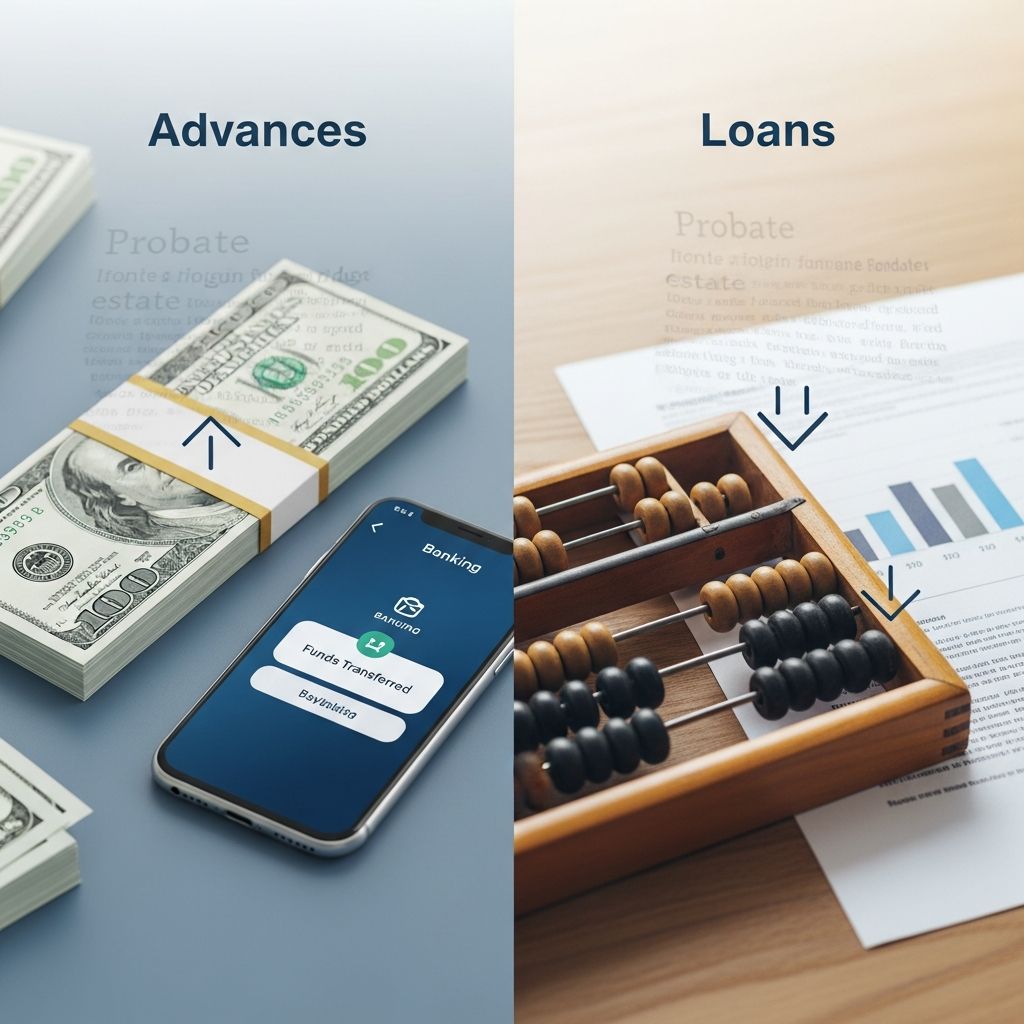
Managing Your Inheritance: Understanding Available Funding Solutions
When a loved one passes away, their estate typically enters a legal process known as probate to settle debts, validate the will, and distribute assets to rightful heirs. This procedural necessity can extend for months or even years, leaving beneficiaries in a challenging position when they need immediate funds. To address this financial gap, the lending industry has developed specialized products designed to help heirs access portions of their inheritance before the formal probate process concludes. Two primary options exist: inheritance advances and probate loans. While these terms are sometimes used interchangeably, they represent distinctly different financial arrangements with important implications for your overall inheritance and financial obligations.
The Foundation: What Happens During Probate and Why Wait Times Matter
Before examining specific funding solutions, it’s important to understand the probate process itself. Probate court serves multiple essential functions in settling an estate. The court validates the deceased person’s will to ensure its authenticity and that it complies with state law. It also oversees the appointment of an executor or estate administrator who manages the distribution of assets. Additionally, probate addresses outstanding debts, taxes, and claims against the estate. In situations where the deceased left no will, the court applies state intestacy laws to determine how assets should be divided among surviving family members.
The complexity and duration of probate vary significantly based on estate size, the presence of a valid will, the number of beneficiaries, and whether any disputes arise among heirs. Simple estates with few assets and clear documentation might resolve within several months. However, estates involving substantial property holdings, business interests, or family disagreements can take two years or longer. During this entire period, heirs receive no distributions, regardless of their financial need. This extended timeline has created a market for financial products designed to bridge the gap between inheritance eligibility and actual receipt of funds.
Inheritance Advances: Purchasing Your Future Inheritance
An inheritance advance represents a fundamentally different type of financial arrangement than traditional loans. Rather than borrowing money that must be repaid with interest, an heir effectively sells a portion of their expected inheritance to a specialized funding company. The company purchases the heir’s future inheritance rights in exchange for immediate cash.
The process begins when an heir contacts an advance company and provides information about the expected inheritance, estate value, and probate timeline. The company conducts due diligence by requesting documentation such as death certificates, probate court filings, and estate appraisals. The funding company typically contacts the estate’s executor directly to verify the information provided by the heir. Based on this assessment, the company offers a cash payment amount, which is substantially less than the heir’s expected full inheritance. If the heir accepts the terms, they sign a legal agreement transferring their inheritance rights to the funding company. When probate concludes and the estate distributes assets, the funding company receives and retains the inherited portion it purchased, while the heir keeps the remaining balance.
Key Characteristics of Inheritance Advances
- No Personal Debt: Because the company has purchased your inheritance rather than loaning you money, you incur no personal debt obligation. The company’s repayment comes directly from the estate.
- Flat Fee Structure: The company takes a fixed percentage or flat fee from your inheritance. These fees typically range from 10 to 50 percent of the amount advanced, with 20 percent being a common rate.
- Quick Access: Once terms are agreed upon and documents are signed, funds can reach the heir within days or a few weeks, far faster than waiting for full probate resolution.
- No Monthly Payments: Unlike traditional loans, there are no monthly payment obligations or ongoing interest charges.
- No Credit Requirements: Approval depends entirely on the estate’s value and probate timeline, not the heir’s personal credit score or financial history.
- Limited Approval Criteria: The company evaluates only the estate’s assets and the heir’s position in the inheritance hierarchy, making qualification straightforward for most heirs.
Probate Loans: Traditional Borrowing Against Your Inheritance
A probate loan functions more like a conventional personal loan, except the underlying security is the heir’s expected inheritance. The heir borrows money from a lender and assumes a legal obligation to repay the borrowed amount plus interest and fees. The lender uses the heir’s expected inheritance as collateral for the loan.
The application process for a probate loan involves providing financial information beyond just estate details. The lender typically requests personal credit history, credit scores, income information, and other standard loan underwriting data. Approval takes longer than for inheritance advances because the lender must assess both the heir’s personal financial situation and the estate’s viability. Once approved, the heir receives the loan proceeds and begins making monthly payments according to a structured repayment schedule. These payments include principal, interest charges, and various loan fees.
Key Characteristics of Probate Loans
- Personal Debt Obligation: You are legally responsible for repaying the loan amount plus interest, regardless of probate outcomes.
- Interest and Fees: In addition to the principal amount, you pay interest charges and loan origination fees, making the total cost considerably higher than the borrowed amount.
- Monthly Payments: You must make regular monthly payments throughout the loan period, which may extend for several years.
- Credit-Based Approval: The lender evaluates your creditworthiness, income, and financial stability before approving the loan.
- Longer Processing: The underwriting process typically takes several weeks before funds are available.
- Ongoing Obligation: You remain obligated to repay the loan even if probate is delayed, the inheritance is smaller than expected, or you receive no inheritance at all.
Side-by-Side Comparison: Which Option Serves Your Needs?
| Feature | Inheritance Advance | Probate Loan |
|---|---|---|
| Financial Structure | Purchase of future inheritance | Loan with interest obligation |
| Personal Liability | None; company collects from estate | Full responsibility for repayment |
| Credit Check Required | No | Usually yes |
| Monthly Payments | None | Required |
| Interest Charges | No interest; flat fee only | Interest accrues monthly |
| Funding Speed | Days to weeks | Weeks to months |
| Cost to Heir | Percentage of inheritance (10-50%) | Interest plus fees |
| Risk Level | Low; no personal debt created | Higher; personal repayment obligation |
| Repayment Source | Estate assets | Heir’s personal income |
Financial Implications and Hidden Costs
Understanding the true financial cost of each option requires careful analysis. With inheritance advances, the cost is transparent and immediate: you receive a specific dollar amount today in exchange for a defined percentage of your future inheritance. If you expect to receive $100,000 from an estate and accept a 20 percent advance fee on a $50,000 advance, you receive $40,000 immediately and the advance company receives $50,000 when probate concludes, leaving you with the remaining $50,000.
Probate loans present a more complex cost structure. If you borrow $40,000 at an interest rate of 12 percent annually over a three-year period, you pay approximately $6,500 in interest charges in addition to loan origination fees, which might total another $1,200. Your true cost becomes $7,700 or more. Additionally, if the probate process takes longer than expected, you continue making payments while waiting for the inheritance. If probate takes five years instead of three, you’ve essentially paid interest on borrowed money for an extended period.
Approval Process and Qualification Standards
The approval requirements for these two options differ significantly. Inheritance advance companies focus primarily on the estate’s financial strength. They examine probate court documents, property appraisals, bank account statements, and other estate assets. They verify your position as a named heir in the will or your claim under intestacy law. The company then calculates a conservative estimate of your inheritance and determines how much they’re willing to advance. For straightforward estates with clear assets and identified heirs, approval can occur within days.
Probate loan approval involves comprehensive personal financial evaluation. Lenders examine credit scores, employment history, income documentation, existing debt obligations, and overall financial stability. This traditional underwriting process requires more time and documentation. Your personal financial situation can result in approval or denial, regardless of the estate’s value. Someone with excellent income but poor credit might struggle to secure a probate loan, whereas their inheritance advance application would proceed based solely on estate factors.
Family Dynamics and Estate Administration Considerations
Beyond financial considerations, choosing between these options involves family and administrative implications. When you accept an inheritance advance, the advance company gains a financial interest in the estate’s settlement. This creates an incentive for the company to ensure proper estate administration and timely probate closure. Some advance companies actively coordinate with estate executors to facilitate the process.
However, family relationships can become complicated when outside parties are involved in estate administration. Other heirs may question why you needed an advance or express concern about outside involvement in family financial matters. Transparent communication with the executor and other beneficiaries helps prevent misunderstandings.
Probate loans keep your financing arrangement private between you and the lender, with no direct involvement in estate administration. The lender has no stake in how quickly probate concludes, only that you repay the borrowed funds. This can feel less intrusive to some borrowers.
Special Circumstances and Limitations
Certain estate situations make one option more feasible than the other. In contested estates where heirs dispute asset distribution or will validity, advance companies may decline to fund because the outcome is uncertain. Similarly, if the estate contains primarily illiquid assets like real estate or business interests that are difficult to value, advance companies may offer lower amounts or decline entirely.
Probate loans may be unavailable to heirs with significant credit problems or unstable income, regardless of inheritance size. Additionally, some states regulate or restrict probate loans more heavily than advance arrangements.
Making Your Decision: Practical Guidance
The optimal choice depends on your specific financial circumstances and priorities. If you need funds quickly, have limited credit history, and prefer a straightforward transaction with no ongoing obligations, inheritance advances align with your needs. The cost is clear upfront, approval is fast, and you retain no debt obligation.
Conversely, if you prefer structured payments aligned with your income, have good credit that qualifies you for favorable loan terms, and expect probate to conclude relatively quickly, a probate loan might prove more cost-effective. The interest you pay may ultimately be less than the percentage fee charged by an advance company, particularly if probate resolves faster than anticipated.
Before committing to either option, explore whether you can meet immediate financial needs through other means. Family loans, personal lines of credit, or reducing expenses might preserve more of your eventual inheritance. If you do pursue either option, work exclusively with reputable, licensed lenders and have an attorney review all agreements before signing.
Frequently Asked Questions
Q: How quickly can I receive funds through an inheritance advance?
A: Most inheritance advance companies can provide funds within days to a few weeks of approval. Probate loans typically take longer, often several weeks, because the underwriting process is more extensive.
Q: Will pursuing an inheritance advance affect my credit score?
A: Inheritance advances do not appear on credit reports because they are purchases, not loans. No credit check is required, and your credit score remains unaffected.
Q: What happens if the estate’s value is smaller than expected?
A: With an advance, you’re obligated to sign over your inheritance portion to cover the advance fee, even if it’s less than projected. With a probate loan, you remain obligated to repay the full loan amount from your personal funds.
Q: Can I pursue both an advance and a loan simultaneously?
A: Generally, no. Once you’ve sold your inheritance through an advance arrangement, you have nothing left to borrow against. Most lenders won’t finance inherited money that’s already committed to another company.
Q: Are there any situations where I cannot qualify for either option?
A: Contested estates where the outcome is uncertain make both options risky for lenders and advance companies. Additionally, some states restrict these products, and certain family situations may make them inappropriate.
Q: How do fees compare on average between advances and loans?
A: Inheritance advances charge flat fees of 10-50 percent of the amount advanced. Probate loans charge interest rates ranging from 8-15 percent plus origination fees, making the total cost dependent on the loan duration and amount.
References
- Understanding Probate Advance: What It Means for Your Estate — Jay Johnson Law Firm. 2024. https://jayjohnsonlawfirm.com/understanding-probate-advance-what-it-means-for-your-estate/
- What is Probate? Definition and Process Overview — American Bar Association. 2023. https://www.americanbar.org
- Probate Advances vs Probate Loans: Key Differences — Doane and Doane. 2024. https://www.doaneanddoane.com/probate-advances-vs-probate-loans-key-differences
- Probate Advance Explained Clearly – Estate Mentors — Estate Mentors. 2024. https://estatementors.com/probate-advance-explained-for-families-and-heirs/
- What is an Inheritance or Probate Advance? — Gudorf Law Group. 2024. https://www.daytonestateplanninglaw.com/what-is-an-inheritance-or-probate-advance/
Similar Articles








Read full bio of medha deb




