
Idaho Last Will And Testament: Step-By-Step Guide
Comprehensive guide to creating, executing, and managing a valid last will and testament in Idaho for secure estate distribution.
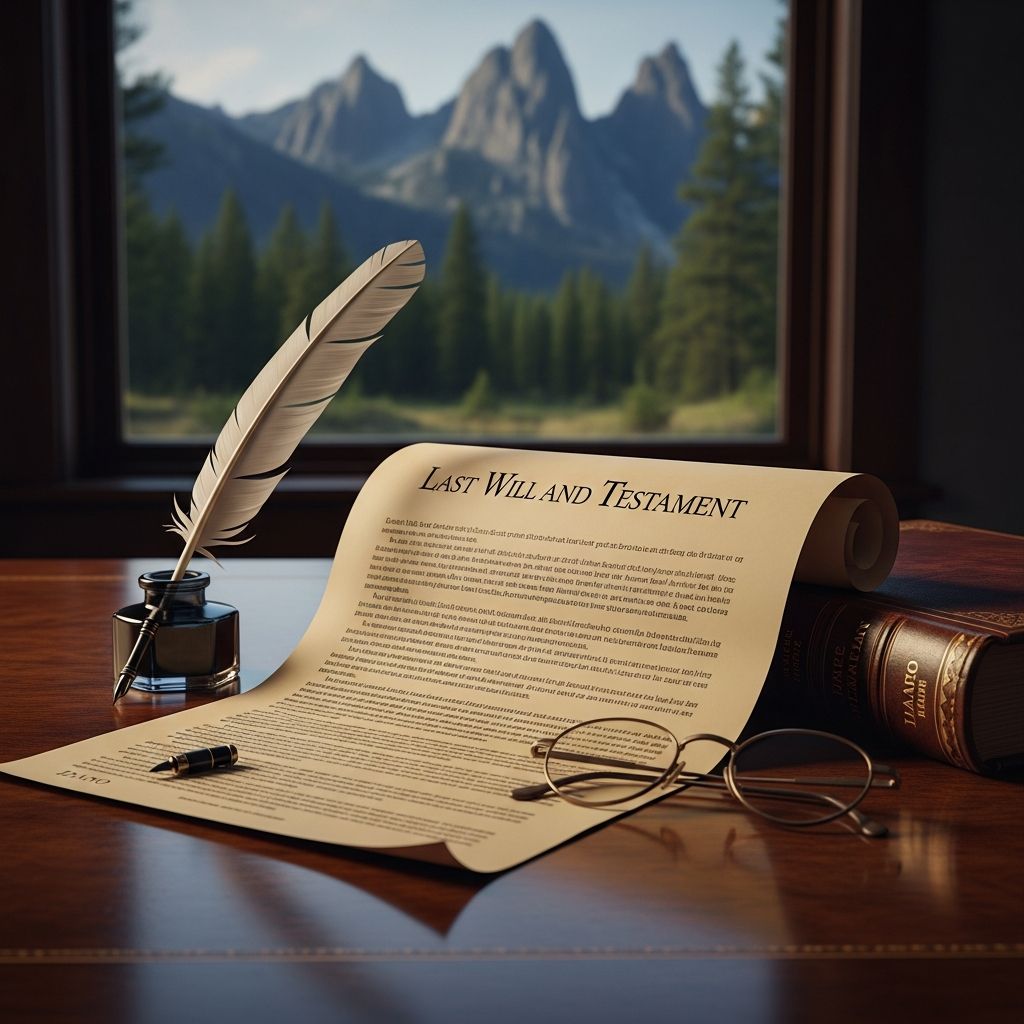
Establishing a last will and testament in Idaho empowers individuals to dictate the distribution of their assets after death, ensuring their wishes are honored rather than dictated by state laws. This legal document, created by the testator, designates beneficiaries, appoints an executor, and can include provisions for dependents or charities, providing peace of mind and control over one’s legacy.
Why Drafting a Will in Idaho Matters
A properly executed will prevents assets from being distributed under Idaho’s intestacy statutes, which prioritize spouses, children, and parents in a rigid hierarchy. Without a will, courts apply these rules, potentially leading to outcomes misaligned with personal intentions, family disputes, or unintended heirs receiving property. For instance, estates under $100,000 or those passing solely to a surviving spouse may qualify for simplified probate, but larger or contested estates face full court supervision.
Idaho follows the Uniform Probate Code (Title 15), streamlining processes while recognizing the importance of testamentary freedom. Wills differ from living wills, which address healthcare decisions during incapacity under the state’s Medical Consent and Natural Death Act.
Core Legal Requirements for Validity
To create an enforceable will in Idaho, specific criteria must be met, as outlined in Idaho Code § 15-2-501 and § 15-2-502.
- Age and Mental Competency: The testator must be 18 years or older (or an emancipated minor) and possess sound mind, meaning they understand the will’s nature, their assets, and natural heirs.
- Written Form: The document must be in writing, whether typed or handwritten; oral or video wills are invalid.
- Signature: The testator signs at the end, or another does so in their presence and at their direction.
- Witnesses: At least two competent witnesses must observe the signing or acknowledgment and sign themselves, ideally disinterested parties to avoid challenges.
Adding a self-proving affidavit, notarized by the testator and witnesses, bolsters validity by allowing probate courts to accept the will without summoning witnesses, expediting proceedings.
Special Types of Wills Recognized in Idaho
Beyond formal typed wills, Idaho validates holographic wills—entirely handwritten by the testator, with material provisions and signature in their hand. These bypass witness requirements but should be dated to prevent ambiguity.
Joint wills for spouses are permissible but inflexible, as they typically cannot be altered unilaterally after one spouse’s death. Oral wills are not recognized, emphasizing the need for written documentation.
Key Components to Include in Your Will
A comprehensive Idaho will covers essential elements for clarity and enforceability:
- Declaration revoking prior wills.
- Payment of debts, taxes, and funeral expenses.
- Appointment of an executor (personal representative) to manage probate.
- Specific bequests of personal property.
- Residue distribution to primary and contingent beneficiaries.
- Guardianship designations for minor children.
- Pet care provisions or charitable gifts.
Executors, often trusted family or professionals, handle asset inventory, creditor payments, and distributions under court oversight.
What Assets Cannot Pass Through a Will
Not all property transfers via probate. Exceptions include:
| Asset Type | Transfer Mechanism |
|---|---|
| Joint tenancy with survivorship | Automatic to co-owner |
| Community property | Directly to surviving spouse |
| B beneficiary-designated accounts (life insurance, retirement) | Per designation form |
| Payable-on-death (POD) or transfer-on-death (TOD) accounts | To named beneficiary |
These bypass the will, passing outside probate instantly upon death. Review and update beneficiary forms regularly to align with overall plans.
Probate Process in Idaho
Upon death, the executor files the will with the district court in the county of residence, initiating probate to validate the document and oversee distribution. Simplified procedures apply to small estates (<$100,000) or spousal inheritances, avoiding full administration. The process involves creditor notices, asset liquidation if needed, tax settlements, and final distributions, typically lasting months to years for complex estates.
Idaho’s will registry with the Secretary of State stores basic filing info (name, date, location) via Form WR-1, aiding location but not storing the document itself.
Consequences of Dying Intestate
Intestacy invokes Idaho Code Title 15, distributing assets based on marital status and descendants:
- If married with children (all shared): Spouse gets all community property; separate property split 50/50.
- If married, no children, parents alive: Spouse inherits all.
- Single with children: To children equally.
- No spouse/children: To parents, siblings, etc.
- No heirs: Escheats to state.
This framework may exclude stepchildren, partners, or charities, underscoring the value of a will.
Modifying or Revoking Your Will
Life changes necessitate updates. Amendments via codicil require same formalities as the original will. Revocation occurs by:
- Executing a new will explicitly revoking the old.
- Physically destroying (burning, tearing) with intent, personally or by proxy.
Store originals safely, inform executors of locations, and consider digital backups with registry filings.
Step-by-Step Guide to Creating Your Will
- Assess Assets and Family: Inventory property, debts, heirs.
- Choose Executor and Guardians: Select reliable individuals.
- Draft Document: Use templates or attorneys; include all provisions.
- Sign with Witnesses: Follow formalities precisely.
- Notarize for Self-Proving: Optional but recommended.
- Register with Secretary of State.
- Store Securely: Safe deposit box, attorney office.
- Review Periodically: Update after major events.
Common Pitfalls to Avoid
Steer clear of interested witnesses, ambiguous language, outdated info, or neglecting non-probate assets. While DIY forms suffice for simple estates, complex situations (blended families, businesses) warrant legal counsel.
Frequently Asked Questions
Can I write my will by hand in Idaho?
Yes, holographic wills are valid if handwritten, signed, and containing material terms by the testator.
Do I need to file my will with the state?
Register basic details with the Secretary of State using Form WR-1, but not the full document.
What if my will is contested?
Challenges allege undue influence, incapacity, or formalities lapses; self-proving affidavits deter this.
Is notarization mandatory?
No, but it enables self-proving status for smoother probate.
How often should I update my will?
After births, deaths, marriages, divorces, or significant asset changes.
Professional Assistance Options
For tailored advice, consult Idaho-licensed attorneys specializing in estate planning to navigate nuances like community property or tax implications. Online services offer affordable templates compliant with state law.
References
- Idaho Last Will and Testament — LegalZoom. 2023. https://www.legalzoom.com/articles/idaho-last-will-and-testament
- Idaho Requirements to Create a Valid Will — Willingham Law Firm. 2024-06-15. https://www.willprobateattorneys.com/post/idaho-requirements-to-create-a-valid-will
- Idaho Last Will and Testament Form — DoYourOwnWill.com. 2025. https://www.doyourownwill.com/templates/last-will/id/
- Will Registry — Idaho Secretary of State. 2025-01-10. https://sos.idaho.gov/will-registry/
- Making a Will in Idaho — Nolo. 2025. https://www.nolo.com/legal-encyclopedia/idaho-make-will-31734.html
- Holographic Wills Guide — Idaho Legal Aid Services. 2025-12. https://idaholegalaid.org/sites/default/files/2025-12/holographic-wills-guide.pdf
Similar Articles








Read full bio of medha deb




