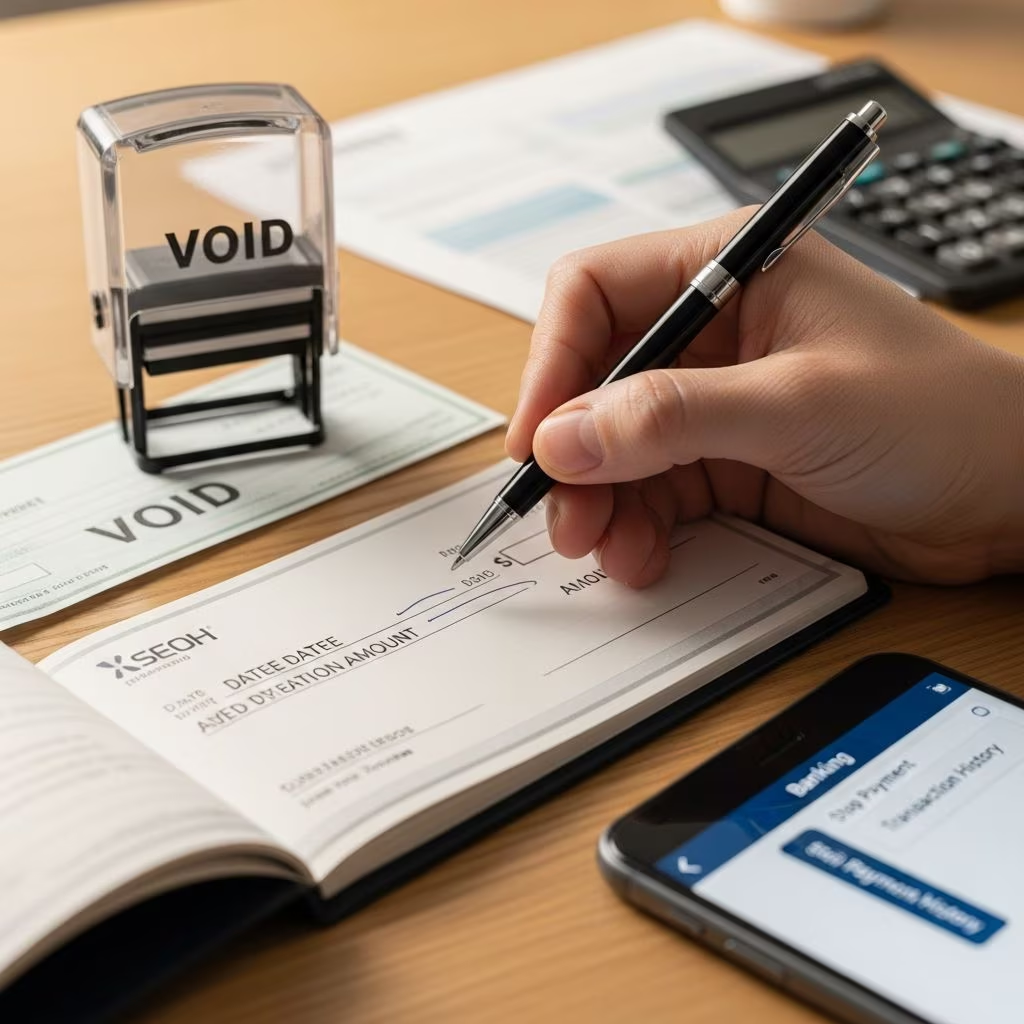
Checks are still widely used for rent, services, and large purchases. When a check is written incorrectly, goes missing, or is used without your consent, issuing a stop payment order can prevent money from leaving your checking account. Understanding how stop payments work, how quickly you must act, and what they cost helps you avoid losses and protect your rights as a consumer.
What It Means to Stop Payment on a Check
A stop payment is a formal instruction you give your bank or credit union not to pay a specific check that has not yet been processed. Under U.S. law, stop payments on checks and electronic debits are governed mainly by the Uniform Commercial Code and the Electronic Fund Transfer Act, which give consumers the right to halt certain payments before they clear.
When you request a stop payment and your bank accepts it, the institution flags that check number and amount in its system. If the check later reaches your bank for payment, the bank is supposed to refuse to pay it, as long as your order was timely and accurate.
Key Characteristics of a Stop Payment
- Applies to a specific check, usually identified by check number and (often) amount.
- Must be received before the check is paid or certified by the bank.
- Is typically temporary, often effective for about six months unless renewed, depending on your bank’s policy.
- Usually involves a fee, commonly in the $20–$35 range, though amounts vary.
When You Might Need to Stop Payment
There are many situations where canceling a check before it clears can protect you from financial harm. Common reasons include:
- Lost or stolen check – If blank checks or a written check go missing, a stop payment reduces the risk that someone will cash or deposit it.
- Wrong amount or payee – You wrote the wrong figure or named the wrong person or business.
- Payment dispute – You disagree about the quality of goods or services or believe you were overcharged.
- Check sent to the wrong address – The check could end up in the hands of someone other than the intended recipient.
- Insufficient funds – You realize the check will bounce and want to avoid overdraft fees and potential returned-check penalties.
- Fraud concerns – You suspect unauthorized use of your checks or compromised account information.
Although a stop payment can be useful, it is not a tool for avoiding legitimate debts. Intentionally writing a check and then stopping payment solely to avoid paying for goods or services you received can expose you to collection activity and, in some cases, allegations of fraud.
Limits on When a Stop Payment Is Effective
A stop payment is not a guarantee in every scenario. There are important limitations based on timing, the type of check, and how the payment was made.
Timing: Before the Check Clears
You generally cannot stop payment on a check once it has cleared your account. Clearing means your bank has already removed the funds and sent them to the other financial institution. At that point, the transaction is complete, and a stop payment request will usually be denied.
Because processing times can be fast, especially with electronic presentment of checks, you should contact your bank as soon as you realize there is a problem.
Types of Payments You Usually Cannot Stop
| Payment Type | Can You Usually Stop It? | Notes |
|---|---|---|
| Personal or business paper check | Yes, if it has not cleared | Standard stop payment rules apply. |
| Scheduled electronic debit (ACH) | Often yes, if requested in time | Covered by the Electronic Fund Transfer Act; must act at least three business days before the transfer in many cases. |
| Cashier’s check | Usually no | Funds are guaranteed by the bank; special procedures, if any, apply. |
| Money order | Usually no | Refund or replacement depends on the issuer’s rules. |
| Check that has already cleared | No | Contact your bank only if you believe the transaction was unauthorized. |
Step-by-Step: How to Request a Stop Payment
The exact procedure varies by institution, but most banks and credit unions follow a similar process. Acting quickly and providing accurate details are essential.
1. Confirm the Check Has Not Cleared
- Log in to your online or mobile banking and review recent transactions; or
- Call your bank’s customer service or visit a branch to ask whether the specific check has been paid.
If the check has already cleared, a stop payment is not available. If it is still pending or has not been presented, you may still be able to stop it.
2. Gather the Necessary Check Information
Banks need enough detail to identify the exact check you want to block. Prepare the following:
- Your account number (or select the account inside online banking).
- The check number.
- The date the check was written.
- The payee’s name (person or business you wrote the check to).
- The exact dollar amount, if known.
Some banks can place a stop payment with only the check number, but including the amount and payee name makes the order more precise and reduces the chance of error.
3. Contact Your Bank Using an Accepted Method
Banks typically let you request a stop payment through one or more of these channels:
- Online banking – Many institutions offer a “Stop payment” option under account services.
- Mobile app – Similar functionality may be available in the app with a few taps.
- Phone – You can call customer service or a dedicated stop-payment line.
- In person – Visit a branch to complete a written form or give instructions.
Follow your bank’s prompts, provide the check details, and review the information carefully before submitting the request.
4. Understand How Long the Stop Payment Lasts
Under common banking practices, a stop payment on a personal check typically remains in effect for up to six months unless renewed, though policies vary by institution. Some banks allow renewals for an additional fee if the check is still outstanding after the original period ends.
If you place a verbal stop payment by phone, the bank may require you to confirm it in writing within a short time frame (often around 14 days). If you do not confirm, the stop payment can expire early.
5. Monitor Your Account
After submitting your request:
- Check your account over the next several days to make sure the check does not clear.
- Keep any confirmation numbers or written notices from the bank.
- Consider issuing a replacement check only after confirming the original did not go through.
Fees and Possible Costs
Banks usually charge a fee for each stop payment order. Many large U.S. banks report fees in the range of about $20–$35 per check, though amounts differ and some accounts may waive or discount the fee.
You may also face indirect costs:
- Merchants or landlords might charge late fees if your replacement payment arrives after the due date.
- If the check had already started processing, there is a risk the stop payment may not be effective in time, leading to both the check clearing and the stop-payment fee.
Review your account’s fee schedule or ask your bank how much a stop payment will cost before confirming the request.
How Stop Payments Differ from Other Options
Stopping payment is only one way to deal with a problematic check. In some situations, another remedy may be more appropriate or necessary.
- Disputing an unauthorized transaction – If someone forged your signature or used your account without permission, you may have rights under federal and state law to have the funds restored rather than just stopped prospectively.
- Placing a fraud alert or closing the account – If your entire checkbook was stolen or your account information is compromised, you may need stronger protective actions than a single stop payment.
- Negotiating with the payee – In a legitimate dispute about services or goods, it can sometimes be better to work out a revised payment plan instead of unilaterally blocking payment.
Consumer Protections and Your Rights
Consumer financial laws offer several protections related to checks and electronic payments:
- For electronic fund transfers (such as preauthorized debit payments), federal rules under Regulation E (implementing the Electronic Fund Transfer Act) give you the right to stop payment if you notify your bank at least three business days before the transfer.
- If you report unauthorized electronic transfers promptly, your liability for losses may be limited, often to $50 or $500 depending on how quickly you notify the bank.
- State versions of the Uniform Commercial Code govern stop payments on checks, generally requiring banks to comply with properly issued orders and setting standards for liability if they fail to do so.
Ask your bank to provide its written disclosure of account terms and error-resolution procedures; institutions are required to make these policies available to consumers for reference.
Practical Tips to Avoid Needing a Stop Payment
Although stop payments are a valuable tool, you can reduce how often you need them by using a few simple strategies:
- Double-check checks before sending – Verify the date, amount, and payee information.
- Use trackable mailing methods for high-value checks so you know when they arrive.
- Consider secure electronic payments for recurring bills and trusted payees, as they can be easier to monitor and dispute if unauthorized.
- Review your statements regularly so you can react quickly to any suspicious activity.
- Store checkbooks securely and shred unused or voided checks you no longer need.
Frequently Asked Questions (FAQs)
Q: Can I stop payment on a check that already cleared?
A: No. Once a check has cleared—meaning the funds have left your account and reached the other bank—you generally cannot use a stop payment. If you believe the check was unauthorized or altered, contact your bank immediately to explore dispute and fraud-resolution options instead.
Q: How long does a stop payment last?
A: Many banks keep a stop payment on a personal check in effect for up to about six months, though specific durations differ by institution. Some banks allow you to renew the order for an additional fee if the check is still outstanding.
Q: Can I stop payment on a recurring automatic debit?
A: Often yes, if you act early enough. Federal rules require banks to honor a consumer’s oral or written stop-payment order on a preauthorized electronic fund transfer if received at least three business days before the transfer is scheduled. You may also need to notify the company you are paying to cancel the underlying authorization.
Q: Is there a fee to stop payment on a check?
A: Most banks charge a fee for each stop payment request. Public fee schedules from several U.S. institutions show typical fees in the range of about $20 to $35 per check, though premium accounts may have reduced fees or waivers.
Q: What happens if the bank pays the check anyway?
A: If you gave your bank a timely and accurate stop payment order and the bank still pays the check, it may be responsible for your loss under state law, subject to certain defenses. You should notify the bank right away, provide documentation of the stop payment order, and follow its formal complaint or error-resolution process.
References
- How to Stop Payment on a Check — Regions Bank. 2024-01-01. https://www.regions.com/help/online-banking-help/manage-accounts/account-services/how-to-stop-payment-on-a-check
- How to Stop Payment on a Check — Citibank, N.A. 2023-08-15. https://www.citi.com/banking/personal-banking-guide/basic-finance/how-to-stop-payment-on-check
- Stop Payment: How Does It Work? — JPMorgan Chase Bank, N.A. 2023-05-10. https://www.chase.com/personal/banking/education/basics/stop-payment
- A Consumer’s Guide to Electronic Banking — Federal Deposit Insurance Corporation (FDIC). 2022-06-30. https://www.fdic.gov/resources/consumers/consumer-news/2022-06.html
- How to Cancel a Check & Stop a Payment — Huntington National Bank. 2023-02-01. https://www.huntington.com/learn/checking-basics/canceled-check