
How Loan-to-Value Ratios Shape Your Mortgage Costs
Understand how loan-to-value ratios affect approval odds, interest rates, mortgage insurance, and the true cost of buying or refinancing a home.
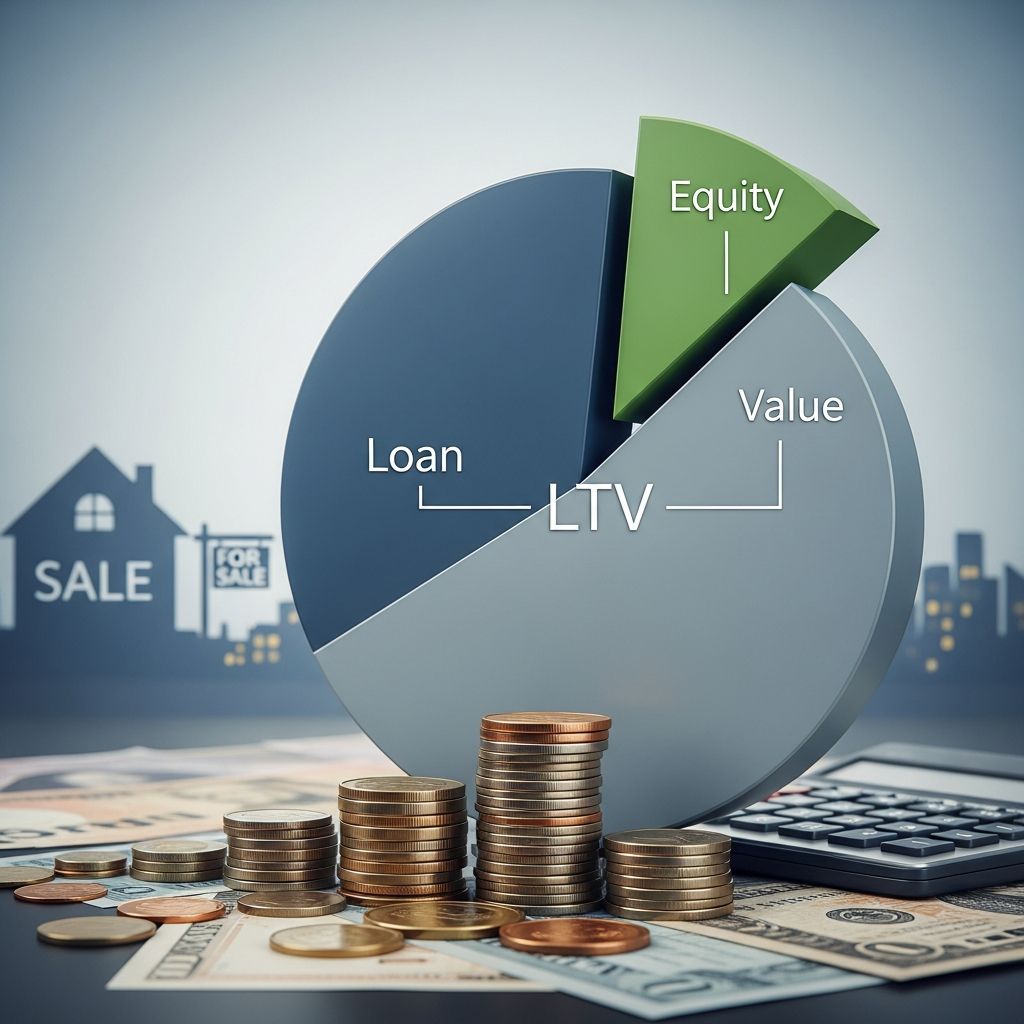
Your loan-to-value (LTV) ratio is one of the first numbers lenders look at when you apply for a mortgage or refinance. It helps determine whether you are approved, what interest rate you pay, whether you must buy mortgage insurance, and how much you can borrow overall.
This guide explains what LTV is, how to calculate it, and how to use it to lower the long-term cost of owning your home.
What Is a Loan-to-Value Ratio?
The loan-to-value ratio compares the amount you borrow to the value of the property that secures the loan. It is expressed as a percentage and is widely used in mortgage lending as a measure of risk.
- Loan amount: How much you are borrowing or the current balance of your mortgage.
- Property value: The purchase price or appraised value of the home, often whichever is lower.
- LTV ratio: The portion of the home’s value that is financed rather than owned by you.
In general, a higher LTV means you are borrowing more relative to the home’s value, which usually signals more risk for the lender. A lower LTV means you have more equity and usually face less restrictive terms.
How to Calculate Your LTV Ratio
The basic formula for LTV is simple and is consistent across major lenders:
Formula:
LTV (%) = (Loan Amount ÷ Property Value) × 100
LTV for a New Home Purchase
When you buy a home, the loan amount is typically the purchase price minus your down payment, and the value is the lower of the purchase price or the appraised value.
- Start with the purchase price (or appraisal if lower).
- Subtract your down payment to find the loan amount.
- Divide the loan amount by the property value.
- Multiply by 100 to get the percentage.
Because lenders often use the lower of price or appraisal, a low appraisal can increase your LTV and potentially raise costs or reduce how much you can borrow.
LTV for a Refinance
For a refinance, the calculation is similar but uses your current balance and current home value:
- Loan amount: The new loan balance you want, which may be your current payoff amount or a higher figure if you are doing a cash-out refinance.
- Property value: The home’s current market value based on a recent appraisal.
LTV (%) = (New Loan Amount ÷ Current Property Value) × 100
If you refinance to take cash out, your LTV typically rises because you are borrowing more against the same property value.
How LTV Relates to Home Equity
Your LTV is closely tied to your home equity, which is the portion of the property you own outright.
- Equity (%) = 100% − LTV (%)
For example:
- LTV of 80% means you have 20% equity.
- LTV of 90% means you have 10% equity.
- LTV of 60% means you have 40% equity.
As you pay down your mortgage or as your home’s value rises, your equity generally increases and your LTV falls, which may unlock better refinancing terms or eliminate the need for mortgage insurance.
Why Lenders Care About LTV
Lenders use LTV as a core part of evaluating how risky a loan is.
From the lender’s point of view:
- A high LTV means they are funding most of the purchase and have less of a cushion if home values fall or the borrower defaults.
- A low LTV gives the lender a larger margin of safety because the property is worth significantly more than the loan balance.
Because of this risk difference, lenders often set maximum LTV limits for different loan programs and price loans differently across LTV ranges.
How LTV Affects Your Mortgage Costs
Your LTV influences several major cost components of a mortgage.
1. Interest Rate and Overall Pricing
Many lenders offer lower interest rates to borrowers with lower LTV ratios, especially when combined with strong credit scores and stable income. A lower LTV means the lender is taking less risk and often rewards you with better pricing.
- Lower LTV: Often qualifies for lower rates and fewer add-on fees.
- Higher LTV: May lead to higher rates, stricter underwriting, or denial if it exceeds program limits.
2. Mortgage Insurance Requirements
For many conventional mortgages, an LTV above a certain threshold (commonly 80%) requires private mortgage insurance (PMI), which is an additional monthly or upfront cost. Government-backed loans such as FHA and some VA or USDA programs have their own insurance or guarantee fees that are also influenced by LTV.
- At or below about 80% LTV, borrowers may avoid PMI on many conventional loans.
- Above that level, PMI is often required until you build enough equity through payments or home value growth.
3. Maximum Loan Amount and Cash-Out Options
LTV caps affect how large a mortgage you can take, particularly with cash-out refinances or home equity borrowing.
- Purchase loans: Programs set maximum starting LTVs (for example, many conventional loans allow LTVs up to the high 90% range, depending on borrower profile and product type).
- Refinances: Cash-out transactions usually have lower maximum LTVs than rate-and-term refinances, which limits how much equity you can extract.
4. Risk of Owing More Than the Home Is Worth
At very high LTVs, a modest decline in home values can leave you owing more on the mortgage than the property could sell for, sometimes called being “underwater.” While this does not automatically cause problems if you can afford payments and stay in the home, it can limit your ability to sell or refinance.
Comparing Different LTV Levels
The table below summarizes how typical LTV ranges can influence costs and borrowing options. Exact thresholds vary by lender and program, but these patterns are common.
| LTV Range | Typical Characteristics | Cost Implications |
|---|---|---|
| ≤ 60% | Very strong equity position; lower risk to lender. | Often qualifies for some of the best available rates and most flexible refinance options. |
| 61% – 80% | Solid equity; widely accepted for many conventional loans. | Competitive pricing and, for many conventional loans, no PMI requirement at closing. |
| 81% – 90% | Smaller down payment or equity; still common for first-time buyers. | More likely to require mortgage insurance; rates can be somewhat higher. |
| 91% – 97%+ | Minimal down payment; typically allowed only under specific conventional or government-backed programs. | Higher overall borrowing costs, strict underwriting, and insurance or guarantee fees are almost always required. |
Strategies to Improve Your LTV
If your LTV is higher than you would like, there are several ways to lower it and potentially reduce your costs over time.
- Increase your down payment: Saving more before you buy reduces your initial LTV and may eliminate the need for mortgage insurance.
- Choose a less expensive property: A lower purchase price relative to your available cash can bring your LTV into a more favorable range.
- Pay down your loan faster: Extra principal payments can steadily reduce LTV and create opportunities to refinance or cancel PMI sooner.
- Monitor property values: If local prices rise, your LTV may improve even if your balance falls only modestly. A new appraisal in a refinance or PMI removal request can reflect this.
- Avoid taking on more secured debt: Additional home equity loans or lines of credit increase your combined LTV, which can affect future borrowing.
Combined Loan-to-Value (CLTV) and Multiple Mortgages
In some cases, lenders also look at combined loan-to-value (CLTV), which considers all loans secured by the property, such as a first mortgage plus a home equity loan or line of credit.
The concept is similar:
CLTV (%) = (Total of All Mortgage Balances ÷ Property Value) × 100
CLTV matters when you:
- Use a second mortgage instead of a larger down payment.
- Open a home equity line of credit (HELOC).
- Refinance when you already have multiple liens on the property.
Even if your main mortgage has a comfortable LTV, a high CLTV may limit future borrowing or affect pricing.
LTV in Different Loan Types
While every program has its own guidelines, you will typically see different LTV expectations depending on the type of mortgage:
- Conventional loans: Often permit relatively high LTVs for strong borrowers, sometimes into the upper 90% range, but usually require mortgage insurance above about 80% LTV.
- Government-backed loans: Programs such as FHA, VA, and USDA frequently allow higher LTV ratios, sometimes with very low or no traditional down payments, but offset the higher risk with insurance premiums or guarantee fees.
- Jumbo loans: Mortgages above standard conforming limits often require lower LTVs and larger down payments, reflecting the larger dollar risk.
Using LTV to Plan for the Long Term
Thinking about LTV only at closing is a missed opportunity. Because it interacts with equity, rates, and fees over time, your LTV should be part of your long-term planning.
Consider how LTV fits into your goals:
- If you plan to sell in a few years, you may accept a higher initial LTV and focus on affordability rather than rapid equity building.
- If long-term ownership is your goal, extra principal payments and a more moderate purchase price can steadily improve your LTV position and flexibility.
- If you expect to use the home’s equity later—for example, to fund renovations—managing your LTV carefully can preserve that option.
Frequently Asked Questions (FAQs)
Q: Is a lower LTV always better?
A: A lower LTV usually leads to better borrowing terms and less risk of owing more than the home is worth. However, tying up too much cash in a down payment can reduce your savings for emergencies or other goals. The right LTV balances cost savings with financial flexibility.
Q: What LTV do I need to avoid mortgage insurance?
A: Many conventional lenders do not require private mortgage insurance when the LTV is at or below about 80%, though exact rules vary by lender and program. Government-backed loans follow their own rules and may require insurance or guarantee fees even at lower LTVs.
Q: Can I improve my LTV without moving or refinancing right away?
A: Yes. Regular payments gradually reduce your balance, and extra payments toward principal can speed that process. If local home prices rise, your LTV can also improve over time. When conditions are favorable, you may then refinance or request mortgage insurance removal using the new, lower LTV.
Q: How does LTV affect refinancing options?
A: For many refinance programs, lenders set maximum LTV limits. A lower LTV can qualify you for better interest rates, lower fees, and more flexibility on cash-out amounts, while a very high LTV may restrict options or require specialized programs.
Q: Do lenders use the purchase price or the appraisal to calculate LTV?
A: Lenders typically use the lower of the purchase price or appraised value to calculate LTV, which protects them if a home is purchased for more than its appraised market value. For refinances, they generally use the appraised current market value.
References
- Understanding Loan-to-Value Ratio (LTV) — JPMorgan Chase Bank, N.A. 2023-06-01. https://www.chase.com/personal/mortgage/education/financing-a-home/loan-to-value-ratio
- What Is the Loan-to-Value Ratio (LTV) and How Is It Calculated? — Rocket Mortgage. 2024-01-10. https://www.rocketmortgage.com/learn/loan-to-value-ratio
- What Is a Loan-To-Value Ratio? — Bankrate. 2024-03-18. https://www.bankrate.com/mortgages/what-is-loan-to-value-ratio-ltv/
- What Is Loan-to-Value (LTV) Ratio? — PNC Bank, National Association. 2023-11-15. https://www.pnc.com/insights/personal-finance/borrow/what-is-ltv.html
- What Is a Loan-to-Value Ratio (LTV) & How Is It Calculated? — Equifax Inc. 2023-08-09. https://www.equifax.com/personal/education/loans/articles/-/learn/what-is-ltv/
Similar Articles








Read full bio of Sneha Tete




