
How Late Rent Can Affect Your Credit Score
Understand when late rent shows up on credit reports, how it can hurt your score, and what steps you can take to limit the damage.
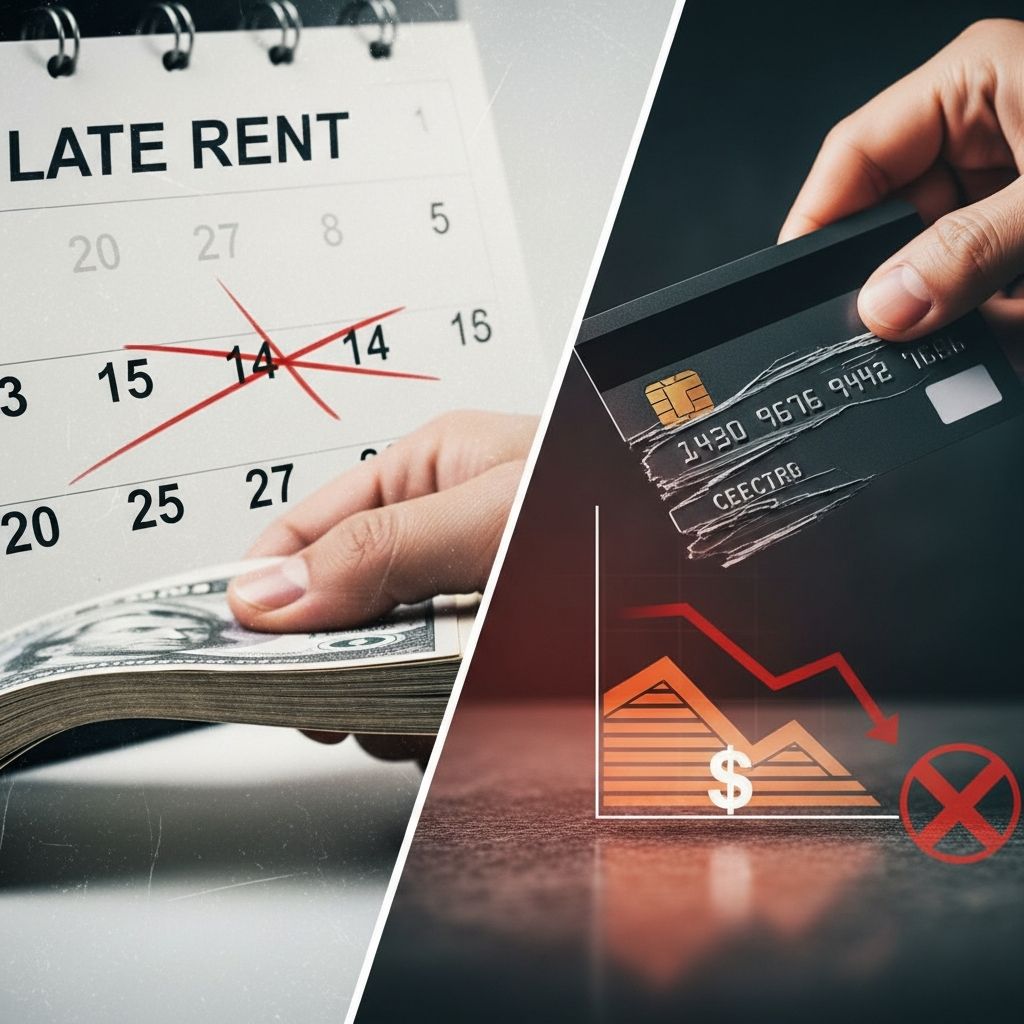
Late rent payments can affect far more than your relationship with your landlord. In some circumstances, late or unpaid rent can be added to your credit reports and may damage your credit scores, as well as appear in reports used by landlords to decide whether to rent to you in the future.
This guide explains how rental information is shared, when late payments might show up on your credit reports, and what you can do to reduce the impact if you fall behind.
Key Takeaways About Late Rent and Credit
- Late rent can affect your credit if it is reported to the major credit bureaus or sent to collections.
- Not all landlords report rent, and many only report when there is serious delinquency or a collection.
- Specialty tenant screening agencies collect rental history data for landlords, which can influence whether you are approved for future housing.
- Negative information can stay on your credit reports for up to about seven years, including serious late payments and collection accounts.
- Communication and early action are critical for limiting damage if you are at risk of missing rent.
How Credit Reports and Scores Work With Rent
To understand the impact of late rent, it helps to know how credit reports and scores are created and used.
The role of the three major credit bureaus
The three largest nationwide consumer reporting agencies are:
- Experian
- Equifax
- TransUnion
These companies collect information from many sources, including lenders, debt collectors, and in some cases, landlords or rent payment services. They use this information to compile your credit reports, which then feed into credit scoring models such as FICO and VantageScore.
Where rental information fits in
Unlike mortgage payments, rent is not automatically included on credit reports. Participation is voluntary: landlords, property management companies, or third-party rent reporting services decide whether to furnish rental data to one or more bureaus.
When rental information is reported, the bureaus may include both:
- On-time payments (in some rent-reporting programs)
- Delinquent or collection accounts related to rent
How each bureau incorporates rental data can vary, and not all lenders or scoring models use that data in the same way.
Specialty Tenant Screening and Rental History Reports
In addition to the major credit bureaus, there are specialty consumer reporting agencies that focus on rental history and tenant screening. These companies compile information specifically for landlords and property managers.
What tenant screening reports may include
Depending on the agency and what your prospective landlord requests, a rental history or tenant screening report might contain:
- Your name and identifying information
- Current and previous addresses
- How long you lived at each address
- Reported payment history with past landlords
- Eviction records or court filings related to housing
Landlords use these reports to decide whether to approve your application, require a higher deposit, or deny tenancy altogether.
How these reports differ from credit reports
| Feature | Traditional Credit Reports | Tenant Screening / Rental Reports |
|---|---|---|
| Main purpose | Evaluate credit risk for loans, credit cards, and other credit products | Evaluate risk as a tenant and likelihood of paying rent on time |
| Primary data sources | Lenders, credit card issuers, debt collectors, some service providers, some landlords | Landlords, property managers, courts, public records, some credit data |
| Type of information | Credit accounts, payment history, balances, public records, collections | Rental payment history, evictions, address history, sometimes credit and criminal checks |
| Who typically uses them | Banks, credit unions, credit card issuers, auto lenders | Landlords, property managers, some housing programs |
When Late Rent Can Appear on Your Credit Reports
Late rent does not automatically show up on your credit reports. It depends largely on what your landlord or property manager does when a payment is missed.
Scenarios that may lead to credit report damage
- Your landlord reports directly to a credit bureau. Some larger property management companies or landlords use systems that report rental data, including serious delinquencies, to Experian, Equifax, or TransUnion.
- Your unpaid rent is placed with a collection agency. If you fall far behind, your landlord may assign or sell the debt to a collector, who can then report the collection account to the bureaus.
- Judgments or public records related to unpaid rent. Court actions involving unpaid rent may appear in certain reports, depending on the type of record and current reporting practices.
Missing by only a few days usually will not affect your credit score directly, especially if the payment is made before it is 30 days overdue and is not reported as late. However, your lease may still allow for late fees or other consequences at the property level.
Timeline of consequences for falling behind on rent
Every lease is different, but the progression often looks like this:
- After the due date: You may be charged a late fee or receive a late notice under the terms of your lease.
- After the grace period (if any): You may be considered in default under the lease and subject to further action, such as notices to pay or quit.
- After 30 days or more: A landlord or rent reporting service may be able to report a serious delinquency to the credit bureaus.
- If the debt is sent to collections: The collection account can be reported and may significantly lower your credit scores.
How Late Rent Affects Credit Scores and Future Housing
When late rent or related collection accounts appear on your credit reports, they can have multiple effects on your financial life.
Impact on credit scores
Payment history is generally the most heavily weighted factor in many credit scoring models. A pattern of serious late payments or collections may:
- Lower your overall credit scores, sometimes by a substantial amount
- Make it more difficult to qualify for loans and credit cards
- Lead to higher interest rates or less favorable terms when you are approved
Both late payment notations and collection accounts can remain on your credit reports for up to about seven years, even if you later catch up or pay off the balance.
Effect on rental applications
Even if your credit scores remain relatively strong, negative rental information on either credit reports or tenant screening reports may:
- Cause some landlords to deny your application
- Lead to higher security deposits or additional conditions
- Limit your options to landlords who do not use screening reports or who accept higher-risk tenants
Because many landlords check both credit and specialized rental history reports, late rent can make it more difficult to move, downsize, or relocate, even years later.
Evictions, Collections, and Your Record
Late rent can escalate into more serious outcomes, including eviction and collections. These events may not all affect your credit scores in the same way, but they can still have long-term consequences.
Eviction and credit scores
An eviction case itself does not directly create a traditional credit score entry. However:
- If you owe unpaid rent or damages and do not pay, the landlord may send the account to collections, which can be reported to the credit bureaus and hurt your scores.
- Eviction filings or judgments can appear in tenant screening or rental history reports, which can make it harder to rent again.
Collection accounts related to rent
If unpaid rent is turned over to a collection agency:
- The collection may appear on your credit reports and signal a serious long-term delinquency.
- Credit scoring models often treat collection accounts as a major negative factor, especially if they are recent.
- Even after you pay, the collection can remain for several years, though its impact may lessen over time.
How to Find Out What Is Being Reported
Because reporting practices vary, it is important to check your own records instead of guessing.
Reviewing your credit reports
- You can obtain free credit reports from the three major credit bureaus through the official centralized service for consumers in the United States.
- Look for entries related to rental accounts, late payments, and any collection agencies that might be associated with past landlords.
- If you see incorrect information, you have the right to dispute it with the credit reporting agency and, when appropriate, the furnisher of the data.
Asking about your landlord’s reporting practices
You can also ask your current or prospective landlord:
- Whether they report rental payments to any credit bureaus or tenant screening agencies
- Whether they use a third-party rent payment or reporting service
- How long after a missed payment they may report or send the account to collections
While policies can change, having this information can help you plan and understand your risks.
Steps to Take If You Are Late or Expect to Be Late
If you are at risk of missing a rent payment, acting early can significantly reduce potential damage.
Communicate with your landlord
- Reach out as soon as you know you may be late.
- Explain your situation clearly and propose a realistic plan for payment.
- Ask whether they can offer a temporary payment arrangement or short extension.
While landlords are not required to agree, many prefer a good-faith plan over pursuing collections or eviction, which can be costly and time-consuming.
Prioritize housing in your budget
Because stable housing is essential, many financial counselors recommend treating rent or mortgage payments as one of your highest priorities in your budget. If money is tight:
- Review all recurring expenses and see what can be reduced or paused.
- Consider contacting creditors to discuss hardship options on lower-priority debts.
- Explore local rental assistance programs, nonprofit counseling services, or government resources.
Monitor and protect your credit
- Check your credit reports regularly to spot any new negative entries.
- Dispute inaccurate information promptly with the reporting agency.
- Continue making all other payments on time to help support your overall credit profile.
Using On-Time Rent to Build Credit
Although this article focuses on late rent, some tenants may be able to use on-time rent payments to build credit through optional programs.
Certain rent-reporting services work with landlords or directly with tenants to report positive rent payment data to one or more credit bureaus.
- These programs may help people with thin credit files demonstrate responsible payment behavior.
- Participation usually requires consent from the tenant and may involve fees.
- If late payments occur, they may also be reported, which can create negative marks; the same system that helps you can hurt you if you fall behind.
Before enrolling, review the program’s terms carefully and make sure you can reliably pay on time.
Frequently Asked Questions (FAQs)
Does a rent payment that is a few days late affect my credit score?
A brief delay of only a few days usually does not show up on your credit reports, especially if you pay before the landlord considers the payment seriously delinquent or reports it. However, you may still owe late fees under your lease.
Will every landlord report late rent to credit bureaus?
No. Many landlords never report to credit bureaus at all. Late rent may affect your credit only if your landlord, a rent-reporting service, or a collection agency chooses to furnish that information.
How long can late rent or collections stay on my credit reports?
Serious late payments and collection accounts related to rent can generally remain on your credit reports for up to about seven years from the date of the original delinquency.
Can I see what landlords see about my rental history?
You are entitled to request copies of consumer reports about you, which can include tenant screening reports from specialty agencies, as well as your traditional credit reports. This can help you understand how past rental issues may appear to future landlords.
If I pay off a rental collection, will it disappear from my credit?
Paying a collection typically updates the account to show a zero balance, but it does not automatically remove the entry. The collection may remain for several years, although its negative impact usually lessens over time.
References
- Does late rent affect my credit score? — Consumer Financial Protection Bureau. 2022-04-19. https://www.consumerfinance.gov/ask-cfpb/does-late-rent-affect-my-credit-score-en-1815/
- Does Paying Rent Late Affect Your Credit Score — Centier Bank. 2023-06-01. https://www.centier.com/resources/articles/article-details/does-paying-rent-late-affect-your-credit-score
- Can Late Rent Payments Hurt My Credit Score? — Experian. 2023-08-15. https://www.experian.com/blogs/ask-experian/can-late-rent-payments-hurt-my-credit-score/
- Will a Late Rent Notice Affect My Credit Score? — RentCafe. 2022-05-10. https://www.rentcafe.com/blog/apartment-search-2/how-to-handle-late-rent-notice/
- Can Missing Rent Impact Your Credit Score? — Sharefax Credit Union. 2021-09-20. https://www.sharefax.org/can-missing-rent-impact-your-credit-score/
Similar Articles








Read full bio of Sneha Tete




